
CRYPTO
The SEC Crypto Rule Leaves Exchanges Still Exposed
Regulation Crypto Assets would let issuers raise up to $75 million a year, while exchanges and brokers still face securities duties until Congress acts.

The SEC’s proposed Regulation Crypto Assets would let issuers raise up to $75 million a year without full registration. It would not tell an exchange, broker, or dealer when listing that token stops being a securities-law risk.
Jay B. Sykes, a Congressional Research Service legislative attorney, wrote in a September 10 legal sidebar that those intermediaries could still trigger registration duties if they list or trade a covered crypto asset before the issuer finishes, or permanently drops, the work it promised buyers.
Three Offering Paths and One Listing Gap
The Commission voted the proposal out on August 18, 2026, as a package of Securities Act exemptions for “covered investment contracts.” Those are deals whose only subject is a crypto asset that is not itself a stock, bond, or other security. Chairman Paul S. Atkins cast the package as a way to raise capital while a network is still being built, instead of forcing that sale into 1930s registration forms.
The proposed rule published August 21 splits that raise into a startup path and a two-tier fundraising path modeled in part on Regulation A. Caps would adjust for inflation. Bad-actor bars would apply. The exemptions would be non-exclusive, so an issuer could still use another available path.
THE THREE REG CA OFFERING PATHS
| Path | Cap | Window | Filing | Audited statements |
|---|---|---|---|---|
| Startup exemption | $5 million | 4 years | Form NOR, then Form TR | No |
| Fundraising Tier 1 | $20 million | 12 months | Form 1-CRYPTO, SEC qualifies before sales | No |
| Fundraising Tier 2 | $75 million | 12 months | Form 1-CRYPTO, SEC qualifies before sales | Yes |
The startup path is a one-time ceiling of $5 million over four years. The issuer files a notice of reliance on new Form NOR, posts principles-based disclosures on a website listed in that notice, and certifies that it intends to finish the essential managerial efforts it promised, within four years of the filing. A transition report on new Form TR is due no later than the end of that four-year clock. The SEC would not review the startup materials before sales. There is no accredited-investor lock and no resale restriction. Sykes notes the path is also meant for deals that may be securities offerings even when they raise little or no cash, including airdrops and rewards to network users.
The fundraising path is larger and slower. Sales cannot start until the SEC qualifies Form 1-CRYPTO. Affiliates could sell no more than $6 million of a Tier 1 deal and no more than $22.5 million of a Tier 2 deal. Nonaccredited buyers would be capped at 10% of the greater of a natural person’s annual income or net worth, or 10% of a non-person’s annual revenue or net assets. Raises above $75 million in a 12-month window would fall back on full registration or some other exemption, which the proposing release itself treats as a poor fit for this asset class.
Both paths use the same ten-topic narrative overlay rather than a stock-style item list. Issuers would have to describe material facts on the investment contract, the asset, management and related persons, the associated network and build plan, and the asset’s economics, including supply, pricing, lockups, release schedules, and mint or burn mechanics. Startup issuers would update that package annually for material changes. Fundraising issuers would file annual, semiannual, and current reports until a Form TR ends the cycle.
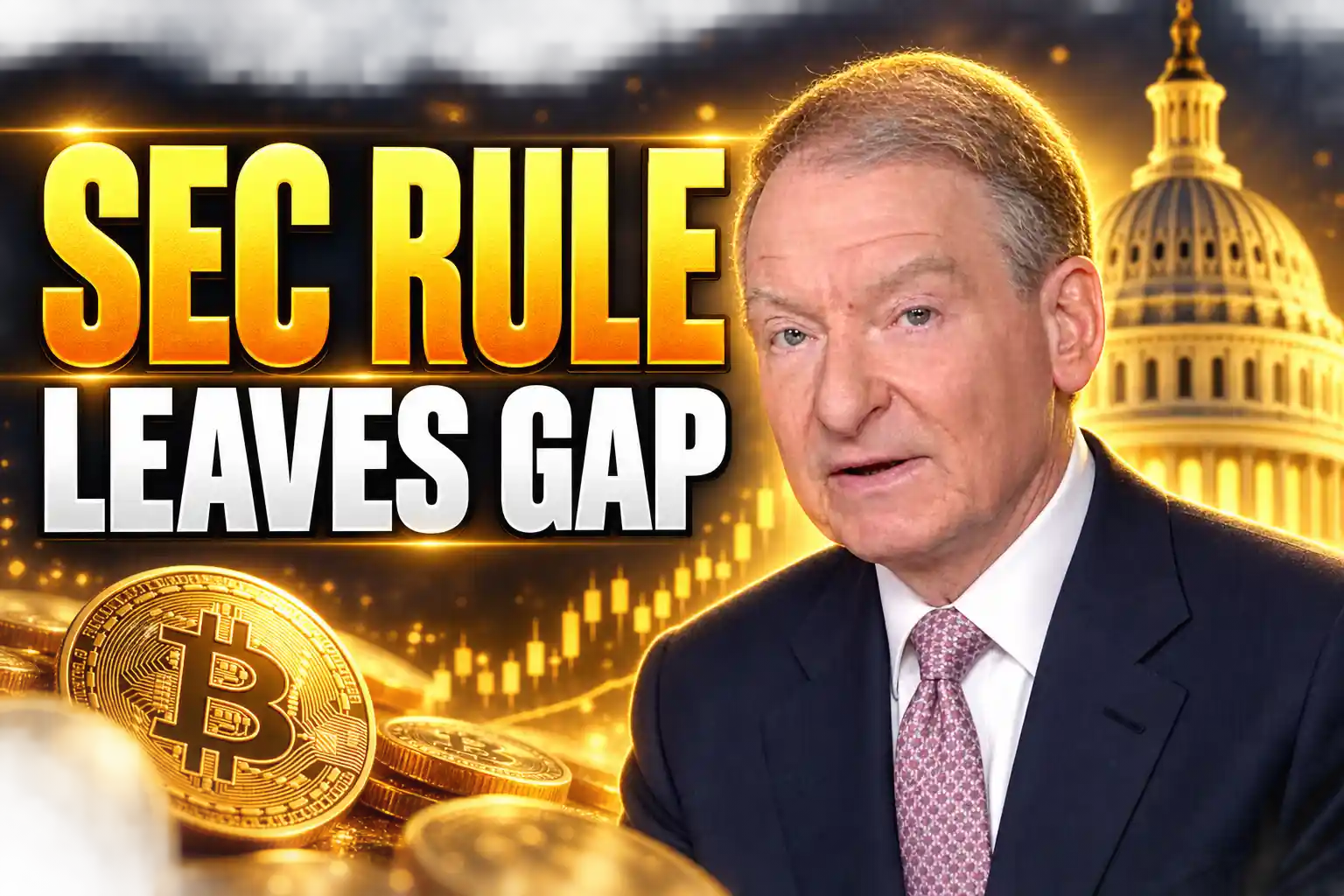
A Form TR Filing Does Not Clear an Exchange
The third pillar is an investment contract safe harbor. If the issuer certifies that it has completed or permanently ceased every essential managerial effort it promised, and it meets the other conditions and files Form TR, the Commission would no longer treat the non-security crypto asset as subject to that investment contract under the Securities Act and the Exchange Act. The safe harbor can apply to tokens sold before the rule exists, and to tokens sold outside these two exemptions, so long as they fit the covered-investment-contract definition.
That off-ramp is narrower than it sounds. The proposing release keeps the Commission’s right to dispute the certification, including after the filing. Third parties get a public paper trail. They do not get an express reliance defense. They also have to watch for new promises after the Form TR that could create a fresh investment contract around the same asset.
The safe harbor as proposed would rewrite the Securities Act and Exchange Act definitions of “security.” It would not touch the nearly identical definitions in the Investment Company Act and the Advisers Act. Funds, treasury companies, and protocol foundations that hold a large book of the asset would still have to run that separate analysis.
State blue-sky registration and qualification would be preempted for Reg CA offers and for some resales by people other than the issuer, an underwriter, or a dealer. State antifraud power and notice filings would remain. That is a win against 50-state notice chores. It is not a federal hall pass for the platform that puts the token on a spot book.
What Listing Desks Still Cannot Do
Exchanges, brokers, dealers, and clearing agencies would still have to decide, token by token, whether they are operating an unregistered securities venue if they list or trade a covered asset before the issuer’s promised work is certified as done. The proposal creates no exemption from those Exchange Act registration categories. In the proposing release, the Commission said it will keep considering whether further action on covered investment contracts is warranted.
Sykes’s sidebar is blunt about who that silence hits. If exchanges, brokers, and dealers stay off a name because listing it could pull them into the securities laws, the very distribution the exemptions are supposed to unlock may never arrive. A token that cannot trade widely has a harder time becoming useful on the network the issuer said it would build. The startup exemption even drops the usual resale freeze so that wider use can happen. The listing desk is still the party that would take the federal registration risk of making that freeze meaningless.
THE FEDERAL DUTIES STILL ATTACHED TO A LISTING
- Exchange registration: Running a market in a token that is still “subject to” an investment contract can look like operating an unregistered exchange.
- Broker-dealer registration: Soliciting, routing, or matching customer orders in that token can look like unregistered brokerage or dealing.
- Clearing agency registration: Standing in the middle of those trades can look like unregistered clearing.
- Form TR reliance: There is no safe harbor that lets a platform treat the issuer’s certification as conclusive if the SEC later disputes it.
- Investment Company Act: The proposed off-ramp does not run to that statute, so a large holder still has a separate product-registration question.
Issuers, then, get a mapped raise. The firms that would turn those raises into a U.S. market get a file to read and a residual Howey call. That is why the proposal can be real progress for a founder and still leave Coinbase, Kraken, and every other listing committee in roughly the same legal posture they occupy now, until a later rule or a statute says otherwise.
The House Bill Breaks the Chain at Resale
Congress has spent a year writing a different off-ramp, and it is the one the trading venues actually need. The House passed the Digital Asset Market Clarity Act, H.R. 3633, in July 2025 by 294-134. The Senate Banking Committee advanced a version 15-9 on May 14, 2026. Senator Cynthia Lummis (R-Wyo.) released updated Clarity Act text on July 22, 2026, merging the Banking and Agriculture products. A cloture vote is scheduled for September 15, 2026.
On the point that matters to a listing desk, both legislative drafts go further than Reg CA. They would treat secondary-market transactions in covered crypto assets as not securities transactions even while the issuer is still doing essential managerial work. The House text uses a maturity test for the chain. A July 2026 Senate draft associated with Lummis asks whether covered parties did more than a nominal level of entrepreneurial or managerial efforts in the prior 180 days. Either way, a resale by someone other than the issuer or its agent is supposed to break the investment-contract chain.
WHERE THE OFF-RAMP DIVERGES
| Track | When the asset leaves securities status | Secondary trades while the issuer is still building |
|---|---|---|
| SEC Regulation Crypto Assets | Issuer certifies that essential managerial efforts are done or permanently ceased; the SEC may challenge that filing | Still potentially securities transactions |
| House-passed CLARITY Act | The blockchain system reaches maturity | Not securities transactions |
| Lummis Senate draft | Covered parties did no more than nominal entrepreneurial or managerial efforts in the prior 180 days | Not securities transactions |
The dollar caps diverge too. Reg CA’s top fundraising tier is $75 million in a 12-month window. On the Senate floor on July 29, 2026, Lummis said Title I of the bill in front of her had cut an annual fundraising cap from $75 million to $50 million and added a hard $200 million lifetime limit, among other Democrat-sought edits. Those figures describe the statute, not the SEC proposal, and they can still move. They already show that even the capital-raise math is being bargained in a different building.
Ethics language around officials’ digital-asset holdings, vertical integration at crypto firms, and the treatment of non-decentralized trading protocols have been the live Senate fights. Coinbase chief executive Brian Armstrong said on September 10 that the bill was “ready to get a yes vote” and that ethics rules for government officials holding digital assets were the main remaining issue. That is a floor-politics problem. It is not the same as the legal hole inside Reg CA.
Howey, Peirce, and the March Interpretation
The proposal does not invent a new test for what a security is. It builds a filing machine on top of SEC v. W.J. Howey Co., the 1946 Supreme Court case that treats an investment contract as money put into a common enterprise with profits expected from the efforts of others. For a typical token sale, that analysis has meant the first distribution can be a securities offering even when the token itself is not a share of stock, because buyers were told a team would finish a network they could later use or flip.
Courts have held that those first sales can be securities transactions. Secondary trading of the same token has been the bitter part. If the asset stays “subject to” the investment contract, every later trade can look like a securities trade, and the venue looks like a securities venue. If the asset can separate from that contract, the same book looks like a spot commodity market.
On March 17, 2026, the SEC and the Commodity Futures Trading Commission issued a joint interpretation, Release No. 33-11412, stating that a non-security crypto asset sold under an investment contract remains subject to that contract while the issuer’s promised essential managerial efforts are still in play, and that it can separate once those efforts are fulfilled or the issuer says it cannot complete them. Regulation Crypto Assets is the attempt to turn that paragraph into forms, clocks, and a certification.
THE PATH FROM HOWEY TO FORM TR
- 1946: The Supreme Court decides Howey and sets the investment-contract test later applied to token sales.
- February 6, 2020: Commissioner Hester M. Peirce proposes a time-boxed safe harbor, in a speech titled “Running on Empty,” to let networks decentralize without a full registration.
- January 21, 2025: The Commission’s Crypto Task Force is formed to write a clearer crypto rule set.
- March 17, 2026: The SEC and CFTC issue the joint interpretation on when a crypto asset is, and is no longer, subject to an investment contract.
- August 18, 2026: The Commission proposes Regulation Crypto Assets, with the startup exemption, the fundraising exemption, and the Form TR safe harbor.
- August 21, 2026: The proposing release posts to the Federal Register, opening comments.
- September 10, 2026: CRS publishes LSB11480, flagging the intermediary gap for Congress.
- September 15, 2026: The Senate is scheduled to hold a cloture vote on the CLARITY Act.
- October 20, 2026: Comments on the SEC proposal are due.
Atkins credited Peirce by name. He said she had long championed the concepts in the proposal and that the August action fulfilled her original idea. Peirce, in her own statement, asked for views on whether tokens should be able to play a role closer to equity, so holders can share in the growth of the enterprise that builds the network, and she asked the public to write during the sixty-day comment period.
Armstrong’s Fallback Leaves Brokers Exposed
Armstrong’s September 10 line was that crypto “wins” either way on September 15: if the bill passes, the industry gets a statute; if it fails, “the SEC and CFTC are ready to issue rules.” That treats agency rulemaking as a substitute for the market-structure bill. For issuers looking at Form NOR and Form 1-CRYPTO, there is some truth in it. For a firm that wants to list the resulting token while the team is still shipping code, the substitute is not the same product.
Atkins already said the quiet part in the proposing statement. He backed the rule and, in the same text, said legislation is still required if the work is going to survive a later Commission.
Given the progress made in Congress to date on market structure legislation, let me be clear up front: legislation remains indispensable to enacting “future-proofed” rules of the road that are durable enough to protect the work we are undertaking today from being unwound by a future rogue regulator. The SEC has and will continue to support Congress in delivering the CLARITY Act to President Trump’s desk.
Paul S. Atkins, Chairman, statement on Regulation Crypto Assets, Aug. 18, 2026
He used a shorter version of the same pitch on X the afternoon the proposal dropped, calling it the Commission’s “most historic step yet to modernize federal securities regulations for crypto assets.”
With our new proposal, the SEC is taking the most historic step yet to modernize federal securities regulations for crypto assets.
As the Crypto Capital of the World, the U.S. must and will lead. Regulation Crypto Assets will ensure that we do. 🇺🇸 pic.twitter.com/z0MmDF4doV
— Paul Atkins (@SECPaulSAtkins) August 18, 2026
Historic is his word. The filing machine for issuers is new. The open item for the people who run the books is the same one Sykes put in front of Congress on September 10. Comments close on October 20, 2026. The Senate’s cloture vote is set for September 15. Unless the comment file produces an intermediary exemption the August proposal did not contain, listing a token that is still under construction remains a securities-law judgment call, and the statute on the Senate calendar is still the only text that would take that call away.
Disclaimer: This article is news reporting and analysis of a proposed SEC rule and of related bills in Congress. It is for information only. It is not investment advice, legal advice, or securities-compliance advice, and it is not a recommendation to buy, sell, issue, or list any crypto asset or to rely on any exemption or safe harbor. Anyone considering an offering, a listing, or a trading operation should consult a qualified securities lawyer or a registered compliance professional about the proposal, the comment file, and any statute that may supersede it. Offering caps, forms, comment deadlines, and bill language reflect the agency and congressional materials cited here and can change as the proposal is revised or as Congress votes.

The Yemen Cell Kept Claude’s Flight Code After the Ban

Unofficial AI Pages Beat Marshall County’s Sheriff to Every Scare

The SEC Crypto Rule Leaves Exchanges Still Exposed

Brian Bengs Bets His Senate Race on an AI Stop

FloWrestling Scorekeeper Turns Dual Meets Into Live Data

Fable 5 Came Back Under a Commerce On-Off Switch

Google’s SpaceX GPU Lease Has a Sept. 30 Deadline

Plasma One’s XPL Locks Face a 1.81 Billion Cliff

DGO’s Rs 549 World Cup Pass Cost Fans Sleep and Data

Moonshot AI’s $30 Billion Ask Became a $35 Billion Close
-
 AI3 months ago
Fable 5 Came Back Under a Commerce On-Off Switch
-
 AI4 months ago
Google’s SpaceX GPU Lease Has a Sept. 30 Deadline
-
 CRYPTO4 months ago
Plasma One’s XPL Locks Face a 1.81 Billion Cliff
-
 APPS4 months ago
DGO’s Rs 549 World Cup Pass Cost Fans Sleep and Data
-
 AI4 months ago
Moonshot AI’s $30 Billion Ask Became a $35 Billion Close
-

 NEWS4 months ago
ColorOS 17 Device List Spans Oppo, OnePlus and Realme
-

 GAMING4 months ago
Xbox Cuts 3,200 Jobs After Five Years of Thin Returns
-

 GAMING3 months ago
The RTX 4050 Under Rs 70,000 Hides a Wattage Gap