
APPS
How Iran’s State Quietly Seized Its Booming Tech Industry

Iran’s tech industry spent the mid-2010s doing something the country’s oil and steel giants never could. It grew fast, hired young, and answered to nobody in particular. By late 2014 the e-commerce site Digikala was logging 3,000 orders a day at a $150 million valuation, built by the twin sons of a Tehran baker who launched it on the proceeds of one sold car and one raided wedding fund. A decade later the same company changed hands in a deal that one person close to it called “more a confiscation that took place, rather than a purchase.”
Most accounts of that collapse stop at theft, at state-linked players grabbing valuable companies. The thousands of pages of once-secret records behind a new book by two journalists who reported it for five years point at something cheaper to take and far harder to give back. The apps generated only modest profits. They also generated data on tens of millions of Iranians, and whoever controlled the apps controlled the pipes that data ran through.
How a Sanctions Loophole Built Iran’s Startup Boom
American sanctions did the early work that no Iranian regulator would. Dominant Western platforms such as Uber and Amazon could not legally operate inside Iran, which left a wide-open field for local founders to fill with their own copies. Online shops and ride-hailing apps appeared seemingly overnight, and a small press grew up to cover them.
The same sanctions made the building harder than anywhere else. Banking restrictions cut engineers off from credit cards, so buying foreign tools and cloud services was a constant scramble. Developers improvised their own ways to store code and run servers. The sector boomed anyway.
Digikala, founded in 2006 by Hamid and Saeid Mohammadi, became the showpiece. It started as an electronics site for teenage boys and grew into an all-purpose retailer with distribution centers nationwide and next-day delivery, the closest thing Iran had to Amazon. Much of its scale traced back to one backer: Sarava, a venture fund run by Said Rahmani, a former IBM engineer who gave up a Silicon Valley career to come home and build a startup ecosystem from scratch.
Rahmani put more than half of Sarava’s first money into Digikala for a 51 percent stake, and seeded an accelerator called Avatech that drew hundreds of applicant teams. When a nuclear deal with the West looked close in 2015, foreign capital chased Iranian tech to a frenzy. Rahmani wanted $100 million to remake Digikala. He raised more than twice that.
The 2015 Pivot When Khamenei Named the Threat
The turning point arrived just after the nuclear deal was signed. Supreme Leader Ali Khamenei told a hall of uniformed commanders from the Islamic Revolutionary Guard Corps (IRGC, the elite military and economic force that answers to him) that the enemy was looking to infiltrate the country, by economic, political and cultural means.
A few weeks later he used the Persian word for infiltration, nofooz, 54 times in a single speech, warning of American-linked networks of economic influence operating inside Iran. To a leadership that wanted no real opening to the outside world, the startup scene looked like the leading edge of that threat: the conferences, the foreign investors, the accelerators with their imported Silicon Valley culture.
Around 2016 an anonymous social-media account named Shabnaameh, the Persian word for samizdat, began posting in the voice of a brave truth-teller and naming Rahmani and Sarava as central to a foreign “change project.” Late that year it released a docudrama featuring Digikala and Avatech on the poster and a clip from a startup music video filmed in Avatech’s offices. The film also showed Siamak Namazi, an Iranian American then held by the IRGC, thin and faint against a black backdrop. No ordinary filmmaker could have reached a prisoner like that.
The Squeeze Play of Interrogations, a Staged Burglary and a Raid
What followed was not a single seizure but a slow, deniable campaign. Security agents spooked founders with public attacks and arrests, then opportunistic middlemen with one foot in the private sector and one in the security state offered protection in exchange for equity. One such figure joined Sarava’s board, then asked Rahmani to hand over 15 percent of his shares to make his troubles disappear. He refused. The message landed anyway.
The pressure ran for years and escalated in a recognizable sequence:
- Weekly interrogations of Rahmani for more than a year, fraying his nerves and his trust in everyone around him.
- A December 2017 corporate retreat on Qeshm island where a minibus was smashed open with a rock and the passports of an American adviser, Emad Shargi, were taken, almost certainly by the security services.
- Rahmani’s passport confiscated at the Tehran airport in late January 2018 amid allegations of money laundering and fake foreign investment.
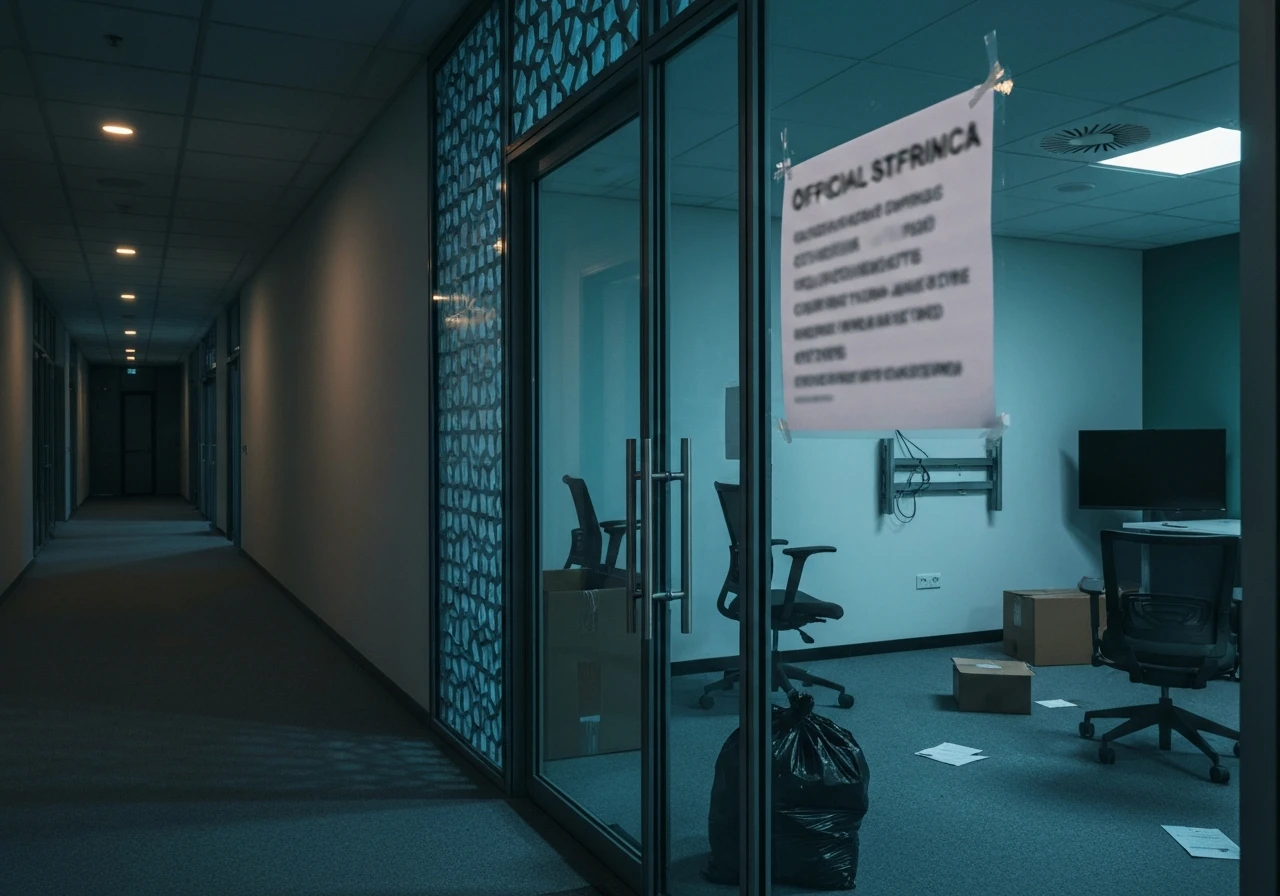
- A roughly 2 a.m. raid on Sarava’s headquarters on April 24, 2018, when IRGC agents kicked in the door, hauled away everything from documents to the conference-room flatscreens, and sealed the office under a judicial sticker.
The same night, agents who had pulled Shargi from a home where he was staying brought him to the ransacked office, inked his finger onto their inventory, and took him to prison. He spent eight months in interrogation, asked again and again about Sarava’s investors, details he did not have. He told them what he thought of Rahmani instead: “If this country had 1,000 Said Rahmanis, we would have a different country.”
Data Became the Asset the State Could Not Resist
Next to the state behemoths pumping oil and forging steel, the startups were never especially rich. They held one thing the regime wanted badly: granular data on how ordinary Iranians lived, shopped and moved. Sometimes the demand came as a formal judicial letter seeking information to solve a crime. Other times an unnamed authority simply called and asked for broad swaths of user data across a stretch of time.
Most executives found a way to comply and a way to live with it. Refusing risked the company and every well-paid job inside it. But the founders had sold themselves as open, modern and liberal, and the requests cut against that self-image.
This is where you crack as a person. You realize that there is no running away from this thing. You’re part of it.
That is how one executive described the moment to the book’s authors. The cracking was structural, not personal. Iran’s founders had imported the Silicon Valley playbook into an economy built on closed networks, where law-enforcement officials decided which apps could be downloaded, which products could be sold, and whether a website could be seen at all. More than five million websites sit behind the country’s filters, by the count in Iran’s Freedom on the Net 2024 assessment, and the state’s National Information Network (NIN, a domestic intranet that lets approved services run even when the global internet is cut) turned that control into infrastructure.
Who Owns Iran’s Internet Now
The clearest measure of what changed is the cap table. One by one, the country’s biggest consumer platforms took on state-linked owners, either to buy peace or because no other capital was allowed near them. The pattern repeats across the three apps most Iranians use every day.
| Platform | What it does | State-linked ownership |
|---|---|---|
| Digikala | E-commerce, the “Iranian Amazon” | A telecom whose ownership runs through subsidiaries to a Khamenei-controlled foundation took a large stake in 2024 |
| Snapp | Ride-hailing market leader | Sold shares to a foundation-owned telecom; its IPO was blocked in 2025 over security clearances |
| Tapsi | Ride-hailing challenger | Launched with investment from IRGC-linked financiers |
The foundations in that table are bonyads, clergy-linked conglomerates that ward off competitors through implicit threat, and they sit alongside the IRGC’s sprawling business arm at the center of Iran’s economy. Their entry into tech did not just move shares. It folded ride-hailing logs and shopping histories into the same orbit as the censors who decide what Iranians can reach, a convergence detailed in a recent technical study of Iran’s internet shutdown methods.
Sarava itself was simply erased. Government ministries wrote to its portfolio companies barring them from public services unless Rahmani was removed. In mid-2019 he stepped down as chief executive and board member, and the firm agreed to vet directors “in coordination with the relevant authorities.” A letter from the head of IRGC intelligence then instructed a powerful foundation to cut all ties with Sarava and Digikala. None of Rahmani’s pleadings to ministers had moved anything.
Digikala’s $550 Million Confiscation
The takeover of the crown jewel came in two squeezes. Around the start of 2024 the state-tied telecom returned with an offer for a majority of Digikala’s shares. Almost at the same moment, Tehran’s prosecutor filed a criminal complaint accusing the retailer of selling items that insulted holy figures, namely cartoon mugs bearing common Iranian names. An executive was briefly jailed and others were summoned. The blasphemy case was thin, but the point was made.
The Mohammadi brothers concluded they had to sell, settling on a minority stake rather than risk a worse fate. The terms tell the story:
- $550 million was the implied value of the company, which one founder and another insider saw as a steep undervaluation.
- A 40% stake went to the telecom, while the founders kept roughly 22 percent and two of five board seats.
- The Iranian currency slid about 30 percent before the money was fully handed over, deepening the discount.
- Every attempt to list on the Tehran Stock Exchange or attract an independent buyer had been blocked, with one regulatory meeting canceled and no reason given.
That is why an insider reached for the word confiscation rather than purchase. A company once valued at half a billion dollars in 2015 was handed, at a deflated price in a collapsing currency, to a buyer the founders could not refuse.
What the Blackouts Cost the Next Generation
The people scattered before the companies fell. One by one the founders and investors emigrated to Europe and North America. Rahmani left for the United Kingdom in 2019, intending to return, and did not. Shargi and Namazi were finally freed in the September 2023 United States and Iran prisoner swap, Shargi after more than five years in custody.
The Mohammadi brothers stayed, and appeared broken by it. “You never had that feeling of courage, that feeling of self-confidence,” Saeid Mohammadi said publicly, “the feeling that you’ve become successful in your own country.”
The machinery they helped build outlived them. Iran now cuts the global internet during unrest while its domestic network keeps banking, ride-hailing and shopping running, which is precisely the capability the state spent the late 2010s assembling. The repeated blackouts are also choking the next opening, as a wave of young founders who hoped to build cheap businesses on artificial-intelligence tools lose the reliable connectivity those tools require. Their story is one thread in the forthcoming book Stolen Revolution by Yeganeh Torbati and Bozorgmehr Sharafedin.
If the apps keep running on a closed network the state can sever at will, the data they collect stays a national-security asset and the founders stay abroad. The harder question is whether anyone inside the country still believes a company can be both successful and their own.


Nintendo Already Tested These NES Remakes, With Mixed Results

South Korea’s Crypto Framework Bill Hinges on a Bank Standoff

Court of Appeal Restores Imo APP Ahead of 2027 Polls

Vivo’s X300 Costs $647, but No US Carrier Sells It

Super Micro’s Bargain Stock Price Rests on One Hidden Customer

Resident Evil’s Remake Profits Just Vindicated Capcom’s Pragmata Bet

XRP Stalls Near $1 While Ripple’s Own Stablecoin Surges

WhatsApp Web’s Free Calling Update Takes Aim at Zoom

Hiya Toys’ Fox Figure Ships the Same Year as Persona 6

ARRI Hands Honor Its First-Ever Smartphone Camera Deal

Fable 5 and Mythos 5 Return as US Lifts Anthropic Export Controls

SpaceX’s Google Deal Turns a Rocket Company Into a Cloud Landlord

CD Projekt Red Co-CEO: Redemption Arc Isn’t Done, Witcher 4 in 2027

Oracle Cuts 21,000 Jobs in a Year, Cites AI in 10-K Filing

XPL Rallies 30% Ahead of Plasma One Card Tier Launch

DGO App Brings Rs 549 Mobile Pass for FIFA World Cup 2026 in Nepal

Google Search Profiles Build a Follow Graph Inside Discover

Moonshot AI Targets $30 Billion in China’s Fastest AI Funding Sprint

Microsoft Xbox Layoffs Start in July as Sharma Slams 3% Margin

Oppo’s ColorOS 17 Eligibility List Leaves A-Series Buyers Behind
-
 AI4 weeks ago
Fable 5 and Mythos 5 Return as US Lifts Anthropic Export Controls
-
 AI2 months ago
SpaceX’s Google Deal Turns a Rocket Company Into a Cloud Landlord
-
 GAMING1 month ago
CD Projekt Red Co-CEO: Redemption Arc Isn’t Done, Witcher 4 in 2027
-
 AI1 month ago
Oracle Cuts 21,000 Jobs in a Year, Cites AI in 10-K Filing
-
 CRYPTO2 months ago
XPL Rallies 30% Ahead of Plasma One Card Tier Launch
-
 APPS2 months ago
DGO App Brings Rs 549 Mobile Pass for FIFA World Cup 2026 in Nepal
-
 NEWS2 months ago
Google Search Profiles Build a Follow Graph Inside Discover
-
 AI2 months ago
Moonshot AI Targets $30 Billion in China’s Fastest AI Funding Sprint