
CRYPTO
Aave Battles Terror Victims For $73M Frozen Kelp DAO ETH
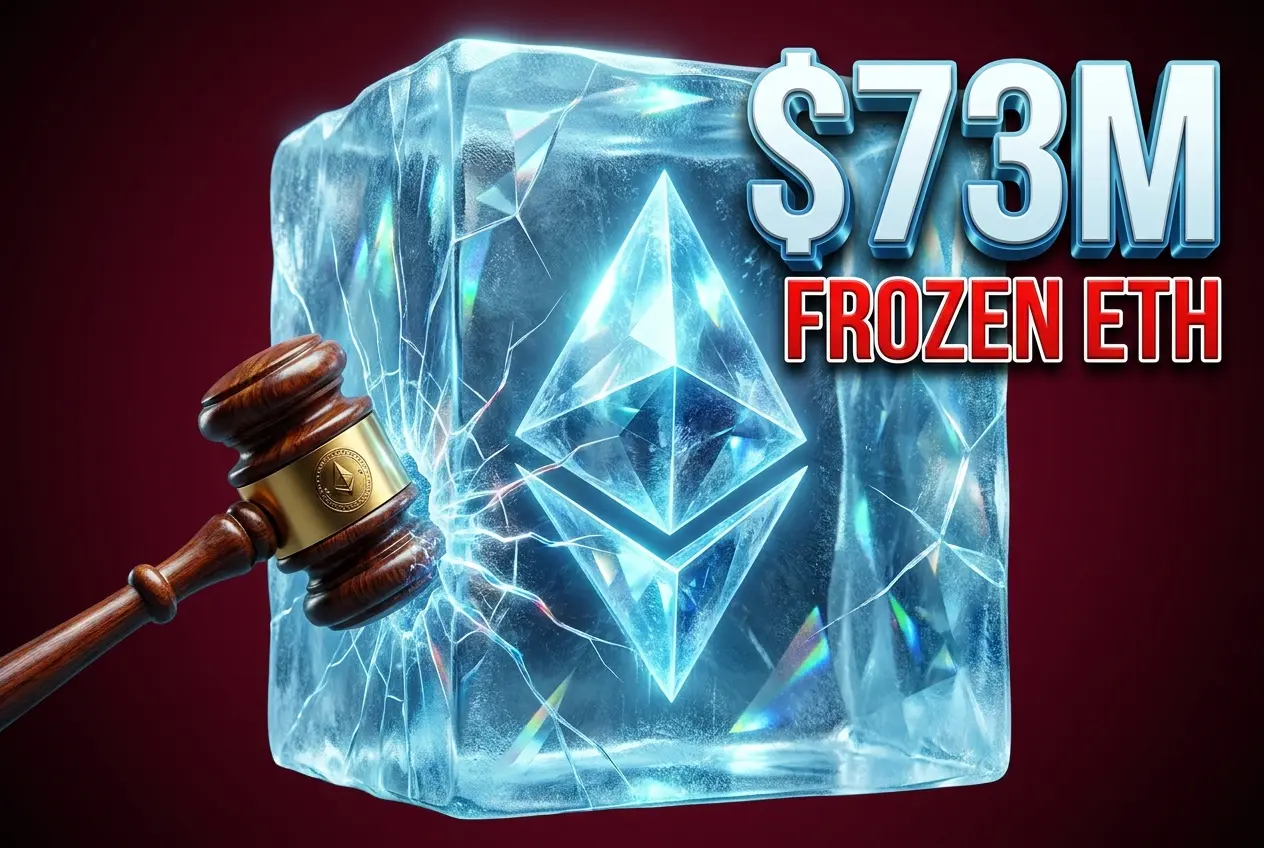
A federal judge in Manhattan walks into the strangest legal fight DeFi has produced. On the docket today: 30,766 ETH frozen on Arbitrum, a $292 million April hack tied to the Lazarus Group, and a New York law firm trying to redirect the recovered funds toward $877 million in unpaid terrorism judgments against North Korea.
The legal twist drives the case. Lawyers from Gerstein Harrow LLP have abandoned the word “theft” entirely. Their filing recasts the Kelp DAO incident as a credit fraud, an unsecured loan that the borrower walked away from. Under U.S. property doctrine, fraudulently obtained assets briefly belong to the fraudster, which would make the disputed ETH attachable as North Korean property under Section 201 of the Terrorism Risk Insurance Act.
Aave LLC, the protocol whose users actually lost the money, calls that interpretation legally and morally backward. The Southern District of New York hears both sides today.
Inside Aave’s Emergency Bid To Vacate The Freeze
Aave moved fast on Monday. The protocol filed an emergency motion in the Southern District of New York asking the court to lift the May 1 restraining order and release the 30,766 ETH back to the recovery fund. If the court keeps the freeze in place, Aave wants the plaintiffs to post a $300 million bond, roughly four times the disputed value.
The legal pitch is plain: stolen property is not the thief’s to keep, even briefly, and so cannot be attached against the thief’s debts. Anything else, Aave argues, hands hackers a fleeting form of legal title that no other asset class recognizes.
“A thief does not own what they have stolen. These funds belong to the users from whom they were taken, and no one else,” said Stani Kulechov, founder of Aave.
Gerstein Harrow’s plaintiffs anticipated that response. Their filing reframes April 18 as a defaulted loan rather than a robbery. The attacker minted unbacked rsETH, posted it as collateral, and borrowed real ETH from Aave’s lending pool. When liquidation kicked in, the rsETH was worthless, so the funds had transferred ownership before the contracts could claw them back.
Aave’s filing also pushes back on a second plaintiff argument that the protocol’s terms of use give it custody-like control over user assets. Calling that reading “catastrophic,” Aave warns that any DeFi platform forced to absorb hack losses on its balance sheet would freeze new lending for months.
The plaintiffs’ counter is sharper. Because Aave’s terms describe the protocol as one that “owns, holds, and controls” client assets, the lawyers argue Aave is in no position to deny that the borrowed ETH ever became North Korean property in the first place.
Three Court Judgments Worth $877 Million Behind The Claim
The plaintiffs Gerstein Harrow represents are not crypto investors. They are families of terror victims with default judgments against Pyongyang that, on paper, total more than $877 million before interest. The largest piece traces back to the 1972 Lod Airport massacre. The smallest involves a Hezbollah rocket attack. The highest-profile names belong to the D.C. Circuit accountability ruling for Reverend Kim Dong-shik, abducted by North Korean agents in 2000 and presumed killed in a kwan-li-so labor camp.
Each case relies on the Foreign Sovereign Immunities Act’s terrorism exception, the same statutory hook that produced the D.C. Circuit ruling in Han Kim v. Democratic People’s Republic of Korea. TRIA Section 201 then lets those plaintiffs reach the blocked assets of state sponsors of terrorism. The novelty is that no creditor has tried to use the doctrine on freshly stolen, on-chain ETH before.
| Case | Plaintiffs | Damages | Forum |
|---|---|---|---|
| Calderon-Cardona v. DPRK | Families of 1972 Lod Airport massacre | ~$378 million | D.P.R., 2010 |
| Kim v. DPRK | Family of Rev. Kim Dong-shik | ~$330 million | D.D.C., 2015 |
| Kaplan v. DPRK | Hezbollah rocket-attack victims | ~$169 million | D.D.C. |
DeFi United Is Already Sitting On Four Times The Frozen Amount
The frozen ETH is, financially, almost beside the point. The DeFi United relief coalition has gathered more than $327 million in pledges since April 18. That total is roughly four times the dollar value of the disputed 30,766 ETH. The freeze is symbolic. The blast radius is not.
The pledge ledger so far:
- 30,000 ETH from Mantle Network, originally structured as a low-interest loan into Aave’s liquidity pool
- 30,000 ETH from Consensys and Joseph Lubin, the single largest equity-style commitment
- 25,000 ETH proposed from Aave’s own DAO Treasury, worth about $58 million at current prices
- 10,000 ETH from LayerZero, the company at the center of the technical blame fight
- 5,000 ETH from Stani Kulechov personally, written from his own wallet rather than a corporate Treasury
A separate Snapshot governance vote runs to a May 7 deadline, with 99% of voting Arbitrum DAO holders already approving release of the frozen ETH into the relief fund. The court order, if it survives the Wednesday hearing, sterilizes that vote no matter how Arbitrum’s holders feel about it.
Gerstein Harrow’s counter is brutal. The plaintiffs’ filing argues that rsETH holders are not in financial distress because the rescue fund already covers losses several times over. From the law firm’s vantage, the 30,766 ETH is found money for victims that the U.S. government has been trying, and failing, to make whole for decades.
The 1-of-1 DVN Fight That Started It All
The April 18 hack was an off-chain compromise that exposed a configuration choice the rest of the industry has been quietly making for years. According to LayerZero’s official KelpDAO incident statement, attackers tied to North Korea’s TraderTraitor unit accessed the RPC node list, compromised two independent op-geth nodes, and swapped the binaries to forge cross-chain attestations. The attack passed every observability check.
The blame fight is over who chose the single-verifier setup that made the forgery possible. LayerZero’s April 19 postmortem framed the rsETH bridge as running a “1-of-1 DVN” configuration that contradicted the company’s own multi-DVN recommendation. Kelp says LayerZero personnel reviewed the setup across roughly two and a half years and eight integration discussions without flagging it. A Chainalysis incident analysis showed 47% of about 2,665 active LayerZero OApp contracts ran the same single-verifier setup over a 90-day window ending April 22, with more than $4.5 billion in market value exposed to identical risk.
LayerZero co-founder and chief executive Bryan Pellegrino disputes Kelp’s read of the integration logs. Posting on X after the postmortem dropped, Pellegrino said “many of Kelp’s claims are simply false,” arguing that the rsETH bridge was originally configured with a LayerZero Labs and Google multi-DVN default and that Kelp later switched to single-validator mode on its own initiative.
Kelp announced the obvious next step on May 5. The protocol is migrating rsETH’s cross-chain plumbing off LayerZero entirely and onto Chainlink’s Cross-Chain Interoperability Protocol, which requires multiple independent validator approvals per message. ZRO, LayerZero’s token, sold off on the news.
Why The Hearing Reaches Beyond One DAO
If the credit-fraud reframe wins on Wednesday, every recovery process in DeFi gets harder. State-sponsored attackers would gain a perverse legal status, briefly owning what they take, and any creditor with a U.S. judgment against the same state could race to attach those funds before users get them back. The blueprint would fit ransomware groups linked to Iran or Russia just as cleanly.
If Aave wins, U.S. courts effectively endorse the position that on-chain protocols can claw back attacker collateral on behalf of users without a parallel criminal forfeiture process. That outcome strengthens DeFi self-defense, but it also tells terror-judgment plaintiffs that future state-sponsored crypto thefts are off-limits as a satisfaction source. Today’s hearing answers the first half of that question. The Snapshot vote, scheduled to close May 7, may answer the second.
Frequently Asked Questions
When Does The Court Rule On The Kelp DAO ETH Freeze?
Arguments are scheduled for today, May 6, in the Southern District of New York. The hearing covers Aave’s emergency motion to vacate the May 1 restraining notice and the plaintiffs’ Terrorism Risk Insurance Act claim against the 30,766 ETH. A ruling could come from the bench or take a few days. Either way, the May 7 Snapshot vote on releasing the funds runs into the result.
Is rsETH Still Safe To Hold?
The underlying restaking position is intact. The April 18 hack damaged the cross-chain mint mechanism, not the EigenLayer staking layer, and DeFi United pledges already exceed the gap by roughly four times. Kelp is moving rsETH’s bridge to Chainlink’s CCIP, which closes the single-verifier path the attacker used. Holders should track the Kelp DAO governance forum for the formal redemption schedule.
Can U.S. Courts Force A DAO To Hand Over Crypto?
Sometimes, yes. The Arbitrum Security Council, a small multisig of named individuals, holds the keys to the frozen funds. That makes Arbitrum subject to court process the same way any custodian would be, regardless of how decentralized the underlying voting layer feels. The May 6 ruling will set early precedent for how federal courts treat governance-controlled assets in future enforcement actions.
What Is The Terrorism Risk Insurance Act And Why Does It Matter Here?
TRIA Section 201, passed after September 11, lets terrorism victims with U.S. court judgments attach blocked assets of state sponsors of terrorism to satisfy those judgments. North Korea is on the State Department’s sponsor list, so any funds legally classified as DPRK property are reachable. The crypto twist is whether ETH briefly held by a North Korean attacker counts as DPRK property under the statute.
The hearing decides who controls the largest single recovery pot in DeFi history. The rulings that follow it decide something bigger.
Federal judges are about to write the rulebook for how stolen on-chain assets get classified, who has standing to claim them, and whether decentralized governance can keep its promises when a U.S. district court says otherwise.
Disclaimer: This article reports on an active federal court proceeding and a related crypto recovery effort and does not constitute legal or investment advice. Cryptocurrency assets, including liquid restaking tokens such as rsETH, carry significant smart-contract, counterparty, and regulatory risk. Readers considering any related action should consult a licensed attorney and a qualified financial advisor. Figures, judgments, and procedural details are accurate as of May 6, 2026, and are subject to change.
CRYPTO
DeFi Loses $14 Billion as North Korea Hits Kelp DAO and Drift
Roughly $14 billion has walked out of decentralized finance in three weeks, and the exit doors weren’t poorly written smart contracts. They were the cross-chain messaging layers that stitch one blockchain to another.
Two state-linked thefts triggered the bleed. North Korea’s Lazarus Group drained $290 million from KelpDAO’s bridge on April 18, then borrowed $230 million from Aave against the stolen tokens. Three weeks earlier, the same group siphoned $285 million from Drift Protocol on Solana. DefiLlama’s DeFi protocol flow dashboard tracks the cumulative outflow at close to $14 billion.
The $14 Billion Bleed
DeFi’s total value locked fell from roughly $99 billion to $85 billion in the 48 hours after the Kelp incident, before continuing to drift lower over the following two weeks. The Financial Times put the cumulative outflow at close to $14 billion as of May 6.
Aave absorbed the worst of it. The lender’s deposits collapsed from $26.4 billion on April 18 to about $20 billion that weekend, a 33% drop in 72 hours that Chainalysis’s KelpDAO bridge exploit post-mortem called one of the steepest single-protocol contractions in recent DeFi history.
The numbers tell the panic clearly.
- $14 billion: total DeFi TVL drained between April 18 and May 6, per DefiLlama.
- 33%: Aave’s three-day deposit decline.
- 14%: Aave V3 stablecoin borrow rate at peak, up from 3.4% before the hack.
- $5.1 billion: stablecoins frozen under withdrawal constraints during the worst hours.
- $86 billion: the market’s current size, down from a 2021 peak of roughly $180 billion.

How The Kelp Bridge Broke Aave
The Kelp DAO incident was a different kind of hack. Past DeFi exploits chased private keys or smart contract bugs. This one targeted the connective tissue between chains.
“Past hacks were due to stolen keys or bugs in smart contracts. This one was convincing the vault the thief was actually the owner,” said Ryan Rugg, global head of digital assets at Citi Treasury and Trade Solutions’ digital assets unit, on the From the Block podcast.
One Verifier, Two Compromised Nodes
LayerZero’s post-incident review traced the breach to a 1-of-1 Decentralized Verifier Network setup. Kelp had run its bridge through a single verifier with two RPC nodes feeding it transaction data. Lazarus owned both.
The attackers planted malware that fed false data only to LayerZero’s verifier while returning honest responses to monitoring tools. They then DDoS-ed the legitimate RPC endpoints, forcing the verifier to lean on the poisoned ones. The bridge signed off on a fabricated mint, releasing 116,500 unbacked rsETH worth roughly $292 million. The malware self-destructed before forensics could grab it.
From there, the stolen rsETH flowed straight into Aave V3 as collateral, and the attackers borrowed about 82,600 ETH against it. That left Aave carrying roughly $196 million in bad debt concentrated in a single rsETH-wETH pair, freezing wETH markets across Ethereum, Arbitrum, Base, Mantle, and Linea.
Drift’s April Fool’s Day Drain
The KelpDAO hack didn’t happen in a vacuum. On April 1, attackers drained $285 million from Drift Protocol, the largest perpetual futures venue on Solana. Elliptic’s analysis of the Drift Protocol exploit attributed it to a DPRK-linked group identified by Mandiant.
Drift’s exploit took a social path rather than a cryptographic one. Hackers tricked multisig signers into pre-signing hidden authorizations, then exploited a zero-timelock Security Council migration to gain admin rights. They created a fake collateral token called CVT, wash-traded it to a $1 price on Raydium, fed that price through an oracle they controlled, and borrowed real assets against worthless paper.
Where The Money Went, Not Just Where It Left
Most of the withdrawn capital stayed inside crypto. It just changed addresses.
SparkLend, a stablecoin-only lender, saw deposits jump from $1.89 billion to $3.3 billion in the week after the Kelp incident, an inflow of roughly $1.4 billion. Money market protocols with conservative collateral lists pulled in similar amounts. The pattern looks less like an industry exodus than an internal flight to quality.
| Incident | Date | Amount | Method |
|---|---|---|---|
| Drift Protocol | April 1, 2026 | $285M | Multisig social engineering, fake collateral token |
| KelpDAO bridge | April 18, 2026 | $290M | Compromised LayerZero RPC nodes |
| Aave (knock-on) | April 18 to 20 | $230M borrowed | Stolen rsETH used as collateral |
TRM Labs’ 2026 North Korea crypto theft report calculates that these two attacks alone account for 76% of all stolen crypto value in 2026 so far. Two incidents. One country. Three quarters of the year’s losses.
That concentration matters because it changes the threat model. Industry losses don’t come from a long tail of opportunistic thieves. They come from one professional adversary with state backing, multiyear planning windows, and recurring access to compromised infrastructure.
Why Wall Street’s DeFi Pilots Just Got Harder
The institutional pitch for DeFi has rested on transparency and code-as-law guarantees. The Kelp incident punched a hole through both.
The fallout is severe. The hacks undermine arguments that crypto offers a safer and more transparent alternative to legacy financial rails.
That’s Lucas Tcheyan, research associate at Galaxy, speaking to the Financial Times. His read lands at a delicate moment. Traditional banks have spent the past year piloting tokenized deposits and on-chain settlement rails, and the case for moving real balance sheet onto public chains depends on the rails being safer than the legacy ones.
Rugg, on the same podcast, was blunter on timing. “Does this delay the institutional adoption of DeFi? Maybe. It is going to take some of the confidence out of the market.” Any institutional commitment, she added, will hinge on whether firms can layer proper redundancy and security at every layer where the trust resides, a standard the 1-of-1 verifier setup at Kelp obviously didn’t meet.
The Manhattan Court Fight Over $71 Million
The story didn’t end with the theft. On May 4, Aave filed an emergency motion in the Southern District of New York seeking to vacate a restraining order that had immobilized roughly $71 million in Ethereum tied to the recovery effort. The order had been served on Arbitrum DAO under enforcement actions in older cases involving North Korean assets.
Aave’s filing argues the freeze rests on unverified online attribution and that no court has formally identified the attacker or established a North Korean legal interest in the recovered tokens. The motion sits in front of a federal judge as of this week, with the outcome likely to set the operating template for how DeFi protocols recover stolen funds caught in sanctions enforcement.
Frequently Asked Questions
Is My Aave Deposit Still Safe?
Aave’s core stablecoin and ETH markets remain operational, but the protocol froze the rsETH market on April 19 and temporarily suspended wETH deposits across Ethereum, Arbitrum, Base, Mantle, and Linea. Check the Aave risk dashboard at app.aave.com for the current status of your specific market. The roughly $196 million in bad debt is concentrated in the rsETH-wETH pair, not in the broader USDC or USDT pools.
What Is rsETH and Why Did It Trigger So Much Damage?
rsETH is a liquid restaking token issued by KelpDAO that represents staked ETH plus restaking rewards on EigenLayer. Nine major lending protocols accepted it as collateral, including Aave, Compound, and Euler. When Lazarus minted 116,500 unbacked rsETH through the bridge exploit, the token’s peg broke, forcing every protocol holding rsETH collateral to reprice it at once. That cascading repricing drove most of the $14 billion outflow.
Can Any of the Stolen Funds Be Recovered?
Some can. About $71 million in Ethereum has been frozen under the New York court order, and Drift Protocol has announced a recovery plan funded by protocol revenue, partner contributions, and Tether support that could reach $151 million toward its $295.4 million in user losses. Recovery tokens pegged to verified user balances are the operational path. Full make-whole recovery depends on coordinated freezes by exchanges and stablecoin issuers.
Should I Move My Crypto Out of DeFi Entirely?
That depends on what you hold. The capital that left Aave largely moved to stablecoin-only lenders like SparkLend, not to centralized exchanges or fiat. If your concern is bridge risk specifically, audit which lending protocol holds your collateral and whether that collateral is a wrapped or restaked asset that depends on a cross-chain mint. Native ETH on Aave behaves differently from rsETH on Aave. Treat them differently.
Why Are North Korean Hackers So Successful at This?
The Lazarus Group runs full-time professional operations with multiyear timelines, often planting agents inside crypto firms or compromising infrastructure providers months before striking. The Drift hack used social engineering against multisig signers. The Kelp hack used long-running RPC node compromise. TRM Labs attributes 76% of all 2026 crypto theft value to two Lazarus operations, a concentration that reflects sustained state investment, not lucky one-off opportunism.
The next test for DeFi isn’t a fix to the LayerZero verifier set or an emergency Aave parameter change. It’s whether the protocols that survive this round can convince a Citi or a JPMorgan that their bridges are worth the risk. The dollars that left Aave found a home in SparkLend. The institutional dollars that never arrived are still sitting on the sidelines, watching the Manhattan courtroom.
Disclaimer: This article reports on publicly disclosed cyberattacks and DeFi protocol movements and does not constitute investment advice. Cryptocurrency and DeFi assets carry significant risk including the potential for total loss from exploits, smart contract failures, and bridge compromises. Readers should consult a licensed financial advisor before making any decisions about their digital asset holdings. All figures, TVL data, and protocol statuses cited reflect the publication date and may change rapidly.
CRYPTO
Equity Perpetuals Set To Eclipse Crypto Perps Within Three Years
Mike Harvey thinks stock perpetual futures will overtake crypto perps within three years. The Galaxy Digital head of franchise trading made the call this week at Consensus Miami 2026 during a panel on digital asset derivatives, alongside Krista Lynch of Grayscale and Griffin Sears of FalconX. All three argued that the line between crypto and traditional finance has effectively dissolved, that perpetuals built originally for crypto are now the natural rail for stocks, commodities and indices, and that the regulatory groundwork is much further along than most of the buy side realizes.
The panel’s title was “Digital Asset Derivatives: Building Ecosystems and Establishing Opportunities.” Its substance was bigger than that. Three executives from very different market lanes converged on a single forecast: equity perps go mainstream first, billion-dollar IPOs go onchain next, and the infrastructure carrying that shift is already running daily volume in the trillions.
The Numbers Already Backing The Forecast
The math gives Harvey’s forecast more support than a typical conference soundbite gets. Derivatives now make up more than 70% of global crypto trading by early 2026, with perpetual futures leading the mix. Monthly volumes routinely cross the trillion-dollar mark. Binance alone cleared $13.6 trillion in perpetual futures volume in a single month earlier this year, according to The Block’s monthly perpetual volume tracking for Hyperliquid versus Binance.
What changed in 2026 is what’s listed on those rails. Stock and commodity perps weren’t a meaningful product line a year ago. Now they’re the fastest-growing segment in derivatives.
Across Q1 2026, weekly tradfi perp volume jumped from $525.8 million to $30.7 billion. That’s a 5,757% increase in three months. Block Scholes called 2026 “the year of RWA perps” in its Block Scholes premium research note on real-world-asset perpetuals, citing the same vertical leap. Stock perpetual swaps alone grew 908% over the quarter to roughly $4.9 billion in weekly volume.
Binance currently lists more than ten tradfi perp contracts spanning metals and U.S. equities, including Tesla, Intel, Robinhood, Strategy, Amazon, Circle, Coinbase and Palantir. Hyperliquid hosts more than fifty tradfi perps via its HIP-3 partner trade.xyz, including silver, gold, oil and a series of equity-index baskets.
Harvey expects the segment to keep compounding because the operational plumbing already exists. “As dealers, we’re the glue that holds those markets together. We have to have the ability to move natively between an offshore exchange, an onshore exchange, futures, ETFs,” he said.
- 5,757% growth in weekly tradfi perpetual volume across Q1 2026
- $30.7 billion weekly tradfi perp volume by end of Q1, up from $525.8 million
- 70%+ derivatives share of total global crypto trading by early 2026
- $2.01 trillion in Q1 onchain perpetual volume across the top ten DEXs

How The SEC Quietly Cleared The Runway
The regulatory base for this convergence sat down in September 2025, and Lynch said most market participants still underestimate how much it changed. On September 17, 2025, the U.S. Securities and Exchange Commission approved generic listing standards for commodity-based trust shares, including digital assets, per the SEC press release on generic listing standards for commodity-based trust shares. Exchanges including NYSE Arca, Nasdaq and Cboe BZX can now list eligible spot crypto ETPs without filing a Section 19(b) rule change for each one. Approval timelines compressed from many months to roughly 60 to 75 days.
Lynch said the standards quietly created a direct link between derivatives and spot eligibility. Two of the three approved paths to spot ETF qualification run through derivative markets. One requires a CFTC-regulated futures contract on the underlying asset that has been actively traded for at least six months. The other allows spot eligibility when an existing ETF already delivers meaningful exposure through swaps or similar instruments.
“Having a derivative on an underlying crypto token is kind of indicative that it should also be available in the spot format,” Lynch said. The path she called “a little bit hairier” is the swaps route, but its existence means a derivatives market on a token can pull a spot ETF through behind it.
Cross-Margining Changes The Capital Math
Sears of FalconX kept returning to one specific structural feature. Cross-margining, where a trader uses different asset classes as collateral against each other inside a single account, is what makes the convergence operationally interesting rather than just thematic.
“What’s really powerful for all of the participants in the space is going to be the cross-margining potential that RWA can unlock,” Sears said. “And I think that benefits the industry as a whole.”
Tokenized real-world assets, excluding stablecoins, sit between $19 billion and $36 billion in early 2026, per RWA.xyz’s analytics dashboard for tokenized real-world assets. Six asset classes have crossed the $1 billion threshold. Tokenized U.S. Treasuries lead with onchain value of $9 to $11 billion.
That collateral pool changes the math for traders. BlackRock’s BUIDL fund, integrated by Securitize into the collateral systems at Binance and Deribit, lets institutions post tokenized T-bills as margin. The yield on the T-bills offsets a portion of the funding rate on a long perpetual position. If long-funding costs 10% annualized and the collateral earns 5% risk-free, effective borrowing cost roughly halves.
Crypto Is Pulling TradFi Onto Its Rails
Most coverage of this convergence frames it as Wall Street swallowing crypto. The panel rejected that framing flatly. Harvey put it the other way around: TradFi is being pulled onto crypto rails because the rails are better.
It’s crypto actually bringing the TradFi rails on chain and forcing all these traditional exchanges to innovate up to the level of where crypto derivatives are.
Harvey said as much during his panel remarks, pointing to 24/7 settlement and continuous price discovery as the features traditional venues have publicly committed to copy. NYSE, Nasdaq and CME have each signaled plans to extend trading hours toward continuous markets. None has matched the always-on settlement crypto exchanges have run since 2017. The catch-up sets the direction of innovation.
What IBIT Options Already Prove
The IBIT options market is the cleanest worked example of how fast crypto derivatives can scale into mainstream products. BlackRock’s iShares Bitcoin Trust ETF launched options in November 2024. By December 2025 they had cracked the U.S. top 10 by open interest with 7.7 million active contracts.
By April 2026, IBIT options open interest hit $27.61 billion and briefly overtook Deribit, the crypto-native venue running since 2016. Sears called it out specifically. “In under two years, options on BlackRock’s spot bitcoin ETF became a top-five ETF globally by options volume,” he said.
The pattern matters because IBIT options behaved exactly the way Harvey is forecasting equity perps will behave. A regulated derivative product on a previously offshore-only asset class scaled past the original venue inside 24 months.
| Metric | IBIT Options | Deribit BTC Options |
|---|---|---|
| Launch | November 2024 | 2016 |
| Active contracts (peak 2026) | 7.7 million | Sub-7 million |
| Open interest (April 2026) | $27.61 billion | Briefly trailed IBIT |
| Primary regulator | SEC, OCC | Dubai VARA |
| Settlement window | U.S. trading hours | 24/7 |
Hyperliquid offers another data point. Its 30-day perpetual volume runs above $180 billion, accounting for roughly 70% of all on-chain perpetual futures volume across every chain. The exchange’s growth caught Galaxy’s attention enough that hedging activity on Hyperliquid was cited in the firm’s Q1 2026 commentary.
Kraken made the most concrete move toward equity perps. The exchange listed regulated tokenized-equity perpetual futures on February 24, 2026 via xStocks, per Kraken’s announcement of the world’s first regulated tokenized-equity perpetual futures. Initial listings cover the S&P 500, Nasdaq 100, Apple, Nvidia, Tesla and SPDR’s GLD gold ETF. Leverage runs to 20x. The product is open to non-U.S. clients across more than 110 countries.
Direct IPOs Onchain Are The Next Frontier
Sears closed his panel remarks with a sharper prediction than even Harvey’s. He expects a traditional finance asset to crack the top five by volume on a crypto exchange. Then he went further.
“Not only will the trading volume grow, but I think we’re also going to see direct IPOs, direct listings of equities on chain instead of traditional venues,” Sears said. “And that’s going to be an extremely exciting moment to see billion-dollar IPOs happen completely onchain.”
The pre-conditions are already arriving. Securitize, Jump Trading Group and Jupiter announced fully onchain regulated trading for tokenized equities the day before Consensus Miami opened. Galaxy holds a UK FCA derivatives license that lets it offer hedging products tied to tokenized real-world assets. The Consensus Miami 2026 agenda set aside an entire institutional summit track to discuss exactly this transition.
Frequently Asked Questions
Can U.S. Traders Buy Tokenized Equity Perps Yet?
Not on U.S.-regulated exchanges. Kraken’s xStocks perpetuals launched February 24, 2026 for non-U.S. clients across more than 110 countries, but U.S. residents are blocked. Domestic access waits on either CFTC product approval or new SEC pathways. For now, U.S. traders looking at equity-perp data are limited to watching offshore venues like Binance and Hyperliquid for indicative pricing through their public dashboards.
How Are Equity Perps Different From Regular Stock Trading?
Equity perpetuals trade 24/7, never expire and offer up to 20x leverage on Kraken’s xStocks contracts. Regular stocks trade only during exchange hours, settle on T+1 and require separate margin or options approvals for similar leverage. Perps also use a funding-rate mechanism to keep their price tracking the underlying, which cash equities don’t have. The exposure looks similar, the wrapper is fundamentally different.
When Will The First Onchain IPO Happen?
No firm date yet, but Sears predicted billion-dollar onchain IPOs are coming. Securitize, Jump Trading and Jupiter already launched fully onchain regulated trading for tokenized equities on May 5, 2026, the infrastructure layer a direct listing would need. Watch late 2026 or 2027 if regulators stay accommodative. The first attempt will likely be a smaller crypto-native firm before any billion-dollar listing tests the model.
Is It Legal To Trade Stock Perps On Crypto Exchanges?
It depends on your jurisdiction. In the United Kingdom, the UAE, Cayman Islands and Switzerland, regulated venues now offer them through licensed entities. The U.S., Canada and Singapore restrict retail access pending further rulemaking. The CFTC and SEC haven’t cleared equity perpetuals for U.S. retail. Verify your venue’s license against your local regulator before trading, and don’t assume offshore access counts as U.S. compliance.
The convergence story has been told for years, mostly as theory. The Q1 2026 numbers are the first stretch where the volume curve actually does what the forecasts said it would. Harvey gave equity perps three years to overtake crypto perps. Sears gave the broader shift less.
Whether the SEC’s generic listing standards survive the next political cycle is a separate question. So is whether U.S. retail traders ever get the same access non-U.S. clients already have on Kraken’s xStocks. The infrastructure is built. The volume is following. The remaining variables are policy and timing.
Disclaimer: This article reports on industry forecasts and trading volume data and does not constitute investment advice. Perpetual futures, tokenized equities and crypto derivatives carry significant risk, including total loss of capital, particularly when traded with leverage. Regulatory treatment varies sharply by jurisdiction, and access on offshore venues may not be permitted in your region. Readers should consult a licensed financial advisor before trading any derivative product. Figures cited reflect publicly available data as of May 2026 and may change without notice.
CRYPTO
Banks Reject CLARITY Stablecoin Deal as Voters Sour on Crypto
Five of America’s biggest bank lobbies told the U.S. Senate on Monday to redo the math. Their joint statement called the new stablecoin compromise inside the CLARITY Act a “shortfall.” The crypto sector is celebrating it anyway.
The deal from Senators Thom Tillis and Angela Alsobrooks, released May 1, lets crypto platforms pay “activity-based” rewards on stablecoins while blocking deposit-style yield. Polymarket odds of CLARITY passing in 2026 jumped from 42% on April 25 to roughly 69% nine days later. Voter polls released the same week say the public still doesn’t trust crypto firms with a dollar.
Inside the Tillis-Alsobrooks Stablecoin Deal
The compromise text, first reported by Punchbowl News on May 1, redraws the line between forbidden yield and permitted rewards. Passive holding of a stablecoin can’t earn anything that looks “economically or functionally equivalent” to interest on a bank deposit. Activities tied to actual usage can.
Federal agencies and the Treasury secretary will get one year after enactment to spell out the boundaries. Regulators also gain discretion to chase what the draft calls “circumvention or evasion” of the prohibition.
Examples of permitted reward triggers under the draft language:
- Transaction, payment, transfer, conversion, remittance, or settlement activity
- Liquidity provision for market-making
- Participation in governance, validation, or staking
- Loyalty, promotional, subscription, or incentive programs
Coinbase chief policy officer Faryar Shirzad called the deal protection of “the ability for Americans to earn rewards, based on real usage of crypto platforms and networks.” CEO Brian Armstrong replied “Mark it up.” Senate Banking chair Tim Scott told Fox Business’ Mornings with Maria his panel was “nearing consensus” and pushing for a bipartisan markup as soon as the week of May 11. Polymarket’s 2026 CLARITY signing market reflects the optimism. Wells Fargo equity research this week called Circle the most underappreciated winner of the new stablecoin order, a sign not every bank is on the lobby’s side.

Why Five Bank Lobbies Walked Out
The American Bankers Association, Bank Policy Institute, Consumer Bankers Association, Financial Services Forum and Independent Community Bankers of America took 72 hours to respond. Their May 4 joint banking trades statement praised Tillis and Alsobrooks for the policy goal. Then it tore into the language.
The lobbies said the draft lets third-party platforms reward “membership” participation as long as the payout doesn’t resemble bank interest, calling that “a significant loophole.” They argued that pegging rewards to “duration, balance, and tenure” would directly incentivize idle holding, the exact behavior the prohibition is meant to deter. Their estimate: yield-bearing stablecoins could shrink consumer, small-business and farm lending by a fifth or more. Crypto in America reporter Eleanor Terrett added another twist on May 5, writing that larger banks, not the community lenders originally flagged as ringleaders, are now driving the harder pushback.
Tillis posted the same day that the compromise was “a substantially improved, consensus-based product” and said he would “respectfully agree to disagree.” White House crypto adviser Patrick Witt was blunter. “Banks sure have a funny way of defining ‘compromise,'” he wrote on X.
The DeFi and Ethics Walls Still Standing
Stablecoin yield isn’t the only fight inside CLARITY. The Blockchain Regulatory Certainty Act of 2026 from Senators Cynthia Lummis and Ron Wyden would shield non-custodial DeFi developers from money-transmitter liability under Section 1960 of the federal criminal code. Crypto operators love it. Senate Judiciary Chair Chuck Grassley, Senator Dick Durbin and several federal law enforcement bodies do not. Witt and Lummis are now negotiating language meant to satisfy Grassley’s prosecution concerns, with Witt publicly predicting a fix “very soon.”
Then there’s the ethics fight. Banking Democrats and Tillis want CLARITY to bar elected officials and their families from profiting on crypto ventures they can clear regulatory paths for. A Bloomberg analysis of $TRUMP memecoin top holders found wallets likely controlled by non-U.S. residents accounted for 76% of $TRUMP purchases and 72% of WLFI sales, exactly the profile of conflict Democrats are unlikely to swallow with the midterm map shaping in their favor.
Justin Sun’s Florida Counter-Punch
World Liberty Financial answered Justin Sun’s California fraud suit with a Florida defamation suit of its own. WLF announced the filing on May 4 in Miami-Dade County’s Eleventh Judicial Circuit Court, accusing the TRON network founder of running “a coordinated smear campaign” against the Trump-affiliated DeFi project.
The dispute traces back to last September, when WLF blacklisted wallets containing most of the $75 million in WLFI Sun acquired starting October 2024. Sun went public with his anger in April, calling the freeze function a “backdoor blacklisting” weapon. He sued WLF in California federal court on April 21.
WLF’s countersuit goes after the substance of Sun’s claims. The complaint alleges Sun made “straw purchases” of WLFI for undisclosed third parties, attempted short-selling before the freeze and ran a campaign of fake social-media bots to amplify what WLF calls his lies. CEO Zach Witkoff publicly described Sun’s California suit as “a desperate attempt to deflect attention from Sun’s own misconduct.”
Sun’s complaint was less restrained. Sections were redacted before public filing, but the visible portions allege WLF is on the brink of “collapse and potential insolvency” and that the project is using his frozen tokens as a “bargaining chip to extort Mr. Sun into providing additional capital.” His lawyers also targeted WLF co-founder Chase Herro, citing what they called Herro’s “lifelong pattern of fraud” and disputing residency claims relevant to federal income tax.
Sun on Monday dismissed WLF’s defamation suit as “a meritless PR stunt” and said he stands by his actions. Both sides now have powerful incentives to expose information neither side particularly wants exposed. That’s how courthouse fights tend to go.
The 5.9 Billion Token Question
Bloomberg reporter Olga Kharif broke last week that WLF authorized sales of an additional 5.9 billion WLFI tokens to undisclosed private buyers, on top of more than $550 million already raised through two public rounds. The transactions were not disclosed to existing investors. The Trump family receives 75% of the proceeds under the project’s token structure.
Kharif’s framing of the structural problem was the cleanest yet:
“What is unfolding has no precedent in American financial life. A sitting president’s family holds financial stakes in a live token project, one setting governance rules, directing treasury sales, collecting proceeds, while the people who signed up find themselves with limited options to exit.”
The exit problem is by design. On April 15, WLF passed a governance proposal locking 62 billion WLFI for two years with three-year vesting on top. Roughly 4.5 billion insider tokens will be burned. Holders who voted no were told their tokens would be “locked indefinitely under existing terms.” WLFI now trades below $0.07, down 54% year-to-date and roughly one-fifth of last September’s all-time high.
Voters Don’t Want What the PACs Are Selling
The Politico Numbers
The crypto sector’s policy push collides with public sentiment ranging from indifferent to hostile. A Politico/Public First survey of 2,035 U.S. adults released this past weekend found just 3% of respondents had heard of Fairshake, the dominant pro-crypto PAC backed by Coinbase, Ripple Labs and Andreessen Horowitz. The same survey explained why most crypto-funded ads avoid mentioning crypto.
The numbers are blunt:
- 53% wouldn’t go near buying or trading tokens, higher than the 40% who avoid the stock market.
- 47% trust banks more than crypto platforms; only 9% trust a crypto platform more than a bank.
- 45% say the risk of crypto investing isn’t worth the reward, against 25% who think it is.
- 61% say billionaires hold too much political influence in U.S. politics today.
Fairshake has spent $13.2 million this cycle and still holds over $193 million for the midterm stretch. Defend American Jobs, its GOP-focused offshoot, just reported nearly $514,000 backing Indiana Republican James Baird. Ripple co-founder Chris Larsen kicked $3.5 million to You Can Push Back, a new super PAC backing Alex Bores’ Democratic bid for Jerry Nadler’s House seat.
CoinDesk’s Trust Gap
A separate CoinDesk-commissioned survey of 1,000 registered voters delivered worse news for the industry. Sixty-five percent trust banks over crypto platforms for safekeeping. Sixty percent see crypto as a mostly negative force in the economy. Only 1% rank crypto as their top midterm concern, putting it at the bottom of the list.
62% have no faith in the Trump administration’s ability to oversee the sector, and 73% disapprove of senior officials having personal crypto business. Disapproval reaches 80% among Democrats and independents but still hits 59% inside the Republican base. Around 55% of respondents say they have little or no awareness of the Trump family’s actual commercial crypto stake, suggesting overall disapproval would climb if more details broke through.
Frequently Asked Questions
When Could the Senate Vote on the CLARITY Act?
Senate Banking Chair Tim Scott is targeting a markup the week of May 11, 2026, with a full floor vote possible in June or July. Polymarket users currently price the odds of CLARITY becoming law in 2026 around 69%. The schedule still depends on resolving the Section 1960 DeFi liability fight and unresolved ethics rules. Watch the Banking Committee’s markup notice for confirmation.
Will My Coinbase USDC Rewards Still Pay Out If CLARITY Passes?
Probably yes. The Tillis-Alsobrooks compromise specifically allows rewards for activity-based stablecoin use such as transactions, transfers and staking participation. Existing usage-tied rewards programs would survive. Rewards calculated as straight interest on idle balances would not. Federal regulators get one year after enactment to draw the final boundaries, so check your platform’s rewards terms for changes during that window.
What Is the Dispute Between World Liberty Financial and Justin Sun About?
WLF froze most of Sun’s $75 million in WLFI tokens in September 2024 after blacklisting wallets it now says were used for straw purchases and pre-freeze short selling. Sun sued in California federal court on April 21. WLF countersued in Florida state court on May 4 alleging defamation. Sun calls WLF’s filing a “meritless PR stunt.” Court dockets in both jurisdictions will publish updates.
How Big Is the Trump Family’s Crypto Stake?
The Trump family entity owns 60% of World Liberty Financial and is entitled to 75% of all token proceeds. The position was estimated above $5 billion at the WLFI launch, though much remains locked under vesting. A separate Bloomberg analysis found 76% of top $TRUMP memecoin holdings sit in foreign-controlled wallets. Senate Democrats want CLARITY to bar this profile of conflict, so watch the markup language.
The CLARITY Act will probably pass this year. Most of Washington wants it done, and crypto money has bought enough goodwill to make finishing it easier than killing it. Whether the law fixes the trust gap with voters is a different question, and this week’s polling says the answer is no.
-
APPS2 days agoGoogle’s Buried Page Reveals 500 Niche Websites Still Making Cash
-
AI2 days agoGPT-5.5 Catches Mythos On Cyber Tests, ARC Reveals Brittle Logic
-
CRYPTO2 days agoAndreessen Horowitz Bets $2.2B on Crypto’s Quiet Cycle
-
AI2 days agoSubquadratic Launches A 12-Million-Token AI Model And Says The Wall Is Gone
-
CRYPTO2 days agoWells Fargo Says Circle Is Crypto’s Underappreciated Winner
-
NEWS2 days agoMetalenz Polar ID Hides Face Unlock Under OLED Smartphone Screens
-
AI22 hours agoMonday.com Stakes Identity Pivot On AI Agents Before Earnings
-
NEWS2 days agoDAEMON Tools Installer Hack Plants Hidden Backdoor on PCs in 100+ Countries





