
NEWS
Samsung Galaxy Z Fold 8 Wide: Wider Screen, Missing Features

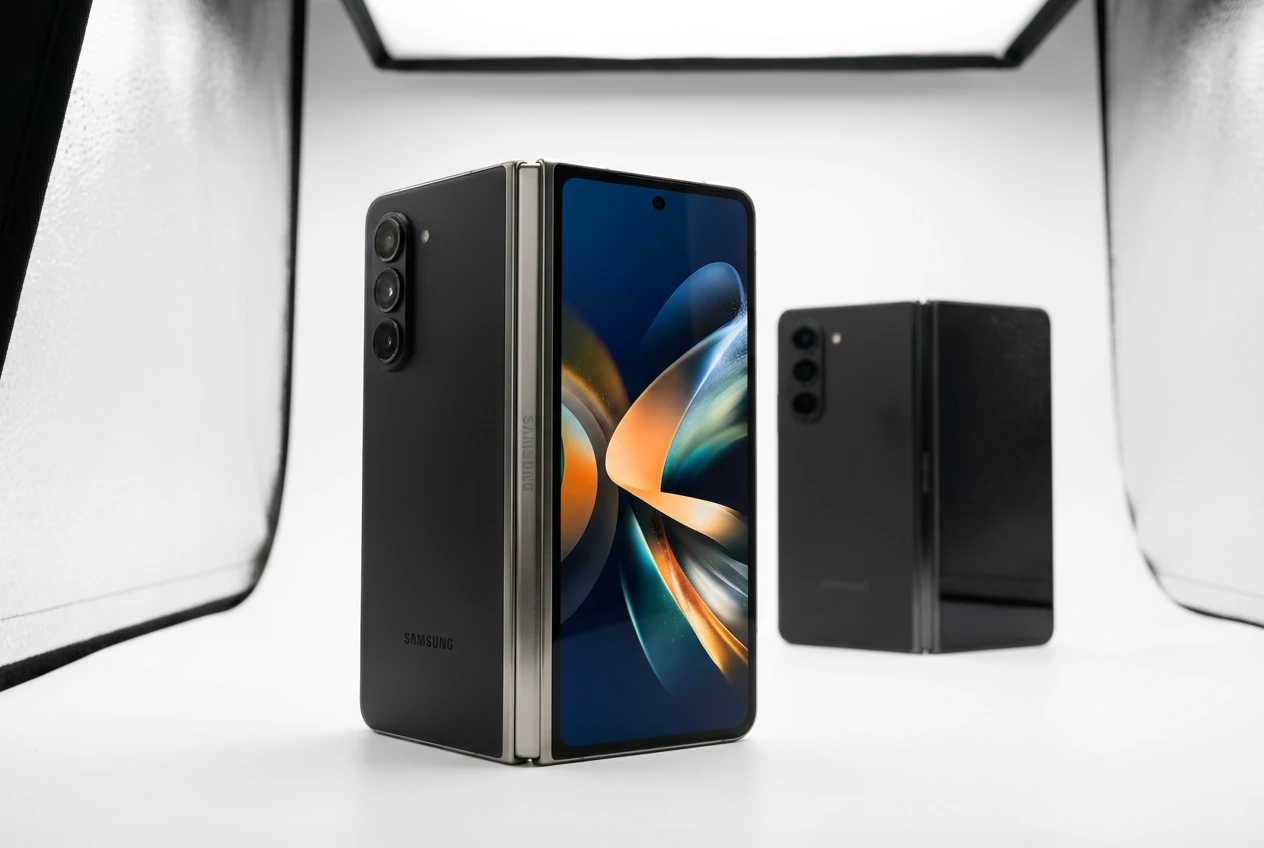
Samsung’s Galaxy Z Fold 8 Wide ships with a front display that finally answers the ergonomic complaint foldable users have voiced since 2019. The wider screen real estate transforms multitasking and media consumption, but the design trade-off introduces a taller, squarer form factor that splits opinion on one-handed usability. Meanwhile, the Z Fold 8 Ultra carries flagship branding without the S Pen or telephoto zoom hardware that defined Samsung’s premium tier for the past four years.
The Z Fold 8 Wide’s screen proportions mark a deliberate pivot from the narrow candy-bar displays that made earlier Fold models feel cramped in cover-screen mode. For users who run split-screen apps or consume widescreen video, the change delivers measurable utility. The question is whether the device’s increased height and width cross the threshold where portability suffers, particularly for users accustomed to slipping a phone into a jacket pocket or operating it one-handed on a commute.
The Wider Display Solves One Problem, Creates Another
Samsung’s decision to widen the Z Fold 8’s front display directly addresses feedback from reviewers and early adopters who found the Fold 6’s 23.1:9 aspect ratio too narrow for comfortable typing or app navigation. The Z Fold 8 Wide adopts a ratio closer to 20:9, adding horizontal space that makes the cover screen feel less like a compromise and more like a usable primary interface.
The benefit shows up immediately in productivity scenarios. Running two apps side-by-side on the cover screen no longer forces each app into a cramped vertical slice. Email clients, messaging apps, and note-taking tools gain breathing room. Video playback benefits as well, with less letterboxing on 16:9 content and a viewing experience that feels closer to a traditional smartphone.
The trade-off arrives when you hold the device. The Z Fold 8 Wide’s increased width pushes the phone’s footprint closer to that of Huawei’s Mate X Max, a device that prioritizes screen area over pocket-friendly dimensions. Users with smaller hands or those who rely on one-handed operation will notice the stretch required to reach the top corner of the display. Samsung’s software includes one-handed mode and gesture shortcuts, but these are workarounds rather than solutions to the fundamental ergonomic shift.
Compared to the Fold 6, the Z Fold 8 Wide is 4mm wider and 2mm taller when closed. That difference sounds minor on paper, but it compounds when the device is unfolded. The inner display’s aspect ratio shifts as well, moving from a near-square canvas to a slightly wider rectangle. For users who sketch, annotate documents, or use the Fold as a digital notebook, the loss of the squarer canvas could feel like a step backward, even as the cover screen improves.
Performance Gains Land Where Expected
Both the Z Fold 8 Wide and Z Fold 8 Ultra ship with Qualcomm’s Snapdragon 8 Gen 4 processor, paired with 12GB of RAM on the Wide and 16GB on the Ultra. Samsung’s One UI 9, built on Android 16, introduces refined multitasking gestures and improved app continuity when transitioning between the cover and inner displays. In benchmark tests shared by early reviewers, the Fold 8 Wide scores approximately 15% higher in multi-core performance compared to the Fold 6, a gain that translates to smoother app switching and faster rendering in photo editing workflows.
Wireless charging sees an upgrade as well. The Z Fold 8 Wide supports 25W wireless charging, up from 15W on the Fold 6, while the Ultra pushes to 30W. Wired charging remains capped at 45W for both models, a specification that lags behind competitors like Oppo’s Find N5, which offers 80W wired charging. For users who charge overnight, the difference is negligible. For those who rely on quick top-ups during the day, Samsung’s conservative charging speeds feel dated in 2026.
The devices are also thinner and lighter than their predecessors. The Z Fold 8 Wide measures 11.2mm thick when folded, down from 12.1mm on the Fold 6, and weighs 253 grams, a reduction of 10 grams. The Ultra shaves an additional 2mm and 5 grams. These changes make the phones easier to carry and less fatiguing during extended use, though the Fold 8 Wide remains heavier than most traditional flagship smartphones.
Battery Life Holds Steady
The Z Fold 8 Wide houses a 4,800mAh battery, while the Ultra steps up to 5,000mAh. In mixed-use testing, the Wide delivers approximately 6.5 hours of screen-on time with moderate multitasking and media consumption, a figure that aligns with the Fold 6’s endurance. The Ultra’s larger battery extends that to roughly 7 hours, though heavy users who lean on the inner display for video streaming or gaming will still need a midday charge.
Display Brightness Reaches New Highs
The Z Fold 8 Ultra’s AMOLED display peaks at 2,800 nits in high-brightness mode, a 20% increase over the Fold 6 and a meaningful improvement for outdoor visibility. The Wide’s display tops out at 2,500 nits, still a solid figure but less impressive when positioned against the Ultra’s premium tier. Both displays support a 120Hz adaptive refresh rate, with Samsung’s LTPO technology dynamically adjusting the rate based on content to conserve battery.
The Ultra Branding Doesn’t Match the Feature Set
Samsung’s decision to label the Z Fold 8 Ultra as “Ultra” invites comparison to the Galaxy S27 Ultra, a device that ships with a 200MP main camera, a 10x periscope telephoto lens, and S Pen support. The Z Fold 8 Ultra includes none of these. Its camera array consists of a 50MP main sensor, a 12MP ultrawide, and a 10MP telephoto with 3x optical zoom. The S Pen, a feature that defined the Note series and carried over to the S Ultra line, is absent from both the Wide and Ultra models.
For professionals who use the Fold as a digital notebook or annotate PDFs during meetings, the lack of S Pen support is a regression. Samsung offered S Pen compatibility on the Fold 3, Fold 4, and Fold 5, then quietly dropped it on the Fold 6. The Fold 8 continues that omission, signaling that Samsung views the stylus as a niche feature rather than a core productivity tool for foldables.
The camera hardware also falls short of Ultra expectations. The 10MP telephoto with 3x optical zoom is the same sensor Samsung used on the Fold 6, and it lags behind the S27 Ultra’s dual-telephoto setup, which offers both 3x and 10x optical zoom. For users who prioritize photography, the Z Fold 8 Ultra’s camera system feels more like a mid-tier offering than a flagship specification.
Samsung’s rationale for these omissions likely centers on the engineering constraints of a foldable form factor. Adding a periscope telephoto lens requires internal space that the Fold’s hinge mechanism and dual-battery design already consume. S Pen support demands a digitizer layer on the inner display, which adds thickness and complexity. These are real trade-offs, but they raise the question of whether the “Ultra” label sets expectations Samsung cannot meet within the foldable format.
Galaxy S27 Series Expands to Four Models
Samsung’s Galaxy S27 lineup includes the S27, S27 Plus, S27 Ultra, and a new S27 Pro. The Pro model positions itself as a compact version of the Ultra, offering the same 200MP main camera and Snapdragon 8 Gen 4 processor in a smaller 6.3-inch form factor. The S27 Pro weighs 185 grams, making it 50 grams lighter than the S27 Ultra and easier to handle for users who prioritize portability.
The S27 Pro’s camera system mirrors the Ultra’s triple-lens setup, including the 200MP ISOCELL HP3 sensor, a 12MP ultrawide, and a 10MP periscope telephoto with 10x optical zoom. The primary difference lies in the display size and battery capacity. The Pro’s 6.3-inch AMOLED panel is smaller than the Ultra’s 6.9-inch screen, and its 4,500mAh battery is 500mAh smaller. For users who want flagship camera performance without the bulk of the Ultra, the Pro offers a compelling middle ground.
The S27 and S27 Plus occupy the entry and mid-tier slots, with the S27 starting at $799 and the Plus at $999. Both models use the Snapdragon 8 Gen 4 processor, though the S27 ships with 8GB of RAM compared to the Plus’s 12GB. The S27’s camera array includes a 50MP main sensor, a 12MP ultrawide, and a 10MP telephoto with 3x optical zoom, a configuration that matches the Z Fold 8 Wide’s setup.
Rollable Phones Emerge as Samsung’s Next Bet
A patent filing published in April 2026 reveals Samsung’s work on a rollable smartphone with a display that expands horizontally. The design includes a flexible OLED panel housed in a cylindrical chassis, with a motorized mechanism that extends the screen from 6.5 inches to 9.2 inches. The patent also describes a retractable camera module that slides into the device’s body when not in use, preserving the phone’s sleek profile.
Rollable phones represent a different approach to expandable displays compared to foldables. Instead of a hinge and crease, the rollable format uses a continuous flexible panel that rolls around an internal spool. The advantage is a seamless display without the visible fold line that foldables carry. The challenge is durability. The rolling mechanism introduces new points of failure, and the flexible display must withstand repeated extension and retraction cycles without degrading.
Oppo and Motorola have both demonstrated rollable prototypes, but neither has committed to a commercial launch. Samsung’s patent suggests the company is exploring the format seriously, though no release timeline has been announced. If Samsung does bring a rollable phone to market, it will likely position the device as a premium experiment rather than a mass-market product, similar to the approach it took with the original Galaxy Fold in 2019.
Rollable vs. Foldable: Which Format Wins?
The rollable format offers a larger screen in a more compact folded state, but it sacrifices the dual-display flexibility that foldables provide. A foldable phone gives users two distinct screens: a cover display for quick tasks and an inner display for immersive content. A rollable phone offers one display that expands, which means users cannot interact with the device in a compact mode without extending the screen.
Durability is another open question. Foldable displays have improved significantly since the Fold 1’s screen failures in 2019, but they still carry a crease and require careful handling. Rollable displays eliminate the crease but introduce a rolling mechanism that must remain dust-free and mechanically reliable over thousands of cycles. Until a rollable phone ships at scale, the format’s real-world durability remains unproven.
Naming Conventions Spark Debate
Samsung’s naming strategy for the Z Fold 8 lineup has drawn criticism from both consumers and industry analysts. The “Wide” label accurately describes the device’s design change, but some argue that “Z Fold 8 Plus” would align better with Samsung’s existing naming conventions, where “Plus” typically denotes a larger or enhanced version of a base model.
The “Ultra” branding faces sharper scrutiny. In Samsung’s Galaxy S series, “Ultra” signals the top-tier model with the most advanced camera hardware, the largest battery, and premium features like S Pen support. The Z Fold 8 Ultra lacks these hallmarks, leading to confusion about what “Ultra” means in the foldable context. If “Ultra” simply denotes a brighter display and a slightly larger battery, the label feels like a marketing stretch rather than a meaningful differentiation.
Effective branding requires consistency. When a product name sets an expectation based on prior usage, deviating from that expectation without clear communication risks disappointing customers. Samsung could address this by either renaming the Z Fold 8 Ultra to reflect its actual feature set or by adding the missing flagship features that the “Ultra” label implies.
Consumer Reception Hinges on Hands-On Experience
The Galaxy Z Fold 8 Wide’s success will depend on how users respond to the wider display in daily use. Early reviews from tech journalists who received pre-production units have been mixed. Some praise the improved cover-screen usability and note that the wider form factor feels more natural for typing and app navigation. Others point out that the device’s increased size makes it less pocketable and harder to use one-handed, particularly for users with smaller hands.
The Z Fold 8 Ultra’s reception will likely hinge on whether buyers prioritize display brightness and battery life over camera hardware and S Pen support. For users who primarily consume media and value outdoor visibility, the Ultra’s 2,800-nit display and 5,000mAh battery offer tangible benefits. For users who expected a foldable equivalent of the S27 Ultra’s camera system, the Z Fold 8 Ultra will feel like a compromise.
Samsung’s pre-order incentives could influence early adoption. The company has historically offered trade-in credits, bundled accessories, and discounted Galaxy Watch or Buds packages to sweeten the deal for early buyers. If Samsung prices the Z Fold 8 Wide competitively and offers aggressive trade-in values for older Fold models, it could drive strong initial sales despite the mixed reviews.
Frequently Asked Questions
Does the Galaxy Z Fold 8 Wide support the S Pen?
No, neither the Z Fold 8 Wide nor the Z Fold 8 Ultra supports the S Pen. Samsung discontinued S Pen compatibility on the Fold 6 and has not reintroduced it for the Fold 8 lineup.
What is the main difference between the Z Fold 8 Wide and the Z Fold 8 Ultra?
The Z Fold 8 Ultra features a brighter AMOLED display with a peak brightness of 2,800 nits, compared to 2,500 nits on the Wide. The Ultra also includes a larger 5,000mAh battery and 16GB of RAM, while the Wide has a 4,800mAh battery and 12GB of RAM. Both models share the same camera hardware and processor.
How does the Z Fold 8 Wide’s camera compare to the Galaxy S27 Ultra?
The Z Fold 8 Wide uses a 50MP main sensor, a 12MP ultrawide, and a 10MP telephoto with 3x optical zoom. The Galaxy S27 Ultra features a 200MP main sensor, a 12MP ultrawide, and dual telephoto lenses with 3x and 10x optical zoom. The S27 Ultra’s camera system is significantly more advanced.
Is the Galaxy Z Fold 8 Wide more durable than previous Fold models?
Samsung has not disclosed specific durability improvements for the Z Fold 8 Wide beyond the use of Gorilla Glass Victus 3 on the cover display and an improved hinge mechanism. The inner display remains a flexible OLED panel that requires careful handling to avoid damage.
When will the Galaxy Z Fold 8 Wide be available for purchase?
Samsung has not announced an official release date for the Z Fold 8 Wide as of May 2026. Industry analysts expect a launch in the third quarter of 2026, likely in August or September, following Samsung’s typical Unpacked event schedule.
What is the starting price for the Galaxy Z Fold 8 Wide?
Samsung has not confirmed pricing for the Z Fold 8 Wide. Based on the Fold 6’s launch price of $1,799 for the base 256GB model, analysts expect the Z Fold 8 Wide to start at a similar price point, with the Ultra model likely priced $200 to $300 higher.
Can the Z Fold 8 Wide run desktop-class apps in DeX mode?
Yes, the Z Fold 8 Wide supports Samsung DeX, allowing users to connect the device to an external monitor and run apps in a desktop-style interface. DeX mode works both wired via USB-C and wirelessly when connected to a compatible display.


South Korea Retail Investors Face Reckoning After KOSPI AI Rally Collapses

Surrey AI Maps Three Heart Attack Paths and Their Molecular Roots

Germany Locks Neutral Apple ATT Prompts Across Most of Europe

Apple’s 5% EU Fee Quietly Rewrites Alternative App Store Math

Apple’s EU Fee Truce Cuts Complexity but Leaves Rivals Fuming

Pixel 11 Pro Fold Trades Thinness for Durability and Seven-Year Stay

Mayo AI Flags HCM Obstruction From Everyday Ultrasound Videos

Indian Brands Quietly Scale Landmark Screens and Home Tech

Navin Vatsa Turns Grief Into a Lifetime of Quiet Seeing

Google Bets Pixel 11 Agentic AI Will Redefine Phones

Oracle Cuts 21,000 Jobs in a Year, Cites AI in 10-K Filing

Fable 5 and Mythos 5 Return as US Lifts Anthropic Export Controls

SpaceX’s Google Deal Turns a Rocket Company Into a Cloud Landlord

CD Projekt Red Co-CEO: Redemption Arc Isn’t Done, Witcher 4 in 2027

XPL Rallies 30% Ahead of Plasma One Card Tier Launch

Google Search Profiles Build a Follow Graph Inside Discover

DGO App Brings Rs 549 Mobile Pass for FIFA World Cup 2026 in Nepal

Moonshot AI Targets $30 Billion in China’s Fastest AI Funding Sprint

Oppo’s ColorOS 17 Eligibility List Leaves A-Series Buyers Behind

Microsoft Xbox Layoffs Start in July as Sharma Slams 3% Margin
-
 AI2 months ago
Oracle Cuts 21,000 Jobs in a Year, Cites AI in 10-K Filing
-
 AI2 months ago
Fable 5 and Mythos 5 Return as US Lifts Anthropic Export Controls
-
 AI2 months ago
SpaceX’s Google Deal Turns a Rocket Company Into a Cloud Landlord
-
 GAMING2 months ago
CD Projekt Red Co-CEO: Redemption Arc Isn’t Done, Witcher 4 in 2027
-
 CRYPTO2 months ago
XPL Rallies 30% Ahead of Plasma One Card Tier Launch
-
 NEWS2 months ago
Google Search Profiles Build a Follow Graph Inside Discover
-
 APPS2 months ago
DGO App Brings Rs 549 Mobile Pass for FIFA World Cup 2026 in Nepal
-
 AI2 months ago
Moonshot AI Targets $30 Billion in China’s Fastest AI Funding Sprint