
NEWS
Kyrgyzstan Threatens Criminal Charges for Anti-Migrant Posts

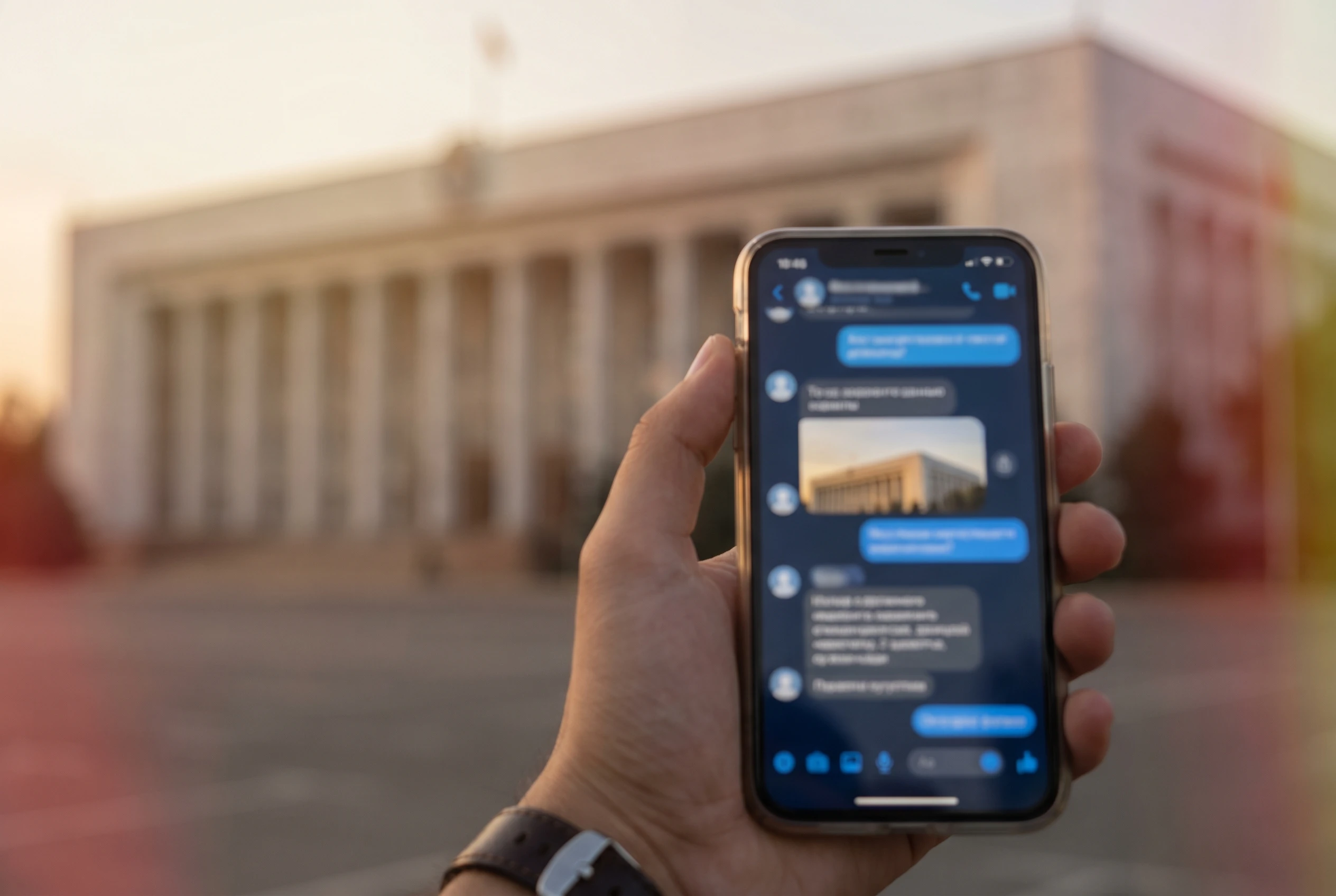
The press service of Kyrgyzstan’s Ministry of Internal Affairs issued a public notice this week telling social-media users that posts inciting interethnic discord or hatred toward foreigners, including foreign workers, will be treated as criminal conduct, not commentary. The wording was short. The legal hook behind it is not. Behind every line of that statement sits Article 330 of the Kyrgyz Criminal Code, which prescribes fines of 1,000 to 2,000 calculated rates or up to five years’ imprisonment for incitement of racial, ethnic, national, religious or inter-regional hatred, with aggravated cases reaching seven years in a strict regime colony.
What looks like a routine appeal for civility is the latest signal that Bishkek now treats online speech about its growing migrant labour force as a public-order matter. The notice lands at an awkward moment: the country has just set a record 52,000-strong foreign labour quota for the year, the highest on its books, while the same Ministry of Internal Affairs has been steadily expanding its presence on the platforms it now polices.
What the Interior Ministry Actually Said
The Ministry’s press service framed the appeal as a reminder, not a new rule. Officers urged users to refrain from any statement that could humiliate the dignity of individuals or promote discrimination based on nationality, and warned that posting such material, sharing it, or amplifying it through comments could trigger criminal proceedings.
The text drew an explicit link between online posts and offline consequences. Investigators referenced the recent appearance of a sign at the Villa Hotel in Osh, prohibiting entry to Jews and animals, which circulated on Telegram and Instagram in April and prompted public outrage. The Osh Department of Internal Affairs had already asked users not to spread provocative comments after a separate murder at a city exchange office; the new notice extends that posture nationwide.
Any actions violating interethnic harmony, public order and the rights of citizens will be prosecuted in accordance with the legislation of the Kyrgyz Republic.
That line, attributed by Ministry communications to its own press service, is the operative paragraph. It does not introduce a new statute. It tells the country’s roughly 4.5 million internet users that the existing one is live.
Why the Warning Lands in a 52,000-Worker Year
Kyrgyzstan has spent the past 18 months reorganising itself around imported labour for the first time in its post-Soviet history. Mirlan Baigonchokov, deputy minister of labour, told the Ishenim parliamentary group earlier this year that the 2026 foreign quota would be set at 52,000 workers, citing shortages in construction, light industry and services that domestic supply could not cover after Russia tightened its migration regime.
The composition of that pipeline is what makes the Ministry’s social-media warning more than ceremonial. According to recruitment data first reported by Kyrgyz outlets and summarised in RFE/RL’s mass-labour-exporter explainer, Bangladeshis accounted for nearly half of foreign-worker placements as of May 2024, Pakistanis for around a quarter, and Chinese nationals for 16 percent. Those three groups are also the most frequent targets of viral anti-migrant videos that have circulated on Kyrgyz-language Telegram channels for two years running.
Anti-migrant sentiment is not new in Bishkek. What is new is the demographic mismatch: a country that sent more than 1.1 million of its own citizens to work in Russia is now hosting tens of thousands of South Asians and Chinese on its own streets. The Interior Ministry knows the platform pattern that preceded the May 2024 mob violence at South Asian dormitories. The current notice is, in effect, a pre-emptive enforcement reminder before the summer construction season ramps up.
Article 330’s Track Record on Facebook and Telegram
The criminal provision the Ministry is invoking has been used against private users, journalists and human-rights defenders with a frequency that civil-society groups now call routine. During the September 2022 Kyrgyz-Tajik border conflict, the Interior Ministry confirmed it was investigating roughly 20 social-media users under the same article for posts described as provoking interethnic hostility. None of those cases produced a custodial sentence, but the message was filed.
The pattern has accelerated since.
| Defendant | Platform | Year | Outcome |
|---|---|---|---|
| Ondurush Toktonasyrov, rights activist | 2024 | Fine of 100,000 som (about $1,150) | |
| Taalay Duyshenbiyev, Next TV director | Telegram, Facebook | 2022 to 2024 | Charged with incitement, later released |
| Kanyshai Mamyrkulova, journalist | 2025 | Four years restricted freedom; social-media ban | |
| Rita Karasartova, rights defender | Facebook repost | 2025 | Five years non-custodial restricted freedom |
Vague Wording, Wide Discretion
Defence lawyers in all four cases have argued that the law’s wording lets prosecutors treat almost any sharply worded post as incitement once a state-appointed expert signs off. The Institute for the Rule of Law in Kyrgyzstan flagged this dependence on “linguistic expertise” as the most exploited feature of the statute, because the experts are commissioned by the same agencies bringing the case.
The Cost of a Single Post
For a low-income user, the financial exposure is severe. 100,000 som is roughly two months of median wages in Bishkek and four months in rural oblasts. The seven-year ceiling for aggravated cases means a single forwarded video, in theory, carries a heavier maximum than several non-violent property offences in the same code.
The Osh Flashpoints That Drew the Notice
The Ministry’s warning did not appear in a vacuum. A series of online flashpoints over the past 18 months has kept the agency’s monitoring teams busy and given prosecutors reason to point to live precedent.
- April 2026, Villa Hotel sign, Osh. A printed notice barring Jews and animals from a hotel entrance appeared in user-shot footage on Telegram and ricocheted across Kyrgyz-language channels, prompting the Ministry’s first explicit reference to xenophobic posting in months.
- March 2026, exchange-office murder, Osh. A homicide at a currency-exchange counter triggered a wave of speculation naming a foreign national, before police identified a Kyrgyz suspect. The Osh Department of Internal Affairs separately asked users to stop spreading unverified claims.
- May 2024, Bishkek dormitory attacks. Mob violence at South Asian student and worker dormitories was preceded by viral videos alleging assaults on Kyrgyz women, later shown to involve unrelated parties. Several Pakistani and Bangladeshi residents were hospitalised, and the Foreign Ministry briefly suspended outbound recruitment from Islamabad.
- 2022 to 2024, anti-Chinese protest cycles. Multiple smaller protests at Chinese-operated mining and construction sites drew their organising energy from Facebook events and Telegram groups, several of which were later cited in court filings.
None of these incidents produced isolated viral posts. They produced sustained content cycles, often resurfacing weeks later when an unrelated event reactivated the original framing. That is what the Interior Ministry is trying to interrupt.
The Free-Speech Side of the Ledger
The same enforcement architecture that lets Bishkek pursue genuine racist posting has been used, repeatedly, against journalists and opposition voices. Human Rights Watch’s 2026 country chapter on Kyrgyzstan documents amendments enacted in January that criminalised libel and insult, empowering the Ministry of Culture to impose fines of up to 200,000 soms without judicial approval, plus July rules adding 20,000-som and 65,000-som penalties for individuals and media outlets spreading content deemed false or unreliable.
The April TV closure in July, ordered after authorities accused the broadcaster of “sarcasm and mockery” that could destabilise public order, sits in the same legal family. So does the September conviction of four Kloop news staffers for calling for mass unrest. Civil-society groups read the new social-media notice through that lens: a broadly worded reminder that the state can choose any post on any platform and find a hook.
The chilling effect is measurable. The International Partnership for Human Rights, in a March report, surveyed Kyrgyz activists and found that 64 percent of respondents had self-censored online in the previous six months, citing Article 330 specifically more often than the new false-information rules.
How This Compares to Other Online-Speech Regimes
Kyrgyzstan is not the only country tightening platform speech this year, and the model it is converging on is recognisable. Vietnam’s Decree 174, covered in our earlier piece on Hanoi’s social-media content fines, layers administrative penalties on top of criminal incitement statutes in a structurally similar way. The Vietnamese rules cap fines at roughly $1,150 per violation; the Kyrgyz Ministry of Culture’s discretionary 200,000-som ceiling lands in the same band.
Where the two systems diverge is on enforcement venue. Vietnam’s regulators handle most cases administratively, with criminal escalation reserved for repeat or high-profile offenders. Kyrgyzstan routes nearly every Article 330 referral through investigators first, which means a low-volume post can land directly in the criminal track. Combined with the country’s reliance on government-commissioned linguistic experts, that produces a system in which the upfront procedural cost of being investigated is itself the deterrent, regardless of conviction rates.
For platforms, the practical implication is narrower. Meta, ByteDance and Telegram have so far declined to open formal liaison offices in Bishkek. The state is therefore enforcing against users, not infrastructure, and the user-side exposure is what the Interior Ministry’s notice is designed to make visible.
What Users and Employers Should Expect This Summer
The Ministry has signalled three things at once. It wants xenophobic content reported, not amplified. It is willing to use a statute civil-society groups consider overbroad to do so. And it is doing so just as the foreign labour quota tops out for the year, which means the volume of source material for viral content will only rise.
Employers of foreign workers, particularly in construction and the garment sector, have already adjusted internal policies. Several Bishkek-based contractors with Bangladeshi crews now ask supervisors to flag any locally produced video featuring their employees, and to report incidents to district police before they spread. The Federation of Trade Unions of Kyrgyzstan, in a statement last week, asked the Ministry to publish quarterly figures on Article 330 cases tied to anti-migrant content, separating them from political-speech prosecutions.
That request matters because the same enforcement tool sits over two very different problem sets. If the next batch of cases concentrates on genuine racist mobilisation around the South Asian and Chinese workforce, the Ministry’s notice will read in hindsight as preventive policing of a real risk. If the cases drift toward critical journalists, opposition figures or rights activists posting about migration policy, the notice will read as a license expansion. The same statute can produce either outcome, and the next 90 days of arrests will tell users which one they are living under.


South Korea Retail Investors Face Reckoning After KOSPI AI Rally Collapses

Surrey AI Maps Three Heart Attack Paths and Their Molecular Roots

Germany Locks Neutral Apple ATT Prompts Across Most of Europe

Apple’s 5% EU Fee Quietly Rewrites Alternative App Store Math

Apple’s EU Fee Truce Cuts Complexity but Leaves Rivals Fuming

Pixel 11 Pro Fold Trades Thinness for Durability and Seven-Year Stay

Mayo AI Flags HCM Obstruction From Everyday Ultrasound Videos

Indian Brands Quietly Scale Landmark Screens and Home Tech

Navin Vatsa Turns Grief Into a Lifetime of Quiet Seeing

Google Bets Pixel 11 Agentic AI Will Redefine Phones

Oracle Cuts 21,000 Jobs in a Year, Cites AI in 10-K Filing

Fable 5 and Mythos 5 Return as US Lifts Anthropic Export Controls

SpaceX’s Google Deal Turns a Rocket Company Into a Cloud Landlord

CD Projekt Red Co-CEO: Redemption Arc Isn’t Done, Witcher 4 in 2027

XPL Rallies 30% Ahead of Plasma One Card Tier Launch

Google Search Profiles Build a Follow Graph Inside Discover

DGO App Brings Rs 549 Mobile Pass for FIFA World Cup 2026 in Nepal

Moonshot AI Targets $30 Billion in China’s Fastest AI Funding Sprint

Oppo’s ColorOS 17 Eligibility List Leaves A-Series Buyers Behind

Microsoft Xbox Layoffs Start in July as Sharma Slams 3% Margin
-
 AI2 months ago
Oracle Cuts 21,000 Jobs in a Year, Cites AI in 10-K Filing
-
 AI2 months ago
Fable 5 and Mythos 5 Return as US Lifts Anthropic Export Controls
-
 AI3 months ago
SpaceX’s Google Deal Turns a Rocket Company Into a Cloud Landlord
-
 GAMING2 months ago
CD Projekt Red Co-CEO: Redemption Arc Isn’t Done, Witcher 4 in 2027
-
 CRYPTO3 months ago
XPL Rallies 30% Ahead of Plasma One Card Tier Launch
-
 NEWS3 months ago
Google Search Profiles Build a Follow Graph Inside Discover
-
 APPS3 months ago
DGO App Brings Rs 549 Mobile Pass for FIFA World Cup 2026 in Nepal
-
 AI3 months ago
Moonshot AI Targets $30 Billion in China’s Fastest AI Funding Sprint