
GADGETS
Silver’s 140% Rally Built the Case for Its Own Collapse

Silver traded at $72.13 an ounce on Thursday, down 3.7% and sitting 40% below the January peak that preceded one of the sharpest single-day crashes in precious metals history. The metal’s 140% surge through 2025 delivered exactly what analysts now say will keep it from recovering: prices high enough to make buyers walk away.
UBS flagged demand erosion in a May 22 note, writing that elevated price levels are weighing on industrial and investment appetite. The bank sees silver as an “unappealing” position for investors, citing volatility that outpaces the metal’s strategic value. HSBC went further on Thursday, calling silver “fundamentally overvalued” and warning that the gold-to-silver ratio is likely to widen even if gold rallies.
Why Silver Lacks Gold’s Anchor
Gold benefits from a structural demand floor that silver does not have. Central banks added 244 tonnes of gold to reserves in the first quarter, according to World Gold Council data published in May. Poland led with 31 tonnes, Uzbekistan added 25 tonnes, and China increased holdings by 7 tonnes. That buying continued despite heightened geopolitical volatility tied to the Iran conflict.
Silver holds no equivalent position in official sector reserves. When prices spike, industrial buyers in electronics, solar panel manufacturing, and automotive sectors face a binary choice: pay up or substitute. Many are choosing the latter. UBS noted that demand erosion is likely to persist as long as prices remain at current levels, and unlike gold, silver has no central bank bid to stabilize the floor.
The metal’s dual role as both industrial input and investment vehicle makes it more sensitive to economic cycles than gold. When industrial demand weakens and private investment appetite fades simultaneously, silver has fewer shock absorbers.
The January Crash That Reset Expectations
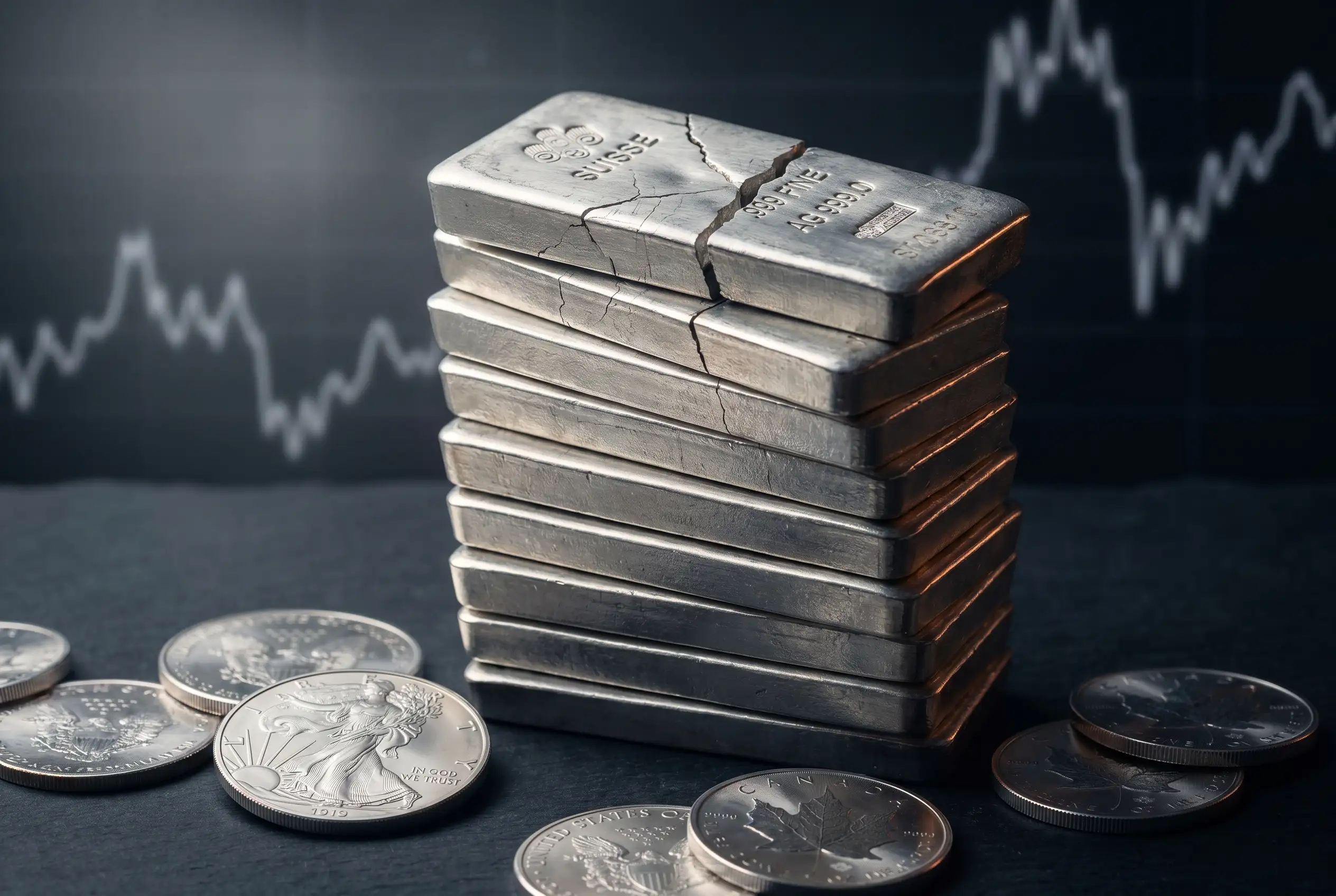
Silver punched through $120 an ounce on January 28 before collapsing nearly 30% in a single session. The crash erased weeks of gains and sent the metal to a low of $67.60 on March 20. Prices have since recovered to the mid-$70s but remain well below pre-crash levels.
The January peak was driven by a combination of geopolitical risk premium tied to escalating tensions with Iran and speculative positioning that assumed the 2025 rally had further to run. When the risk premium evaporated and leveraged positions unwound, the selloff was swift and brutal.
Spot silver last traded around $72.13 on Thursday, while front-month U.S. silver futures settled at $72.16, both down 3.7% on the session. The metal has spent the past two weeks consolidating in a $75-78 range before breaking lower again.
Three Banks See Limited Upside
UBS, HSBC, and Macquarie have all published bearish outlooks for silver in recent weeks, each citing different but overlapping concerns.
| Bank | Core Thesis | Key Risk |
|---|---|---|
| UBS | Demand erosion at current price levels | Lacks central bank buying anchor |
| HSBC | Fundamentally overvalued vs. gold | Gold-silver ratio likely to widen |
| Macquarie | Fed rate hikes in H1 2027 will pressure metals | Macro deterioration adds downside risk |
HSBC’s Thursday note argued that silver will likely diverge from gold’s trajectory, with the ratio between the two metals widening. That would allow silver to ease even if gold rallies, a scenario that breaks the historical correlation many investors rely on.
Macquarie expects the Federal Reserve to hike interest rates in the first half of 2027, which would lift downward pressure on precious metals broadly. The bank sees average silver prices remaining around current levels for the rest of the year, with meaningful downside risk if the macro situation deteriorates further. Volatility will remain elevated until the Middle East situation resolves, Macquarie wrote in a May 21 note.
Industrial Demand Destruction in Real Time
Silver’s industrial applications span electronics, solar photovoltaics, automotive components, and medical devices. The metal is an essential input in mobile phones, computers, and electric vehicle battery systems. Solar panel manufacturers alone accounted for a significant share of industrial silver demand in recent years, driven by the energy transition.
But elevated prices are forcing substitution. Solar manufacturers are exploring copper and aluminum alternatives for certain applications. Electronics producers are reducing silver content per unit or switching to cheaper conductive materials where performance tolerances allow. Automotive suppliers are re-engineering components to minimize silver use.
This is not speculative future risk. UBS stated explicitly that demand erosion is already happening and will persist as long as prices remain elevated. The bank’s May 22 note described the current investment case as insufficient to reward investors for the associated volatility.
What Differentiates This Selloff
Silver has experienced sharp corrections before, but the current environment combines three factors that make recovery more difficult:
- No official sector backstop. Central banks do not hold silver in reserves, removing the structural bid that supports gold during selloffs.
- Demand destruction at the industrial level. High prices are not just deterring speculators; they are forcing manufacturers to redesign products and supply chains.
- Macro headwinds building. If the Federal Reserve hikes rates in 2027 as Macquarie expects, precious metals face a less favorable interest rate environment.
The combination leaves silver vulnerable to further downside even if geopolitical risk premiums return. Gold can rally on safe-haven flows and central bank buying. Silver needs both investment demand and industrial demand to recover, and right now it has neither in sufficient strength.
The Middle East Variable
Volatility will remain elevated until the Iran conflict resolves, according to Macquarie. The war drove gold and silver to record highs earlier in the year, but the safe-haven bid has faded as markets adjusted to the new geopolitical baseline. Silver’s January crash occurred even as tensions remained high, suggesting that speculative positioning rather than fundamental demand was driving the peak.
If the conflict escalates further, silver could see another short-term spike. But analysts warn that any rally would likely be temporary, with prices vulnerable to another sharp reversal once the risk premium dissipates. The metal’s lack of strategic reserve status means it does not benefit from the same sustained official sector demand that supports gold during prolonged uncertainty.
Where Prices Go From Here
HSBC sees limited room to the upside and expects the gold-silver ratio to widen, allowing silver to ease even if gold rallies. Macquarie expects average prices to remain around current levels for the rest of the year, with volatility persisting and meaningful downside risk if the macro situation deteriorates. UBS views the current investment case as unappealing given the volatility and lack of strategic demand anchor.
The metal’s 140% rally in 2025 was driven by a combination of geopolitical risk, speculative positioning, and industrial demand tied to the energy transition. But the rally itself created the conditions for reversal. Prices rose high enough to trigger substitution across industrial applications, and the metal’s lack of central bank buying left it without a structural floor when private investment demand faded.
Silver last traded around $72 an ounce on Thursday, down from $120 in January and $87 in mid-May. The next test is whether prices can hold above the March low of $67.60. If that level breaks, the next support zone sits in the low $60s, a level not seen since before the 2025 rally began.
Disclaimer: This article is for informational purposes only and does not constitute investment advice. Silver and other precious metals are volatile assets subject to significant price fluctuations. Readers should consult a qualified financial advisor before making investment decisions. Figures cited are accurate as of publication on May 28, 2026.


South Korea Retail Investors Face Reckoning After KOSPI AI Rally Collapses

Surrey AI Maps Three Heart Attack Paths and Their Molecular Roots

Germany Locks Neutral Apple ATT Prompts Across Most of Europe

Apple’s 5% EU Fee Quietly Rewrites Alternative App Store Math

Apple’s EU Fee Truce Cuts Complexity but Leaves Rivals Fuming

Pixel 11 Pro Fold Trades Thinness for Durability and Seven-Year Stay

Mayo AI Flags HCM Obstruction From Everyday Ultrasound Videos

Indian Brands Quietly Scale Landmark Screens and Home Tech

Navin Vatsa Turns Grief Into a Lifetime of Quiet Seeing

Google Bets Pixel 11 Agentic AI Will Redefine Phones

Oracle Cuts 21,000 Jobs in a Year, Cites AI in 10-K Filing

Fable 5 and Mythos 5 Return as US Lifts Anthropic Export Controls

SpaceX’s Google Deal Turns a Rocket Company Into a Cloud Landlord

CD Projekt Red Co-CEO: Redemption Arc Isn’t Done, Witcher 4 in 2027

XPL Rallies 30% Ahead of Plasma One Card Tier Launch

Google Search Profiles Build a Follow Graph Inside Discover

DGO App Brings Rs 549 Mobile Pass for FIFA World Cup 2026 in Nepal

Moonshot AI Targets $30 Billion in China’s Fastest AI Funding Sprint

Oppo’s ColorOS 17 Eligibility List Leaves A-Series Buyers Behind

Microsoft Xbox Layoffs Start in July as Sharma Slams 3% Margin
-
 AI2 months ago
Oracle Cuts 21,000 Jobs in a Year, Cites AI in 10-K Filing
-
 AI2 months ago
Fable 5 and Mythos 5 Return as US Lifts Anthropic Export Controls
-
 AI3 months ago
SpaceX’s Google Deal Turns a Rocket Company Into a Cloud Landlord
-
 GAMING2 months ago
CD Projekt Red Co-CEO: Redemption Arc Isn’t Done, Witcher 4 in 2027
-
 CRYPTO3 months ago
XPL Rallies 30% Ahead of Plasma One Card Tier Launch
-
 NEWS3 months ago
Google Search Profiles Build a Follow Graph Inside Discover
-
 APPS3 months ago
DGO App Brings Rs 549 Mobile Pass for FIFA World Cup 2026 in Nepal
-
 AI3 months ago
Moonshot AI Targets $30 Billion in China’s Fastest AI Funding Sprint