
AI
ByteDance in Talks With China’s Iluvatar CoreX on 50,000 AI Chips
ByteDance is in talks with China’s Iluvatar CoreX for at least 50,000 AI chips for inference, also considering Baidu’s Kunlunxin, Reuters reports.

ByteDance is in talks with Shanghai-based Iluvatar CoreX to purchase at least 50,000 AI chips for inference work, the first major commercial anchor deal for the Chinese GPU startup. TikTok parent ByteDance is also weighing a parallel chip arrangement with Baidu’s Kunlunxin unit, according to two sources familiar with the matter.
If the deal closes, Iluvatar CoreX would become ByteDance’s third major domestic supplier of graphics processing units after Huawei and Cambricon, the sources said. ByteDance, Iluvatar CoreX, Baidu and Tencent all declined to comment, and the sources declined to be named because the talks are private. The terms of the potential deals are not final and remain subject to change.
How ByteDance Landed on Iluvatar CoreX
The current talks center on inference-grade silicon for ByteDance’s signature AI chatbot Doubao, the sources said. Most of the chips Iluvatar CoreX would ship are headed for inference workloads, the part of the AI stack that answers user queries rather than training new models. A deal with ByteDance would push the startup from a government-dominated order book into a commercial customer the company has not had before.
ByteDance is also weighing Baidu’s Kunlunxin chips as a separate, parallel source, the sources said. Tencent is already a Kunlunxin customer, per one of the sources, which makes Baidu a potential chip seller to two of China’s three biggest AI cloud platforms if ByteDance signs on.
None of the four companies in the talks responded to requests for comment. The original report on the ByteDance chip talks was published by Reuters on June 15, citing two sources familiar with the matter who declined to be named because the discussions are private. The terms of the potential deal are not final and still subject to change, the sources said.
Inference Silicon Is the Center of the Talks
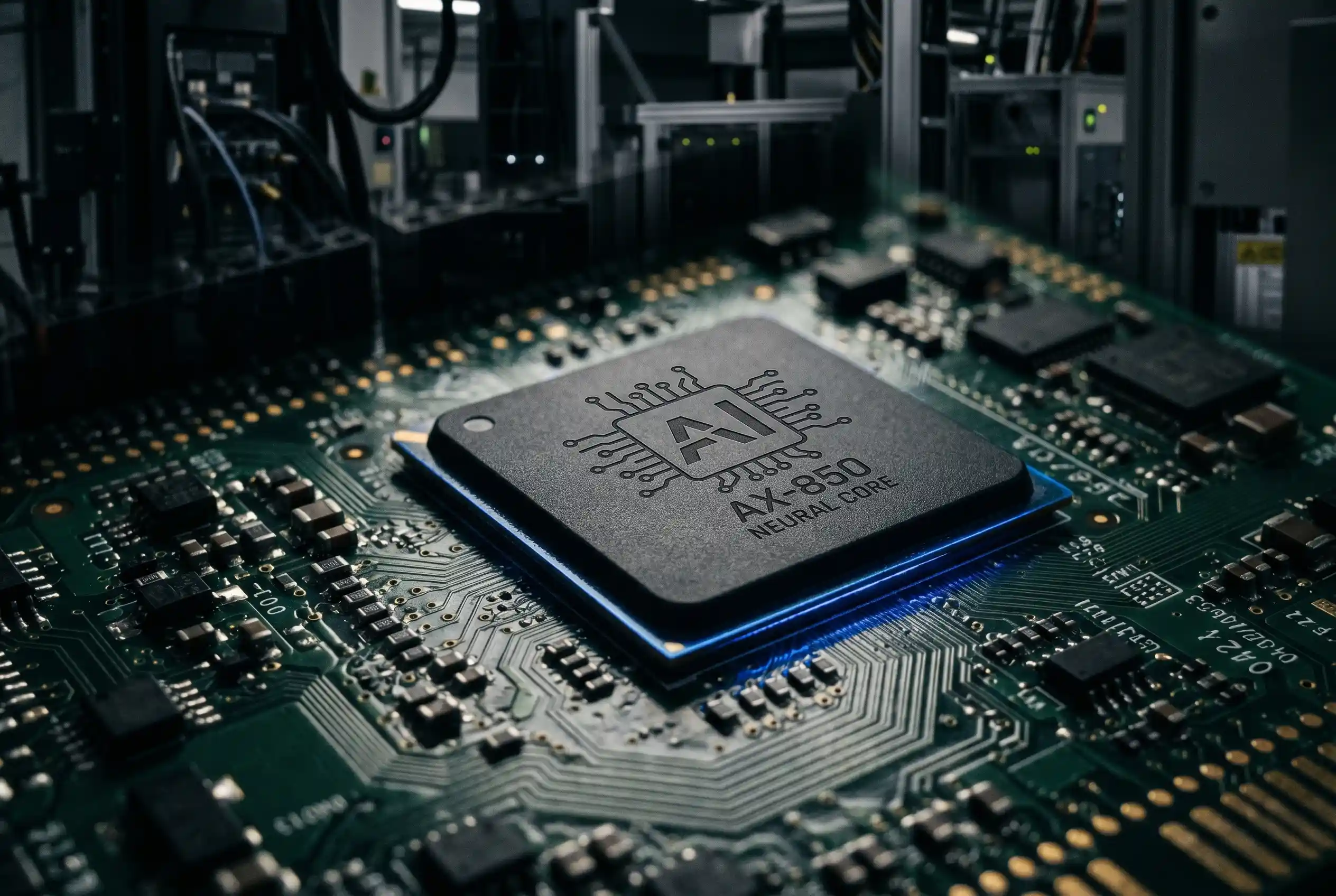
Inference workloads handle the steady stream of user prompts that hit a chatbot like Doubao, and they need different silicon than the chips used to train the underlying model. Training builds the model and tends to run on the most powerful chips available, while inference runs the model and rewards cost and energy efficiency. Doubao is the consumer-facing application driving ByteDance’s inference demand, and the chatbot has been the company’s primary vehicle for monetizing its underlying model. Iluvatar CoreX’s website positions its Zhikai series for exactly this kind of work.
The company splits its product line cleanly: Tiangai for training, Zhikai for inference, per the chipmaker’s own product page. That separation matters because ByteDance’s order is built almost entirely around inference silicon, not the training-class GPUs used to build the underlying model. A Huatai Securities research note estimated the Zhikai inference chip carries an average selling price of 12,000 yuan, or about $1,775 each, the unit economics the broker used to size the deal.
- Inference over training. Doubao answers user queries rather than building new models, so ByteDance’s growth depends on inference silicon, the cheaper and more power-efficient class of GPUs.
- Zhikai as the inference line. Iluvatar CoreX’s website positions the Zhikai series for inference tasks, while the Tiangai line is built for training, a separation the company publishes openly.
- Price per chip. Huatai Securities estimated the Zhikai inference chip carries an average selling price of 12,000 yuan, or about $1,775 each.
The Pivot From Government Projects to Commercial AI
Until now, Iluvatar CoreX has mainly supplied government procurement projects, one of the sources said. A deal with ByteDance would mark a clear pivot from public-sector work to a commercial customer.
The company listed in Hong Kong in January, with trading beginning on January 8 at HK$144.60 per H-share and a market capitalization of HK$35.44 billion. The Shanghai-based GPU maker is one of a small group of Chinese startups trying to fill the gap left by Nvidia in the domestic market, and the Iluvatar CoreX 2026 Hong Kong listing shows the company raised around HK$3.7 billion ($475 million) in the float. About 80% of the proceeds were earmarked for research and development, and cornerstone investors included ZTE Corp.’s Hong Kong unit, UBS Asset Management (Singapore) Ltd., and the investment arm of Beijing Fourth Paradigm Technology. By mid-2025, the company had delivered more than 52,000 general-purpose GPU chips to over 290 customers, according to industry reporting.
Revenue is climbing from a small base, with Iluvatar CoreX reporting 1 billion yuan ($148 million) in 2025 sales, about 90% of which came from GPU shipments. The company also booked a net loss of 892 million yuan in 2024. A Huatai Securities research note projected 2026 revenue of 3.04 billion yuan ($449.8 million), with total shipments jumping 139% to over 100,000 chips, a forecast the broker tied directly to commercial demand from customers like ByteDance.
ByteDance’s Wider Domestic Chip Stack
ByteDance is building out a domestic chip stack on three and potentially four legs, not one. The TikTok parent already counts Huawei and Cambricon as major domestic GPU suppliers, and the Iluvatar CoreX deal would add a third leg with parallel chip sources sitting alongside as a possible fourth.
ByteDance’s domestic chip hedging goes well beyond Iluvatar CoreX. A look at How Qualcomm landed the ByteDance ASIC order earlier this year, a deal that Bloomberg first reported, shows the company is also willing to mix custom ASICs into its compute stack alongside off-the-shelf GPUs. The ByteDance chip team had grown past 1,000 employees by February, and the company has been working on at least four in-house chip lines for AI workloads.
The supplier map for ByteDance’s inference and training split looks like this. Each of the four players occupies a distinct lane in the company’s chip diversification.
| Supplier | Role for ByteDance | Public status of the talks |
|---|---|---|
| Huawei | One of ByteDance’s existing two major domestic GPU suppliers | Not party to current talks per the sources |
| Cambricon | The other of ByteDance’s existing two major domestic GPU suppliers | Not party to current talks per the sources |
| Iluvatar CoreX | Would become the third major domestic supplier; at least 50,000 chips expected in 2026 | In active discussions; not yet final |
| Baidu (Kunlunxin) | Considered as a parallel chip source for inference | In early-stage consideration; Tencent already a customer |
The new talks would put Iluvatar CoreX into commercial-scale inference silicon for the first time, and the broader chip mix in any final agreement has not been disclosed. ByteDance is hedging across multiple chip categories at once, with in-house design work on at least four lines and a custom AI ASIC order reportedly placed with Qualcomm earlier this year. The new arrangements are running alongside that work, not as a replacement for it. None of the four parties responded when asked to confirm the talks, leaving the structure of any final deal opaque.
Nvidia’s Squeeze in China Has Gone Structural
The deal lands against a market that has been tilting away from Nvidia for more than a year. Chinese GPU and AI chipmakers captured nearly 41% of China’s AI accelerator server market last year, eroding Nvidia’s once-dominant position in one of its most important overseas markets. The April reporting that put the 41% figure on the board also framed the shift as durable, not a quarter or two of catch-up buying.
Nvidia’s market share in China has effectively fallen to zero.
Jensen Huang, Nvidia’s CEO, put the company’s effective share in China at 0% in remarks that Reuters cited in its April reporting on China’s AI accelerator market. The drop in share, in his telling, was already complete by the time the 41% number was published.
Tencent’s chief strategy officer James Mitchell said in May that Chinese AI chips would become available in large quantities in the second half of this year, a forecast that puts the ByteDance-Iluvatar CoreX deal in the middle of a broader supply ramp. The Iluvatar CoreX 2026-28 GPU roadmap, which the company disclosed in January, is built around products aimed at Nvidia’s H200 and B200 classes. HiSilicon’s price hike in China’s AI chip market shows that domestic suppliers are now raising prices as AI demand tightens, a sign the sellers’ market is shifting back toward the Chinese side. ByteDance’s order lands inside that window.
- 41% of China’s AI accelerator server market went to Chinese GPU and AI chipmakers last year, per Reuters reporting in April.
- 0% is what Nvidia’s CEO Jensen Huang put as the company’s effective market share in China.
- $148M in 2025 revenue at Iluvatar CoreX, with about 90% from GPU sales.
- 892M yuan was Iluvatar CoreX’s net loss in 2024.
What Could Keep the Deal on the Table
None of the four companies has confirmed the talks, and the deal’s structure remains unsettled. The two sources declined to be named, citing the private nature of the discussions, and the terms of any final agreement have not been disclosed. ByteDance, Iluvatar CoreX, Baidu and Tencent all declined to comment when asked.
Chinese AI chipmakers’ share of China’s AI accelerator server market has been climbing, and that trajectory has been confirmed by Nvidia’s CEO since the April reporting. A failed ByteDance-Iluvatar CoreX deal would not undo that shift, but it would slow the commercial transition for a startup that has, until now, run on government orders. Iluvatar CoreX’s research-driven cost base and its 2024 net loss of 892 million yuan mean a marquee commercial customer carries extra weight for a chipmaker still working through heavy R&D spending. None of the four parties have committed on the record, and any of them can walk away before the structure is finalized.
Frequently Asked Questions
What is Iluvatar CoreX?
Iluvatar CoreX is a Shanghai-based AI GPU startup founded by Li Yunpeng, an Oracle alumnus, that listed on the Hong Kong Stock Exchange on January 8, 2026, at a market capitalization of HK$35.44 billion. The company sells two product lines, the Tiangai series for AI training and the Zhikai series for inference, and reported $148 million in 2025 revenue with about 90% coming from GPU sales. Until the ByteDance talks surfaced, the company had mainly supplied government procurement projects, and by mid-2025 it had delivered more than 52,000 general-purpose GPU chips to over 290 customers.
What is the difference between AI inference and AI training?
Inference is the part of the AI stack that answers user queries against an already-trained model, while training is the heavier process of building the model in the first place. Training tends to run on the most powerful chips available because it chews through vast amounts of data, while inference rewards chips optimized for cost and energy efficiency at scale. ByteDance’s order with Iluvatar CoreX is built almost entirely around inference silicon, not training GPUs.
Who currently supplies ByteDance with AI chips?
ByteDance’s two existing major domestic GPU suppliers are Huawei and Cambricon, and an Iluvatar CoreX deal would add a third. ByteDance is also considering Baidu’s Kunlunxin chips as a parallel source, and Tencent is already a Kunlunxin customer. Beyond off-the-shelf GPUs, ByteDance has been working on at least four in-house chip lines and earlier this year was reported to have placed a multi-million-unit custom AI ASIC order with Qualcomm.
Why is Nvidia losing market share in China?
Chinese AI chipmakers now hold nearly 41% of China’s AI accelerator server market after last year’s share shift, and Nvidia’s CEO Jensen Huang said the company’s market share in China has effectively fallen to zero. The shift tracks U.S. export controls on advanced chips and Beijing’s policy push for locally developed alternatives, with Tencent’s chief strategy officer James Mitchell forecasting in May that Chinese AI chips would become available in large quantities in the second half of 2026. ByteDance’s order with Iluvatar CoreX is the kind of commercial deal that has been driving that share shift.
How big is the Iluvatar CoreX deal for ByteDance?
The startup is expected to deliver at least 50,000 chips to ByteDance in 2026, with the bulk going to inference workloads supporting the Doubao chatbot. A Huatai Securities research note put the average selling price of the Zhikai inference chip at 12,000 yuan, or about $1,775 each, the unit economics the broker used to size the deal. Iluvatar CoreX’s 2026 revenue projection of 3.04 billion yuan ($449.8 million) and 139% shipment-growth forecast both rest on commercial demand from customers like ByteDance, and a separate 2026-28 GPU roadmap is part of the same commercial push.


Gen Z’s Flight From Smartphones Is Spreading Fastest on TikTok

Aakhar App Launches to Preserve Uttarakhand’s Endangered Languages

Samsung’s Galaxy A27 Price Jump Traces Back to a Chip Shortage

ZOTAC RTX 5090 SOLID Catches Fire Near the PCIe Slot, Not the Cable

StepFun’s STEPX Neo Debuts as an AI Phone With Doubao’s Old Problem

Halo Studios Cancels Project Ekur Amid Leadership Abuse Claims

Sandisk Stock Sinks 8% as Wall Street Keeps Raising Price Targets

VCT Pacific Bans Crypto Sponsors, but Riot Keeps One Exception

A New 133-Study Review Finds Video Games Boost the Brain, Barely

XRP Tests $1 Support a Year After Ripple’s SEC Victory

Google Search Profiles Build a Follow Graph Inside Discover

Microsoft Xbox Layoffs Start in July as Sharma Slams 3% Margin

Oracle Cuts 21,000 Jobs in a Year, Cites AI in 10-K Filing

Oppo’s ColorOS 17 Eligibility List Leaves A-Series Buyers Behind

Moonshot AI Targets $30 Billion in China’s Fastest AI Funding Sprint

Google DeepMind and A24 Sign $75 Million AI Partnership Deal

Meta’s Iris AI Chip Enters Production in September, Tests Clean

OCC Issues AML Consent Order Against Wise and Crypto.com Sponsor Bank

DGO App Brings Rs 549 Mobile Pass for FIFA World Cup 2026 in Nepal

Anthropic Tells Senators Alibaba Ran the Largest Claude Distillation Attack
-
 NEWS1 month ago
Google Search Profiles Build a Follow Graph Inside Discover
-
 GAMING1 month ago
Microsoft Xbox Layoffs Start in July as Sharma Slams 3% Margin
-
 AI3 weeks ago
Oracle Cuts 21,000 Jobs in a Year, Cites AI in 10-K Filing
-
 NEWS1 month ago
Oppo’s ColorOS 17 Eligibility List Leaves A-Series Buyers Behind
-
 AI1 month ago
Moonshot AI Targets $30 Billion in China’s Fastest AI Funding Sprint
-
 AI3 weeks ago
Google DeepMind and A24 Sign $75 Million AI Partnership Deal
-
 AI5 days ago
Meta’s Iris AI Chip Enters Production in September, Tests Clean
-
 CRYPTO2 months ago
OCC Issues AML Consent Order Against Wise and Crypto.com Sponsor Bank