
AI
HiSilicon’s Price Hike Signals China’s AI Chip Comeback
HiSilicon raised chip prices as AI demand restores China’s semiconductor pricing power, but the HBM supply ceiling limits how far the recovery can run.

Huawei’s chip design subsidiary HiSilicon raised prices on select products as Chinese demand for AI computing reached levels that give suppliers pricing leverage they haven’t held in years. DigiTimes reported the increase, citing strong domestic AI computing demand, rising supply chain costs, and a broad recovery in China’s semiconductor market as the three factors behind the move. For HiSilicon, China’s largest domestic integrated-circuit (IC) designer, which was effectively cut off from advanced foreign chip manufacturing starting in 2020, the ability to push prices up rather than cut them to hold share is the clearest commercial signal of a genuine sector reversal.
That shift is the outcome of a dynamic US export controls set in motion but did not intend. By progressively blocking Chinese companies from buying advanced chips abroad, Washington created a captive domestic market large enough to hand HiSilicon and its parent Huawei the pricing leverage that a decade of government investment alone couldn’t deliver. The constraint that still applies runs through high-bandwidth memory (HBM), and that is where the recovery’s ceiling sits.
Seven Years From Blacklist to Pricing Power
In May 2020, the US Commerce Department’s Bureau of Industry and Security tightened its foreign direct product rule to cut TSMC, and any chipmaker relying on American technology, off from supplying HiSilicon without a license. Huawei halted production of its Kirin smartphone processors entirely for close to three years afterward. The broader Chinese IC design sector ran thin margins and weak demand through 2023, a stretch DigiTimes and analysts have described as a long-running recession for the industry.
Sector-wide, Chinese chip design revenue reached $90.99 billion in 2024, up 11.9% from 2023, according to the Center for Strategic and International Studies (CSIS) analysis of US-China chip design competition. The combined revenue of China’s top 10 design firms fell 3.7% in the same year, meaning the broad mid-market recovered while the flagship tier was still compressing. CSIS describes HiSilicon as “the most profitable and innovative fabless private semiconductor company” in China; it was navigating that gap on restricted process nodes with a narrowed addressable market.
Three forces shifted the calculus between 2025 and now. DeepSeek’s January 2025 debut triggered an infrastructure spending wave among Chinese cloud providers, driving demand for domestic AI hardware sharply higher. Chinese foundry utilization rates ran at roughly 87% by 2025. And input costs rose across the global semiconductor supply chain as logic, memory, and packaging capacity all pushed near-full. Against that backdrop, the price increase follows the arithmetic of demand running ahead of supply at current price points.
Ascend’s Grip on China’s Data Centers
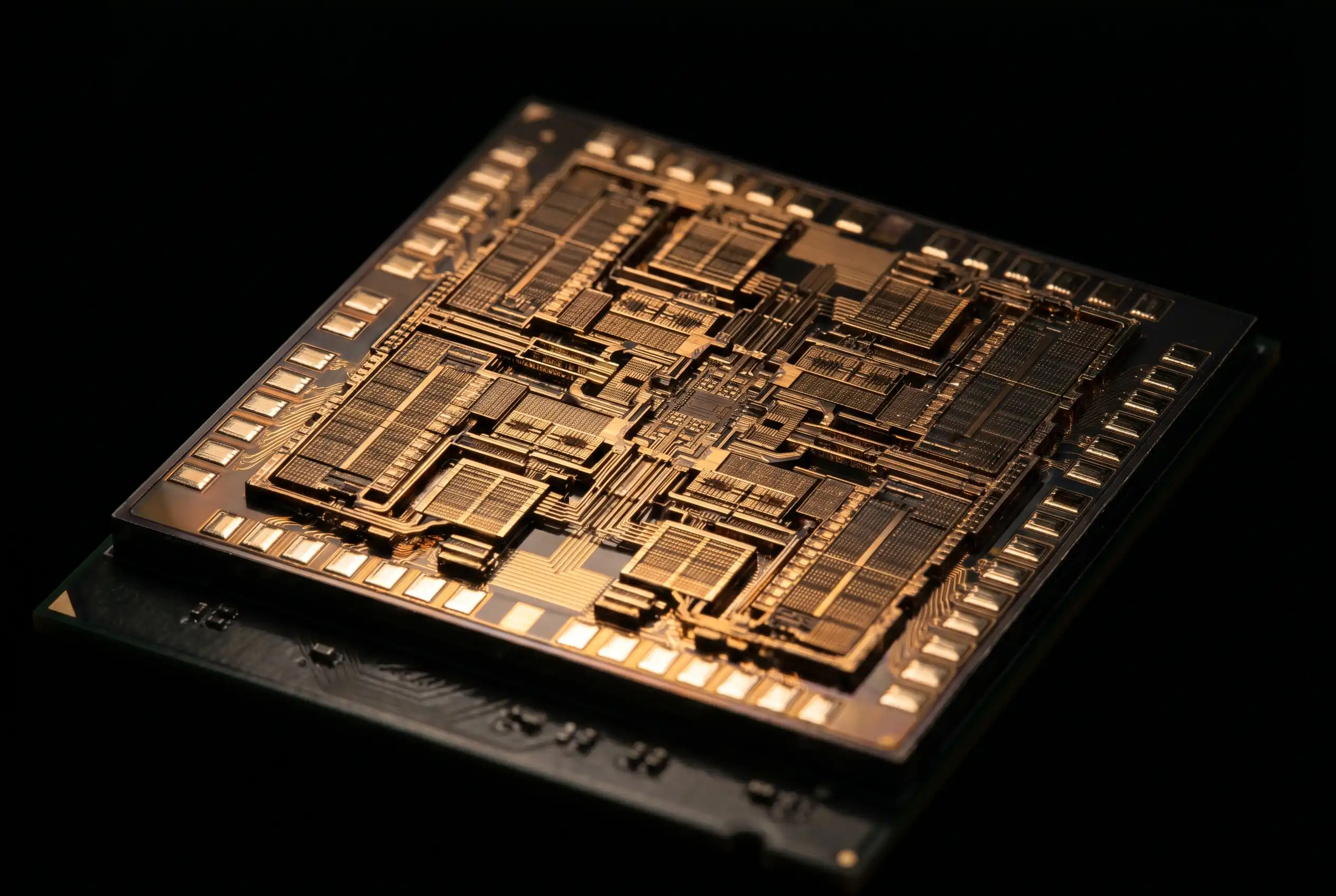
Behind HiSilicon’s pricing move is the Ascend AI accelerator line. HiSilicon designs the chips; SMIC, or Semiconductor Manufacturing International Corporation, China’s leading foundry, manufactures them. Domestic Chinese chipmakers shipped 1.65 million AI accelerator cards in 2025, capturing 41 percent of China’s AI accelerator market, per International Data Corporation (IDC) data on China’s AI accelerator market share. Huawei’s Ascend line dominated that pool, shipping roughly 812,000 chips in 2025 and now powering approximately 50 percent of domestic Chinese data centers.
The revenue arc behind the price move:
- $12 billion in AI chip revenue projected by Huawei for 2026, up from $7.5 billion in 2025, on orders confirmed from Alibaba, ByteDance, and Tencent, per Huawei’s $12 billion AI chip revenue trajectory and Nvidia’s China market collapse
- 60-plus percent year-over-year growth forecast for China’s high-end AI chip market in 2026, per TrendForce, with domestic suppliers on track to capture roughly half of the total
- Zero: Nvidia’s effective share of China’s AI accelerator market, confirmed by CEO Jensen Huang after US restrictions halted H20 shipments in April 2025
- ~50 percent of domestic Chinese data centers now running on Ascend 910C hardware, per IDC data, reflecting deliberate state-directed procurement at scale
The Ascend 910C delivers roughly 60% of Nvidia’s H100 inference performance, per assessments from DeepSeek researchers. For the inference workloads that dominate commercial Chinese AI deployment, running deployed models at scale rather than training new ones from scratch, that performance gap has proven manageable for most enterprise use cases. Nvidia’s legal supply options for most Chinese buyers are exhausted, which narrows the purchase decision to whether Ascend is adequate, full stop.
The Feedback Loop Washington Did Not Anticipate
Export controls have partly achieved their intended effect. EUV (extreme ultraviolet) lithography machines, produced by the Dutch firm ASML under coordinated restrictions with the US and European governments, remain inaccessible to Chinese fabs. SMIC manufactures on its N+2 node, a 7nm-class process built with deep ultraviolet (DUV) lithography, and the performance and yield gap between DUV-based chips and TSMC’s 3nm EUV-produced silicon is substantial. On that axis, the controls have capped China’s access to the manufacturing frontier.
RAND Corporation’s full-stack analysis of China’s AI industrial policy found that Beijing is explicitly directing Chinese AI companies to switch to domestic chips, with Huawei’s Ascend series as the primary alternative to Nvidia and AMD, and that this mandate has become critical to China’s AI sector precisely because export controls limit foreign supply. The restrictions that blocked Nvidia gave Huawei a customer base it could not have won on performance alone.
CSIS, in a study of chip export controls and China’s domestic semiconductor response, concludes that the controls have “resulted in China doubling down on its existing deeply subsidized development efforts” with potential to produce breakthrough technologies that could leapfrog current capabilities. Morgan Stanley estimates the Chinese domestic AI chip market could reach $67 billion by 2030. Both figures describe the same unintended consequence: a captive, state-backed demand pool large enough to sustain HiSilicon through the lean development years and into a position where pricing power is now possible.
Bernstein analysts put Huawei and Nvidia at roughly 40 percent each of China’s AI chip market as of January 2026. IDC’s full-year 2025 data put all domestic vendors collectively at 41 percent, with Huawei supplying the largest single share. Nvidia’s portion has since collapsed to roughly zero, per CEO Huang’s own account. Eighteen months before that, Nvidia held around 66 percent of China’s AI accelerator market per Bernstein projections. Export controls drove that reversal in under two years.
Where the Production Ceiling Sits
Ascend output runs against three hard supply-side limits:
- High-bandwidth memory supply: HBM is the binding bottleneck on Ascend production. CXMT, China’s domestic memory producer, is targeting meaningful HBM output by year-end, but current Ascend production draws on finite imported stockpiles. SemiAnalysis analysis found China’s Ascend output limited by HBM availability rather than by logic-chip fabrication capacity.
- Foundry yield rates: SMIC’s N+2 process, which produces the Ascend 910C, runs at yield rates estimated between 20% and 40%, far below the 80%-plus benchmarks at advanced TSMC nodes. Low yields mean fewer usable chips per wafer and higher per-unit costs.
- EUV access: SMIC’s planned doubling of 7nm-class capacity in 2026 runs on DUV multi-patterning. Without EUV tools, each successive process node is progressively harder to scale at cost-competitive yields.
Beijing is funding what it can control. SMIC’s AI chip expansion strategy and 2026 production roadmap is underwritten by China’s third National Integrated Circuit Industry Investment Fund, known as Big Fund III, launched in May 2024 at 344 billion yuan ($47.5 billion), with SMIC as a primary beneficiary. In January 2026, SMIC took full control of its Beijing subsidiary, Semiconductor Manufacturing North China, for $5.79 billion, consolidating its northern manufacturing assets under the AI production mandate. Production capacity is expanding; whether yield rates improve fast enough to matter in volume will become clear within the year.
DeepSeek’s Pull on Procurement Timelines
The Ascend 950PR’s price jump is partly a DeepSeek story. Huawei gave DeepSeek early optimization access for its V4 model; DeepSeek’s own AI infrastructure runs on Ascend silicon rather than Nvidia or AMD hardware. Chinese hyperscalers that want V4-compatible infrastructure at scale have few practical alternatives, and chip prices for the 950PR have reportedly risen by roughly 20 percent as a result, per Tom’s Hardware reporting, pulling procurement timelines forward across the Chinese cloud industry.
The two Ascend chips now competing for budget share in Chinese data centers:
| Chip | Process Node | Performance vs. Nvidia Reference |
|---|---|---|
| Ascend 910C | SMIC N+2 (7nm class) | ~60% of H100 inference (DeepSeek researchers) |
| Ascend 950PR | SMIC N+3 (5nm class) | Between H100 and H200 (TrendForce) |
Zhipu, a Chinese AI firm, trained its GLM-5 large language model entirely on Huawei Ascend hardware via the MindSpore framework, without US-manufactured semiconductors in the stack. A training-focused successor to the 950PR, the 950DT, is on Huawei’s roadmap for Q4 2026. Each new model trained on MindSpore adds another migration cost for an operator considering a shift away from Ascend, and the switching cost rises with every deployment cycle.
Costs Across the Data Center Stack
Chinese data center operators are absorbing HiSilicon’s increase at a moment when the global chip supply chain is repricing broadly. TSMC’s CEO C.C. Wei told shareholders at the company’s June 4, 2026 annual meeting that AI chip demand growth is “insane” and that shortages will persist for years, with TSMC already implementing measured price increases of 3% to 10% across advanced nodes and a reported 15% increase on 3nm production possible in the second half of the year. Server CPU prices have risen 10% to 20% since March. DRAM contract prices climbed roughly 90% quarter-on-quarter coming out of late 2025.
Nvidia’s full product lineup remains under restriction for most Chinese buyers. Alternative supply routes carry legal risk and constrained supply of their own. Cambricon, a Chinese semiconductor company focused on AI inference acceleration, posted $423 million in first-quarter 2026 revenue, a meaningful figure but not at the scale required to serve Chinese hyperscalers as a Huawei substitute.
State support partially offsets the pressure. Electricity for Chinese AI data centers runs 30% to 50% below US rates, per Changjiang Securities data, giving operators a structural cost advantage even as silicon prices rise. Big Fund III’s $47.5 billion flows into the foundry and memory capacity that Ascend production depends on, meaning higher chip prices from HiSilicon cycle back partly to the state infrastructure that created the captive market.
The $12 billion forecast holds as long as the HBM supply does.


South Korea Retail Investors Face Reckoning After KOSPI AI Rally Collapses

Surrey AI Maps Three Heart Attack Paths and Their Molecular Roots

Germany Locks Neutral Apple ATT Prompts Across Most of Europe

Apple’s 5% EU Fee Quietly Rewrites Alternative App Store Math

Apple’s EU Fee Truce Cuts Complexity but Leaves Rivals Fuming

Pixel 11 Pro Fold Trades Thinness for Durability and Seven-Year Stay

Mayo AI Flags HCM Obstruction From Everyday Ultrasound Videos

Indian Brands Quietly Scale Landmark Screens and Home Tech

Navin Vatsa Turns Grief Into a Lifetime of Quiet Seeing

Google Bets Pixel 11 Agentic AI Will Redefine Phones

Oracle Cuts 21,000 Jobs in a Year, Cites AI in 10-K Filing

Fable 5 and Mythos 5 Return as US Lifts Anthropic Export Controls

SpaceX’s Google Deal Turns a Rocket Company Into a Cloud Landlord

CD Projekt Red Co-CEO: Redemption Arc Isn’t Done, Witcher 4 in 2027

XPL Rallies 30% Ahead of Plasma One Card Tier Launch

Google Search Profiles Build a Follow Graph Inside Discover

DGO App Brings Rs 549 Mobile Pass for FIFA World Cup 2026 in Nepal

Moonshot AI Targets $30 Billion in China’s Fastest AI Funding Sprint

Oppo’s ColorOS 17 Eligibility List Leaves A-Series Buyers Behind

Microsoft Xbox Layoffs Start in July as Sharma Slams 3% Margin
-
 AI2 months ago
Oracle Cuts 21,000 Jobs in a Year, Cites AI in 10-K Filing
-
 AI2 months ago
Fable 5 and Mythos 5 Return as US Lifts Anthropic Export Controls
-
 AI3 months ago
SpaceX’s Google Deal Turns a Rocket Company Into a Cloud Landlord
-
 GAMING2 months ago
CD Projekt Red Co-CEO: Redemption Arc Isn’t Done, Witcher 4 in 2027
-
 CRYPTO3 months ago
XPL Rallies 30% Ahead of Plasma One Card Tier Launch
-
 NEWS3 months ago
Google Search Profiles Build a Follow Graph Inside Discover
-
 APPS3 months ago
DGO App Brings Rs 549 Mobile Pass for FIFA World Cup 2026 in Nepal
-
 AI3 months ago
Moonshot AI Targets $30 Billion in China’s Fastest AI Funding Sprint