
NEWS
Evangelical Alliance Calls UK Under-16 Ban ‘Not a Silver Bullet’
The UK will ban under-16s from Snapchat, TikTok, Instagram, X, Facebook and YouTube by spring 2027. The Evangelical Alliance calls it ‘not a silver bullet.’

Prime Minister Keir Starmer stood in Downing Street on June 15 and promised that under-16s in the UK would be banned from social media, with regulations drafted before Christmas and the rule in force by spring 2027. A week on, the Evangelical Alliance, a faith-based policy body that has spent years lobbying Westminster on online safety, gave the plan a sharper verdict: a social media ban is “not a silver bullet.”
Mark Gilmore, policy adviser at the Evangelical Alliance, told Christian Daily International that social media “has caused real harm to children’s wellbeing, relationships and safety,” but warned enforcement alone would fall short. His verdict lands on a government that has framed its package as the strictest in the world and is following the model Australia set in December 2025.
What Starmer Announced on June 15
Starmer said his government would move further than any peer country, banning under-16s from a defined list of platforms and adding restrictions on livestreaming, stranger contact and certain gaming features. The aim, in his words, is “a line in the sand” against platforms that “had their chance and failed.” Tech Secretary Liz Kendall called the package “a bold and significant step” that takes “power away from the tech giants” and “puts it back in parents’ hands.”
The platforms in scope are the major user-to-user services where algorithms drive feeds: Snapchat, TikTok, YouTube, Instagram, Facebook and X. The government has explicitly excluded messaging services like WhatsApp and Signal, along with YouTube Kids. AI “romantic companion” chatbots, the kind built to simulate sexual or romantic roleplay, will be restricted to users 18 and older, with other AI chatbots barred from offering sexually explicit content to under-18s. The government plans to pass the underlying regulations before Christmas and bring the ban into force by spring 2027. Wider restrictions on livestreaming, stranger contact, and certain gaming features will also apply across more services, including gaming sites.
| Status | Platforms or services |
|---|---|
| Banned for under-16s | Snapchat, TikTok, YouTube, Instagram, Facebook, X |
| Excluded from the ban | WhatsApp, Signal, YouTube Kids |
| Restricted to 18+ | AI “romantic companion” chatbots |
| Default restrictions on | Livestreaming and stranger chat for 16- and 17-year-olds; certain gaming features |
Why Australia Is the Template
Britain’s plan copies Australia’s December 2025 ban, the first national under-16 social media restriction in the world. Australian rules apply to 10 named platforms: Facebook, Instagram, Snapchat, Threads, TikTok, X, YouTube, Reddit, and the streaming services Kick and Twitch. The UK is following the same age-assurance model the Australians designed to support compliance and deter children from bypassing safeguards.
Six months in, that template is showing its limits. One Australian student told the BBC she knew of only three children in her grade of more than 170 who had been kicked off social media. Australia’s internet regulator has heard from 70% of parents who say their children are still on the banned platforms. No fines have been issued yet, although the eSafety Commission is investigating potential non-compliance by Facebook, Instagram, Snapchat, TikTok and YouTube. The same enforcement gap is the most immediate risk to the UK’s plan, as the first six months of Australia’s ban enforcement show.
The UK is part of a wider wave. Reuters counts Australia, China, Denmark, France, Germany, Greece, Italy, India, Malaysia, Norway, Poland, Slovenia, Spain, Sweden, Turkey, the United Arab Emirates, the United States and the European Union among authorities that have introduced restrictions on young people’s social media use. The OECD puts the global count higher, with 25 countries having age restrictions in force, enacted or under active consideration. The UK government has framed its package as the strictest so far.
- 3 of more than 170 students in one Australian grade removed from platforms
- 70% of Australian parents say their children still have accounts
- No fines issued yet
- eSafety Commission investigating Meta, Snap, TikTok and YouTube
The Evangelical Alliance’s ‘Not a Silver Bullet’ Verdict
A week after the announcement, the Evangelical Alliance made its position public through policy adviser Mark Gilmore. The group’s view is more textured than a flat yes or no. It accepts the diagnosis the government is acting on, then rejects the prescription as too narrow.
A social media ban is not a silver bullet, and many young people will find ways around it. But social media has caused real harm to children’s wellbeing, relationships and safety.
Mark Gilmore, policy adviser at the Evangelical Alliance, gave the verdict in an interview with Christian Daily International, whose write-up of the EA’s response covers the alliance’s full position. The alliance has been one of the faith-based voices pressing Whitehall on online safety for years, including contributing to the government’s Growing up in the online world consultation that produced the June 15 package. Gilmore positioned the verdict as a long-running critique of platform accountability, not a sudden objection to a single policy. The framing matters because the same critique has surfaced around the UK’s Online Safety Act, which the alliance called a “silver bullet” in its own writing when the law was passed in 2023 and has since judged against the harder test of implementation.
What the Faith Group Wants Instead
The Evangelical Alliance has spent years pressing for tighter accountability on tech firms, including through parliamentary submissions and engagement with MPs. In Gilmore’s words, the alliance “has consistently called for even stronger accountability of tech companies.” That track record is the backdrop to its response to the June 15 announcement.
The alliance’s critique goes beyond regulation. It also frames the question as one of community.
“Young people are made for “real relationships” with God and one another,” Gilmore said. “As these changes take effect, churches have an opportunity to invest in young people through spaces that offer genuine friendship, belonging and support.” The framing echoes the alliance’s earlier online safety case, which argued that “legislation is only the beginning” and called the real work “building a culture where such a shield is not so desperately needed.” It is a different ask from what tech accountability groups and child safety charities are pushing for, and it sits next to those demands rather than in place of them.
The alliance has also flagged the same enforcement gap Australian regulators now confront. Its own writing on the Online Safety Act warned that “children can bypass restrictions using VPNs,” and judged that “protecting the majority of children is still better than protecting none.” That logic carries straight into its verdict on the new ban. Australia’s six-month enforcement record, laid out in what the first six months already show, gives the UK a preview of what it may face.
- Stronger accountability for tech companies than current rules provide
- Investment in offline spaces where young people can form “real relationships”
- A long-term cultural shift, not a single piece of legislation
How the Ban Is Supposed to Be Enforced
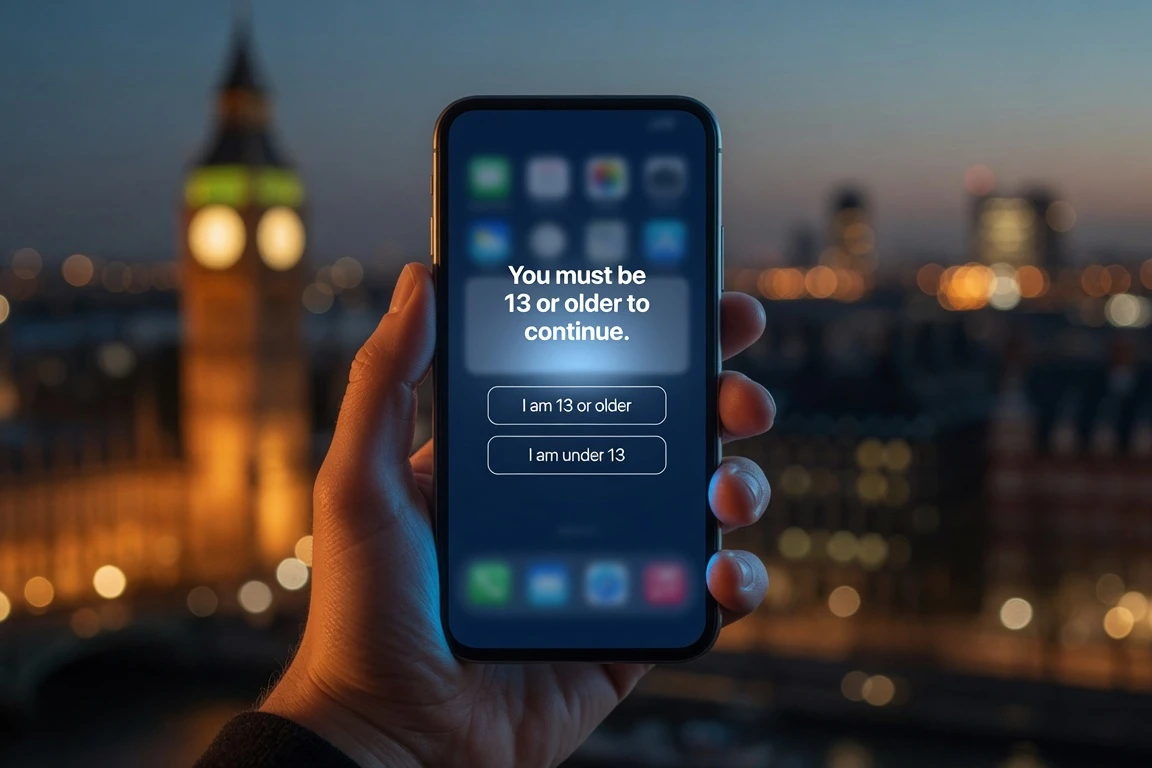
The government has tasked Ofcom, the UK’s communications regulator, with studying “highly effective age assurance” methods, including face scans and ID checks. The same machinery already runs on UK pornography sites and has drawn fines for non-compliance. Privacy campaigners, including the Open Rights Group, have raised concerns about how users’ data will be handled.
The restrictions extend beyond social feeds. AI “romantic companion” chatbots must enforce a minimum age of 18, and other AI chatbots must restrict sexually explicit or intimate role-play features for under-18s. The government will impose default restrictions on livestreaming and stranger chat for 16- and 17-year-olds to “prevent a cliff-edge at 16.” It is also considering overnight curfews and breaks in infinite scrolling for under-18s, with more detail due in July. The regime targets platforms, not children, in Starmer’s repeated framing.
- 116,000 responses to the government’s consultation
- 9 in 10 parents backed a social media ban for under-16s
- More than 83% of parents said social media’s risks outweighed its benefits
- Two-thirds of young people backed restrictions on at least some platforms
Who Else Says It Won’t Work
The pushback isn’t only religious. The platforms themselves have warned the policy will push teenagers toward less safe corners of the internet. Snapchat said it shared the safety goal but disagreed with a blanket ban. Meta said a ban risked “isolating teens from online communities and information, and driving them to unregulated alternatives.” YouTube said it was “a vital resource for young people, educators and parents” and that blanket bans push children toward anonymous services.
Children’s commissioners for Wales, Scotland and Northern Ireland gave the plan a rougher ride than their English counterpart. Rocio Cifuentes, the Welsh commissioner, called a ban “too simplistic a framing” and said accountability should sit with the platforms. Nicola Killean, her Scottish equivalent, called the policy “not a proportionate, effective, or enforceable way to protect children’s rights.” Chris Quinn in Northern Ireland said it “risks letting technology companies off the hook.” England’s commissioner, Dame Rachel de Souza, called the package “positive” but said the line should run to 18.
Some teenagers are unconvinced. George, 14, told BBC Radio 4’s Today programme that his age group is “beyond people saying what we have to do.” Lilly, 15, said TikTok helps her “communicate more” by posting performance videos. Bereaved parents who have campaigned for years, including Esther Ghey, whose daughter Brianna was killed in 2023, supported the announcement but warned it must come with support services for children pushed off social media.
Campaign group Smartphone Free Childhood welcomed the move, with co-founder Joe Ryrie calling it “a major step forward” that gives children “a few more years to grow up before entering online environments that were never designed with their wellbeing in mind.” NSPCC, the children’s charity, urged the government to make sure age checks are robust and enforced. Even within government, the framing has shifted from “ban solves everything” to “ban as cultural reset.” Tech Secretary Kendall told the House of Commons that the announcement “is not ‘one and done’ or the end of the story.” That acknowledgement, that the policy is a first move rather than a final answer, is the closest thing to common ground between the government and its loudest critics. Separated parents will feel the effects in a different setting entirely, as family court battles reshape over digital welfare.
What Happens Before Spring 2027
The plan’s first checkpoint is parliamentary. Starmer said the government wants the regulations passed before Christmas. The ban itself would then come into force by spring 2027. Kendall has told MPs further detail on enforcement will arrive in July, alongside the government’s response to the rest of the consultation.
Ofcom is running a parallel study on age verification, with results expected in the same window. The regulator has already been told to look for “the best ways to verify if someone is over 16,” and may face new fines-and-investigation powers under the package. Beyond enforcement, the government is still weighing overnight curfews and breaks to infinite scrolling for under-18s. The PM has said he expects to discuss the approach with US President Donald Trump and other leaders at a Group of Seven summit in France, as American tech firms sit in the firing line.
Frequently Asked Questions
Which apps will the UK ban for under-16s?
The UK ban covers six named platforms: Snapchat, TikTok, YouTube, Instagram, Facebook and X. The government’s stated focus is on user-to-user services that use algorithms to push content, and the final list may grow beyond what has been published. WhatsApp, Signal and YouTube Kids are explicitly outside the scope.
When does the UK social media ban start?
The UK government plans to lay the regulations before Parliament before Christmas 2026, with the ban itself set to take effect by spring 2027. Statutory guidance and Ofcom’s enforcement timetable are expected to follow in the months after.
Will children still be able to use WhatsApp, Signal or Roblox?
WhatsApp and Signal are excluded because they are messaging services, not the user-to-user platforms in scope. Roblox is not banned outright either, but features such as its chat function will be restricted for under-16s alongside other gaming platforms.
How will age verification work in practice?
Ofcom will recommend technical standards for verifying users are over 16, with face scans, document checks and behavioural signals among the methods under consideration. Critics including the Open Rights Group have flagged the data-protection implications. Porn sites already operate age checks in the UK under Ofcom rules, and several have been fined for non-compliance.
What does the Evangelical Alliance actually want?
The alliance wants stronger, longer-lasting accountability for tech companies than current rules provide, alongside investment in offline community spaces for young people. Its policy adviser has called a ban alone “not a silver bullet” and pointed to enforcement gaps already visible in Australia’s six-month-old rule.


OpenAI Ultrafast Puts GPT-5.6 Sol on Live Workloads

Apple’s 15% External Fee Bid Admits Its Own Zero Floor

JBL Beats Bose and Sony on Value for 2026 Soundbars

iPhone Users Pull 40 Percent More From Microdrama Apps

Nebius Q2 Turns AI Cloud Demand Into Prepaid Growth Machine

One UI 9.5 App Lock Ends Years of Samsung Delays

Shiprocket IPO Premium Hides ESOP Costs and Flat Merchant Base

Google Halves Gemini 3.7 Flash Price to Fuel Agent Swarms

Dawnwalker Time Clock Cracks Open-World RPG Habits

Gemini 3.7 Flash Cuts Agent Costs While Pro Stays Delayed

Fable 5 and Mythos 5 Return as US Lifts Anthropic Export Controls

Oracle Cuts 21,000 Jobs in a Year, Cites AI in 10-K Filing

SpaceX’s Google Deal Turns a Rocket Company Into a Cloud Landlord

CD Projekt Red Co-CEO: Redemption Arc Isn’t Done, Witcher 4 in 2027

XPL Rallies 30% Ahead of Plasma One Card Tier Launch

Google Search Profiles Build a Follow Graph Inside Discover

DGO App Brings Rs 549 Mobile Pass for FIFA World Cup 2026 in Nepal

Moonshot AI Targets $30 Billion in China’s Fastest AI Funding Sprint

Microsoft Xbox Layoffs Start in July as Sharma Slams 3% Margin

Oppo’s ColorOS 17 Eligibility List Leaves A-Series Buyers Behind
-
 AI2 months ago
Fable 5 and Mythos 5 Return as US Lifts Anthropic Export Controls
-
 AI2 months ago
Oracle Cuts 21,000 Jobs in a Year, Cites AI in 10-K Filing
-
 AI2 months ago
SpaceX’s Google Deal Turns a Rocket Company Into a Cloud Landlord
-
 GAMING2 months ago
CD Projekt Red Co-CEO: Redemption Arc Isn’t Done, Witcher 4 in 2027
-
 CRYPTO2 months ago
XPL Rallies 30% Ahead of Plasma One Card Tier Launch
-
 NEWS2 months ago
Google Search Profiles Build a Follow Graph Inside Discover
-
 APPS2 months ago
DGO App Brings Rs 549 Mobile Pass for FIFA World Cup 2026 in Nepal
-
 AI2 months ago
Moonshot AI Targets $30 Billion in China’s Fastest AI Funding Sprint