
CRYPTO
MiniPay Card Connects 16M Stablecoin Wallets to 175M Visa Merchants
MiniPay’s new Visa debit card lets 16M stablecoin wallets spend at 175M merchants worldwide. Built on Gnosis Pay, no monthly fee, cashback in Tether Gold.

MiniPay, the Opera-owned stablecoin wallet, has launched a Visa debit card that lets its more than 16 million activated wallets spend digital dollars at 175M+ merchant locations worldwide. The card, built on infrastructure from Gnosis Pay and issued by Monavate, settles merchants in local currency while users pay directly from their self-custodial balance. The launch turns a peer-to-peer wallet into a checkout instrument.
The MiniPay Card is rolling out across selected markets in the European Economic Area, Africa, Latin America and Southeast Asia, with no monthly or annual fee and what the launch announcement calls “a competitively low nominal FX fee.” Eligible users in some regions will earn up to 5% cashback, paid in Tether Gold, USDT and USDC. The launch extends a wallet that, until now, was useful mostly for peer-to-peer transfers and savings. No financial terms of the partnership were disclosed.
How the Wallet Becomes a Card
MiniPay began in 2023 as a self-custodial stablecoin wallet on the Celo blockchain, run by Blueboard Limited, an Opera company. Users held USD-pegged balances in their own wallets rather than at a custodian, and could send money across borders without going through a bank. Until this launch, the wallet could not convert stablecoin balances into a normal Visa checkout transaction.
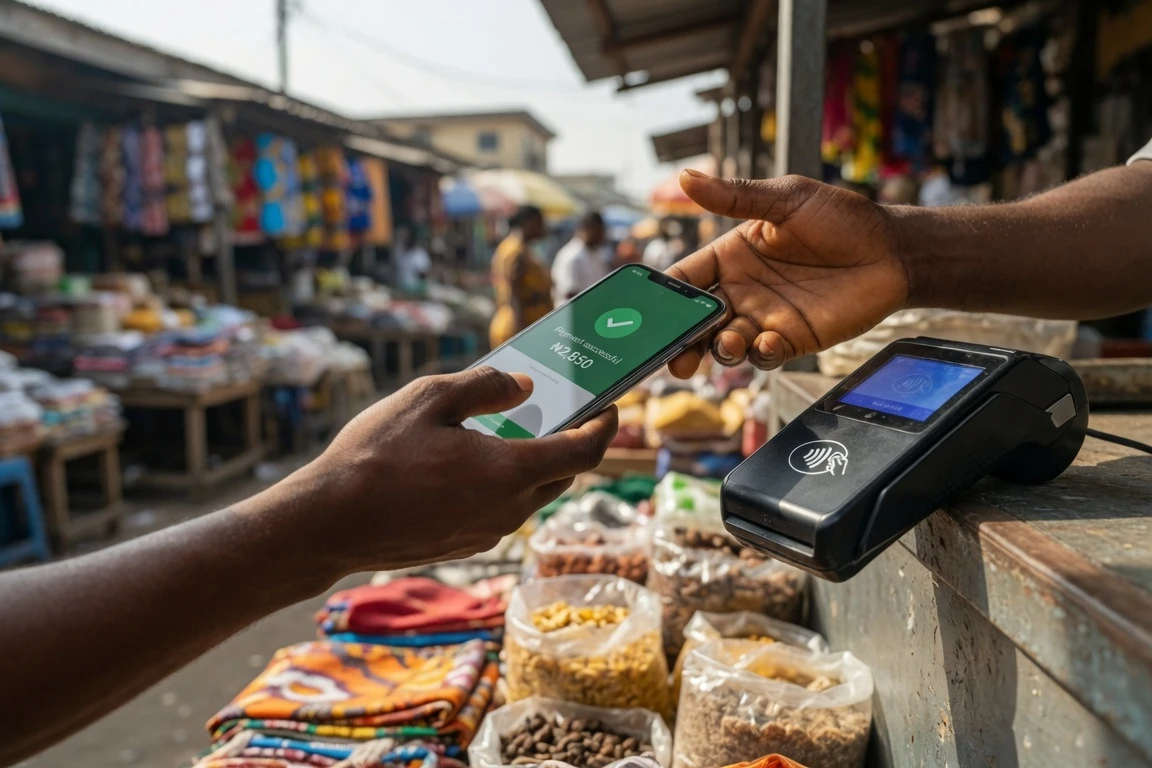
The card closes that gap. The flow runs wallet to card to checkout, with Gnosis Pay handling the off-chain bridge that turns a stablecoin balance into a fiat authorization. Merchants see a Visa transaction in their local currency, and they never need to touch crypto. The user never has to off-ramp to a bank account before buying coffee.
The Tech Stack Underneath
Four named partners split the work. The launch announcement and full partner list lays out each role. Visa brings the global acceptance network, Gnosis Pay provides the payment and program-management infrastructure that bridges on-chain balances to card rails, and Monavate, a regulated electronic money institution, is the actual card issuer. Opera, through MiniPay, owns the user-facing wallet and the customer relationship.
The split is more than paperwork. Each layer handles a different compliance and operational burden. Together they let a non-custodial wallet touch a regulated card network without MiniPay itself becoming a bank.
The card runs on Gnosis Pay’s infrastructure, which bridges MiniPay’s stablecoin balances to Visa’s global network. Gnosis Pay is the technical enabler and program manager, handling the technical and compliance layer that makes this work across multiple markets. Merchants receive payment in their local currency with no crypto-specific setup required. The card is issued through Monavate’s regulated card issuing under Visa’s global payments network.
- Visa: global acceptance network and settlement rails
- Gnosis Pay: payment infrastructure and program manager
- Monavate: regulated card issuer
- Opera / MiniPay: wallet and customer relationship
Where the Card Works and What Users Pay
The card is rolling out in selected markets across four regions. Eligibility is decided on a per-country basis, and the exact list of supported countries lives at the official card page with cashback and fee details. Opera said further details on availability sit at minipay.to/virtual-card.
The MiniPay Card has no monthly or annual fees, and transactions incur only “a competitively low nominal FX fee” per the launch announcement. There is no physical card at launch: MiniPay’s FAQ states the company is “currently focusing exclusively on digital cards” and that “no physical cards are being printed or shipped at this time.” Users can top up from any external wallet with $0 deposit fees. Balances are spendable the moment they land, with the architecture described as self-custodial. The user holds the keys rather than a centralized custodian.
Cashback is paid in the same kind of assets the wallet already holds. In selected markets, eligible users earn up to 5% back in digital gold or stablecoins, including Tether Gold (XAUT), USDT and USDC. The Tether Gold allocation is the unusual piece: a token backed by physical gold. Cashback lands once a month, per the card page.
Apple Pay and Google Pay are the only contactless channels at launch. Adding the card to either mobile wallet takes a minute or less, per the card page. No physical card is offered, and no shipping is involved.
- No monthly or annual fee; only a nominal FX fee per transaction
- Up to 5% cashback in Tether Gold, USDT and USDC in selected markets
- Apple Pay and Google Pay support from launch
- $0 deposit fees when funding from an external wallet
- Self-custodial: balance stays in the user’s wallet until tap-to-pay
Why the Partners Are Saying Yes
Dan Roesbery, Visa’s VP of global crypto partnerships, framed the launch in trust terms. “Trust is foundational to how people engage with digital payments,” Roesbery said. His team’s mandate, he added, is supporting “trusted, familiar payment experiences that connect users in markets with growing demand for digital payments to every day commerce.” For Opera, the card is the next step in MiniPay’s evolution from a savings and transfers wallet into a full commerce experience. Strong adoption in markets across Africa and other high-growth regions is what underpins the launch, the company said.
For Gnosis, the framing is the most concrete. Founder Friederike Ernst argued that the wallet side was already solved. What remained was the bridge from balance to checkout.
The missing piece isn’t the wallet. It’s the last meter. The ability to spend those balances at a checkout in another country without the merchant needing to know or care about crypto. This card program closes that gap.
The Stablecoin Market Around It
The card lands on a much larger stablecoin market than the one MiniPay entered in 2023. The early 2026 stablecoin market total at $308.55 billion, per DeFiLlama data cited in industry coverage, marked a doubling from January 2023. That growth has been driven by adoption in emerging markets, where dollar-backed tokens function as a savings and payments layer outside local banking. MiniPay’s 16 million wallets sit inside that wave.
MiniPay’s own numbers tracked the same trend. The wallet has grown to more than 16 million activated wallets across 65+ countries since launching in 2023. Adoption is concentrated where demand for faster, lower-friction ways to save, send and spend money continues to rise, per Opera. The card is the next step in expanding MiniPay from a wallet for savings, transfers and payments into a more complete commerce experience, the company said. Strong adoption in markets across Africa and other high-growth regions is what underpins the launch.
On the institutional side, the same trend is producing new products across regulated finance. The tokenized-deposit network banks are building to counter stablecoins is the parallel rail on the regulated side. The MiniPay Card is the consumer-facing edge of the same trend, with a non-custodial wallet sitting at the checkout. Both rails are chasing the same emerging-market payment flow.
What the Card Cannot Yet Do
Some pieces of the MiniPay Card are still off the table. There is no physical card, no shipping, and no print run. MiniPay is digital-first only.
Geographic coverage is limited to selected markets. The card is available across the European Economic Area, Africa, Latin America and Southeast Asia, with eligibility decided country by country. Users outside the eligible markets cannot yet get the card, even if they have an existing MiniPay wallet. MiniPay’s wallet spans 65+ countries; the card does not.
The financial terms of the partnership between Opera, Visa, Gnosis Pay and Monavate were not disclosed in the launch materials. The announcement did not name which countries within the four regions are first in line. Cashback is also limited to “selected markets,” and the assets paid out depend on jurisdiction. Apple Pay and Google Pay support is global in principle, but the card itself must first be issued in an eligible market. Until those gaps close, the card is a regional product wearing a global brand.
For users, the practical question is which country they live in. MiniPay’s wallet is available in 65+ countries; the card is not. That gap will determine how many of those 16 million wallets can convert into a checkout instrument in the near term.
Opera has been building MiniPay into a wider commerce offering. The card sits alongside virtual bank accounts that let users receive salaries in stablecoins, and alongside local-rail integrations with Mpesa in Kenya, OPay in Nigeria and Mercado Pago in Latin America. Those layers move money inside countries, while the card extends balances outward into Visa’s global network. Adoption metrics will decide how disruptive the product becomes.
Disclaimer: This article is for informational purposes only and does not constitute financial advice. Stablecoins are volatile digital assets; users may lose the full value of their holdings. Figures cited are accurate as of publication and may change. Consult a qualified financial professional before using stablecoin-based payment products.


OpenAI Ultrafast Puts GPT-5.6 Sol on Live Workloads

Apple’s 15% External Fee Bid Admits Its Own Zero Floor

JBL Beats Bose and Sony on Value for 2026 Soundbars

iPhone Users Pull 40 Percent More From Microdrama Apps

Nebius Q2 Turns AI Cloud Demand Into Prepaid Growth Machine

One UI 9.5 App Lock Ends Years of Samsung Delays

Shiprocket IPO Premium Hides ESOP Costs and Flat Merchant Base

Google Halves Gemini 3.7 Flash Price to Fuel Agent Swarms

Dawnwalker Time Clock Cracks Open-World RPG Habits

Gemini 3.7 Flash Cuts Agent Costs While Pro Stays Delayed

Fable 5 and Mythos 5 Return as US Lifts Anthropic Export Controls

Oracle Cuts 21,000 Jobs in a Year, Cites AI in 10-K Filing

SpaceX’s Google Deal Turns a Rocket Company Into a Cloud Landlord

CD Projekt Red Co-CEO: Redemption Arc Isn’t Done, Witcher 4 in 2027

XPL Rallies 30% Ahead of Plasma One Card Tier Launch

Google Search Profiles Build a Follow Graph Inside Discover

DGO App Brings Rs 549 Mobile Pass for FIFA World Cup 2026 in Nepal

Moonshot AI Targets $30 Billion in China’s Fastest AI Funding Sprint

Microsoft Xbox Layoffs Start in July as Sharma Slams 3% Margin

Oppo’s ColorOS 17 Eligibility List Leaves A-Series Buyers Behind
-
 AI1 month ago
Fable 5 and Mythos 5 Return as US Lifts Anthropic Export Controls
-
 AI2 months ago
Oracle Cuts 21,000 Jobs in a Year, Cites AI in 10-K Filing
-
 AI2 months ago
SpaceX’s Google Deal Turns a Rocket Company Into a Cloud Landlord
-
 GAMING2 months ago
CD Projekt Red Co-CEO: Redemption Arc Isn’t Done, Witcher 4 in 2027
-
 CRYPTO2 months ago
XPL Rallies 30% Ahead of Plasma One Card Tier Launch
-
 NEWS2 months ago
Google Search Profiles Build a Follow Graph Inside Discover
-
 APPS2 months ago
DGO App Brings Rs 549 Mobile Pass for FIFA World Cup 2026 in Nepal
-
 AI2 months ago
Moonshot AI Targets $30 Billion in China’s Fastest AI Funding Sprint