
AI
Google Loses Gemini Researchers to Its Own TPU Customer
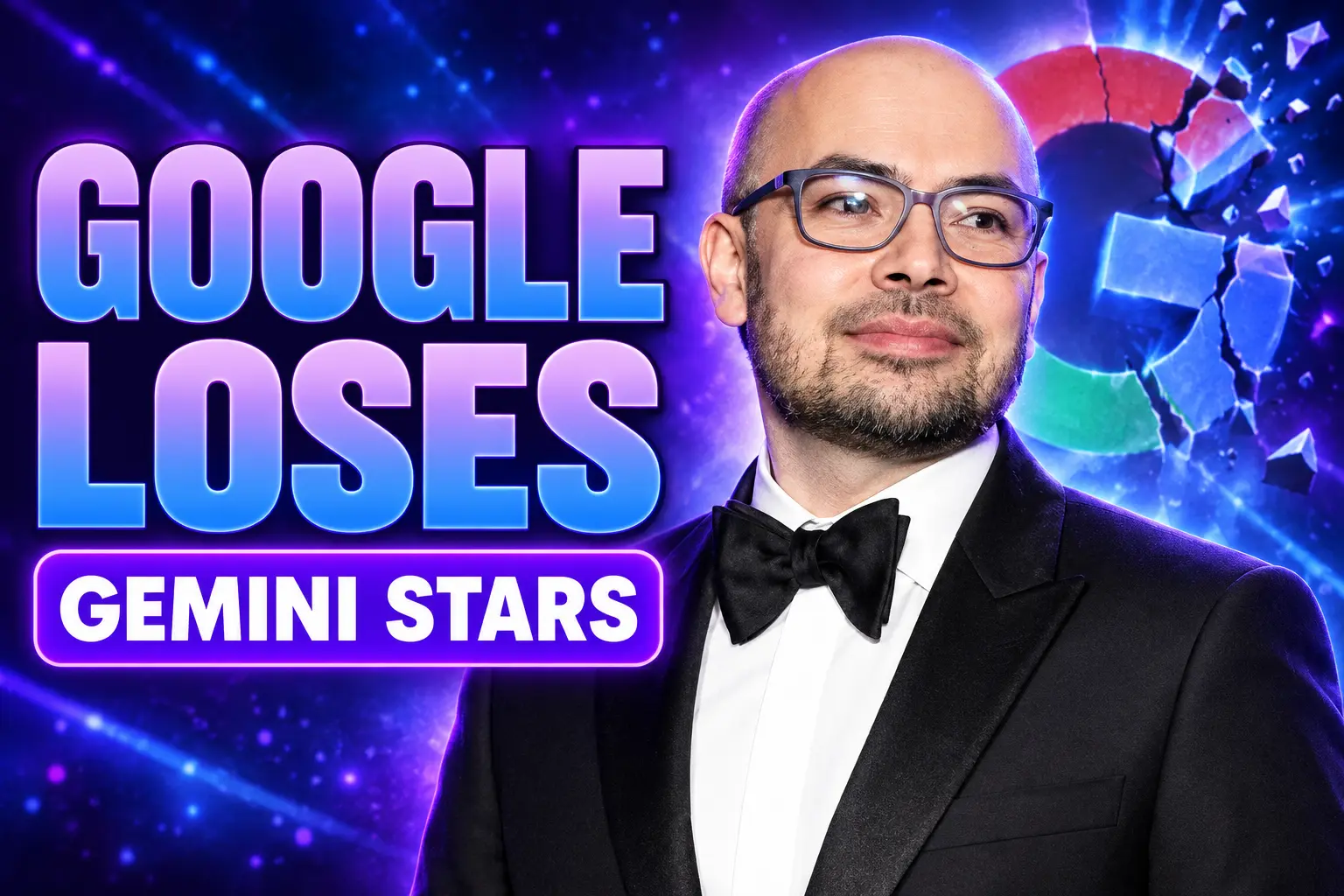
Two Gemini researchers were set to join Anthropic, the Claude lab that buys Google TPUs and is lining up a fall IPO.

Two senior Google Gemini researchers, Jonas Adler and Alexander Pritzel, were set in June 2026 to join Anthropic. People familiar with the matter said both were viewed inside Google as key contributors to Gemini, with Adler on the AI coding effort and Pritzel on training.
They were lined up to follow Nobel laureate John Jumper to the Claude lab, a company that already buys Google chips in bulk and had just filed papers for a public listing. Alphabet shares fell as much as 1.2% on June 24, then closed slightly down.
Five Google AI Names Moved in Six Days
The Adler and Pritzel plans landed on June 24, 2026, six days after Gemini co-lead Noam Shazeer said he was joining OpenAI and five days after Jumper said he was leaving Google DeepMind for Anthropic. Arthur Conmy, a senior research engineer who had worked on Gemini 2.5 and AI coding, wrote on X that same Wednesday that he was set to join Anthropic to work on AI safety.
Adler, Pritzel, Jumper, and Shazeer did not answer requests for comment at the time. Anthropic declined to comment. A Google spokesperson said the company remained confident in its place in the AI talent market and pointed to remarks by DeepMind chief Demis Hassabis earlier that week.
THE JUNE 2026 GOOGLE AI EXITS
| Name | Work at Google | Destination | Date |
|---|---|---|---|
| Noam Shazeer | Gemini co-lead, VP of engineering | OpenAI | June 18, 2026 |
| John Jumper | DeepMind VP, AlphaFold lead | Anthropic | June 19, 2026 |
| Jonas Adler | Gemini, AI coding | Anthropic | June 24, 2026 |
| Alexander Pritzel | Gemini, training | Anthropic | June 24, 2026 |
| Arthur Conmy | Gemini 2.5, AI safety | Anthropic | June 24, 2026 |
Unlike Shazeer and Jumper, Adler and Pritzel never posted a public farewell. The June 24 account described them as planning to leave, not as already on Anthropic’s payroll. Later industry lists have treated both as Anthropic hires, still without a first-person announcement from either researcher.
Google Still Sells Anthropic the Chips
Anthropic competes with Gemini and still runs a large share of Claude on Google hardware. On Oct. 23, 2025, the company said it would expand its use of Google Cloud, including up to one million Google TPUs, in a deal worth tens of billions of dollars that it expected to bring well over a gigawatt of capacity online in 2026.
Anthropic’s choice to significantly expand its usage of TPUs reflects the strong price-performance and efficiency its teams have seen with TPUs for several years.
Thomas Kurian, CEO, Google Cloud, on Anthropic’s TPU expansion
On April 6, 2026, Anthropic said it had signed a new deal with Google and Broadcom for multiple gigawatts of next-generation TPU capacity due to come online starting in 2027. Krishna Rao, Anthropic’s chief financial officer, called it the company’s most significant compute commitment to date. Amazon remains Anthropic’s primary cloud and training partner, and Claude is sold on AWS, Google Cloud, and Microsoft Azure. That split does not cancel the awkward part. Google is still minting the accelerators, and Anthropic is still hiring the people who used to spend those accelerators on Gemini.
ANTHROPIC’S YEAR ON GOOGLE IRON
- October 23, 2025: Anthropic says it will take up to one million Google TPUs and bring well over a gigawatt online in 2026.
- November 12, 2025: Anthropic pledges $50 billion for U.S. computing sites, including data centers built with Fluidstack.
- April 6, 2026: Anthropic, Google, and Broadcom agree on multiple gigawatts of next-generation TPU capacity from 2027, as Anthropic’s run-rate revenue surpasses $30 billion.
- May 28, 2026: Series H closes at a $965 billion post-money value.
- June 1, 2026: Anthropic confidentially submits a draft S-1, keeping a fall listing on the table.
Google Cloud’s pitch is price and performance. Anthropic’s recruiting pitch, in the same months, is equity in a private company that uses those chips to beat Google’s own models.
What a Pre-IPO Stake Buys That RSUs Do Not?
Anthropic’s May 28, 2026 Series H raised $65 billion and valued the company at $965 billion after the round, led by Altimeter Capital, Dragoneer, Greenoaks, and Sequoia Capital. The round included $15 billion of previously committed hyperscaler money, $5 billion of it from Amazon. Rao said the cash would help meet demand for Claude, including Claude Code, and keep research at the frontier.
On April 6, Anthropic said run-rate revenue had surpassed $30 billion, up from about $9 billion at the end of 2025. The count of business customers spending more than $1 million a year had gone from over 500 at the February Series G to more than 1,000, doubling in less than two months. In October 2025 it had already claimed more than 300,000 business customers, with large accounts up nearly 7x in a year.
A public company can print large restricted-stock grants. It cannot easily reprint the upside of a private round that just marked the Claude maker above OpenAI and left a listing window open for the fall. That gap, more than any single lab feud, is what a senior researcher is weighing when the call comes from Anthropic or OpenAI. Google’s RSUs vest on a known calendar. A pre-IPO stake is a bet that the next filing will reprice the last decade of work.
Adler and Pritzel were not named in any of those funding posts. They did not need to be. The round is the offer letter’s silent page.
The Cluster That Moved Before Shazeer Did
Shazeer’s June 18 post was the first public crack in that week. He had been at Google since 2000, left in 2021 to found Character.AI, and came back in 2024 under a licensing deal that valued his company at $2.5 billion. Once back, he co-led Gemini. People familiar with the matter said that shortly before he announced OpenAI, computing power on one of his projects was reassigned to a London DeepMind team, in a bid to tighten collaboration on pre-training.
I’m excited to share that I’ll be joining OpenAI and look forward to working with the exceptional team there.
It was a difficult decision to move on. I’m incredibly proud of the amazing team at Google and everything we’ve built together. It has been an honor and a pleasure to…
— Noam Shazeer (@NoamShazeer) June 18, 2026
He had also been working on a new architecture that still used the transformer method he and colleagues introduced in 2017, with early results that one person described as promising. Google got the paper and, for a stretch, the person. Then it moved the cluster, and he moved firms. The same week, Adler’s coding brief and Pritzel’s training brief were the next two names on the list. If pre-training compute is being pooled in London, the people who sat on the old stacks have a clear read on where their next job will actually get machines.
Jumper’s Protein Team Now Feeds Two Labs
Jumper posted on June 19 that after nearly 9 years he would leave Google DeepMind and join Anthropic after some time to recharge. Hassabis, he wrote, had let him lead the AlphaFold team six months after he finished his PhD. AlphaFold predicted more than 200 million protein structures and won Jumper and Hassabis the 2024 Nobel Prize in Chemistry. A DeepMind spokesperson said the lab was grateful for his work and wished him well.
Adler and Pritzel both worked with Jumper on that protein research, and both were set to join him at Anthropic. Other people from the same folding group have already gone to Isomorphic Labs, an Alphabet spinout that designs drugs with AI, according to a person familiar with the matter. Alphabet still catches some of that science inside the family. Anthropic catches the Nobel name and two Gemini contributors who know the same stack.
UK non-compete rules, which are enforceable, often keep DeepMind leaders on long garden leave. Jumper would likely not start at Anthropic until 2027, a person familiar with the matter said. Google keeps the prizewinner on ice for months. Anthropic still gets to sell the hire to every researcher who wants to sit next to him when the clock runs out. Anthropic has also been pushing into life sciences and health, the same field AlphaFold made famous, so the delayed start is a staffing plan, not a pause in the raid.
Hassabis Bets on a Bench Rivals Still Raid
Hassabis answered the week in Cannes by talking about scale, not about any one name.
There’s a lot of talent movement between all the leading labs and we win our fair share of the top talent. We have by far the biggest and broadest research bench of any of the labs out there. It’s a ferociously competitive market right now, the most ferociously competitive it’s ever been in the tech industry.
Demis Hassabis, CEO, Google DeepMind, at an event in Cannes
The headcount claim can be true and still miss the direction of travel. SignalFire’s 2025 State of Talent Report, built from its Beacon AI tracker, found that DeepMind engineers leave for Anthropic at a ratio of nearly 11 to 1 the other way. OpenAI engineers were 8 times more likely to go to Anthropic than the reverse.
HOW THE LABS KEEP PEOPLE
- Anthropic retention: 80% of people hired at least two years earlier were still there at the two-year mark.
- DeepMind retention: 78% on the same two-year test, just behind Anthropic.
- OpenAI retention: 67%, in line with large consumer-tech firms.
- Meta retention: 64% in the same cut.
DeepMind still holds most of the people it hires. The leak is at the top, toward a lab that keeps more of its own staff and can still write pre-IPO paper. Hassabis can win “fair share” on volume and lose the specific people who train Gemini, write coding tools, and own AlphaFold. Those are not interchangeable seats on a broad bench.
Addy Osmani Took the Coding Path in September
Adler’s brief was Google’s AI coding effort, the work that is supposed to keep Gemini in the same conversation as Claude Code. That thread did not end in June. On Sept. 8, 2026, Addy Osmani, a longtime Google Chrome engineer who had led Gemini developer experience, wrote that he had joined Anthropic to work on Claude Code.
I've joined @AnthropicAI!
I'll be working on Claude Code and making it better for developers who use it. Here's a little Fable & Three.js pic.twitter.com/HvuzVbji73
— Addy Osmani (@addyosmani) September 8, 2026
The June cluster and the September coding hire are the same trade seen twice. Google sells Anthropic the iron, books cloud revenue, and watches the people who knew Gemini’s coding stack walk toward Claude. Jumper’s garden leave only delays one start date. It does not reverse the offer that a $965 billion private company can still make before it lists.
Disclaimer: This article is news reporting and analysis of published company statements, a venture talent study, and named researchers’ own posts. It is for information only and is not investment advice, a recommendation to buy or sell Alphabet, Anthropic, or any other security, or a prediction of any IPO price. Readers who are considering employment moves or securities trades should consult a qualified career adviser or a licensed financial adviser about their own situation. Headcount plans, valuations, listing windows, and start dates are those given by the cited companies and people on the dates named above and can change.

Google Says AI Agents Now Compress Thefts Into Hours

Average People Feel AI First on the Power Bill

Suno Turns the Warner Settlement Into Licensed v6 Models

Lunit Turns Routine H&E Slides Into a Lung Pre-Screen

Meta’s Muse Agent Wants Your Inbox and Your Card

Fable 5 Came Back Under a Commerce On-Off Switch

Google’s SpaceX GPU Lease Has a Sept. 30 Deadline

Plasma One’s XPL Locks Face a 1.81 Billion Cliff

DGO’s Rs 549 World Cup Pass Cost Fans Sleep and Data

Moonshot AI’s $30 Billion Ask Became a $35 Billion Close
-
 AI3 months ago
Fable 5 Came Back Under a Commerce On-Off Switch
-
 AI4 months ago
Google’s SpaceX GPU Lease Has a Sept. 30 Deadline
-
 CRYPTO4 months ago
Plasma One’s XPL Locks Face a 1.81 Billion Cliff
-
 APPS4 months ago
DGO’s Rs 549 World Cup Pass Cost Fans Sleep and Data
-
 AI4 months ago
Moonshot AI’s $30 Billion Ask Became a $35 Billion Close
-

 NEWS4 months ago
ColorOS 17 Device List Spans Oppo, OnePlus and Realme
-
 GAMING4 months ago
Xbox Cuts 3,200 Jobs After Five Years of Thin Returns
-
 GAMING3 months ago
The RTX 4050 Under Rs 70,000 Hides a Wattage Gap