
NEWS
EU Hits Google With a Record $1 Billion Antitrust Fine
The EU’s record 890 million euro Google fine echoes a 2024 hotel search fix that ended up favoring Booking.com and Expedia over small hotels.

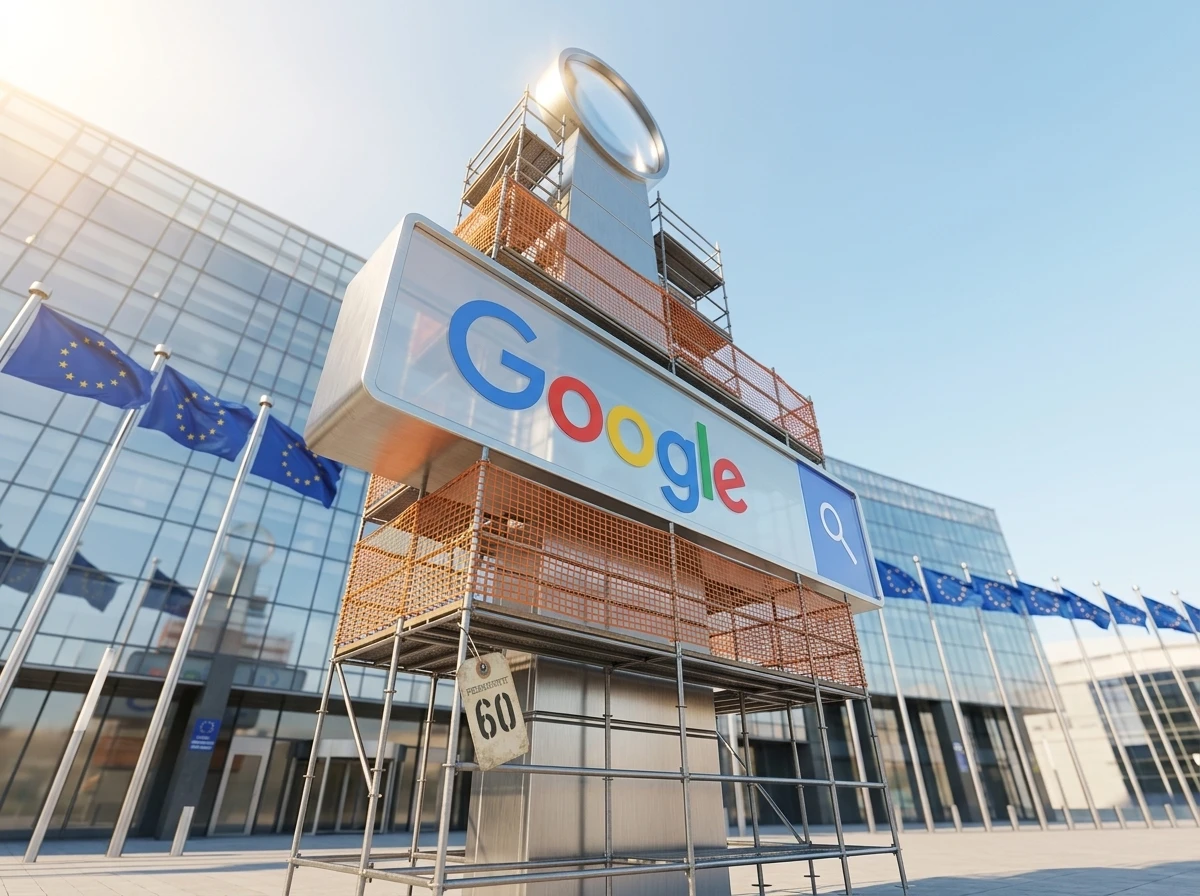
The European Commission fined Google €890 million, about $1.02 billion, on Thursday, its first and largest penalty under the Digital Markets Act (DMA), the EU’s rulebook for dominant tech platforms. Regulators gave the company 60 days to stop favoring its own products in Search and to loosen its grip on how Play Store developers can point users toward cheaper deals.
Brussels has forced a version of this fix once before, on hotel bookings. Its own data from that earlier round shows Booking.com and Expedia picked up the traffic Google gave up, while independent hotels lost direct bookings. The redesign ordered Thursday covers far more ground than hotels ever did.
Two Fines, One Deadline
The Commission split the penalty across two non-compliance decisions. The larger piece, €460 million (about $525 million), targets how Google ranks its own shopping, hotel, transport, and sports results above rivals in Search. The smaller piece, €430 million (about $491 million), targets Play Store rules that blocked app developers from telling users about cheaper ways to pay.
Both practices have to end within 60 days, or Google faces periodic penalty payments of up to 5% of Alphabet’s average daily worldwide turnover, a figure that accrues for every day the company stays out of compliance.
| Violation | EU Fine | USD Equivalent | What Must End |
|---|---|---|---|
| Search self-preferencing | €460 million | ~$525 million | Enhanced visuals and top placement for Google Shopping, Flights, and Hotels |
| Play Store anti-steering | €430 million | ~$491 million | Fees and contract terms that blocked developers from promoting cheaper options |
Under Article 6(5) of the DMA, gatekeepers must rank rivals fairly rather than tilting the page toward their own services. Investigators found Google gave Google Shopping, Google Flights, and Google Hotels better placement, richer visuals, and interactive filters that Expedia, Skyscanner, and Booking.com never received for the same queries.
The EU Already Ran This Fix Once, on Hotels
The Search case is new. The remedy is not. After the DMA’s obligations first took hold in 2024, Google adjusted how it displayed hotel results in Europe to give rival booking sites more equal footing. Hospitality technology firm Mirai tracked what happened next.
- 30% fewer clicks – traffic from Google Hotel Ads to hotel websites dropped by that share in DMA-covered markets after Google’s first compliance changes, Mirai found.
- 36% fewer direct bookings – hotels’ own reservation channels lost more than a third of bookings tied to that Google traffic, compared with non-DMA markets.
- 16.8% to 15.7% – Google’s own slice of hotels’ direct-booking mix, which still slipped even as the search giant lost less ground than independent hotels did.
Mirai’s numbers have circulated for two years now, cited again through each new round of compliance talk, and they still describe the same pattern. European hotels lost direct traffic. The platforms built to aggregate many hotels at once kept or grew their share.
Booking and Expedia Look Like the Winners
The online travel sector that Google’s search rivals operate in is already concentrated. Research firm Mordor Intelligence put Europe’s online travel market at $112.81 billion in 2026, on pace to reach $171.26 billion by 2031, with a handful of companies controlling most of the revenue:
- Booking Holdings, owner of Booking.com and Priceline
- Expedia Group, owner of Expedia, Hotels.com, and Vrbo
- Trip.com Group
- Trivago
- Lastminute.com Group
Statista’s tracking of hotel distribution channels found that Booking.com already held the highest market share among online travel agencies in Europe before Thursday’s ruling ever landed. A search redesign built to stop Google favoring itself does not touch that starting position, and it may make it stronger.
Google Calls the Redesign a Downgrade
Google did not accept the decisions quietly. Kent Walker, Alphabet’s president of global affairs, said the Commission’s demands amount to stripping away real-time features European users rely on: live hotel pricing, direct flight availability, restaurant booking, and safety checks built into Play Store.
A small group of self-serving complainants.
That is how Walker described the parties behind the case, in a statement cited by CNBC. He said Google is reviewing the decisions and weighing an appeal.
An appeal would go to the EU General Court and would likely take two to three years to resolve. It would not pause the clock. A July 8 ruling from that same court dismissed Apple’s three challenges to its gatekeeper status and confirmed that companies cannot obtain a pre-decision injunction to delay DMA enforcement. Google has to comply first and argue afterward.
Google’s complaint about unintended consequences has some backing beyond its own statement. The German Marshall Fund, a transatlantic policy institute, has documented Google’s argument that the DMA favors intermediaries over direct sellers and adds regulatory uncertainty. A trade group whose members include Google, Amazon, and Meta has gone further, estimating in its own research that the DMA causes billions in annual EU business losses, though that estimate’s wide range shows how contested the underlying methodology still is.
The Commission’s counter is narrower than a flat denial. Its position is that uneven outcomes reflect the quality of Google’s own compliance choices, not a flaw in the non-discrimination requirement itself.
A Two-Decade Ledger Tops $11 Billion
Thursday’s fine adds to a two-decade history of EU antitrust action against Google, one that started with a complaint from a small British company most people have never heard of.
Foundem, a price comparison website, filed that complaint in 2009, arguing Google’s search engine buried competing comparison-shopping services while promoting its own. The case took eight years to produce a fine: €2.42 billion (about $2.76 billion) in 2017, the original Google Shopping decision.
More followed. Google’s Android licensing practices drew a €4.34 billion (about $4.95 billion) fine in 2018, reduced on appeal to €4.1 billion (about $4.68 billion) and confirmed by the EU Court of Justice on July 2, 2026. Its ad technology business drew a €2.95 billion (about $3.37 billion) fine in September 2025. Add Thursday’s €890 million, and Google’s running total across antitrust and DMA cases reaches roughly €10.38 billion, or about $11.85 billion.
The DMA was built to move faster than Foundem’s eight-year odyssey, trading case-by-case harm analysis for a flat rule: designated gatekeepers cannot favor themselves. The investigation behind Thursday’s fine opened in March 2024, according to policy outlet TechPolicy.press, and produced a decision a little more than two years later. That is slow next to a 60-day compliance clock, but fast next to eight years.
Does the Fine Reach Google’s AI Overviews?
Not directly, and not yet. Thursday’s decision was built around Google Shopping’s old-style enhanced card, not around AI Overviews, the Gemini-generated summaries now sitting atop many EU search results. But the Commission has flagged that the same non-discrimination principles could extend there next, opening a new front before this one even closes.
AI Overviews did not exist in their current form when the Search investigation began. They do now: generated by Google’s own Gemini model, occupying the top slot on the results page, and appearing above the comparison sites, retailers, and publishers the original case was built to protect.
Brussels has not ruled that AI Overviews violate the DMA. It has said the legal question is the same one Thursday’s decision already answered for Google Shopping: does Google’s own service get placement and formatting no competitor can match? Discussions continue.
The Commission is not waiting for that debate to finish before moving elsewhere. On July 16, separate binding orders required Google to share anonymized search data with rival search engines and AI services starting in January 2027, and to open 11 Android system features to competing AI assistants by next summer’s Android release. Those orders are already in force, separate from Thursday’s 60-day window. The pattern echoes a broader push ordering Google and Apple to open their AI assistants to rivals, a fight regulators have compared to their earlier battle with Meta over WhatsApp interoperability.
For now, Google’s near-term deadlines are set. The Search and Play Store changes are due within 60 days, by late September, or daily penalties begin. The Android assistant access opens next July. Apple, Meta, and Google have each drawn a DMA penalty within about two years of the law’s full applicability; Amazon, Microsoft, and ByteDance remain under the same obligations, watching what compliance costs in practice.
Frequently Asked Questions
Does this fine change what Google Search shows outside the EU?
No immediate change is expected outside the European Economic Area. The DMA only applies within the EEA, so the ranking and formatting changes the Commission ordered apply to results pages served to users there. Google has generally built separate compliance code paths for the EU rather than altering its global product, a pattern it followed with earlier DMA obligations.
Is the 5% penalty a single extra fine or does it repeat?
It repeats. The 5% figure is a daily penalty payment, tied to Alphabet’s average daily worldwide turnover, that accrues for every day Google remains out of compliance once the 60-day deadline passes. It sits on top of, not in place of, the €890 million fine issued Thursday, which covers past conduct rather than future non-compliance.
How large is €890 million next to Alphabet’s overall business?
Small, by design. The Commission could have fined Google up to 10% of its global annual turnover for a first DMA violation, a threshold that exceeds $40 billion on Alphabet’s recent revenue. Thursday’s roughly $1 billion fine works out to well under one percent of that turnover, evidence the Commission chose a penalty meant to change behavior rather than maximize financial pain.
Are Amazon, Microsoft, or other companies facing similar DMA fines?
Not yet, but they remain exposed. Amazon, Microsoft, ByteDance, and other designated gatekeepers carry the same DMA obligations that Google, Apple, and Meta have already been fined under. No formal non-compliance decision against any of them had been announced as of Thursday, though each stays subject to Commission review of how it meets gatekeeper duties around data, interoperability, and self-preferencing.


Meta Bets on People with Bowie’s Five-Year Extinction Song

T-Mobile’s Free iPhone 17 Deal Carries a 24-Month String

Nvidia’s AI Security Alliance Excludes OpenAI, Google and Anthropic

CleanMy®Phone Clears iPhone Clutter and Funds Ukraine’s Defense

Amodei Rejects Open-Weight AI Ban, Pushes Chip and Distillation Curbs

Americans Say China Leads AI While the Money Still Says Otherwise

ONR Bets on AI to Run Research and Multiply Program Officers

TrendAI Appoints Richard Harrison as First Auckland-Based Global VP

Honor’s Robot Phone Launches August 12 as IPO Pressure Builds

The Snapdragon 8s Elite Leak That Foreshadowed Qualcomm’s Chip Split

Fable 5 and Mythos 5 Return as US Lifts Anthropic Export Controls

SpaceX’s Google Deal Turns a Rocket Company Into a Cloud Landlord

CD Projekt Red Co-CEO: Redemption Arc Isn’t Done, Witcher 4 in 2027

Oracle Cuts 21,000 Jobs in a Year, Cites AI in 10-K Filing

XPL Rallies 30% Ahead of Plasma One Card Tier Launch

DGO App Brings Rs 549 Mobile Pass for FIFA World Cup 2026 in Nepal

Moonshot AI Targets $30 Billion in China’s Fastest AI Funding Sprint

Google Search Profiles Build a Follow Graph Inside Discover

Microsoft Xbox Layoffs Start in July as Sharma Slams 3% Margin

Oppo’s ColorOS 17 Eligibility List Leaves A-Series Buyers Behind
-
 AI4 weeks ago
Fable 5 and Mythos 5 Return as US Lifts Anthropic Export Controls
-
 AI2 months ago
SpaceX’s Google Deal Turns a Rocket Company Into a Cloud Landlord
-
 GAMING1 month ago
CD Projekt Red Co-CEO: Redemption Arc Isn’t Done, Witcher 4 in 2027
-
 AI1 month ago
Oracle Cuts 21,000 Jobs in a Year, Cites AI in 10-K Filing
-
 CRYPTO2 months ago
XPL Rallies 30% Ahead of Plasma One Card Tier Launch
-
 APPS2 months ago
DGO App Brings Rs 549 Mobile Pass for FIFA World Cup 2026 in Nepal
-
 AI2 months ago
Moonshot AI Targets $30 Billion in China’s Fastest AI Funding Sprint
-
 NEWS2 months ago
Google Search Profiles Build a Follow Graph Inside Discover