
NEWS
The Snapdragon 8s Elite Leak That Foreshadowed Qualcomm’s Chip Split
A 2025 leak showing Qualcomm’s cheaper Snapdragon chip skipping Oryon cores was the first sign of a split that now spans four Elite Gen 5 variants.

A March 2025 leak said Qualcomm’s cheaper flagship chip, the Snapdragon 8s Elite, would skip the company’s custom Oryon processor cores entirely. It read like a footnote about one budget part. Sixteen months later, that cost cut has become the template for Qualcomm’s whole flagship line: the Snapdragon 8 Elite Gen 5 now ships in four differently binned versions, each with its own model number, its own clock speeds and its own price band.
The chip that leaked as Snapdragon 8s Elite never actually carried that name. It launched instead as the Snapdragon 8s Gen 4, and its real specifications lined up with the leak almost to the decimal point. What that first report could not show was how far Qualcomm would push the idea of one silicon design serving four separate budgets by 2026.
A Leak That Turned Out Almost Entirely Right
The leak came from technology tipster Debayan Roy, known on X as @Gadgetsdata, and was picked up by GSMArena on March 24, 2025. It laid out a chip with a single Cortex-X4 prime core at 3.21GHz, a mixed cluster of Cortex-A720 cores, two Cortex-A520 efficiency cores, an Adreno 825 graphics processor and a 4 nanometer node. Crucially, it listed zero Oryon cores, the custom processor design Qualcomm reserves for its priciest silicon.
GSMArena’s read on the numbers was blunt.
You might be disappointed if you were hoping that the Snapdragon 8s Elite would be more like the premium Snapdragon 8 Elite. It is shaping up to be closer to the Snapdragon 8s Gen 3 than anything.
That assessment ran the same day the specs surfaced. It held up.
Qualcomm Renamed the Chip but Kept Every Cut
Qualcomm unveiled the chip in China around an April 2 event, and it carried a different badge than anyone had guessed: Snapdragon 8s Gen 4, not Snapdragon 8s Elite. GSMArena had actually flagged the naming switch ahead of launch. The internals, though, matched the leak closely. The production chip still ran a lone Cortex-X4 prime core near 3.2GHz, still paired it with Arm’s stock Cortex-A720 and Cortex-A520 cores, still used the Adreno 825 GPU, and still sat on a 4 nanometer process. Qualcomm markets that core arrangement under its long-running Kryo name, even though none of it descends from Oryon.
Qualcomm’s own performance claims put the Snapdragon 8s Gen 4 at 31% faster CPU performance, roughly 49% stronger graphics throughput and 39% lower power draw than the outgoing Snapdragon 8s Gen 3. Here is how the four chips stack up against each other on paper.
| Chip | Node | Prime Core | Oryon Cores | GPU |
|---|---|---|---|---|
| Snapdragon 8 Elite | 3nm | 2x Oryon @ 4.32GHz | Yes | Adreno 830 |
| Snapdragon 8s Elite (leaked spec, March 2025) | 4nm | 1x Cortex-X4 @ 3.21GHz | No | Adreno 825 |
| Snapdragon 8s Gen 4 (shipped, April 2025) | 4nm | 1x Cortex-X4 @ 3.2GHz | No | Adreno 825 |
| Snapdragon 8s Gen 3 | 4nm | 1x Cortex-X4 @ 3.0GHz | No | Adreno 735 |
Five device lines carried the new chip to market within weeks of launch.
- iQOO Z10 Turbo Pro
- Redmi Turbo 4 Pro
- Xiaomi CIVI 5 Pro, sold in India as the Xiaomi 15 CIVI
- POCO F7, a rebadged Redmi Turbo 4 Pro for global markets
- OPPO K13 Pro
None of them advertised Oryon cores, because none of them had any.
Why Oryon Never Made It Into the Cheaper Silicon
Oryon cores are Qualcomm’s custom design, built to compete directly with Apple’s chips on single-core performance. They cost more to engineer, more to validate and more to bin than licensing a reference design straight from Arm. Reserving Oryon for the true flagship, and filling the cheaper tier with off-the-shelf Cortex cores under the Kryo label, let Qualcomm hit a lower price point without opening a second custom-core production line. It is a sound cost argument. It is also the decision that set up everything that came after.
One Chip Design Now Ships as Four
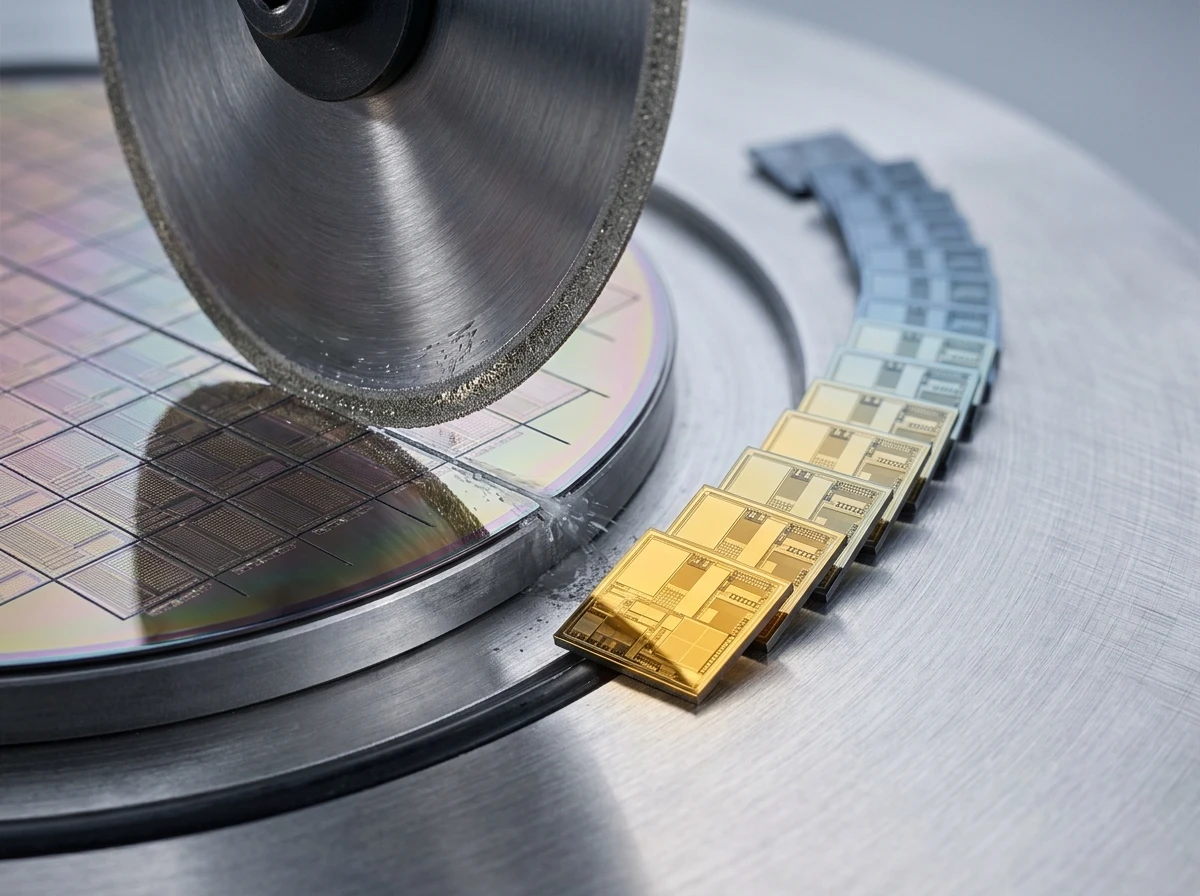
Qualcomm has stretched the Gen 5 lineup even further as component costs climbed industrywide, and the flagship Snapdragon 8 Elite Gen 5, built around the SM8850 design, now exists in four distinct configurations rather than one.
| Variant | Model Number | Configuration | Primary Devices |
|---|---|---|---|
| Standard | SM8850-AC | Full 8-core, reference clocks | Mainstream 2026 flagships |
| High-frequency | SM8850-1-AD | Full 8-core, highest clock bin | Galaxy S26, Galaxy Z Fold8, RedMagic 11S |
| Efficiency | SM8850-5-AC | 7-core, tuned for thin chassis | Oppo Find N6 |
| Cost-optimized | SM8850-1-AB | Full 8-core, lower clock bin | Unnamed $400 to $500 phones, second half of 2026 |
Samsung slots the AD bin into both the Galaxy S26 and a Galaxy Z Fold8 that leaked at 201 grams before its launch. The cheapest bin, SM8850-1-AB, does not cut the architecture at all. Chips that miss the clock speed threshold for the standard SM8850-AC get sorted down instead of scrapped, then sold into the $400 to $500 bracket. Qualcomm’s Snapdragon 8 Elite Gen 5 press materials for the Galaxy S26 launch describe a chip driving unprecedented performance in the Galaxy S26 series, a framing that applies to exactly one of the four bins riding on the same silicon.
The Elite Badge Stops Meaning One Thing
Counterpoint Research’s own analysis frames the Gen 5 platform as redefining mobile performance and AI efficiency, which is a fair description of the top bin. It says nothing about the bin heading into a $450 phone later this year. Buyers cannot tell the difference from the box. Two phones can carry the words Snapdragon 8 Elite Gen 5 on their spec sheets and ship meaningfully different silicon underneath, sorted by a production line rather than a design team.
The line blurs further one rung down. Counterpoint has also tracked a custom Oryon core reaching the entry-level premium segment through the plain Snapdragon 8 Gen 5, a non-Elite chip. So the badge that once separated custom-core silicon from stock-core silicon now runs in both directions at once: an Elite chip that is really a binned commodity part, and a non-Elite chip carrying Qualcomm’s premium core design.
Who Wins When a Flagship Chip Gets Sorted Into Bins
Phone makers win the clearest upside. Binning lets a brand like Oppo or an unnamed value-flagship maker advertise Snapdragon 8 Elite Gen 5 branding at a price that would have required a completely different chip two years ago. That is real value passed down the chain, and it explains why the practice keeps expanding rather than reversing.
Buyers absorb the cost of that flexibility in a different currency: clarity. A shopper comparing two phones with identical chip names has no simple way to know which bin sits inside either one without digging into a specific model number. The SM8850-1-AB variant still benchmarks well, with Geekbench 6 scores landing around 3,600 single-core and 11,300 multi-core, meaningfully ahead of any true mid-range chip in its price class. It just is not the same part as the one in a Galaxy S26.
Gen 6 Leaks Show Qualcomm Doubling Down
Leaked block diagrams for the next generation, the Snapdragon 8 Elite Gen 6 and Gen 6 Pro, carry the model numbers SM8950 and SM8975. Reporting on those diagrams describes two primary memory configurations, one built around LPDDR5X and a higher-end option supporting LPDDR6, alongside a new heat pass block cooling design for the Pro chip. The Gen 6 Pro’s standard configuration reportedly uses an 8-core CPU cluster, and industry coverage expects Qualcomm to introduce a binned 7-core version of that same Pro chip once yields settle, mirroring the exact playbook that started with a leak nobody took seriously in 2025.
Frequently Asked Questions
What do the letters after SM8850 actually mean?
SM8850 identifies the base chip design behind the Snapdragon 8 Elite Gen 5. The suffixes that follow, such as AC, AD or AB, mark a specific bin: a combination of core count, clock ceiling and target device tier rather than a separate chip design.
Does a cheaper Snapdragon 8 Elite Gen 5 bin use a different manufacturing process?
No. Every SM8850 variant comes off the same production line and process node. Binning sorts finished silicon by how high it can clock and how many cores function correctly, then routes lower-performing units to cheaper devices instead of discarding them.
How much cheaper is the entry-level Snapdragon 8 Elite Gen 5 bin?
The SM8850-1-AB variant targets phones priced between $400 and $500, well under the roughly $1,000-plus phones carrying the top SM8850-1-AD bin, while keeping the same eight-core architecture underneath.
Will the Snapdragon 8 Elite Gen 6 repeat the same binning split?
Leaks point that way. Reporting on leaked block diagrams for the SM8975 Gen 6 Pro chip expects a binned 7-core version alongside the standard 8-core part, continuing the pattern Qualcomm built with the Gen 5 generation.
Why bin chips instead of just designing a separate budget chip?
Binning recycles silicon that would otherwise go to waste because it cannot hit the top clock speed a flagship needs, rather than scrapping it. Industry coverage of the Gen 6 leaks notes Apple uses a comparable approach with its own chips, selling lower-yield silicon into cheaper product tiers instead of engineering a second design from scratch.


Workers Still Trust Judgment Over the AI Tools They Use

DigitalOcean’s $894 Million Backlog Rewrites the Old Cloud

Companies Froze Job Design and Called AI a People Problem

AI Capex Looks Unique Because the Chips Wear Out

Samsung Medison’s HERA Z10 Aims at the Sonographer Shortage

GPT-6 Astra Ships as OpenAI’s First Critical Cyber Model

Palms Sells Clean Air Without Ending Casino Smoking

OnlyFans Promo Bots on X Now Pass the Humanity Tests

Datamaran Drops the ESG Label After Winning the Argument

Xiaomi’s Own Chip Lands While Apple Argues Over Color

Oracle Cuts 21,000 Jobs in a Year, Cites AI in 10-K Filing

Fable 5 and Mythos 5 Return as US Lifts Anthropic Export Controls

SpaceX’s Google Deal Turns a Rocket Company Into a Cloud Landlord

CD Projekt Red Co-CEO: Redemption Arc Isn’t Done, Witcher 4 in 2027

XPL Rallies 30% Ahead of Plasma One Card Tier Launch

Google Search Profiles Build a Follow Graph Inside Discover

DGO App Brings Rs 549 Mobile Pass for FIFA World Cup 2026 in Nepal

Moonshot AI Targets $30 Billion in China’s Fastest AI Funding Sprint

Oppo’s ColorOS 17 Eligibility List Leaves A-Series Buyers Behind

Microsoft Xbox Layoffs Start in July as Sharma Slams 3% Margin
-
 AI3 months ago
Oracle Cuts 21,000 Jobs in a Year, Cites AI in 10-K Filing
-
 AI2 months ago
Fable 5 and Mythos 5 Return as US Lifts Anthropic Export Controls
-
 AI3 months ago
SpaceX’s Google Deal Turns a Rocket Company Into a Cloud Landlord
-
 GAMING3 months ago
CD Projekt Red Co-CEO: Redemption Arc Isn’t Done, Witcher 4 in 2027
-
 CRYPTO3 months ago
XPL Rallies 30% Ahead of Plasma One Card Tier Launch
-
 NEWS3 months ago
Google Search Profiles Build a Follow Graph Inside Discover
-
 APPS3 months ago
DGO App Brings Rs 549 Mobile Pass for FIFA World Cup 2026 in Nepal
-
 AI3 months ago
Moonshot AI Targets $30 Billion in China’s Fastest AI Funding Sprint