
NEWS
Vivo S2 Dummy Units Reveal a Downgraded Chipset and New Colours
Leaked Vivo S2 dummy units show black and rose gold colours and a MediaTek Dimensity 7360 chip, a step down from the Snapdragon 8 Gen 5 rumoured earlier.

Dummy units of the Vivo S2 have surfaced online in black and rose gold, and they point to a MediaTek Dimensity 7360 chipset in place of the Snapdragon 8 Gen 5 that earlier leaks had promised. The handset is tipped to launch in India on August 6, with sales opening August 11, marking the S series’ first India appearance in nearly six years.
The bigger shift is not on the back panel. Behind the colour swap sits a global memory price surge that is quietly rewriting which chips and cameras Indian phones ship with in 2026, and the Vivo S2 is turning into a visible example of that trade-off.
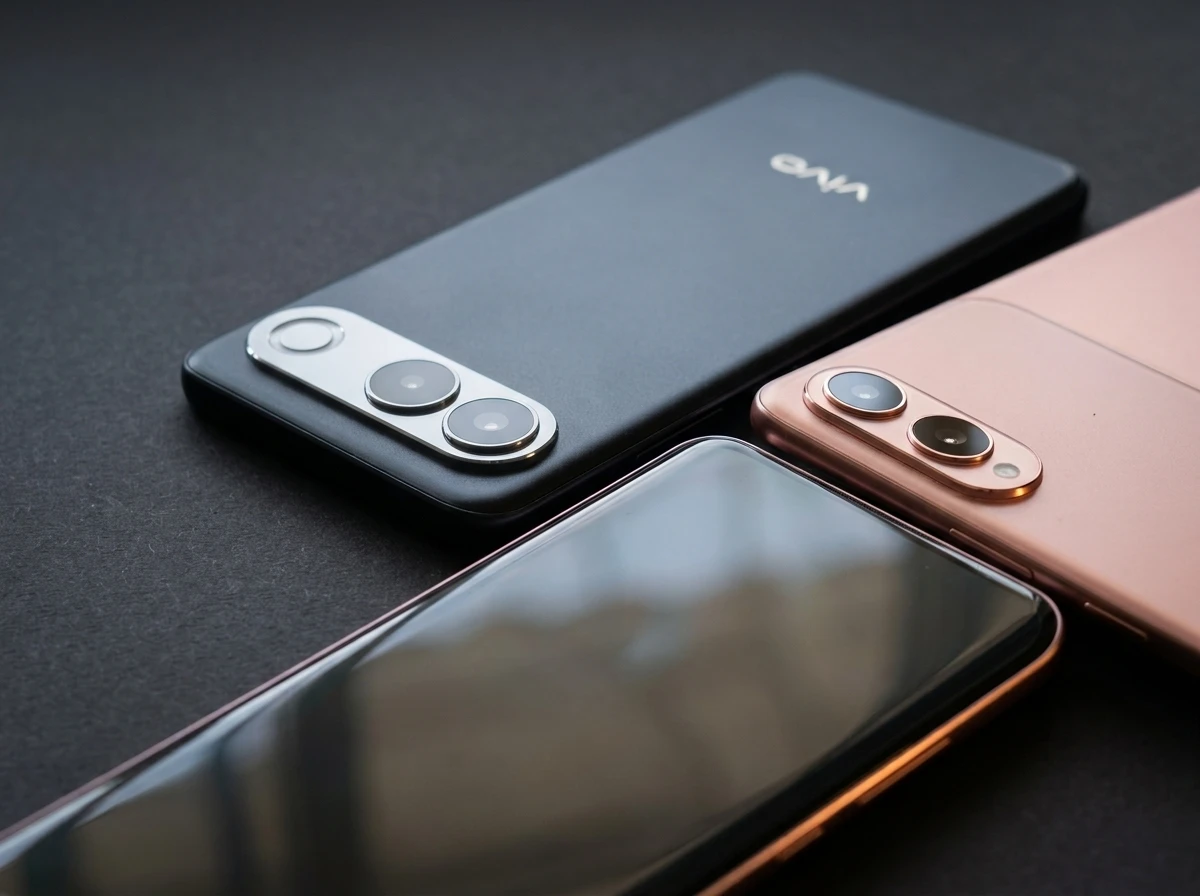
A Matte Black Back and a Rose Gold Twin
Tipster PassionateGeekz posted the leaked dummy unit photos on X, showing the alleged Vivo S2 in black and rose gold finishes. Both units carry a matte rear panel with a slightly raised, pill-shaped camera module sitting horizontally near the top.
Two lenses sit on the left side of that module. A separate circular element on the right looks like a light ring rather than a third camera. A small sticker on the back carries Vivo S2 branding, standard practice for pre-launch dummy hardware handed to retailers and reviewers.
Up front, the dummy shows a curved display with a centred hole-punch cutout for the selfie camera. The frame and back appear to be polycarbonate rather than metal or glass, consistent with a device built to hit an aggressive price rather than chase premium materials.
Snapdragon Talk Fades as Dimensity 7360 Takes Hold
The chipset story has moved the most. Earlier reports pointed to a Snapdragon 8 Gen 5 under the hood, a chip built for genuine flagship territory. The dummy unit leak instead points to MediaTek’s Dimensity 7360, and separate reporting now backs that up.
The camera claims moved too. Earlier tips described a triple rear setup: a 50-megapixel main sensor, a 50-megapixel periscope telephoto lens, and an 8-megapixel ultra-wide camera. The dummy units instead suggest a simpler dual-camera layout, a 50-megapixel main sensor with optical image stabilisation paired with an 8-megapixel ultra-wide, and no periscope module at all.
| Spec | Earlier Reports | Dummy-Unit Leak |
|---|---|---|
| Chipset | Snapdragon 8 Gen 5 | MediaTek Dimensity 7360 |
| Rear cameras | 50MP main, 50MP periscope telephoto, 8MP ultra-wide (triple) | 50MP main with OIS, 8MP ultra-wide (dual) |
| Colours | Sapphire Blue, Regal Bronze, Silk White | Black, Rose Gold |
| Build | Not detailed, premium positioning implied | Polycarbonate frame and rear panel |
The Dimensity 7360 is an octa-core chip built on a 4-nanometer process for mid-range 5G phones, not the flagship tier the Snapdragon rumour implied. MediaTek’s own listing claims up to 20 percent higher gaming frame rates and better power efficiency than rival mid-range platforms, but it is still a clear step down from a Snapdragon 8-series part.
Two Versions of the Same Phone
None of this makes the Vivo S2 a bad phone on paper. A 1.5K AMOLED screen at 120Hz, a curved display, and a design pitched as flagship-adjacent still add up to a phone built to look premium in hand.
What changed is which corners got cut to hit that look at a lower price. A periscope zoom lens and a Snapdragon 8-series chip cost real money in a phone’s bill of materials. Dropping both while keeping the screen and design intact is a specific kind of trade, and it lines up with a pattern showing up across the industry this year.
Why Memory Chips Are Rewriting the Bill of Materials
Mobile DRAM and NAND flash prices have spiked through 2025 and into 2026, and the increase has been steep enough to change what phone makers can afford to include at a given price point. Research firm TrendForce has tracked brands raising prices and downgrading specs to cope with the surge, exactly the kind of move visible in the Vivo S2’s shifting spec sheet.
- Mobile DRAM prices have climbed more than 70 percent since early 2025, with NAND flash roughly doubling in the smartphone segment over the same stretch.
- Bill of materials costs for a typical smartphone could rise around 25 percent industry-wide in 2026.
- Memory’s share of manufacturing cost has jumped past 20 percent of a phone’s total bill of materials, up from roughly 10 to 15 percent before the surge.
- Budget and mid-range devices feel it hardest, with memory alone eating up to 64 percent of parts costs on phones priced under $99.
Research firm IDC has been tracking the same squeeze, describing a memory shortage crisis reshaping device costs through the rest of 2026. Counterpoint Research separately estimates the hit to flagship phones alone at $150 to $200 per device. For a brand like Vivo, protecting a sub-Rs 45,000 (roughly $510) price point on the S2 while memory and storage costs climb behind the scenes likely meant trimming the chip and camera instead.
iQOO 16 Is Feeling the Same Pinch
Vivo is not alone in facing this choice, and its own sister brand shows the opposite version of it. iQOO, Vivo’s performance-focused sub-brand, has reportedly been piling on flagship-tier camera and display specs for the iQOO 16, while its India launch itself wavers over cost.
Tipster Yogesh Brar has said the iQOO 16 could carry a price tipped to clear Rs 85,000 if it launches in India at all, a direct result of the same DRAM and NAND cost spike. Reports suggest iQOO may limit its India lineup this year to a single budget Z-series phone instead.
Set side by side, the two sibling brands are making opposite trades against the same memory squeeze. iQOO appears to be holding onto flagship specs and letting the price float upward, even at the risk of skipping India altogether. Vivo appears to be protecting its price point on the S2 and letting the spec sheet slide instead. Same parent company, same cost pressure, two different answers.
What’s Confirmed and What Still Isn’t
With the launch nine days out at the time of the dummy unit leak, several details remain genuinely unsettled between competing reports.
- Launch date: August 6, with sales opening August 11.
- Memory and storage: 8GB+128GB and 8GB+256GB variants.
- Display: a curved 1.5K AMOLED panel with a 120Hz refresh rate and a centred hole-punch cutout.
- Chipset: MediaTek Dimensity 7360, now corroborated by multiple reports beyond the original dummy unit leak.
- Colour lineup: the dummy units show black and rose gold, while earlier retail listing leaks pointed to Sapphire Blue, Regal Bronze, and Silk White.
- Camera count: the dummy units suggest a dual rear camera with no periscope lens, while other reports still describe a triple setup including a 50-megapixel periscope telephoto shooter.
- Final price: leaked demo units were tagged between Rs 38,000 and Rs 43,000 for the base variant, while broader tips place the phone anywhere up to Rs 45,000.
Dummy units and demo-unit price tags typically arrive before a brand locks its final retail configuration, which is likely why these details still conflict this close to launch.
Does Rs 45,000 Still Hold?
If the Dimensity 7360 chipset and dual-camera setup hold through launch day, the Vivo S2 lands as a mid-range phone wearing flagship styling rather than a true flagship comeback for the S series. That is not necessarily a bad outcome for shoppers. Gartner has forecast a forecast 8.4 percent drop in shipments globally this year as memory costs squeeze the whole industry, and a phone that holds its price under Rs 45,000 while everything around it gets more expensive is doing something right.
Vivo has not confirmed pricing, colours, or final specifications. That confirmation arrives August 6, with retail sales following on August 11.
Frequently Asked Questions
What Chipset Does the Vivo S2 Use?
Leaks now point to MediaTek’s Dimensity 7360, an octa-core chip pairing four performance cores at 2.5GHz with four efficiency cores at 2GHz, alongside a Mali-G615 MC2 GPU, replacing the Snapdragon 8 Gen 5 rumoured earlier in the leak cycle.
Will the Vivo S2 Support 5G?
Yes. The Dimensity 7360 carries a 5G modem rated up to 3.27Gbps downlink with dual 5G SIM support and VoNR calling, standard for a 2026 mid-range release.
How Does the Vivo S2 Compare to the Vivo V70 Series?
Reports tip the Vivo S2 to sit below Vivo’s own V70 lineup on price, positioning it as a more affordable option within Vivo’s own India catalogue rather than a direct flagship rival.
Why Would Vivo Drop the Periscope Camera?
Periscope zoom lenses use folded-optics assemblies that cost noticeably more than a standard ultra-wide sensor, making them one of the easier components to cut when a brand is protecting a price point against rising memory costs.


Workers Still Trust Judgment Over the AI Tools They Use

DigitalOcean’s $894 Million Backlog Rewrites the Old Cloud

Companies Froze Job Design and Called AI a People Problem

AI Capex Looks Unique Because the Chips Wear Out

Samsung Medison’s HERA Z10 Aims at the Sonographer Shortage

GPT-6 Astra Ships as OpenAI’s First Critical Cyber Model

Palms Sells Clean Air Without Ending Casino Smoking

OnlyFans Promo Bots on X Now Pass the Humanity Tests

Datamaran Drops the ESG Label After Winning the Argument

Xiaomi’s Own Chip Lands While Apple Argues Over Color

Oracle Cuts 21,000 Jobs in a Year, Cites AI in 10-K Filing

Fable 5 and Mythos 5 Return as US Lifts Anthropic Export Controls

SpaceX’s Google Deal Turns a Rocket Company Into a Cloud Landlord

CD Projekt Red Co-CEO: Redemption Arc Isn’t Done, Witcher 4 in 2027

XPL Rallies 30% Ahead of Plasma One Card Tier Launch

Google Search Profiles Build a Follow Graph Inside Discover

DGO App Brings Rs 549 Mobile Pass for FIFA World Cup 2026 in Nepal

Moonshot AI Targets $30 Billion in China’s Fastest AI Funding Sprint

Oppo’s ColorOS 17 Eligibility List Leaves A-Series Buyers Behind

Microsoft Xbox Layoffs Start in July as Sharma Slams 3% Margin
-
 AI3 months ago
Oracle Cuts 21,000 Jobs in a Year, Cites AI in 10-K Filing
-
 AI2 months ago
Fable 5 and Mythos 5 Return as US Lifts Anthropic Export Controls
-
 AI3 months ago
SpaceX’s Google Deal Turns a Rocket Company Into a Cloud Landlord
-
 GAMING3 months ago
CD Projekt Red Co-CEO: Redemption Arc Isn’t Done, Witcher 4 in 2027
-
 CRYPTO3 months ago
XPL Rallies 30% Ahead of Plasma One Card Tier Launch
-
 NEWS3 months ago
Google Search Profiles Build a Follow Graph Inside Discover
-
 APPS3 months ago
DGO App Brings Rs 549 Mobile Pass for FIFA World Cup 2026 in Nepal
-
 AI3 months ago
Moonshot AI Targets $30 Billion in China’s Fastest AI Funding Sprint