
CRYPTO
South Korea’s Crypto Framework Bill Hinges on a Bank Standoff
South Korea’s ruling party wants its crypto framework law passed by year-end, but the central bank’s bank-only stablecoin demand remains unresolved.

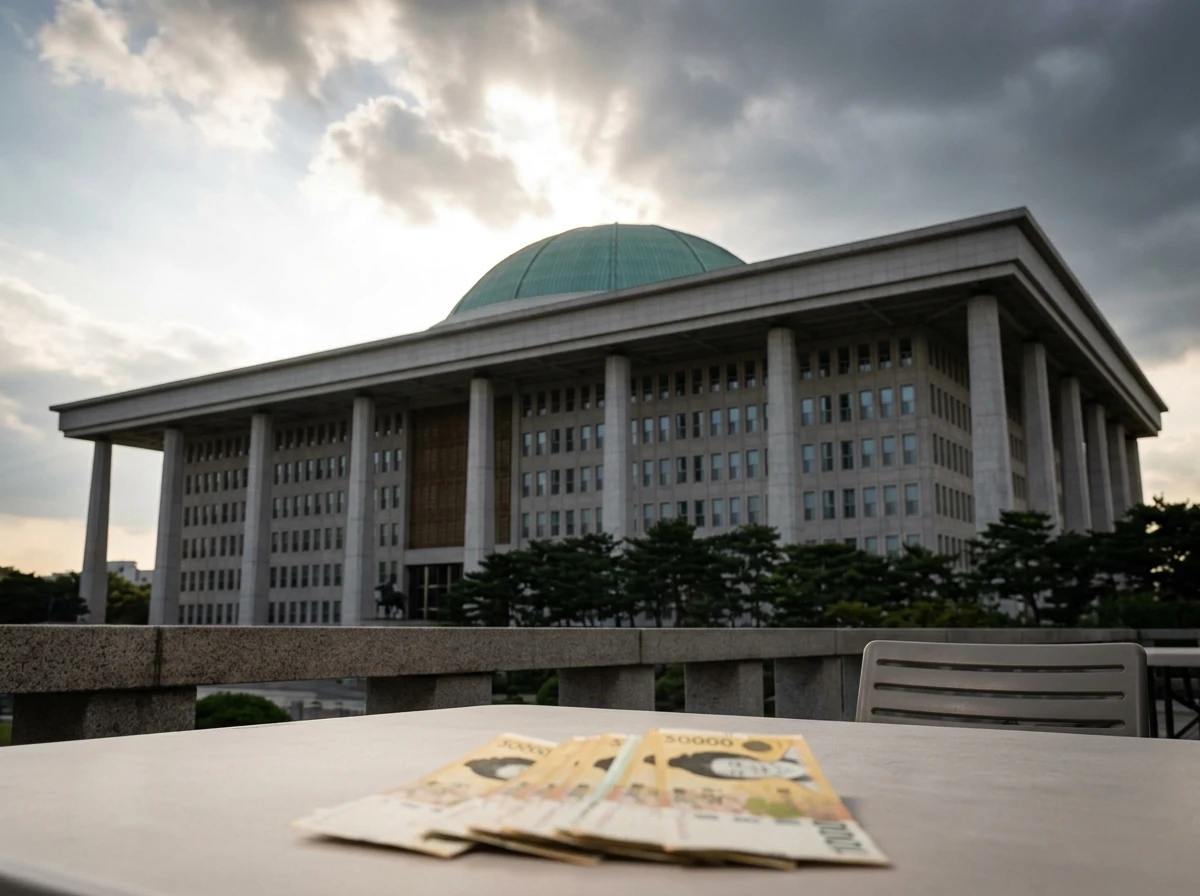
South Korea’s ruling party is treating its digital asset law as a deadline with no extension. Rep. Min Byung-deok, a Democratic Party lawmaker on the National Assembly’s Political Affairs Committee, told Bloomingbit on July 29 that he expects the Digital Asset Framework Act to clear the Assembly before the year is out. The bill would set rules for won-denominated stablecoins, cap major shareholder stakes at exchanges such as Upbit and Bithumb, and lock in user asset protections, with a government-drafted version due within weeks.
Min never named the institution his central pledge, that no single sector gets a monopoly on digital assets, is actually aimed at. For months, the Bank of Korea has told that same Assembly that stablecoin issuance should belong to banks alone.
A Bill With No Fallback Plan
There is no Plan B if the Digital Asset Framework Act is not enacted this year. I am confident the National Assembly will pass the basic law within the year.
Min made the comment in the July 29 interview with Bloomingbit, the Seoul-based outlet that first published his remarks. He introduced the bill in June 2025, but discussions stalled for more than a year before this summer’s push. He said the Assembly held extensive discussions in the first half of the year and that the government is also aiming for enactment in 2026.
The government’s own version, drafted by financial authorities including the Financial Services Commission (FSC), Korea’s chief financial regulator, has been previewed in broad strokes since spring but has not yet been formally filed with the Assembly. Min said it would be submitted soon, after which lawmakers plan to reconcile it with bills already on the table. Differences between the ruling party and financial authorities should close by the September plenary session, he said, with the Political Affairs Committee’s bill subcommittee doing the detailed work.
Two principles are not up for negotiation, Min said: no sector gets exclusive rights to issue digital assets, and user asset protection cannot be compromised. What matters for an issuer, he said, is not whether it is a bank or a non-bank, but whether it holds sufficient reserves, repayment capacity and internal controls. Europe has already forced that question into practice; its Markets in Crypto-Assets regime pushed Binance to tell EU users their holdings stay ring-fenced through its licensing transition.
The Bank of Korea’s Bank-Only Stablecoin Demand
The Bank of Korea (BOK), the country’s central bank, has spent months telling the National Assembly’s Strategy and Finance Committee that won stablecoin issuance should stay inside a bank-majority structure, with commercial banks holding more than 50 percent of any issuing consortium. The central bank argues that letting non-bank firms issue won stablecoins on their own could break Korea’s long-standing separation of banking and commerce, and could open a channel for evading foreign exchange reporting rules.
That position runs into a legal wall of the BOK’s own making. Under Korea’s Banking Act, banks are barred from owning more than 15 percent of a nonfinancial company, precisely the kind of stake the central bank’s own stablecoin proposal would require them to hold.
Sangmin Seo, chair of the Kaia DLT Foundation, a blockchain industry group, said the bank-led argument lacks a logical foundation, and that clearer rules applied evenly to every issuer would manage risk better than an ownership test. Industry groups have warned a strict bank-led rule would limit competition and slow innovation in digital asset services.
Min’s answer was blunt: no de facto monopoly for any one sector. He did not name the Bank of Korea directly, but the target is hard to miss. The central bank’s position has held steady for months and remains one of the main reasons the framework act stalled in the first place.
Who Loses If the Ownership Cap Sticks?
Upbit and Bithumb would carry the heaviest load. The FSC and the ruling party’s digital-asset task force have agreed to cap any major shareholder’s stake in a virtual-asset exchange at 20 percent, with exceptions up to 34 percent subject to FSC approval, and exchanges would get a three-year grace period after the law takes effect to comply.
That cap lands squarely on Korea’s two dominant platforms. Upbit and Bithumb together control roughly 90 percent of the country’s crypto trading volume. At Dunamu, which operates Upbit, chair Song Chi-hyung and related parties hold more than 28 percent of the company. At Coinone, founder Cha Myung-hoon controls about 53 percent, well above the proposed ceiling.
The joint council representing Upbit, Bithumb and Coinone has already objected to the 20 percent figure since it surfaced in media reports. Regulators have floated some flexibility elsewhere: a government regulatory reform committee has recommended exceptions to major-shareholder screening for crypto firms, a carve-out that could ease a pending merger between Naver and Dunamu.
The cap lands in an odd spot given who has been buying in. Hana Bank agreed in May to pay $670 million for a stake in Dunamu, a commercial bank buying into the country’s dominant non-bank exchange group at the same time the central bank insists non-banks should be kept out of stablecoin issuance entirely.
Seoul Went to Washington to Study the Competition
Min traveled to the United States last month and met with congressional offices, the White House, the Securities and Exchange Commission (SEC) and Coinbase to compare notes on digital-asset legislation. He also met Senate Banking Committee Chairman Tim Scott during the trip.
- Congress – discussions on pending market-structure and stablecoin legislation
- The White House – briefings on the administration’s digital-asset strategy
- The Securities and Exchange Commission – regulatory coordination on token classification
- Coinbase – an industry read from a major US exchange
What he took from the trip, Min said, is that Washington now treats digital assets as a national strategy, not a financial product category. Korea may be ahead in technology and market development, he said, but it lags in institutions and regulation, and domestic companies worry more about regulatory uncertainty than about competing on technology.
The US market he studied is already moving. Banks there have leaned into stablecoins since the GENIUS Act reshaped a $323 billion stablecoin market earlier this year, pulling incumbents into a business non-banks had built first, the mirror image of the fight Min is having at home. Congress itself remains tangled on the follow-on bill; Ripple has warned that a market-structure measure, the CLARITY Act, risks being pulled into a Trump family ethics dispute in the Senate.
Taxation Waits Its Turn
Virtual-asset taxation is scheduled to start in January 2027, and Min said he does not see the choice as a simple binary between repeal and enforcement. The principle that income should be taxed cannot be denied, he said, but a system taxpayers accept as fair, and a reliable way to identify who owes what, has to come first.
Seoul has been here before. A 20 percent tax on crypto trading profits was originally set for 2021, then pushed to 2023, then 2025, and now 2027. Lawmakers most recently voted 204 to 33, with 38 abstentions, to move the start date back again. Each delay traced to the same gaps: unclear rules on what counts as taxable income and no reporting system for categories like staking rewards or income earned on overseas platforms.
Min’s sequencing is deliberate. He wants the framework act to first clarify issuance, distribution and service-provider responsibilities, then use that structure to address fairness and to secure transaction data from exchanges based overseas, before enforcement begins in earnest.
September Is the Real Deadline
Min named September as the moment the framework act’s remaining fights have to close. Here is where each one stood as of his July 29 interview.
| Issue | Min and Ruling Party Position | Rival Position | Where It Stands |
|---|---|---|---|
| Won stablecoin issuance | Open to bank and non-bank issuers meeting reserve and control standards | Bank of Korea wants bank-majority consortiums, over 50 percent bank-owned | Unresolved; targeted for the September plenary |
| Major shareholder stakes | Cap around 20 percent, exceptions to 34 percent with FSC approval | Upbit, Bithumb and Coinone’s joint council oppose the cap | Drafted, with a three-year compliance grace period |
| User asset protection | Non-negotiable baseline for any licensed issuer or exchange | No major opposition identified | Expected to carry into final text largely intact |
| Virtual-asset taxation | Fix fairness and data collection before enforcement begins | Scheduled for January 2027 after three prior delays | Deferred until after the framework act passes |
Min also pointed to EastPoint: Seoul 2026, a private Web3 conference scheduled for September 28, as a marker of how far the policy conversation has moved. Last year’s edition, he said, was notable for pulling theory, policy and industry into the same room; he hopes this year’s gathering produces practical answers rather than just tracking trends.
- June 2025: Min introduces the Digital Asset Framework Act in the National Assembly.
- Through mid-2026: Legislative talks stall for more than a year over institutional design details.
- Coming weeks: The government’s own draft, prepared by financial authorities, is expected to be filed.
- September 2026: Target date for the ruling party and financial authorities to close remaining gaps at the plenary session.
- September 28, 2026: EastPoint: Seoul 2026 convenes policy, industry and finance figures.
- Year-end 2026: Min’s target date for final passage of the framework act.
Five weeks separate the September plenary from the deadline Min has set for himself. The gap between the ruling party’s open-door issuer standard and the central bank’s bank-only demand is still the one line item nobody has agreed how to close.
Frequently Asked Questions
What Would the Digital Asset Framework Act Regulate?
The bill splits digital assets into two categories: general tokens and asset-linked tokens such as stablecoins. Asset-linked types face stricter rules, including FSC licensing and a requirement that issuers hold reserves above 100 percent of the tokens in circulation.
Can Anyone Legally Issue a Won Stablecoin Right Now?
No. Korea currently has no licensing regime for won-denominated stablecoins at all, for banks or non-banks. The framework act would be the first law to create one, which is why the issuer-eligibility fight carries so much weight.
Will South Korea’s Crypto Tax Still Start in January 2027?
It remains scheduled for January 2027, but the pattern favors another delay. Korea still lacks reporting systems for several taxable categories tied to digital assets, including mining income, hard forks and lending or rental income, on top of the staking and airdrop gaps already flagged by lawmakers.
How Does Korea’s Timeline Compare With the US and EU?
Both are further along. The US has an operating stablecoin framework under its GENIUS Act, and the EU has been enforcing its Markets in Crypto-Assets rules for exchanges. Korea does not yet have a functioning legal framework for either won stablecoins or exchange governance, which is the gap Min said his US trip made obvious.
Disclaimer: This article covers pending legislation in South Korea and is for informational purposes only, not legal, tax or investment advice; bill details can change before final passage, and figures reflect reporting available as of July 29, 2026.


Nintendo Already Tested These NES Remakes, With Mixed Results

South Korea’s Crypto Framework Bill Hinges on a Bank Standoff

Court of Appeal Restores Imo APP Ahead of 2027 Polls

Vivo’s X300 Costs $647, but No US Carrier Sells It

Super Micro’s Bargain Stock Price Rests on One Hidden Customer

Resident Evil’s Remake Profits Just Vindicated Capcom’s Pragmata Bet

XRP Stalls Near $1 While Ripple’s Own Stablecoin Surges

WhatsApp Web’s Free Calling Update Takes Aim at Zoom

Hiya Toys’ Fox Figure Ships the Same Year as Persona 6

ARRI Hands Honor Its First-Ever Smartphone Camera Deal

Fable 5 and Mythos 5 Return as US Lifts Anthropic Export Controls

SpaceX’s Google Deal Turns a Rocket Company Into a Cloud Landlord

CD Projekt Red Co-CEO: Redemption Arc Isn’t Done, Witcher 4 in 2027

Oracle Cuts 21,000 Jobs in a Year, Cites AI in 10-K Filing

XPL Rallies 30% Ahead of Plasma One Card Tier Launch

DGO App Brings Rs 549 Mobile Pass for FIFA World Cup 2026 in Nepal

Moonshot AI Targets $30 Billion in China’s Fastest AI Funding Sprint

Google Search Profiles Build a Follow Graph Inside Discover

Microsoft Xbox Layoffs Start in July as Sharma Slams 3% Margin

Oppo’s ColorOS 17 Eligibility List Leaves A-Series Buyers Behind
-
 AI4 weeks ago
Fable 5 and Mythos 5 Return as US Lifts Anthropic Export Controls
-
 AI2 months ago
SpaceX’s Google Deal Turns a Rocket Company Into a Cloud Landlord
-
 GAMING1 month ago
CD Projekt Red Co-CEO: Redemption Arc Isn’t Done, Witcher 4 in 2027
-
 AI1 month ago
Oracle Cuts 21,000 Jobs in a Year, Cites AI in 10-K Filing
-
 CRYPTO2 months ago
XPL Rallies 30% Ahead of Plasma One Card Tier Launch
-
 APPS2 months ago
DGO App Brings Rs 549 Mobile Pass for FIFA World Cup 2026 in Nepal
-
 AI2 months ago
Moonshot AI Targets $30 Billion in China’s Fastest AI Funding Sprint
-
 NEWS2 months ago
Google Search Profiles Build a Follow Graph Inside Discover