
CRYPTO
Ripple’s CLARITY Act Warning Collides With a Trump Ethics Fight
Ripple is urging the US Senate to pass the CLARITY Act before August recess, warning of FTX-style risk as a Trump ethics dispute stalls the vote.

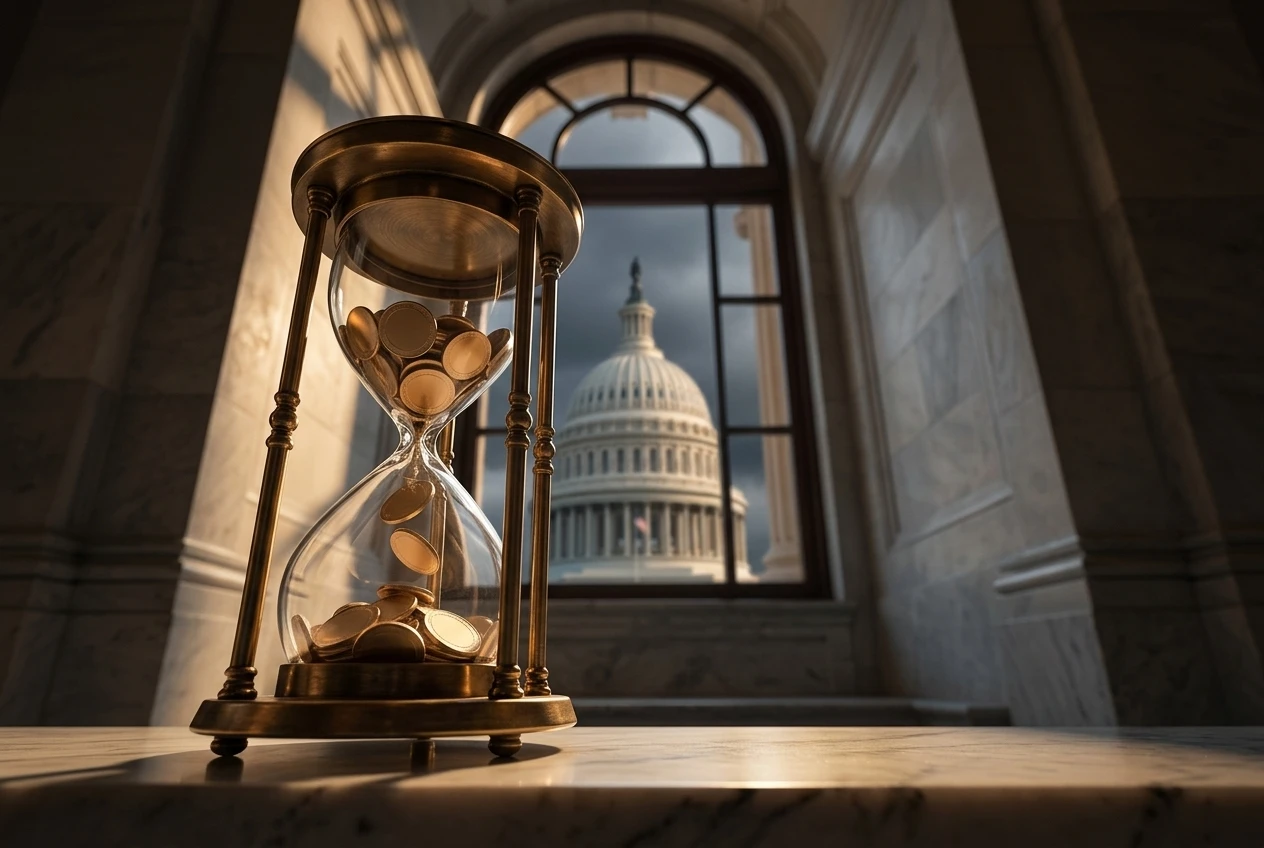
Ripple has urged the US Senate to pass the CLARITY Act, warning that rejecting it would expose crypto users to “FTX-style risks.” The Senate hasn’t scheduled a floor vote yet. It has roughly three weeks left before its August recess to hold one.
Ripple’s statement doesn’t mention what’s actually blocking that vote. Democrats are withholding support over a fight about letting government officials, Trump included, keep profiting from crypto while in office.
Ripple Ties a Senate Rejection to FTX-Style Collapse
Ripple’s public argument is simple. Block the bill, and the next exchange failure could look like the 2022 collapse of FTX, which wiped out billions of dollars in customer funds. “Voting against the CLARITY Act leaves crypto users exposed to FTX-style risks,” the company said.
The comparison points to something specific in the text. A new insolvency safe harbor for digital commodity transactions would guarantee customers a legal claim to their own assets if a platform fails.
Sen. Cynthia Lummis has made a blunter version of the same argument. Without a statute, she has said, a bankrupt exchange can leave customers with no guaranteed right to their own holdings at all.
That risk isn’t hypothetical. Bybit is still rebuilding institutional trust after a $1.5 billion hack exposed how vulnerable even large platforms remain.
FTX collapsed in November 2022, and its aftershocks still shape how Congress writes crypto rules.
The Three-Bucket Framework at the Center of the Bill
Strip away the lobbying and the CLARITY Act is a jurisdictional map. It sorts every digital asset into one of three legal categories, then assigns each one to a specific regulator, something federal law has never done for crypto before.
- Digital commodities: Bitcoin and Ethereum qualify, with Solana likely joining them, and fall under exclusive Commodity Futures Trading Commission oversight for spot and cash markets, an authority the CFTC has never held by statute.
- Investment contract assets: tokens sold to fund a central team stay with the Securities and Exchange Commission, preserving its traditional securities role.
- Permitted payment stablecoins: fall under joint supervision alongside the banking framework Congress already wrote into last year’s GENIUS Act.
The Senate Banking Committee’s own summary of the bill argues it gives everyday Americans the tools they need to participate in digital asset markets. The same document lays out Regulation Crypto, a new SEC exemption letting a company raise up to $50 million a year, or 10% of its outstanding ancillary assets, without registering as a full public offering, capped at $200 million in total proceeds.
Ripple’s $25 Million Stake in Its Own Warning
Ripple isn’t a neutral messenger here. Campaign finance filings reviewed by The Defiant show Fairshake’s Protect Progress PAC, the Democrat-facing arm of crypto’s main political operation, had $193 million on hand earlier this year.
Ripple put in $25 million of it. Coinbase matched that figure. Andreessen Horowitz added $24 million.
| Entity | Position | Stake or Reason |
|---|---|---|
| Ripple | Backing | $25 million to Fairshake’s Protect Progress PAC; pushing for permanent commodity status for XRP |
| Coinbase | Backing | $25 million to the same PAC; CEO Brian Armstrong blocked two earlier drafts before endorsing this one |
| Andreessen Horowitz | Backing | $24 million to Fairshake’s PACs |
| JPMorgan Chase | Opposing | CEO Jamie Dimon says banks will fight the bill’s stablecoin-interest provisions |
| National Consumers League coalition | Opposing | June 4 letter cites weak anti-money-laundering rules and unresolved ethics gaps |
| Senate Democrats blocking cloture | Conditional | Withholding votes until ethics language on officials’ crypto holdings is added |
Not everyone with money in the fight wants the bill to pass as written. JPMorgan Chase CEO Jamie Dimon said in late May that banks would fight the legislation, arguing it lets crypto platforms pay interest on customer balances without the deposit protections or anti-money-laundering rules banks must follow.
Trump’s $1.4 Billion Crypto Income Splits the Senate
The number that hardened Democratic opposition arrived on July 1. President Trump’s financial disclosure showed he collected more than $1.4 billion in crypto-related income during 2025, according to the US Office of Government Ethics.
More than $635 million came from licensing his TRUMP meme coin. Another $236 million came from World Liberty Financial token sales, plus $65.6 million from WLFI equity. He also holds $50 million in Bitcoin and nearly $25 million in Ethereum directly.
Those figures landed inside a fight that predates them. Section 604, the specific conflict-of-interest language Democrats want in the bill, would bar senior officials, elected officials and their immediate families from holding financial interests in crypto while in office.
Senate Banking Committee Democrats tried to force it into the bill in May with an amendment from Sen. Chris Van Hollen. It failed 13 to 11, along party lines.
Sen. Kirsten Gillibrand of New York has held a firm line since: no ethics language, no Democratic votes, and Republicans need at least seven of them to reach 60.
Essentially legalize Donald Trump’s crypto corruption scheme.
That’s how Sen. Chris Murphy, a Connecticut Democrat, described the bill in its current form, at a July 14 press conference on Capitol Hill, according to crypto.news.
Republicans have offered a narrower fix, limiting enforcement to the US Attorney General instead of state prosecutors. Democrats rejected it as circular, since the attorney general serves at the president’s pleasure.
Does the CLARITY Act Protect Consumers?
Not entirely, according to a coalition that includes the National Consumers League. In a June 4 letter to Senate leaders John Thune and Chuck Schumer, the group argued the bill’s anti-money-laundering rules are too weak, its ethics language is missing, and its stablecoin rules could let platforms drain deposits from community banks.
The coalition’s letter warned Senate leaders the bill leaves weak anti-money-laundering rules and unresolved conflicts of interest, saying current language would “fail to hold key cryptocurrency intermediaries accountable” and could let stablecoin issuers “siphon deposits from community banks and reduce local lending.”
Ripple’s pitch rests on consumer protection. The consumer coalition’s letter says three specific protections are still missing from the text.
XRP’s Market Has Already Priced in the Good News
XRP, Ripple’s native token, rallied to $1.52 the day the Senate Banking Committee advanced the bill on May 14. By mid-July, it traded near $1.10, up 3.45% on the day, even as its five spot ETFs sat at a combined $1.48 billion in assets with zero net new inflows that session.
Some traders positioned for passage months ago. They’re waiting for the vote itself to cash out, a pattern showing up across XRP-focused Reddit and X threads this month.
Standard Chartered projects $4 billion to $8 billion in new XRP ETF inflows if the bill passes, a range equal to roughly 7% to 13% of XRP’s $60 billion market cap. Citi’s comparable Bitcoin projection is $15 billion against a $1.2 trillion market cap, near 1.25%.
New institutional money would move XRP’s price further than Bitcoin’s, dollar for dollar.
Ripple has built more than 300 financial institution relationships through RippleNet, many of which have stayed cautious about deeper XRP integration while litigation risk lingered.
Trust in exchanges more broadly hasn’t fully recovered either. A zero-fee crypto cash-out promotion from BingX drew fresh scrutiny this month over whether platforms can be trusted to honor withdrawal terms, the same gap CLARITY’s insolvency language is meant to close.
From FIT21’s Death to a Twenty-Five-Day Countdown
Congress has tried this before and failed. The House passed FIT21, an earlier market structure bill, on May 22, 2024. It never got a Senate vote.
The aftershocks of FTX’s collapse, the coming midterms and resistance to narrowing SEC authority all worked against it, and the bill died when that Congress ended.
The GENIUS Act took a different path. It passed the Senate 68 to 30 in June 2025 and the House 308 to 122 on July 17, 2025, the same day the House passed H.R. 3633 by a 294 to 134 vote.
Trump signed the GENIUS Act into law the next day. Its own rulemaking deadline lands July 18, 2026, almost the same week regulators would start writing CLARITY’s rules if the Senate clears it first.
Not every insider reads the odds the same way. SEC Commissioner Hester Peirce, a former Senate Banking Committee staffer, said on the Searching for Mana podcast that “this is a rare window where you have a lot of regulatory goodwill.”
Galaxy Research’s Alex Thorn is less sure. He puts 2026 passage odds at roughly 50-50, down from 75% in May. Negotiators are working on a merged Senate Banking and Agriculture text this month, said to add more than 70 pages of new language aimed at Democratic ethics demands.
- July 17, 2025: The House passes the CLARITY Act 294 to 134.
- May 14, 2026: The Senate Banking Committee advances its version 15 to 9, with Democrats Ruben Gallego and Angela Alsobrooks crossing over.
- June 1, 2026: The bill is placed on the Senate Legislative Calendar as Calendar No. 423, formally eligible for a floor vote.
- July 1, 2026: Trump’s crypto income disclosure becomes public, and Polymarket’s odds of passage this year fall to 39%.
- August 7, 2026: The Senate’s summer recess begins. It isn’t scheduled back until September 14.
Miss that window, Sen. Cynthia Lummis has warned, and “this is likely our last chance to get real legislation for digital assets on the books before 2030.”
Frequently Asked Questions
Why Is Ripple Supporting the CLARITY Act?
Ripple’s public argument centers on consumer protection, but the company has a direct commercial stake too. Statutory commodity status would remove the last legal cloud over XRP. Ripple also paid a $125 million fine last August to resolve the SEC’s yearslong lawsuit against it, and clearer law would prevent similar arguments from resurfacing under a future SEC.
Why Did Ripple Compare the Vote to the FTX Collapse?
Ripple is pointing to the bill’s customer-asset protections, but supporters also cite more than 16 illicit-finance safeguards written into the text, including a section applying the Bank Secrecy Act to crypto exchanges and a provision letting exchanges freeze funds tied to sanctioned actors. FTX’s 2022 collapse happened without any of those protections in federal law.
What Is the CLARITY Act?
Formally the Digital Asset Market Clarity Act, or H.R. 3633, it is a market structure bill that splits regulatory authority over crypto between the SEC and CFTC based on a three-part legal classification. The House passed it 294 to 134 in July 2025, and the Senate Banking Committee advanced its own version 15 to 9 in May 2026. The Senate version must still be reconciled with a separate bill from the Senate Agriculture Committee before it can merge with the House text.
How Could the CLARITY Act Affect XRP (CRYPTO:XRP)?
The SEC and CFTC already classified XRP as a digital commodity through an interpretive release on March 17, 2026, but that action is not a statute, and a future administration could reverse it. The CLARITY Act would lock the same classification into federal law and move XRP’s oversight to the CFTC permanently.
Has the CLARITY Act Become Law?
No. As of mid-July 2026, it has passed the House and cleared the Senate Banking Committee but still needs 60 votes on the Senate floor, reconciliation with the House text and Trump’s signature. Kalshi’s prediction market currently prices the odds of passage in July at just 0.1% and in August at 13%.
Disclaimer: This article is for informational purposes only and does not constitute financial, legal or investment advice. Cryptocurrency markets and pending legislation carry significant uncertainty; consult a licensed financial or legal professional before making decisions. Figures are accurate as of publication on July 16, 2026.


South Korea Retail Investors Face Reckoning After KOSPI AI Rally Collapses

Surrey AI Maps Three Heart Attack Paths and Their Molecular Roots

Germany Locks Neutral Apple ATT Prompts Across Most of Europe

Apple’s 5% EU Fee Quietly Rewrites Alternative App Store Math

Apple’s EU Fee Truce Cuts Complexity but Leaves Rivals Fuming

Pixel 11 Pro Fold Trades Thinness for Durability and Seven-Year Stay

Mayo AI Flags HCM Obstruction From Everyday Ultrasound Videos

Indian Brands Quietly Scale Landmark Screens and Home Tech

Navin Vatsa Turns Grief Into a Lifetime of Quiet Seeing

Google Bets Pixel 11 Agentic AI Will Redefine Phones

Oracle Cuts 21,000 Jobs in a Year, Cites AI in 10-K Filing

Fable 5 and Mythos 5 Return as US Lifts Anthropic Export Controls

SpaceX’s Google Deal Turns a Rocket Company Into a Cloud Landlord

CD Projekt Red Co-CEO: Redemption Arc Isn’t Done, Witcher 4 in 2027

XPL Rallies 30% Ahead of Plasma One Card Tier Launch

Google Search Profiles Build a Follow Graph Inside Discover

DGO App Brings Rs 549 Mobile Pass for FIFA World Cup 2026 in Nepal

Moonshot AI Targets $30 Billion in China’s Fastest AI Funding Sprint

Oppo’s ColorOS 17 Eligibility List Leaves A-Series Buyers Behind

Microsoft Xbox Layoffs Start in July as Sharma Slams 3% Margin
-
 AI2 months ago
Oracle Cuts 21,000 Jobs in a Year, Cites AI in 10-K Filing
-
 AI2 months ago
Fable 5 and Mythos 5 Return as US Lifts Anthropic Export Controls
-
 AI3 months ago
SpaceX’s Google Deal Turns a Rocket Company Into a Cloud Landlord
-
 GAMING2 months ago
CD Projekt Red Co-CEO: Redemption Arc Isn’t Done, Witcher 4 in 2027
-
 CRYPTO3 months ago
XPL Rallies 30% Ahead of Plasma One Card Tier Launch
-
 NEWS3 months ago
Google Search Profiles Build a Follow Graph Inside Discover
-
 APPS3 months ago
DGO App Brings Rs 549 Mobile Pass for FIFA World Cup 2026 in Nepal
-
 AI3 months ago
Moonshot AI Targets $30 Billion in China’s Fastest AI Funding Sprint