
AI
Gemini Locks the Android Slot as Free Apps Split the Work
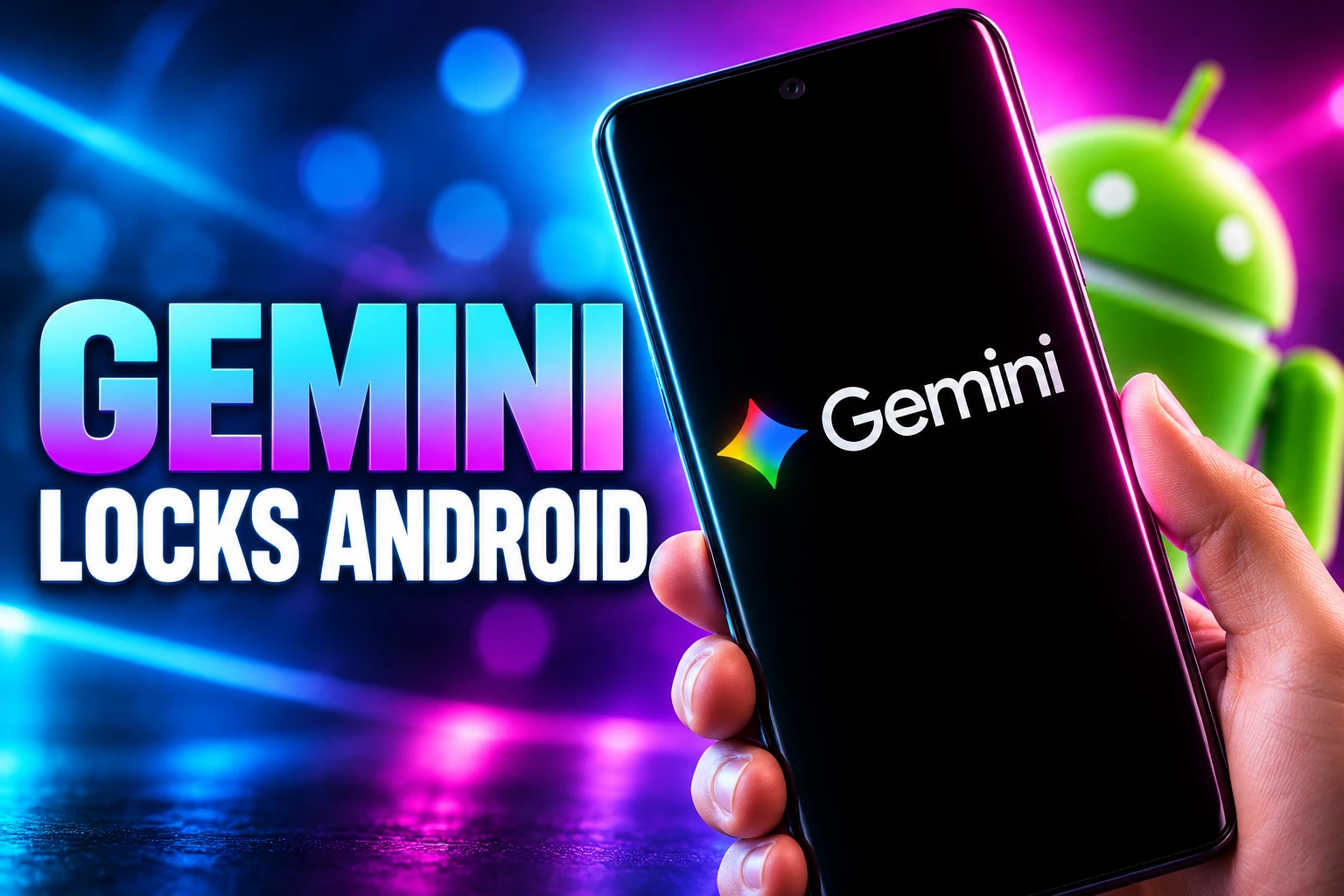
Gemini now owns Android’s assistant shortcut as Google Assistant is removed, while ChatGPT and other free AI apps still win the jobs people open on purpose.

Google began pulling Google Assistant off Android phones on September 4, 2026, and putting Gemini in its place.
An August roundup of free AI apps treats Gemini, ChatGPT, Perplexity, Gemini Notebook, Canva and Claude as a balanced toolkit. They are not. Gemini now answers the assistant shortcut, and the others still have to be opened.
Gemini Takes the Phone’s Default Slot
Google told Assistant users in August that the old helper is “being discontinued” on mobile and that Gemini is now “the assistant experience on Android.” Removal started on September 4 and, the company said, “may take a few weeks to reach everyone.”
The cut is wider than the phone in your pocket. It also covers tablets, Wear OS watches, headphones, and cars that run Android Auto projected from the handset. Google carved out one exception: cars with Google built-in keep Assistant after that date.
The Gemini listing on Google Play still describes an opt-in that replaces Assistant, and it still mentions a settings toggle to switch back. That wording is the old bargain. Google’s August mail is the new one. Once the cutoff reaches a given device, the toggle dies with it.
THE 2026 HANDOFF
- June 25, 2026: Google launches free study notebooks inside the Gemini app, first on the web, with mobile promised later in the summer.
- August 4, 2026: Google emails Assistant users that the mobile helper is going away and that Gemini is the Android assistant from here.
- August 19, 2026: A roundup of free Android AI apps lists Gemini beside ChatGPT, Perplexity, Gemini Notebook, Canva and Claude.
- August 31, 2026: The Gemini Android app updates on Play, pitching Gemini 3.6, Gemini Omni, Live, and Nano Banana 2 image tools.
- September 4, 2026: Google starts removing Assistant from phones, tablets, Wear OS, headphones and phone-projected Android Auto.
Play already shows how far that default has spread. The Gemini app holds more than 1 billion Play downloads, 45.6 million reviews, and a 4.6-star rating, and it sat at No. 8 among free productivity apps when that listing was checked. Connecting Gmail, Calendar, Photos, YouTube and Search is the point of the install, not a bonus.
The Open Tab Still Goes to ChatGPT
Winning the shortcut is not the same as winning the session. Similarweb’s United States usage rank for the last 28 days through September 11, 2026 put the ChatGPT Android app at 34 and Gemini at 58. People still open OpenAI’s app on purpose.
That split is the whole story on Android. Gemini can draft a reply from Gmail, pull a photo, or talk through Gemini Live while you hold the camera on a problem. ChatGPT’s free Android app still covers chat, web search, file and image analysis, and image generation, with caps on the heavier tools. When the job is a blank page, a messy PDF, or a coding fix, a lot of phones already have both.
Android has let you pick another digital assistant app in Settings for some time, and ChatGPT can take that shortcut. The switch changes who wakes on a long press. It does not hand ChatGPT the Gmail thread, the calendar, or the system settings Gemini can reach while it is the Google assistant.
The complaint that follows the forced handoff is not subtle. Gemini still feels closer to a talkative Assistant than to the app people open when they want a hard answer, and ChatGPT keeps getting that second tap. Claude gets the long document. The default slot and the useful slot are no longer the same place.
What the Free Stack Does
The August list is useful as a map of jobs, not as a set of peers. Gemini is the only one that can be the phone. The rest earn a home screen icon by doing one thing the default brain still does less well.
SIX APPS, SIX JOBS
| App | Job on Android | Owner | What free actually means |
|---|---|---|---|
| Google Gemini | Default assistant, Google apps, images, study tools | Full app, then Plus, Pro or Ultra for heavier models and higher caps | |
| ChatGPT | General writing, voice, files, images | OpenAI | Broad free app with separate caps on uploads, images and voice |
| Perplexity | Research with sources | Perplexity | Everyday search is open; deeper Pro Search is tightly capped |
| Gemini Notebook | Source-grounded study from PDFs, sites and video | Free app on Play, with higher Notebook limits on paid Google AI plans | |
| Canva | Layouts, social graphics, on-phone design | Canva | Free design app with AI tools; Pro unlocks more templates and Magic features |
| Claude | Long documents, careful edits, extended reading | Anthropic | Free Android app on a rolling usage window, then Pro or Max |
Keep all six if you bounce between mail, research, slides and drafts. Do not expect them to share power. Gemini is wired into the phone. ChatGPT is the generalist you launch. Perplexity is the citation layer. The last three are closer to specialist studios than to assistants.
Study, Design and Long Writing Split Three Ways
Google now runs two study products, and mixing them up is how you waste an evening. Study notebooks live inside Gemini. Gemini Notebook is the separate app built on NotebookLM, the tool that reads your sources and cites them back.
On June 25, 2026, Google said study notebooks were “free and available globally in every language in the Gemini app.” You set a goal, upload material, and get a diagnostic quiz, then short lessons and a dashboard of strengths and focus areas. SAT prep shipped in the notebooks that day, with JEE and NEET promised next, and ENEM, ACT and GRE listed for later in the summer. Mobile access was still rolling when that post went up; the Gemini Play listing by late August already advertised class-note quizzes.
Today we’re launching study notebooks in the @GeminiApp — an interactive space built to turn your natural curiosity into true comprehension. 📓
Whether you’re a student making sense of organic chemistry or preparing for a standardized exam, personalized learning should be… pic.twitter.com/UEkQfEaF3c
— Google (@Google) June 25, 2026
Gemini Notebook is the pile-of-PDFs tool. Google’s Play listing, still titled Google NotebookLM, says you can create notebooks, ask questions, and listen to Audio Overviews in the background, including offline. The app shows 10 million downloads on Google Play, a 4.8-star rating, and 196,000 reviews. Flashcards, quizzes, and a larger chat memory landed in its 2026 updates. Gemini’s own listing now points at NotebookLM when you want answers grounded in a notebook’s sources.
THE THREE SPECIALIST JOBS
- Study packs: Dump notes, PDFs, sites or YouTube links into Gemini Notebook, then use Gemini’s study notebooks when you want a quiz, not a summary.
- Layouts: Canva remains the free design room for social posts, posters and decks, including AI layout and write tools that chat apps still fake with a single flat image.
- Long drafts: Claude’s free Android app is the one you open when the file is long and the tone has to hold, because the other two chat apps still wander on extended reads.
Those three are doing the study packs, layouts and long drafts that used to wait for a laptop. They do not replace the assistant button. They replace the evening you used to spend at a desk.
A Meter, Then a Paywall
Free is the install price, not the ceiling. Every app in the stack meters the heavy features, then sells a rung that lifts the cap.
Google’s consumer ladder is the clearest, because it is tied to storage and to the same account that already runs the phone. The Gemini app is free. Paid Google AI plans are Plus, Pro and Ultra. At I/O 2026, Google announced a $100 a month AI Ultra plan with a 5X higher usage limit in the Gemini app than Pro, and cut the top Ultra plan from $250 to $200 a month for a 20X Pro limit. Play is also pushing a free one-year student plan that ends on October 2, 2026.
OpenAI, Anthropic, Perplexity and Canva all sell a paid tier on top of the same Android apps. ChatGPT’s free tier keeps everyday text useful and puts stricter daily caps on images, files and voice. Claude meters use across a short session and a longer weekly window. Perplexity leaves quick search open and guards the deeper Pro Search mode. Canva’s AI layout tools are the bait; Pro is where the template library and Magic features stop feeling rationed.
The practical move on a phone is rotation, not loyalty. Use Gemini while it can see your mail and photos. Jump to ChatGPT or Claude when the answer quality drops. Spend Perplexity’s better searches on the queries you actually have to cite. Treat Canva as a design shop, not a chatbot with a export button.
Fake ChatGPT Apps Lead the Malware Lure
The same brand names that make a free-app list also make a lure. Kaspersky said that from January to the beginning of May 2026 its products detected more than 92,000 malware attacks and unwanted apps dressed up as AI agents and services.
THE FAKE-APP BAIT
- ChatGPT clones: Fake ChatGPT apps were 49% of the detected attacks, the largest single bait by far.
- Claude and Gemini: Each accounted for 18%, so the three household names were 85% of the lure.
- Agentic clones: Researchers also logged more than 15,000 malware samples posing as agent-style AI software, including banking trojans, spyware and downloaders.
- Silver Fox: In May 2026, Kaspersky’s GReAT team tied a campaign to that group, which pushed fake Claude apps for Windows, macOS and Linux.
The Android advice is dull and it works. Install Gemini, ChatGPT, Claude, Perplexity, Canva and Gemini Notebook from Play, not from a search ad, a Telegram file or a “premium APK” page. Gemini’s Play listing says it may collect location, personal info and 11 other data types, that data is encrypted in transit, and that Google declares no sharing with third parties. That is the official app. A clone with the same icon is a different product.
The Work That Still Leaves Gemini
Google is not shy about the end state. The August mail told people the old assistant would not come back on a phone, tablet or paired device once the cutoff landed. The company also said it wanted a smooth move and that Gemini would be “an even more capable and helpful assistant experience.”
Once availability is removed, you will no longer be able to use or switch back to Google Assistant on your phone, tablet, or paired devices.
Google, email to Assistant users, August 2026
The work that still leaves Gemini is the work the other free apps were built for. ChatGPT still gets the open-ended draft, the voice session, and the “make this file make sense” job. Perplexity still gets the query you have to show a source for. Claude still gets the long read. Canva still gets the layout. Gemini Notebook still gets the syllabus in a folder.
Gemini gets the button. It gets Gmail and Calendar and Photos. It gets study notebooks for people who will learn inside Google’s app. It gets the billion-plus installs that come with being the assistant on Android. That is a real win, and it is a narrower win than a seven-app list implies.
On a phone that has already taken the cutoff, the long-press is Gemini, the watch follows, and the buds follow. ChatGPT stays in the app drawer for the jobs that button still cannot finish.

Instagram Plus Tests a Read-Only Mode That Cuts Stories

Altman Asks the Public to Accept Some AI Harm

Google Freezes OSS VRP Product Reports After AI Flood

AI Agents Make Payment Rails the Scarce Prize

Turkey’s Crypto Boom Now Runs Through Three Banks

Fable 5 Came Back Under a Commerce On-Off Switch

Google’s SpaceX GPU Lease Has a Sept. 30 Deadline

Plasma One’s XPL Locks Face a 1.81 Billion Cliff

DGO’s Rs 549 World Cup Pass Cost Fans Sleep and Data

Moonshot AI’s $30 Billion Ask Became a $35 Billion Close
-
 AI4 months ago
Fable 5 Came Back Under a Commerce On-Off Switch
-
 AI4 months ago
Google’s SpaceX GPU Lease Has a Sept. 30 Deadline
-
 CRYPTO4 months ago
Plasma One’s XPL Locks Face a 1.81 Billion Cliff
-
 APPS4 months ago
DGO’s Rs 549 World Cup Pass Cost Fans Sleep and Data
-
 AI4 months ago
Moonshot AI’s $30 Billion Ask Became a $35 Billion Close
-

 NEWS4 months ago
ColorOS 17 Device List Spans Oppo, OnePlus and Realme
-

 GAMING4 months ago
Xbox Cuts 3,200 Jobs After Five Years of Thin Returns
-
 GAMING4 months ago
The RTX 4050 Under Rs 70,000 Hides a Wattage Gap