
CRYPTO
MoonPay ChatGPT Onramp Tests OpenAI’s Finance Line

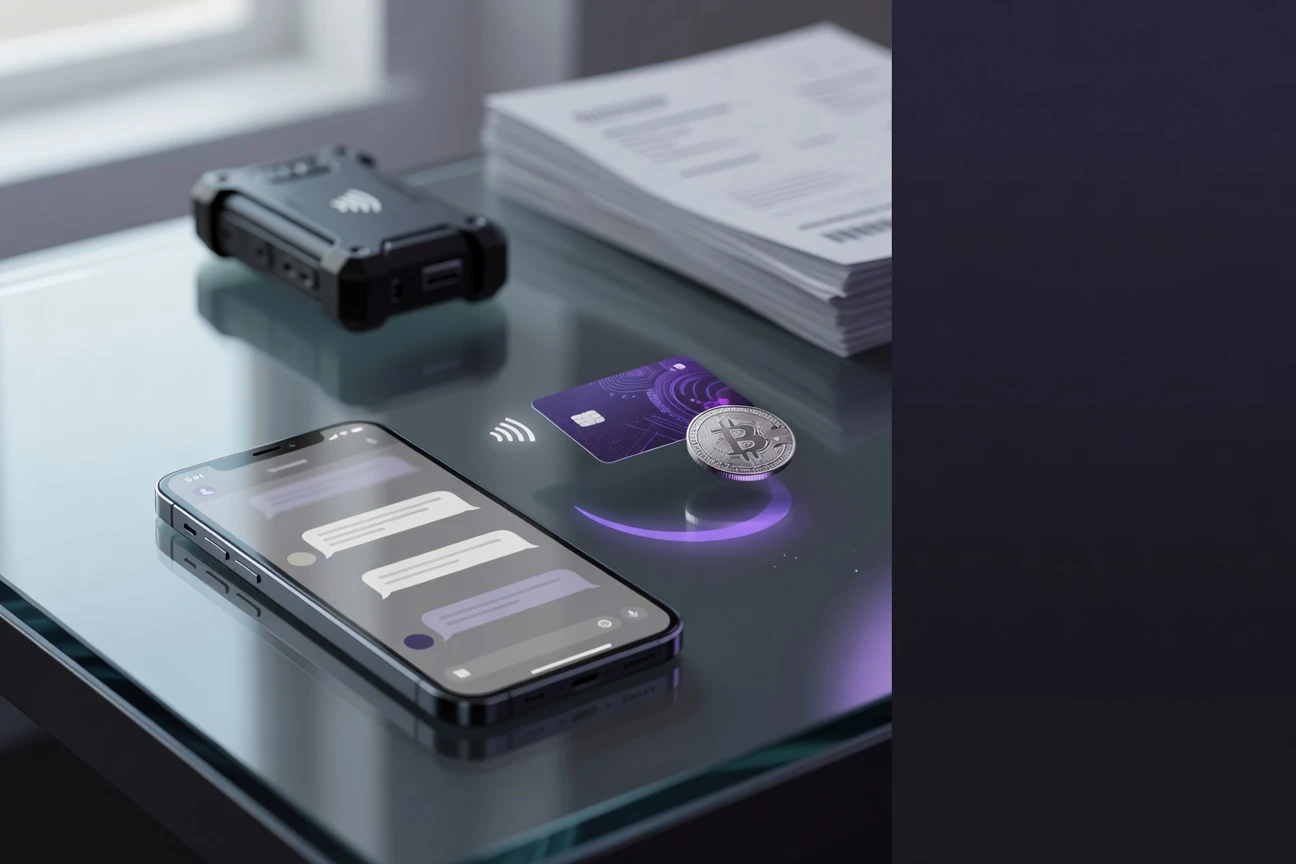
The MoonPay ChatGPT Apps integration pushes the crypto payments company into a new test: whether buying digital assets can move from a separate exchange page into an AI conversation. Blockster, a crypto media site, reported on May 22 that a MoonPay onramp lets users connect a wallet and buy Solana with Apple Pay inside the chat.
The friction sits in the boundary line around the button. OpenAI, the ChatGPT developer, markets apps as tools that can complete tasks directly in conversation, yet its developer terms still bar apps from initiating, executing, or facilitating money transfers and cryptocurrency transfers through its services.
The Claim Lands Beside a Hard Rule
The report describes MoonPay as the first crypto onramp integrated into ChatGPT Apps, with Apple Pay handling the purchase and Solana named as the first obvious retail use case. OpenAI’s own ChatGPT apps product page says users can add approved apps from the sidebar, call them from the tools menu, or summon them with an @ mention inside a conversation.
- May 22 report: Blockster said the integration lets users connect a wallet and buy digital assets without leaving the chat.
- May 14 infrastructure: MoonPay launched Headless Onramps eight days earlier, positioning the product around embedded Apple Pay, cards, and Google Pay.
- Rule pressure: OpenAI’s developer app terms restrict apps from initiating, executing, or facilitating money transfers and crypto transfers through OpenAI services.
That tension makes this more than a crypto convenience story. If the onramp is simply surfaced from a chat and the regulated checkout remains MoonPay’s responsibility, the model may fit. If users understand the AI assistant as the party helping them buy a volatile asset, OpenAI has a harder trust problem.
MoonPay Built the Checkout Layer First
MoonPay did not arrive at the ChatGPT moment empty-handed. In its Headless Onramps launch announcement, the company said the product lets partners own the checkout experience while MoonPay handles payment rails, compliance, and identity verification underneath. Initial launch partners included Moonshot, Bitcoin.com, Bread, and Trust Wallet.
Headless Onramps give our partners full control over how their users buy crypto, while MoonPay powers everything behind the scenes. This is what infrastructure should look like: invisible, global, and instant.
Ivan Soto-Wright, co-founder and chief executive of MoonPay, said that in the company’s May 14 product announcement. The line explains why a chat app matters: MoonPay is selling regulated plumbing, not another consumer destination.
The same release said verified users can complete an Apple Pay purchase with one tap inside a partner’s app, with no redirect and no re-authentication. It also said new users see a lightweight onboarding frame inside the partner app before later visits become faster. In a wallet, that cuts taps. In an AI conversation, it changes the user’s sense of where the purchase began.
Where the Payment Boundary Sits
The hard question is legal and behavioral at the same time. OpenAI’s terms cover apps built with the Apps software development kit (SDK, tools developers use to build app features), custom connectors, and custom GPT actions that connect to an application programming interface (API, the software connection between services). Those terms say an app must not facilitate money transfers or crypto transfers through OpenAI’s services.
- Discovery can happen in the chat, where a user asks about Solana or a wallet funding step.
- Identity checks still need a regulated party, with Know Your Customer (KYC, identity checks required by financial platforms) handled by the payments provider.
- Card data should stay out of typed prompts and move through secure payment frames or approved payment pages.
- Order execution needs a named provider of record, which points back to MoonPay rather than the model.
OpenAI’s own financial data safety guidance tells users not to enter cardholder data such as account numbers, validation codes, or personal identification numbers into ChatGPT inputs. That warning fits awkwardly next to any consumer story that sounds like buy crypto in the chat.
How the Onramp Race Lines Up
MoonPay’s advantage is not that Apple Pay exists. Coinbase, Stripe, and Transak all sell versions of fiat to crypto access for developers. The difference is where each provider lets the partner control the experience, which becomes vital when the host app is an AI interface rather than a wallet or exchange screen.
| Provider | Embedded Model | Payment Reach | Chat App Constraint |
|---|---|---|---|
| MoonPay Headless Onramps | Partner owns the visible checkout while MoonPay runs rails, compliance, and identity checks. | Apple Pay, cards, and Google Pay across the US, European Economic Area (EEA, the EU plus Iceland, Liechtenstein and Norway), and 100+ countries. | Best fit if payment execution is clearly MoonPay’s flow, not the assistant’s action. |
| Coinbase Onramp developer options | Hosted onramp plus a Headless Onramp for native feeling purchase flows. | Coinbase says Headless Onramp is US-only and card-based, while hosted flows cover more account holders. | Stronger where the user already has Coinbase trust, narrower for global chat distribution. |
| Stripe fiat to crypto onramp | Hosted onramp, embeddable onramp, and SDK plus API customization. | Credit cards, debit cards, Apple Pay, and Automated Clearing House (ACH, US bank transfer). | Natural for developers already using Stripe, but crypto purchase policy still depends on the host platform. |
| Transak On-Ramp documentation | Widget, mobile WebView, and white-label API paths. | Cards, bank transfers, Apple Pay, Google Pay, local methods, 136+ currencies, and 45+ blockchains. | Broad asset coverage helps, but chat-native trust still depends on clear permissions and checkout ownership. |
The table shows why this race is moving toward chat distribution. Wallets and exchanges remain important, but the first prompt may happen elsewhere. Whoever owns the lowest-friction funding step at that moment gets the first shot at conversion.
That is also why OpenAI’s rules matter more than ordinary developer docs. A wallet can present a buy button as its own feature. A general assistant needs to avoid looking like it is recommending, arranging, and executing a risky financial transaction in one breath.
Solana Gives the Feature Its Retail Test
Solana (SOL, the network’s native token) is a logical asset for the first public example because it is familiar to retail crypto users, heavily used by consumer wallets, and often tied to small-dollar experimentation. The risk is that the same smooth path that helps a user fund a legitimate wallet can also shorten the distance from curiosity to speculation.
That is where this story links to a broader crypto enforcement pattern. Oton Technology has covered how the FBI’s fake crypto token sting used an Ethereum-based token to expose market manipulation, and the lesson travels well: easier access increases the value of strong disclosure, fraud screening, and user education at the point of purchase.
Compliance Moves Into the Conversation
MoonPay has spent the last year presenting itself as a regulated infrastructure company. Its New York Trust Charter announcement said the New York State Department of Financial Services authorized MoonPay Trust Company, LLC to provide digital asset custody and over-the-counter trading, and noted earlier BitLicense approval for US coverage.
That matters because the ChatGPT surface creates a new assignment of responsibility. The user may start with a question, but the minute money moves, the experience needs a provider of record, audit trail, risk checks, receipts, support, and a clean way to reverse out when identity verification fails.
The enforcement side is already becoming more technical. As Oton Technology reported in its look at crypto seizures and stablecoin enforcers, the power to trace and stop digital money now sits across issuers, exchanges, and law enforcement partners. AI distribution adds another front door, not a free pass around those controls.
If users see a MoonPay purchase as a MoonPay checkout that happens from a chat surface, the model can spread. If they see ChatGPT as the party helping them buy volatile assets, this integration becomes a test case for every finance app in the directory.
Disclaimer: This article is for informational purposes only and is not financial, investment, legal, or tax advice. Crypto assets are volatile and regulatory rules vary by jurisdiction. Consult a qualified professional before making financial decisions. Figures and platform details are accurate as of publication.


AI Risk and Regulation Reshape Australia’s Cybersecurity Providers

Nelson Mandela Bay Switches On R27m CCTV, Drone and Fibre Network

JT’s Meta Apps Outage Stretches Past a Week With No End in Sight

Pixel 11 vs iPhone 18 Pro: What 2026’s Flagship Battle Looks Like

ATO Crypto Tax Warning Emails Hit Thousands of Aussie Inboxes

Nebula’s One-Click Android 17 Root Runs on a 15-Year-Old Kernel Bug

Lance Gokongwei Joins PhilWeb Board Two Weeks After P2 Billion Deal

Wuthering Waves Myriad Snare Rustfire Chassis Boss Guide

Faithful Heart Tested at Skyfall Quest Guide for Wuthering Waves 3.5

A 4.2% Print Meets a 4.345% Bond: The Crypto Hurdle Rate

Microsoft Xbox Layoffs Start in July as Sharma Slams 3% Margin

Google Search Profiles Build a Follow Graph Inside Discover

Google DeepMind and A24 Sign $75 Million AI Partnership Deal

Oracle Cuts 21,000 Jobs in a Year, Cites AI in 10-K Filing

OCC Issues AML Consent Order Against Wise and Crypto.com Sponsor Bank

DGO App Brings Rs 549 Mobile Pass for FIFA World Cup 2026 in Nepal

Oppo’s ColorOS 17 Eligibility List Leaves A-Series Buyers Behind

Anthropic Tells Senators Alibaba Ran the Largest Claude Distillation Attack

Apple Strikes Preliminary Deal For Intel To Make iPhone And Mac Chips

Andreessen Horowitz Bets $2.2B on Crypto’s Quiet Cycle
-
 GAMING1 month ago
Microsoft Xbox Layoffs Start in July as Sharma Slams 3% Margin
-
 NEWS1 month ago
Google Search Profiles Build a Follow Graph Inside Discover
-
 AI3 weeks ago
Google DeepMind and A24 Sign $75 Million AI Partnership Deal
-
 AI2 weeks ago
Oracle Cuts 21,000 Jobs in a Year, Cites AI in 10-K Filing
-
 CRYPTO2 months ago
OCC Issues AML Consent Order Against Wise and Crypto.com Sponsor Bank
-
 APPS1 month ago
DGO App Brings Rs 549 Mobile Pass for FIFA World Cup 2026 in Nepal
-
 NEWS1 month ago
Oppo’s ColorOS 17 Eligibility List Leaves A-Series Buyers Behind
-
 AI2 weeks ago
Anthropic Tells Senators Alibaba Ran the Largest Claude Distillation Attack