
NEWS
Parents’ Phone Distraction Tied to Teen Insecure Attachment
A Frontiers in Psychology study of 600 US teens finds parental phone distraction correlates with anxious and avoidant attachment styles in adolescents.

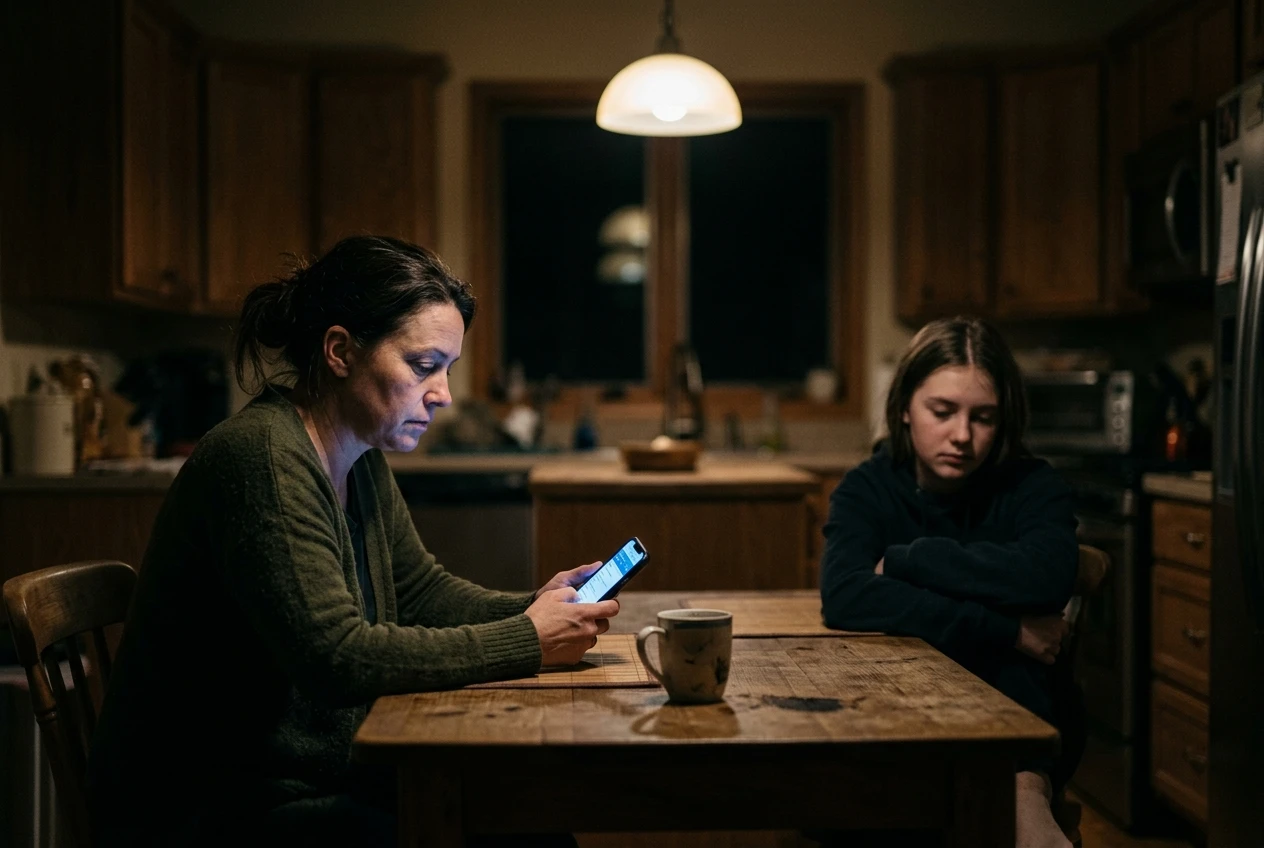
Parents’ phone distraction at home shows up in their teens’ attachment security, according to a new study of 600 US adolescents published in June in Frontiers in Psychology. Most of the public fight over screens and young people has focused on the kids themselves. The new work, led by Dr Don Grant of Newport Healthcare, flips the lens toward the parents in the next chair.
What the New Study Found
The team, based at Newport Healthcare’s Center for Research and Innovation, recruited 600 US teens aged 12 to 17 through Qualtrics and asked them to complete both the Device Attachment Interference Scale, a measure the researchers built and validated for this study, and a standard attachment-style questionnaire. Higher scores on the DAIS, meaning more perceived interference from a caregiver’s phone, consistently tracked with greater anxious and avoidant insecure attachment to mother-like figures and father-like figures in the sample.
- Sample: 600 US adolescents, ages 12 to 17 (mean 14.45), recruited August 2025 via Qualtrics.
- New measure: The Device Attachment Interference Scale (DAIS), built and validated by the team.
- Outcome: Higher DAIS scores aligned with more anxious and avoidant attachment to both mother- and father-like caregivers.
- Design: Cross-sectional and observational, and not a test of causation.
“The fact that our results were so significant across the board means that this issue appears to be much more prevalent than even I thought,” Grant, a corresponding author of the article in Frontiers in Psychology, said in the journal’s release. The full study is published in the 600-teen parent-and-adolescent attachment study. The researchers caution that the design cannot confirm causation. Insecure adolescents may be primed to perceive their caregivers as more distracted regardless of actual phone habits, and the team is calling for follow-up work that tests whether reducing caregiver phone use can shift attachment scores in the same teens.
Why the Conversation Has Missed Parents
Most of the public fight over phones and young people has been about the kids themselves. Parents and school districts have spent the year arguing that Instagram, TikTok, Snapchat, and YouTube built addictive features that hook minors. A New Mexico jury recently told Meta to pay $375 million for misleading users over child platform safety. Alphabet’s YouTube, Snap, TikTok, and Meta settled a separate case brought by a Kentucky school district in May, ahead of a scheduled federal trial in Oakland.
Teens themselves have spent much less time in the headlines, even though they are the ones whose attachment security is on the line. The new study argues the wider fight is missing one half of the attention equation, what caregivers do with their own phones in the same room. Platforms built loop-shaped feeds that pull adults in too, and the cost lands on the kids, Grant said. “We know that they got the kids,” he said. “Bravo, you got us too. We were not immune to the psychological motivations and manipulations.” The 600-person study puts a developmental weight on a pattern that adolescents have been describing in clinical settings for years, Grant added, noting the research was partly driven by a clinical psychologist colleague whose young daughter once asked, “Mommy, do you love your phone more than me?”
What Teens Have Been Saying All Along
Adolescents have been reporting the pattern in surveys for years, and the new findings line up with the existing data. 46% of US teens say their parent is at least sometimes distracted by their phone when they are trying to talk, according to a survey of 1,453 US teens and parents conducted Sept. 26 to Oct. 23, 2023, and recorded in the 2024 teens-and-screens survey on parental phone use.
Parents themselves agree, but a smaller share of them think it is a problem. Earlier Pew data from 2020 found that 68% of parents report being at least sometimes distracted by their phones when with a child. The 46% number of teens and the 68% number of parents suggest two different pictures of the same household, drawn from the same agency across two surveys four years apart.
The age range in the Pew data matters. Per Pew, older girls ages 15 to 17 (55%) are more likely than younger girls (41%), younger teen boys (41%), and older teen boys (40%) to say they feel anxious at least sometimes when they do not have their smartphone. Teens of every age also tend to flag a parent’s phone in the room more often than parents flag their own behavior. The new study puts an attachment measure on that everyday perception, since the adolescents reporting more caregiver distraction in the DAIS also reported more insecure attachment.
Why Insecure Attachment Travels Far
Insecure attachment is not a teenage phase that fades after graduation. Adolescents with anxious attachment tend to cling to caregivers and seek constant reassurance. Those with avoidant attachment pull back to minimize emotional risk. The patterns come from standard attachment theory that the new study cites, where repeated interactions with a primary caregiver shape working models of self and others that travel into adult relationships, including romantic partnerships and friendships.
The same paper flags a complicating detail. Insecure adolescents may be primed to perceive their caregivers as more distracted regardless of actual phone habits. The team is calling for follow-up work that tests whether reducing caregiver phone use can shift attachment scores in the same teens over time, rather than as a single observation.
| Style | What it looks like at home | What it can lead to later |
|---|---|---|
| Anxious | Clinging, reassurance-seeking, hypervigilance when a caregiver reaches for a phone | Anxiety-driven clinginess, lower self-esteem, strained peer relationships |
| Avoidant | Withdrawal, “fine, never mind,” emotional distance | Difficulty trusting others, social isolation, risky and substance-related behaviors |
The paper links both styles in adolescence to a wider pattern of poorer mental and physical health outcomes, including depression, anxiety, and strained adult relationships later. Researchers have separately characterized parental phone-snubbing as a “new form of social neglect during parent-child interactions,” a framing the new study cites. Secure attachment, by contrast, is tied in the same paper to greater wellbeing, better interpersonal competence, and higher life satisfaction.
Attachment is malleable. Thus, even if there is an established secure attachment with a child, it can be pivoted to an insecure one, even during teenaged years. Obviously, this is not something any parent would want for their child.
Dr Don Grant, a corresponding author and a fellow of the American Psychological Association, framed the take-home for caregivers reading the new study: secure attachment can be rebuilt in the same direction it slipped. He noted that millennials, considered by some the first digital-native generation and now entering parenthood, may be most likely to need the reminder.
What Parents Can Actually Try
Grant’s specific recommendation is narrow. “We are not saying that every time a child submits a bid for attention a parent has to drop everything, including whatever they are doing on their devices, and answer it,” he said in the journal’s release. “We are recommending that when those bids occur, a parent does acknowledge and respond to them in some way.” The team frames the goal as keeping the channel of caregiver availability open, not banning phones from the home.
- Notice the start. Acknowledge when a teen begins a sentence, even if you cannot stop what you are doing, so they register that the bid was heard.
- Make a phone-down ritual. Pick one predictable moment a day, like dinner or the door at pickup, when devices stay out of reach.
- Keep the response short. A glance up and a brief answer is enough to keep the channel open.
- Loop in the rest of the household. A shared default, not a one-parent campaign, makes the rule stick.
The point is not perfection. Since attachment is malleable in both directions, the team argues that small repeated responses can keep a teen’s sense of security from drifting toward the anxious or avoidant side. For caregivers who read the new findings and feel guilty, the broader message from Grant is that secure attachment can be reassembled with the same everyday habits.
Where the Legal Pressure Is Heading
Earlier this year, a Los Angeles jury awarded $6 million to K.G.M., a 20-year-old California woman who accused Meta and YouTube of designing addictive platforms, in the first personal-injury verdict of its kind against social media companies.
In May, Alphabet’s YouTube, Snap, TikTok, and Meta settled a federal case brought by a Kentucky school district on the eve of a trial scheduled for mid-June in Oakland federal court. The school district had accused the four companies of creating a mental health crisis for its students and of generating counseling costs the district was forced to absorb. The settlement was the first to resolve one of the multi-district claims before trial. It leaves a broader multi-district litigation that includes thousands of similar cases and claims.
A second bellwether trial, brought by Florida teen R.K.C., is set for July 27 in Los Angeles against Meta, TikTok, and Snap after YouTube settled its part of the case. R.K.C. is the second plaintiff through Los Angeles Superior Court Judge Carolyn Kuhl’s bellwether process for resolving the more than 1,000 similar cases in California. The remaining defendants face a jury pool that has already returned a $6 million personal-injury verdict against Meta and YouTube in the first bellwether of 2026. A separate New Mexico jury, in the same week as the K.G.M. verdict, told Meta to pay $375 million for misleading users over child platform safety. For a closer look at the YouTube settlement specifically, see the YouTube settlement in Florida’s R.K.C. case, and for a different age group, see compulsive smartphone use and depression in older adults.
Frequently Asked Questions
What did the new study actually measure?
The team built and validated the Device Attachment Interference Scale in a general-population sample of 600 US adolescents aged 12 to 17, then compared DAIS scores to a standard attachment-style questionnaire. Teens with higher DAIS scores, meaning more perceived interference from a caregiver’s phone, also reported higher anxious and avoidant attachment to mother-like and father-like figures.
Does this prove parents’ phones cause insecure attachment?
No. The researchers flag the design as correlational and call for follow-up work. It is possible that insecure adolescents perceive their caregivers as more distracted regardless of actual phone habits. Future studies will need to test whether targeted reductions in caregiver phone use change attachment scores in the same teens.
How common is parental phone distraction in real households?
Pew’s 2024 teens-and-screens survey found that 46% of US teens say their parent is at least sometimes distracted by their phone during conversations, drawn from a sample of 1,453 teens and parents surveyed Sept. 26 to Oct. 23, 2023. Earlier Pew data from 2020 puts the same admission at 68% among parents themselves, a perception gap that the new study now links to a measurable correlation with attachment style.
What does “technoference” mean?
Technoference is a portmanteau of technology and interference, used in research literature to describe device use in the presence of others that disrupts the relationship. A related term, phubbing, refers specifically to snubbing someone in favor of a phone. The new study cites prior work that has characterized parental phubbing as a new form of social neglect during parent-child interactions.
Where do the social media addiction cases stand now?
A California jury awarded K.G.M. $6 million in the first personal-injury verdict against Meta and YouTube in 2026, and a New Mexico jury told Meta to pay $375 million for misleading users over child safety. Alphabet’s YouTube, Snap, TikTok, and Meta settled a separate Kentucky school-district case in May ahead of a scheduled trial, and a second bellwether trial brought by Florida teen R.K.C. is set for July 27 in Los Angeles.


Lunit Turns Routine H&E Slides Into a Lung Pre-Screen

Meta’s Muse Agent Wants Your Inbox and Your Card

Police Chase Mules as AI Chatbots Run Romance Scams

Ticketmaster’s Personalized App Is Built to Move Empty Seats

Software Deals Now Hinge on Filing Accuracy, Not Beats

Iowa Counties Warn Workers That ChatGPT Keeps Their Files

Shaalan Beg’s Oncology AI Hits an Enrollment Wall

Exowatt Warns Gas-Fired AI Campuses May Not Last a Decade

Philips Splits Innovation and Hands AI to Partovi

Chrome 153 Puts the Whole Web on a Two-Week Clock

Oracle Cuts 21,000 Jobs in a Year, Cites AI in 10-K Filing

Fable 5 and Mythos 5 Return as US Lifts Anthropic Export Controls

SpaceX’s Google Deal Turns a Rocket Company Into a Cloud Landlord

CD Projekt Red Co-CEO: Redemption Arc Isn’t Done, Witcher 4 in 2027

XPL Rallies 30% Ahead of Plasma One Card Tier Launch

Google Search Profiles Build a Follow Graph Inside Discover

DGO App Brings Rs 549 Mobile Pass for FIFA World Cup 2026 in Nepal

Moonshot AI Targets $30 Billion in China’s Fastest AI Funding Sprint

Oppo’s ColorOS 17 Eligibility List Leaves A-Series Buyers Behind

Microsoft Xbox Layoffs Start in July as Sharma Slams 3% Margin
-
 AI3 months ago
Oracle Cuts 21,000 Jobs in a Year, Cites AI in 10-K Filing
-
 AI2 months ago
Fable 5 and Mythos 5 Return as US Lifts Anthropic Export Controls
-
 AI3 months ago
SpaceX’s Google Deal Turns a Rocket Company Into a Cloud Landlord
-
 GAMING3 months ago
CD Projekt Red Co-CEO: Redemption Arc Isn’t Done, Witcher 4 in 2027
-
 CRYPTO3 months ago
XPL Rallies 30% Ahead of Plasma One Card Tier Launch
-
 NEWS3 months ago
Google Search Profiles Build a Follow Graph Inside Discover
-
 APPS3 months ago
DGO App Brings Rs 549 Mobile Pass for FIFA World Cup 2026 in Nepal
-
 AI3 months ago
Moonshot AI Targets $30 Billion in China’s Fastest AI Funding Sprint