
NEWS
Candice Odgers Warned Social Media Bans Would Backfire, Data Now Shows
A BMJ study finds 85% of Australian teens kept using social media three months after the country’s under-16 ban, as psychologist Candice Odgers predicted.

Candice Odgers warned that banning teenagers from social media would backfire. Three months into Australia’s landmark ban, the first hard numbers say she called it right.
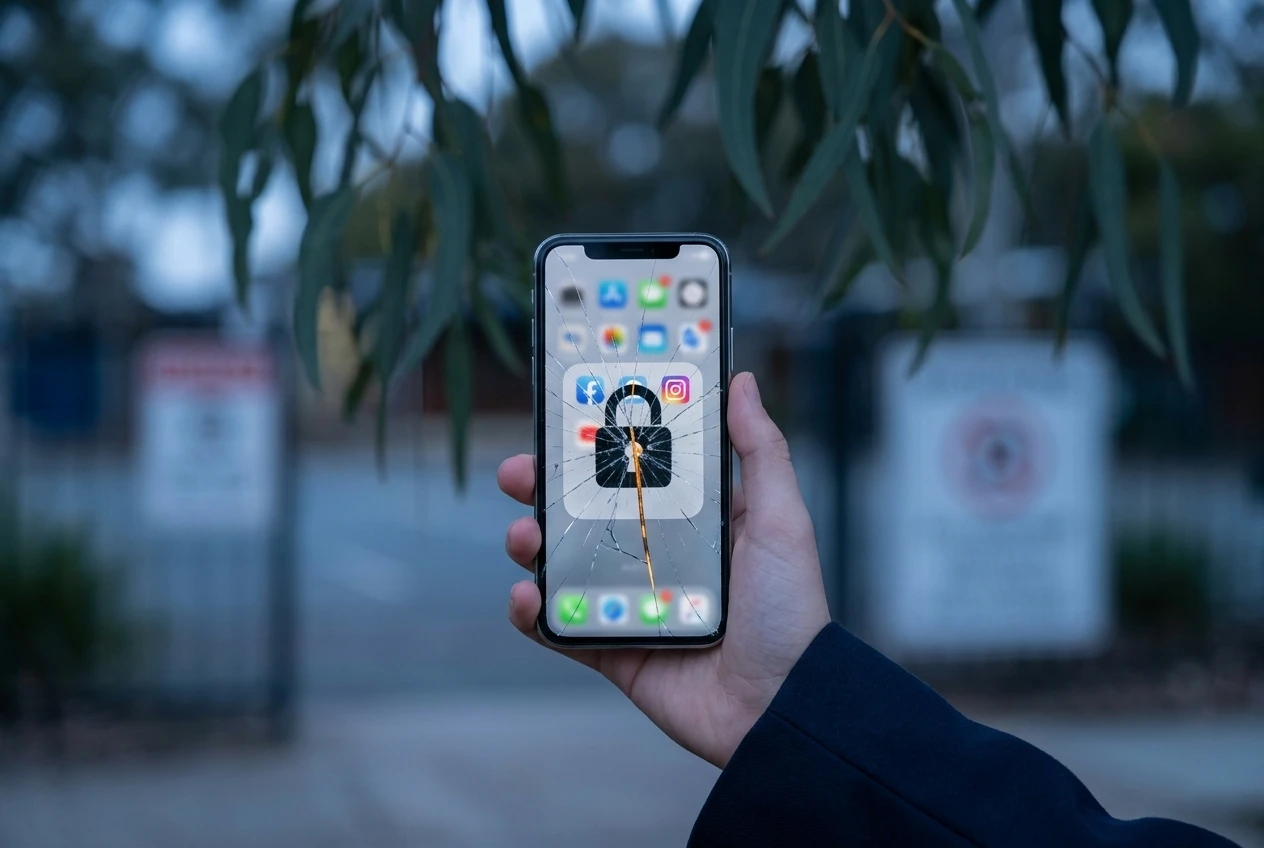
A study published in the British Medical Journal (BMJ) found that more than 85% of Australians under 16 kept using platforms like TikTok, Instagram and Snapchat months after the law took effect. The age checks built to stop them barely functioned.
Odgers, a developmental psychologist at the University of California, Irvine, has spent two years telling governments that a ban was the wrong bet. Most of them are placing it anyway.
A Psychologist Places a Very Public Bet
Odgers has studied adolescent mental health for 25 years. She is an associate dean for research at UC Irvine and also holds a research post at Duke University, and since 2008 she has tracked thousands of 10 to 14 year olds through their phones, school records and sleep data.
In an April TED talk, Odgers argues the teen panic is mostly fiction that happens to sell. She told her audience plainly that teenagers today are amazing.
It’s becoming increasingly clear to me that bans are likely to make things worse, not better.
Odgers said that in an interview with the Guardian, speaking by video call from her home in Los Angeles.
Jonathan Haidt takes the opposite view. The New York University social psychologist wrote The Anxious Generation, a book arguing that phone based childhoods are driving the collapse in teen mental health, and it has sold more than 2 million copies in 44 languages since it came out two years ago. He and Odgers have spent years reading the same studies and reaching opposite conclusions, something laid bare in a recorded University of Virginia debate between the two.
Three Months In, the Numbers Land
Researchers at the University of Newcastle tested Odgers’s wager against reality. They surveyed 408 Australians aged 12 to 17 shortly before the country’s under-16 social media law took effect in December 2025, then again three months later.
They found that more than 85% of the underage teens in the sample were still using TikTok, Instagram, Facebook, Snapchat, YouTube or X, even though two-thirds of them said they had run into an age check somewhere along the way.
“Australia’s experience shows that legislating a restriction is not the same as enforcing one,” said Dr. Amrit Kaur Purba, an assistant professor at the London School of Hygiene and Tropical Medicine who wrote an editorial accompanying the study.
Australian regulators have separately estimated that close to 70% of under-16 accounts remained active three months in. It is a rougher measure, but it points the same direction as the peer reviewed survey.
The Enforcement Timeline
The law’s short life so far reads like a policy trying to catch up with itself.
- December 2025: Australia’s ban on social media accounts for under-16s takes effect, believed to be the world’s first national law of its kind.
- January 2026: Platforms report wiping roughly 4.7 million suspected underage accounts in the law’s first month.
- April 2026: The eSafety Commissioner flags poor compliance among major platforms and pushes for tougher enforcement.
- June 2026: Canberra doubles the maximum fine for noncompliant platforms and threatens court action.
- July 2026: The Newcastle study lands in the BMJ. Prime Minister Anthony Albanese says more than five million accounts have now been removed and unveils tougher legislation.
Each entry describes enforcement getting tighter on paper. None of them describes the ban actually keeping most under-16 users off the apps.
Odgers made a related point in a peer reviewed paper she co-authored earlier this year, warning that researchers studying these restrictions had excluded the very youth the bans target from their evidence base. Teens themselves are growing more critical of the platforms without any ban forcing the issue. In a Pew Research Center survey of American teenagers, 48% said social media has a mostly negative effect on people their age, up from 32% in 2022.
How Australia’s Age Gate Fell Apart
The mechanism was supposed to be simple. Platforms ask, teens tell the truth, accounts under 16 get blocked. A team of software testers, led by researcher Andrew Hammond, who had advised the government’s original rollout, found otherwise.
- Testers opened 50 accounts declaring an age of 16 across major platforms, and none were asked to prove it.
- Some of the dummy accounts began receiving ads for youth banking products, suggesting the platforms had already logged their real age range.
- One account that signed up to X and declared itself 16 was served pornographic content.
- Only Kick, an Australian based livestreaming platform, refused to let the accounts sign up without proof of age.
Colm Gannon, the Australia head of the International Centre for Missing and Exploited Children, advised the government’s original trial. He said “circumvention has become the go-to by young people.”
Even as the enforcement gaps piled up, Canberra kept raising the stakes. Prime Minister Anthony Albanese doubled the maximum fine for noncompliant platforms in June and is now defending the law against a High Court challenge brought by Reddit. Australia’s eSafety Commissioner, Julie Inman Grant, has defended the law in similar terms, saying it would introduce some friction in a system that has previously had none.
Haidt Isn’t Conceding the Point
Haidt has not backed down. After Odgers’s review of his book ran in the journal Nature, he posted a lengthy rebuttal on X, where he laid out six problems with her critique and rejected the idea that his argument rests on a single cause.
“Both of these assertions are untrue,” he wrote, pushing back on the claim that his book confuses correlation with causation.
Haidt says he has managed the trick in his own home. He told BBC Radio 4 last week that he had done “an amazing job” keeping his 16-year-old daughter off social media, saying of her, “She doesn’t want it. She sees what it did to the other girls.”
At the University of Virginia debate, Haidt pressed harder still, telling Odgers, “You’d be crazy to let your daughter engage in something that doubles or triples her risk for depression.” Odgers shot back, “You need to stop telling people it doubles or triples your risk.”
Not everyone reading the same evidence sides with Odgers. A group of pediatric and psychiatric clinicians reviewing the debate for a 2026 medical journal described social media, for the children in their clinics, as a potentially toxic and coercive space, citing patients with obsessive-compulsive behaviors and eating disorders. They cited estimates that around 11% of adolescents worldwide already show addiction-like symptoms in how they use the platforms.
Every Other Government Is Placing the Same Bet
None of this is slowing the global rush toward bans. The European Union pledged this week to introduce its own age based restriction, joining a list that keeps growing regardless of what Australia’s data shows.
French President Emmanuel Macron has already made his position public. “Banning social media for those under 15: this is what scientists recommend,” he said. Denmark is drafting a similar ban for under-15s.
The United Kingdom is moving on two tracks at once. This week its government floated a voluntary midnight-to-6am social media curfew for 16 and 17 year olds, and separately, a fuller proposed ban would block under-16s from Facebook, Instagram, Snapchat, TikTok, X and YouTube outright, plus bar them from livestreaming or talking to strangers on Roblox and similar sites, with a start date reported for 2027.
| Country or Bloc | Policy | Status |
|---|---|---|
| Australia | Bars under-16s from holding accounts on major social platforms | In effect since December 2025; enforcement being toughened |
| United Kingdom | Proposed ban on under-16 accounts plus a voluntary night curfew for 16 to 17 year olds | Curfew announced this week; ban targeted for 2027 |
| France | President Macron has called for a ban on under-15s | Under political discussion |
| Denmark | Planned ban on accounts for under-15s | In development |
| European Union | Bloc-wide pledge for an age based social media restriction | Announced this week; member states split on the age floor |
Ireland wants Brussels to go further than the rest of the bloc, demanding a tougher age ban than Brussels wants. Brussels itself is moving toward an age limit as its own doubts pile up.
Researchers tracking the global wave count Greece, Spain, Malaysia, Norway, India, Egypt, Canada, Turkey, Brazil, Austria, Thailand and South Korea among the other governments weighing comparable rules. Almost none of them have published evidence that a ban changes teen mental health outcomes.
So What Would Actually Help Teenagers?
Odgers wants the money spent on the adults around teenagers, not just new rules for the teenagers themselves: more school counselors, more drop-in mental health centers, and a tax on social media platforms to help fund both.
The ratio of counselors to students in American middle and high schools currently stands at 1 to 500, by her count. She points to a UC Irvine colleague, psychology professor Stephen Schueller, who already runs digital mental health services for rural families and in-person drop-in centers for teens across California.
She has floated funding it “with a big old tax on tech,” arguing governments should spend on better community spaces instead of pouring money into phone-locking pouches for schools.
Odgers points the finger at adults more broadly, arguing that caregiver mental health predicts a child’s outcomes better than screen time does. That argument lines up with separate research tying parents’ own phone habits to insecure attachment in their teenagers.
None of this makes Odgers a defender of the platforms. She wants perpetrators of sextortion and image-based abuse prosecuted, noting that victims are 80% to 90% female while the people building these products are roughly 90% male.
Reddit’s High Court challenge to Australia’s law is still pending. The wager, on both sides, is still being placed.
Frequently Asked Questions
Does Australia’s Social Media Ban Actually Work?
Not for most under-16s so far. A University of Newcastle study in the BMJ found more than 85% of Australians aged 12 to 17 were still using banned platforms three months after the law took effect, mainly because platforms accepted self-declared birthdates without follow-up checks.
Which Countries Have Banned or Restricted Teen Social Media Use?
Australia is the only country with a full ban currently in effect, since December 2025. More than a dozen others are weighing similar rules, among them the United Kingdom, France, Denmark, Canada, Brazil, Greece, Spain, Norway, Malaysia, India, Egypt, Turkey, South Korea, Austria and Thailand, though most are still in legislation or consultation.
What Does Candice Odgers Recommend Instead of a Ban?
Odgers wants governments funding the adults around teenagers, more school counselors, drop-in mental health centers, and a tax on tech platforms to pay for it. She also notes that no study has ever tested whether removing social media from a teenager’s life actually improves their mental health, which is the core assumption behind every ban.
Why Do Jonathan Haidt and Candice Odgers Disagree?
Both scientists read overlapping research and draw different conclusions about causation. Haidt’s rebuttal to Odgers’s review cited a correlation of roughly 0.15 between social media use and depression in girls, a figure Odgers says is real but too small to explain the scale of harm he describes, while Haidt argues that many smaller harms compound into a much larger effect.
Are Teenagers Caught Bypassing Australia’s Ban Punished?
No. Australia’s law penalizes platforms, not individual teenagers, for failing to prevent underage accounts. Regulators doubled the maximum fine for noncompliant platforms in June 2026 and are pursuing court action against several companies, while teens who evade the checks face no legal consequence themselves.


South Korea Retail Investors Face Reckoning After KOSPI AI Rally Collapses

Surrey AI Maps Three Heart Attack Paths and Their Molecular Roots

Germany Locks Neutral Apple ATT Prompts Across Most of Europe

Apple’s 5% EU Fee Quietly Rewrites Alternative App Store Math

Apple’s EU Fee Truce Cuts Complexity but Leaves Rivals Fuming

Pixel 11 Pro Fold Trades Thinness for Durability and Seven-Year Stay

Mayo AI Flags HCM Obstruction From Everyday Ultrasound Videos

Indian Brands Quietly Scale Landmark Screens and Home Tech

Navin Vatsa Turns Grief Into a Lifetime of Quiet Seeing

Google Bets Pixel 11 Agentic AI Will Redefine Phones

Oracle Cuts 21,000 Jobs in a Year, Cites AI in 10-K Filing

Fable 5 and Mythos 5 Return as US Lifts Anthropic Export Controls

SpaceX’s Google Deal Turns a Rocket Company Into a Cloud Landlord

CD Projekt Red Co-CEO: Redemption Arc Isn’t Done, Witcher 4 in 2027

XPL Rallies 30% Ahead of Plasma One Card Tier Launch

Google Search Profiles Build a Follow Graph Inside Discover

DGO App Brings Rs 549 Mobile Pass for FIFA World Cup 2026 in Nepal

Moonshot AI Targets $30 Billion in China’s Fastest AI Funding Sprint

Oppo’s ColorOS 17 Eligibility List Leaves A-Series Buyers Behind

Microsoft Xbox Layoffs Start in July as Sharma Slams 3% Margin
-
 AI2 months ago
Oracle Cuts 21,000 Jobs in a Year, Cites AI in 10-K Filing
-
 AI2 months ago
Fable 5 and Mythos 5 Return as US Lifts Anthropic Export Controls
-
 AI3 months ago
SpaceX’s Google Deal Turns a Rocket Company Into a Cloud Landlord
-
 GAMING2 months ago
CD Projekt Red Co-CEO: Redemption Arc Isn’t Done, Witcher 4 in 2027
-
 CRYPTO3 months ago
XPL Rallies 30% Ahead of Plasma One Card Tier Launch
-
 NEWS3 months ago
Google Search Profiles Build a Follow Graph Inside Discover
-
 APPS3 months ago
DGO App Brings Rs 549 Mobile Pass for FIFA World Cup 2026 in Nepal
-
 AI3 months ago
Moonshot AI Targets $30 Billion in China’s Fastest AI Funding Sprint