
APPS
Aptoide Is Play’s First Rival Store, With Google’s Checkout
Aptoide Games is inside Google Play, but Play Catalog Access still routes US installs and service fees through Google’s own checkout.

Aptoide Games became the first rival store listed in Google Play on August 10, 2026. US users can install it from Play like any other app.
It arrived through the Play Catalog Access Program, a United States-only setup a federal court forced after Epic Games won its Android antitrust trial. Play catalog titles that Aptoide surfaces still download through Google, and Google’s service fee still applies.
Aptoide Games Is the First Store Inside Play
Aptoide is a Portuguese app distributor that spent more than a decade as a sideloaded store. On August 10 it put a games-focused client, Aptoide Games, on Google Play for US users, 19 days after the catalog access program Google launched in July opened enrollment.
CEO and co-founder Paulo Trezentos treated the listing as the end of a long exile, not a new product.
This is much more than a product launch. More than ten years ago, Android users lost the ability to discover alternative app stores through Google Play. Today, that changes. Users gain more choice, developers gain additional distribution opportunities, and Android becomes a more open and competitive ecosystem.
Paulo Trezentos, CEO and co-founder, Aptoide
Trezentos said the company has access to Play’s full catalog of 1.9 million apps and 295,000 games under the court order. Aptoide separately says it has about 25 million monthly active users worldwide and more than 400,000 Android applications of its own. Those are two different piles: one is Play’s library, the other is Aptoide’s.
The Play listing is Aptoide Games, not the full general Aptoide client. That broader store still arrives the old way, as an APK users fetch themselves.
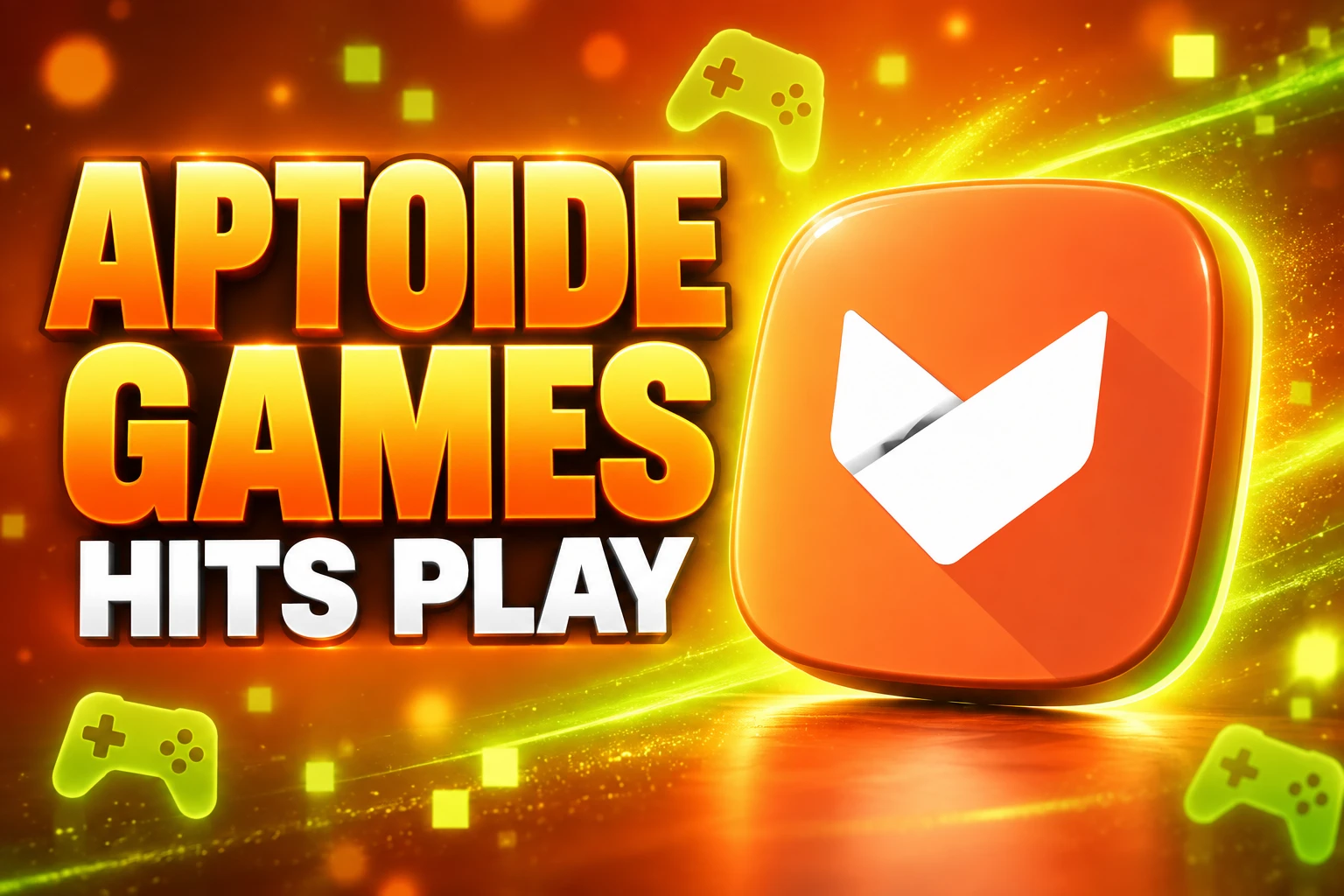
Rival Listings Still Install Through Google Play
Google’s help page is blunt about the plumbing. Enrolled US stores may show Play catalog apps. The download of those apps is completed through Google Play on the same terms as a download started inside Play itself, and the Play service fee still applies.
Stores must tell the user that a Play catalog app comes from Google Play before they fire the Inline Install API completes those downloads. They may not tack on extra fees for those installs, and they may not monetize Play catalog installations in other ways. They also may not ship those listings to users outside the United States, share the catalog data with other stores, or use it for anything except running their own storefront.
Google even requires enrolled stores to offer apps other than titles that exist only through catalog access. A rival cannot be a pure Play reseller. It also cannot undercut Play on the Play titles it is allowed to show.
HOW CATALOG ACCESS SPLITS THE WORK
| Piece of the deal | Who handles it |
|---|---|
| Names, icons, descriptions, screenshots, videos | Shared with enrolled US stores unless a developer opts out |
| The APK install for those titles | Google Play, through the Inline Install API |
| Play’s service fee on those downloads | Still charged by Google |
| Extra markup on Play catalog apps | Banned for enrolled stores |
| Where those listings may be offered | United States only |
Catalog data itself arrives as a daily export snapshot in Google Cloud Storage, with optional intra-day APIs if a store wants faster refreshes. Google tells stores to refresh at least weekly. The storefront can look different. The checkout for Play’s own catalog does not.
Epic and Google Dropped the Injunction Rewrite
This shape exists because a rewrite failed. In October 2024, US District Judge James Donato entered a permanent injunction after a jury found Google had unlawfully held monopoly power in Android app distribution. The order required Google, for three years, to carry rival Android stores inside Play and to give those stores access to Play’s catalog.
Epic and Google later announced a settlement that would have swapped those two remedies for a global Registered App Stores path and a longer fee deal running toward 2032. Donato signaled doubt that the swap served the public. On July 15, 2026, the two companies jointly withdrew the bid to modify the injunction, and Google told the court it was ready to start distributing third-party stores in Play on July 22.
FROM THE INJUNCTION TO APTOIDE
- October 2024: Donato’s injunction orders catalog sharing and rival stores inside Play for three years.
- November 2025: Epic and Google announce a settlement that would replace those two remedies with Registered App Stores and a longer global fee deal.
- June 30, 2026: Google begins rolling out lower service fees and split billing in the United States, the United Kingdom, and the EEA, a commercial change that moved even as the injunction fight continued.
- July 15, 2026: Epic and Google withdraw the motion to modify the injunction.
- July 22, 2026: Play Catalog Access enrollment opens in the US.
- August 10, 2026: Aptoide Games appears in Play as the first rival storefront.
The commercial fee work and the court-ordered store work are not the same project. One changed what developers pay. The other put a second store icon inside Play without moving the install pipe. That split is the leftover of Epic’s antitrust case against Google, not a product Google designed for fun.
What Developers Can Block in Catalog Settings
Google warned developers in June that, starting July 22, 2026, their US names, icons, descriptions, screenshots, and videos would flow to third-party US stores. The company said this was to comply with the court order. Third-party stores are not bound by Play’s content policies and may write their own.
If a developer does nothing, sharing is the default. The Play Console path is Settings, then Catalog Settings, with three choices.
CATALOG SETTINGS IN PLAY CONSOLE
- Publish all: Every US listing goes to every enrolled third-party store.
- Manage each store: The developer picks store by store.
- Block all: No US listing is published to any enrolled third-party store.
Google’s own developer notice states that US app listings shared with enrolled stores start on that July date unless the developer chooses otherwise. Opting out stops the listing copy. It does not stop Play from charging its service fee when someone still installs the app through Play.
The $5,000 Review and the 1% Malware Cap
Enrollment is not a public API anyone can hit. The store must target US users, register as an organization, and operate as what Google calls a legitimate marketplace, with publicly posted, non-discriminatory trust and safety rules. It may still curate what it shows. It must have written authorization from developers whose apps it distributes, a consumer-facing destination and launcher icon, and basic management tools: install, uninstall from the same page, and updates.
Google charges an annual $5,000 security and policy review to onboard and to keep access. That is the figure on the official enrollment page: $5,000 up front, then the same amount each year after that for continued reviews. Google will not take the APKs of every title inside the rival store. It reviews the store client, browses for obvious harmful content, and sets a hard malware line.
WHAT AN ENROLLED STORE MUST ACCEPT
- Malware cap: No more than 1% of install attempts over a 30-day rolling window, across all devices, globally.
- Origin label: Tell the user a Play catalog app comes from Google Play before the inline install starts.
- Own inventory: Offer apps and games beyond titles that exist only through catalog access.
- No extra fee: Do not charge users more to download, install, or use Play catalog apps.
- US only: Do not use Play catalog data to reach users outside the United States.
Fail the notice period on a violation and Google may suspend the store. Extremely harmful or illegal content can end access immediately. Play Integrity checks on the rest of Android did not disappear when this aisle opened, which is why a sideload-built phone and a Play-hosted rival store can still be treated as different trust problems on the same device.
Epic’s Mobile Store Is Still an APK
The company that brought the case has not taken the Play shelf it forced open. As of September 2026, the Epic Games Store client for Android is still installed from Epic’s own APK, not from Google Play. Amazon’s Appstore and Samsung’s Galaxy Store already live on hardware those companies control. Neither has been confirmed as a Play Catalog Access tenant beside Aptoide Games.
Microsoft’s long-planned Xbox mobile store was named as a logical follow-up when Aptoide appeared. It has not shown up in Play’s rival-store aisle either. The people who expected a rush of household names into that aisle are still waiting on a second logo.
Google has separately described a Registered App Stores program for markets outside the United States, a one-step website install for stores that meet safety checks. That is the path the withdrawn settlement preferred. It is not the US injunction. In the United States, the court wanted rival stores inside Play. Outside it, Google is still designing a sideload with fewer warnings.
Users Reach Rival Stores Through a Buried Category
Play did build a dedicated destination. US users can open Play’s third-party app stores page, or walk Apps, then Categories, then Third-party app stores at the bottom of that list. Searching for Aptoide can surface the same aisle. The stores are not parked on the Play home screen next to charts and ads.
Once Aptoide Games is installed from Play, further installs from that client do not ask the user to flip unknown sources. The extra tap is an Install prompt after the file lands. For Play catalog titles, that prompt sits on Google’s install path, with Google’s fee attached, after a notice that the app comes from Play.
Aptoide Games is the rival store US users can actually fetch from Play. Epic’s Android client is still an APK. Google still completes the Play catalog downloads.

Instagram Plus Tests a Read-Only Mode That Cuts Stories

Altman Asks the Public to Accept Some AI Harm

Google Freezes OSS VRP Product Reports After AI Flood

AI Agents Make Payment Rails the Scarce Prize

Turkey’s Crypto Boom Now Runs Through Three Banks

Fable 5 Came Back Under a Commerce On-Off Switch

Google’s SpaceX GPU Lease Has a Sept. 30 Deadline

Plasma One’s XPL Locks Face a 1.81 Billion Cliff

DGO’s Rs 549 World Cup Pass Cost Fans Sleep and Data

Moonshot AI’s $30 Billion Ask Became a $35 Billion Close
-
 AI4 months ago
Fable 5 Came Back Under a Commerce On-Off Switch
-
 AI4 months ago
Google’s SpaceX GPU Lease Has a Sept. 30 Deadline
-
 CRYPTO4 months ago
Plasma One’s XPL Locks Face a 1.81 Billion Cliff
-
 APPS4 months ago
DGO’s Rs 549 World Cup Pass Cost Fans Sleep and Data
-
 AI4 months ago
Moonshot AI’s $30 Billion Ask Became a $35 Billion Close
-
 NEWS4 months ago
ColorOS 17 Device List Spans Oppo, OnePlus and Realme
-
 GAMING4 months ago
Xbox Cuts 3,200 Jobs After Five Years of Thin Returns
-
 GAMING4 months ago
The RTX 4050 Under Rs 70,000 Hides a Wattage Gap