
APPS
Aptoide Entered Google Play After Epic, Google Still Installs
Aptoide listed on Google Play after Epic’s case, but catalog downloads still run through Google, which still charges a service fee in the US.

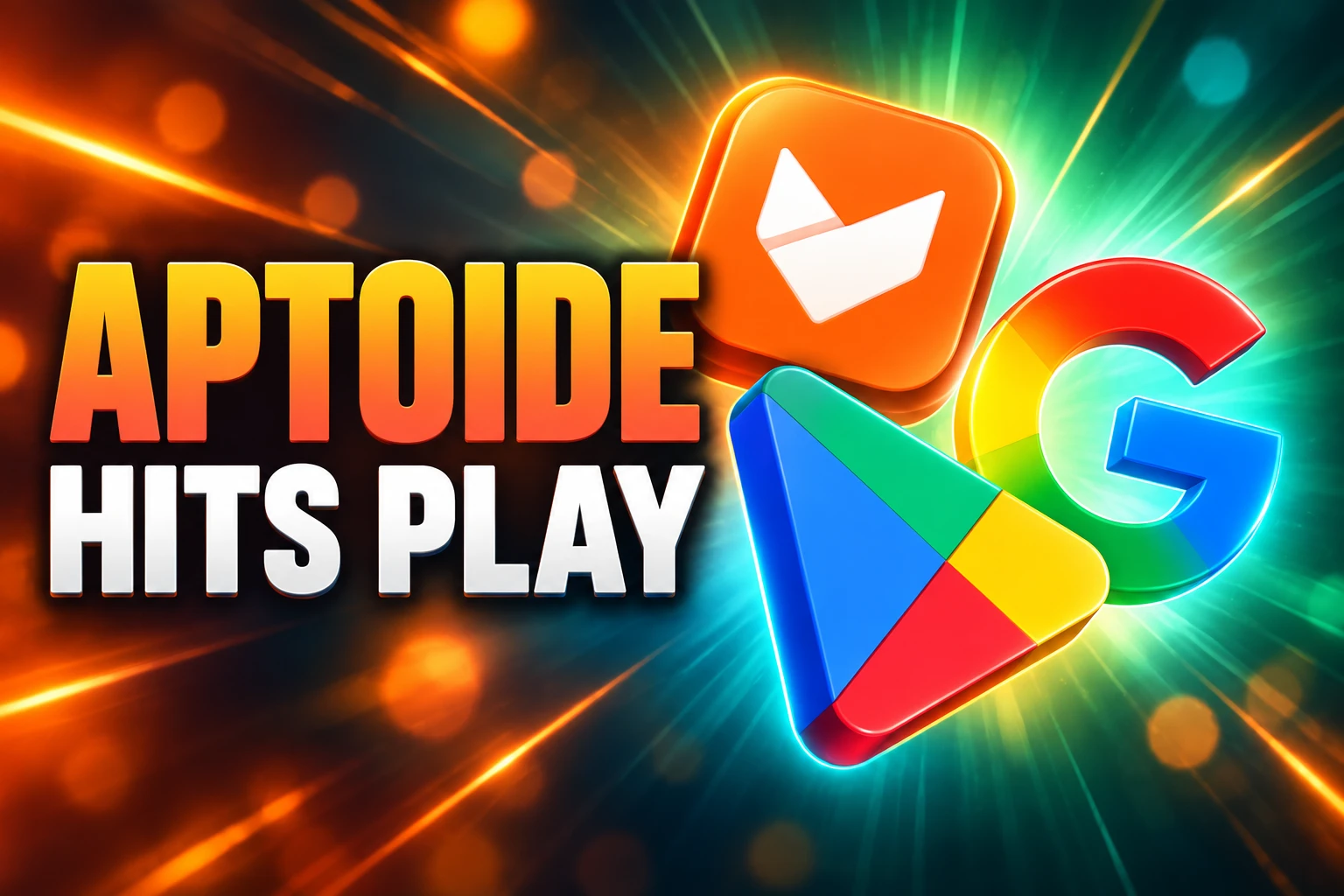
Aptoide Games reached Google Play in the United States on August 10, 2026, the first rival storefront listed after Epic Games won its antitrust case.
Users can install that store from Play itself. Apps pulled from Google’s catalog still download through Google Play, on Google’s terms, at Google’s service fee.
July 15 Ended the Global Settlement
Epic and Google spent the first half of 2026 trying to swap Judge James Donato’s injunction for a private deal that would have run through June 30, 2032 and stretched beyond the United States. Donato had already signaled he might not bless that swap. On July 15, 2026, the companies pulled the motion rather than fight the hearing.
Dan Jackson, Google’s Trust and Reputation Communications Lead, said the firms agreed to withdraw the request “rather than prolonging this process which creates uncertainty for the ecosystem.” The October 2024 injunction stayed in force. Catalog sharing, which that order had parked for July 22, 2026, went ahead on the court’s calendar instead of the settlement’s.
HOW THE OPENING GOT THIS NARROW
- December 2023: A nine-person San Francisco jury finds for Epic on all 11 counts, including monopolization of Android app distribution and in-app billing.
- October 2024: Judge James Donato enters a permanent injunction that opens rival stores and bars exclusive launch deals for three years.
- July 31, 2025: The Ninth Circuit upholds the order at 147 F.4th 917.
- March 19, 2026: Fortnite returns to Google Play worldwide after more than five years off the store.
- June 30, 2026: Google splits its Play cut into a service fee and a billing fee in the United States, the United Kingdom, and the EEA.
- July 15, 2026: Epic and Google withdraw the proposed modified injunction.
- July 22, 2026: The Play Catalog Access Program opens for US Android stores.
- August 10, 2026: Aptoide Games lists on Google Play in the United States.
The withdrawn papers would have replaced the three-year US store remedy with a longer registered-store program and locked in fee cuts worldwide. What remains is the original US order, Google’s own global fee schedule, and a catalog-share design Google wrote after it lost.
Google Still Completes Every Catalog Download
The injunction made Google let rival US stores see Play’s listings. It did not make Google hand over the installer. Google’s Catalog Access Program, which opened on July 22, 2026, says third-party stores can offer those apps to users, and the downloads completed through Google Play on the same terms as a tap inside Play itself. Play’s service fee still applies to those installs.
That is the design, not a glitch. A rival store can put Clash of Kings or any other shared listing on its home screen. When the user hits install, Google’s Inline Install API finishes the job. The storefront is someone else’s. The pipe is Google’s.
WHAT A RIVAL STORE MUST ACCEPT
- The geography: Catalog apps cannot be offered to users outside the United States.
- The fee: Google charges $5,000 up front for security and policy review, then $5,000 each year after to keep access.
- The malware cap: Install attempts cannot exceed 1% malware over a rolling 30-day window, measured across all devices worldwide.
- The extra-charge ban: Stores may not add fees for downloading catalog apps or otherwise monetize those installs.
- The daily snapshot: Listings must refresh from Play’s catalog at least weekly, and stores must tell the user the app comes from Google Play before the inline install starts.
Developers can publish every US listing to every enrolled store, pick stores one by one, or opt out. If they do nothing, Google starts sharing the name, icon, description, screenshots, and video. Stores also have to ship some of their own apps, not only Play’s catalog, and they must hold written permission from each developer they distribute. The empty-shelf problem is gone. The cash register did not move.
What Google Now Charges on Play Purchases
Google split Play’s old cut into a service fee and a billing fee on June 30, 2026, in the United States, the United Kingdom, and the EEA. Paul Feng, vice president for Google Play engineering, product, and UX, wrote that the service fee starts at 10% on a developer’s first $1 million in annual earnings, including when the checkout is not Google’s. Other digital sales then sit higher once that first million is behind them.
PLAY SERVICE FEES AFTER JUNE 30, 2026
| Transaction type | First $1M a year | Standard rate | Games Level Up or Apps Experience |
|---|---|---|---|
| Auto-renewing subscriptions | 10% | 10% | 10% |
| Other digital goods, new installs | 10% | 20% | 15% |
| Other digital goods, existing installs | 10% | 25% | 20% |
A new install, in the United States, is a user whose first Play install or update of the app landed on or after June 30, 2026. An existing install is anyone who was already on the app before that date. Feng’s post adds a separate 5% billing fee in the United States, the United Kingdom, and the EEA when the purchase uses Google Play Billing. Alternative billing and web links skip that 5%. They do not skip the service fee.
Google Play still handles taxes, refunds, and more than 300 local payment methods across 195-plus markets, which is the convenience case for staying on its rails. The Level Up and Apps Experience rate cards become available on September 30, 2026, for partners that meet those program rules. The old 30% headline rate is no longer the US menu. A 25% service fee on older installs plus 5% for Play Billing is 30% by another route, and that path is optional only if the developer actually ships another checkout.
Aptoide Reached the Play Shelf First
Aptoide, founded in 2009 and based in Lisbon, said Aptoide Games cleared Google’s review and returned to Play in the United States more than a decade after competing stores were pushed off the shop. The company calls the US its largest market. It reports about 25 million monthly active users and more than 400,000 Android applications. In its own words, it is the first major competing Android app store distributed through Play in the United States under the new program.
This is much more than a product launch. More than ten years ago, Android users lost the ability to discover alternative app stores through Google Play. Today, that changes. Users gain more choice, developers gain additional distribution opportunities, and Android becomes a more open and competitive ecosystem.
Paulo Trezentos, CEO and co-founder, Aptoide
Trezentos has also said Aptoide can see Play’s full catalog, which he put at 1.9 million apps and 295,000 games, with more titles to be added over time. Early listings inside Aptoide Games were thinner than that full dump, which is what a curated store looks like when the legal access is wide and the shelf is still being stocked. Microsoft has talked about an Xbox mobile store for years. It was not the first name on Play’s rival-store page.
Tim Sweeney, Epic’s founder and chief executive, cheered the listing on August 10, 2026, and thanked Google for what he called Android’s lead as an open mobile platform.
Big news! Aptoide has become the first independent store listed on Google Play in the modern era!
And thanks to Google for Android's leadership as the most open mobile platform. Now Epic Games Store, Google Play, and Windows Store are open to third-party stores in the US. https://t.co/ZKT3wcsiyT
— Tim Sweeney (@TimSweeneyEpic) August 10, 2026
The plaintiff that spent six years in court to force this shelf did not occupy it first. A Portuguese games store did, after paying the review fee and plugging into Google’s install API. That is the live result of a structural remedy that shares inventory and keeps fulfillment.
The Epic Games App Will Add a Store
Fortnite’s absence was the public face of the case. Google pulled the game in August 2020 after Epic snuck in its own checkout. Epic said Fortnite launched on Google Play worldwide on March 19, 2026, timed with the Fortnite Showdown season, and noted that more than 345,000 games built with Unreal Editor for Fortnite sit inside that client. The battle royale was already on the Epic Games Store for Android everywhere, and on iOS in the European Union.
The Epic Games Store as a full Android shop is a different product from Fortnite. Sweeney said on September 3, 2026, that “the Epic Games App on the Google Play Store will soon include Epic Games Store functionality in the US.” Soon is not listed. The Play app is the vehicle he named, not a separate store package sitting next to Aptoide Games on the third-party landing page.
That sequencing is the quiet tell. Epic got Fortnite back onto the default shop, where the audience already is. Building a second storefront that still has to route shared catalog titles through Google’s installer is a slower, narrower prize than the 2032 global deal would have been. The company can wait, ship store features inside an app that is already on Play, and keep its own sideload catalog for titles it hosts directly.
Google Can End US Alternative Billing
US developers can offer their own checkout in lieu of, or next to, Google Play Billing. Google’s help page for alternative billing for United States users ties that program to the district court’s order. The same page says Google may modify or terminate the program, including if that order changes or ends. Enrolled developers must report authorized US transactions within 24 hours once reporting is required, and they must meet card-security rules if they handle card data.
THE CLOCK ON THE US REMEDY
- Fee start: Enrolled US developers must report transactions and successful downloads, and pay the Play service fee, beginning October 1, 2026.
- Form factor: The US alternative-billing program covers mobile and tablet apps, not every Android screen.
- Order end: The injunction’s three-year window runs through November 1, 2027.
- Kill switch: Google reserved the right to alter or drop the US billing program if the court order moves or dies.
Outside the United States, this case does not open Play’s third-party shelf. Google has talked about a separate registered-store track for other countries, installed from the web with a simpler flow for stores it trusts. That is a company program, not Donato’s catalog-share order. A developer in London or Tokyo does not get US catalog interoperability from this lawsuit.
Apple Still Collects on the Way Out
Epic sued Apple the same week it sued Google. A judge rejected the core monopoly claims against Apple and ordered anti-steering, later sharpened so US developers could link to outside checkout without paying Apple on those off-app sales. Apple was not forced to host rival stores inside the App Store. Google was, in the United States, for phones and tablets, for three years.
The two platforms now teach different lessons in the same country. Android has a court-ordered store-inside-a-store, with Google still fulfilling shared listings. iOS in the US has external links and a surviving distribution monopoly. In Europe, the Digital Markets Act already pushed both firms, and Apple’s 5 percent off-store fee still follows some purchases after a user leaves the native shop. Publishers that sell in both places will keep two playbooks: US Android catalog rules with a dated injunction, and iOS rules that never gave Epic the distribution win it got against Google.
Aptoide is the first name on the US Play shelf Epic opened. Google still runs the installer for the catalog those stores borrow, and it still bills a service fee on the way through. The Epic Games App, Sweeney said, will pick up store functions in the United States soon. The order that created the shelf is written to lapse on November 1, 2027, unless a court extends it.

Instagram Plus Tests a Read-Only Mode That Cuts Stories

Altman Asks the Public to Accept Some AI Harm

Google Freezes OSS VRP Product Reports After AI Flood

AI Agents Make Payment Rails the Scarce Prize

Turkey’s Crypto Boom Now Runs Through Three Banks

Fable 5 Came Back Under a Commerce On-Off Switch

Google’s SpaceX GPU Lease Has a Sept. 30 Deadline

Plasma One’s XPL Locks Face a 1.81 Billion Cliff

DGO’s Rs 549 World Cup Pass Cost Fans Sleep and Data

Moonshot AI’s $30 Billion Ask Became a $35 Billion Close
-
 AI4 months ago
Fable 5 Came Back Under a Commerce On-Off Switch
-
 AI4 months ago
Google’s SpaceX GPU Lease Has a Sept. 30 Deadline
-
 CRYPTO4 months ago
Plasma One’s XPL Locks Face a 1.81 Billion Cliff
-
 APPS4 months ago
DGO’s Rs 549 World Cup Pass Cost Fans Sleep and Data
-
 AI4 months ago
Moonshot AI’s $30 Billion Ask Became a $35 Billion Close
-

 NEWS4 months ago
ColorOS 17 Device List Spans Oppo, OnePlus and Realme
-
 GAMING4 months ago
Xbox Cuts 3,200 Jobs After Five Years of Thin Returns
-
 GAMING4 months ago
The RTX 4050 Under Rs 70,000 Hides a Wattage Gap