
AI
Perplexity’s Hybrid AI Orchestrator Challenges Cloud Inference
Perplexity’s hybrid inference routes AI tasks between device and cloud automatically, no user input required. The feature hits Perplexity Computer in July.

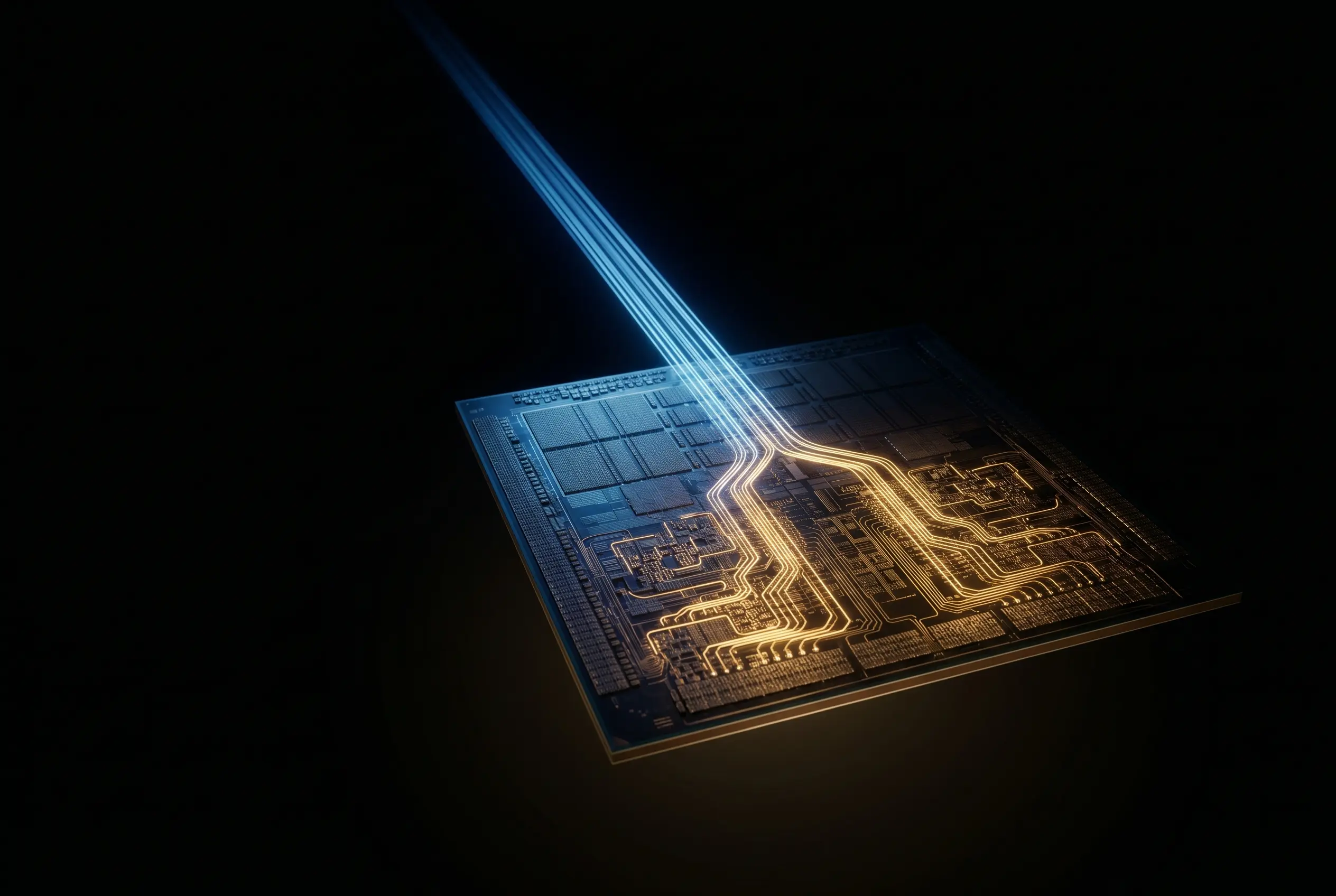
Perplexity’s hybrid local-server inference orchestrator, announced at Computex 2026 on June 2 alongside Intel, routes AI workloads automatically between a user’s device and cloud frontier models without user input. The feature arrives in Perplexity Computer in July as the first commercial product to offer real-time automatic task routing.
For three years, cloud inference has been the default architecture: AI work happens on remote servers, billed by the token. Perplexity’s orchestrator treats compute location as one more thing to route intelligently, the same way it already routes across 20 different AI models today.
The Computex Demo
On June 2, Aravind Srinivas shared the Intel keynote stage in Taipei with Intel CEO Lip-Bu Tan and fed confidential deal materials to Perplexity Computer in a live demonstration. Local models on an Intel Core Ultra Series 3 chip classified which data should stay on the device and which tasks could move to cloud frontier models while the agent was still running. Hours earlier at the same conference, NVIDIA CEO Jensen Huang had introduced RTX Spark, an Arm-based computing platform designed for local large language model inference on laptops and desktops, making the session a showcase for on-device AI from the whole chip industry at once.
The Perplexity chief executive described the orchestrator’s logic to Bloomberg Television that evening:
An air-traffic controller for AI tasks.
Srinivas, Perplexity’s chief executive, used the phrase during that Bloomberg Television interview to explain how the compact local model arbitrates between device execution and cloud routing at each sub-task, not at the session level. The description reflects a product arc the company has been building since February 2026, when Perplexity Computer launched as a cloud-based agent that coordinated 19 different AI models for complex long-running tasks. Personal Computer, the version that added local file access across apps, files, and the web, followed in April on Mac after its March introduction at the company’s Ask 2026 developer conference. The hybrid orchestrator is the third step: the system now reasons about compute location as well as model selection, continuously, as work runs.
Where Apple Intelligence and Microsoft’s Copilot+ handle the local-cloud split through fixed designations set by developers, Perplexity’s system treats the routing decision as too context-dependent to hardcode. The compact local classifier makes it task by task. Perplexity’s announcement blog post, The Data Center Moves to Your Machine, frames compute location as one more resource to orchestrate alongside models, tools, and data. Personal Computer for Mac is available now; a Windows version is on a waitlist.
A Crisis of Inference Costs
Cloud inference, the computational work of answering every AI query, has become the cost line threatening profitability across the sector. Per-token prices have fallen sharply over the past two years, but total inference spend has gone the opposite direction as AI usage expands faster than efficiency gains. The gap hits companies that route queries through models they don’t own especially hard.
Perplexity does not train any of the frontier models its system routes to. Annualized recurring revenue reached $500 million in spring 2026 while headcount grew only 34 percent, a ratio Srinivas cited publicly at Computex. The company has raised $1.5 billion in total funding at a $20 billion valuation, per PitchBook data. In its announcement, Perplexity described the architecture as optimizing “value per watt per user,” arguing that routing tasks onto hardware users already own reduces centralized infrastructure demand without compromising output quality.
- $8.67 billion: OpenAI’s estimated Azure inference spend through Q3 2025, per investigative reporting on OpenAI’s Azure invoice records
- 85%: share of the average enterprise AI budget now consumed by inference, per AnalyticsWeek’s 2026 Inference Economics report
- $7 million: average enterprise annual AI spend in 2026, up from $1.2 million two years prior, per the same report
- 11+: U.S. states with proposed restrictions on new data-center construction, per Air Street Press
Perplexity’s business model creates a structural incentive that frontier-model API providers don’t share. The company wins when it routes a query to the smallest capable model that can answer it correctly, which pushes in the same direction as the user’s interest in cost and the product’s interest in speed. The data-center constraint compounds that incentive: communities, state legislatures, and a proposed federal moratorium bill have all added friction to new centralized compute construction. Routing routine and sensitive workloads onto consumer hardware that already exists bypasses that bottleneck for a growing class of tasks.
How the Orchestrator Routes a Task
The system places a compact model on the user’s device that classifies each incoming sub-task for data sensitivity and compute requirements before dispatching it. Tasks go to cloud frontier models only when the job genuinely needs that capacity. Per Perplexity’s official announcement, the routing operates as follows:
- Document summarization, text reformatting, and lightweight classification run on the local device
- Any sub-task touching financial records, health information, or personal files stays on-device, regardless of complexity
- Multi-step reasoning, large-scale retrieval, and tasks requiring frontier-model capability route to cloud servers
- The system requests explicit user permission before sending any task it classifies as sensitive to a remote server
That fourth point is a compliance-level design choice. Enterprise IT departments have resisted agentic AI specifically because of data-governance uncertainty; building a permission gate into the routing logic rather than the user interface addresses that concern at the architecture layer, not through a policy addendum written after the fact.
The orchestration framework is chip-agnostic. Perplexity demoed the system on Intel Core Ultra Series 3 hardware in Taipei, but NVIDIA’s RTX Spark platform is also a confirmed target. RTX Spark packs a Blackwell GPU with 6,144 CUDA cores, up to 20 Arm CPU cores, 128 gigabytes of LPDDR5X RAM, and 300 gigabytes per second of memory bandwidth, enough to run models up to 120 billion parameters locally. Consumer hardware with RTX Spark silicon is scheduled to arrive this fall.
How the Competition Stacks Up
Every major AI platform now includes some form of on-device inference. The differences are in architecture, control, and whether routing is automatic.
The Incumbent Approaches
Apple has invested most heavily in the privacy architecture. Apple Intelligence routes sensitive processing to M-series chips locally and sends capacity-exceeding tasks to Private Cloud Compute, Apple’s privacy-preserving server infrastructure. Google ships Gemini Nano on Pixel devices for local inference and larger Gemini models in the cloud; the rollout has drawn criticism because Chrome was reportedly installing a 4GB Gemini Nano model without explicit user consent, and the “AI Mode” button most users see does not use that local model. Microsoft’s Foundry Local reached general availability in April 2026, enabling full local AI inference on Windows, macOS, and Linux without any cloud dependency and giving enterprise developers a completely offline option.
| Company | On-Device Component | Cloud Backend | Routing Control |
|---|---|---|---|
| Apple | Apple Intelligence on M-series chips | Private Cloud Compute | Fixed by data type |
| Gemini Nano on Pixel devices | Gemini cloud API | Developer-configured | |
| Microsoft | Foundry Local on NPU-equipped PCs | Azure AI services | User or developer set |
| Perplexity | Compact local classifier model | 20+ frontier models | Automatic, per sub-task |
The Routing Differentiator
Most of those systems require users or developers to designate tasks as local or cloud in advance. Perplexity’s orchestrator treats that designation as a real-time inference problem, one the compact local classifier solves continuously as work progresses. A single job involving a private financial document alongside public research data can keep sensitive records on-device while routing the research-retrieval portion to cloud servers, within the same workflow, without a session restart.
The architectural detail that separates Perplexity from the comparison table is sub-task granularity. Breaking a request into components, rather than labeling an entire session as “local” or “cloud,” is what allows the orchestrator to handle the reality of most professional work, where sensitive and non-sensitive data arrive mixed in a single prompt. For a closer look at how specific task categories get classified and routed, Perplexity Computer’s task-split breakdown between laptop and cloud walks through the mechanics in detail.
Intel and NVIDIA’s Dividend
Neither chip company needs Perplexity to succeed for the Computex announcement to benefit it, but a successful rollout would validate the exact category of local silicon both companies just spent the conference promoting.
Intel’s position is near-term. Core Ultra Series 3 processors are already in market, and the Computex partnership puts Intel silicon inside the most visible hybrid AI demonstration of the show. Intel CEO Lip-Bu Tan’s presence on the keynote stage alongside Perplexity’s chief executive signals a formal partnership with product commitments attached. The same keynote introduced Xeon 6+ data-center processors with 288 efficiency cores built on Intel’s 18A process node, connecting Intel’s client and server business under a single hybrid inference story: work gets classified at the laptop and, for complex jobs, runs on data-center silicon.
NVIDIA’s RTX Spark has a longer horizon. Systems carrying that silicon arrive this fall, and the spec sheet is built specifically for the workload Perplexity describes. Perplexity’s chip-agnostic framing creates no reason for it to prefer one vendor; the broader the hardware base that runs Personal Computer, the larger the addressable subscriber audience without adding cloud capacity.
The sovereignty argument in Perplexity’s announcement also benefits the chip vendors directly. The data-center restrictions Air Street Press documented this spring, spanning state legislatures and a proposed federal moratorium, make that case more durable than a single cost cycle. A government or enterprise that wants sensitive AI workloads processed domestically, without standing up a data center to do it, can now point to local silicon as the hardware layer that keeps data within its jurisdiction.
July’s Open Question
Perplexity Computer with hybrid inference is scheduled for July. Hardware requirements have not been published, and the company has not confirmed whether every subscriber gets access simultaneously or whether the Windows version receives the feature at launch.
The harder unknown is classification accuracy. The compact local model makes two kinds of errors: routing something sensitive to the cloud when it should have stayed on-device, or assigning a complex task to an underpowered local model and degrading output quality. Neither is visible to the user in real time, and both cut into the same promise the Computex demonstration made.
Enterprise accounts with strict data-residency requirements are Perplexity Computer’s clearest growth market if the classification proves reliable. They’re also the accounts most likely to notice a mis-routing first.
The demo processed a controlled set of deal materials under ideal conditions. Real workflows carry a more complex data topology: personal emails referencing financial decisions, spreadsheets blending private figures with market data, browser sessions pulling sensitive context and public research simultaneously. No independent benchmark measuring routing accuracy against actual data sensitivity exists yet.
Hardware requirements and phased-rollout details remain undisclosed. July is when the routing model faces its first production workloads.


WeChat Moments AI Tools Hide a Bigger Skills Redesign

iOS 27 Beta 5 Locks Six iPhones and a Split Launch

Edge AI Forces Hybrid Data Centers Into a Split Reality

Qi2 25W Magnets Quietly Rewrite Desk and Car Charging

Spotify AI Persona Badges Wall Off Synthetic Discovery

GCCs Build AI Bullet Trains on Incomplete Data Tracks

Coreum Bridge Multisig Signed Off on Its Own 200k XRP Drain

AI Shrinks Solar Inspection Crews While Paying Hybrid Skills Far More

Intel Graphics Driver Fixes Still Fight Windows and OEMs

Codex Now Runs Your Mac Apps and Remembers Across Days

Fable 5 and Mythos 5 Return as US Lifts Anthropic Export Controls

Oracle Cuts 21,000 Jobs in a Year, Cites AI in 10-K Filing

SpaceX’s Google Deal Turns a Rocket Company Into a Cloud Landlord

CD Projekt Red Co-CEO: Redemption Arc Isn’t Done, Witcher 4 in 2027

XPL Rallies 30% Ahead of Plasma One Card Tier Launch

Google Search Profiles Build a Follow Graph Inside Discover

DGO App Brings Rs 549 Mobile Pass for FIFA World Cup 2026 in Nepal

Moonshot AI Targets $30 Billion in China’s Fastest AI Funding Sprint

Microsoft Xbox Layoffs Start in July as Sharma Slams 3% Margin

Oppo’s ColorOS 17 Eligibility List Leaves A-Series Buyers Behind
-
 AI1 month ago
Fable 5 and Mythos 5 Return as US Lifts Anthropic Export Controls
-
 AI2 months ago
Oracle Cuts 21,000 Jobs in a Year, Cites AI in 10-K Filing
-
 AI2 months ago
SpaceX’s Google Deal Turns a Rocket Company Into a Cloud Landlord
-
 GAMING2 months ago
CD Projekt Red Co-CEO: Redemption Arc Isn’t Done, Witcher 4 in 2027
-
 CRYPTO2 months ago
XPL Rallies 30% Ahead of Plasma One Card Tier Launch
-
 NEWS2 months ago
Google Search Profiles Build a Follow Graph Inside Discover
-
 APPS2 months ago
DGO App Brings Rs 549 Mobile Pass for FIFA World Cup 2026 in Nepal
-
 AI2 months ago
Moonshot AI Targets $30 Billion in China’s Fastest AI Funding Sprint