
NEWS
UK Online Safety Act Barely Moved the Needle on Harmful Content
A Molly Rose Foundation study of 1,825 UK teens finds exposure to harmful content barely fell after the Online Safety Act, with 47% of girls affected.

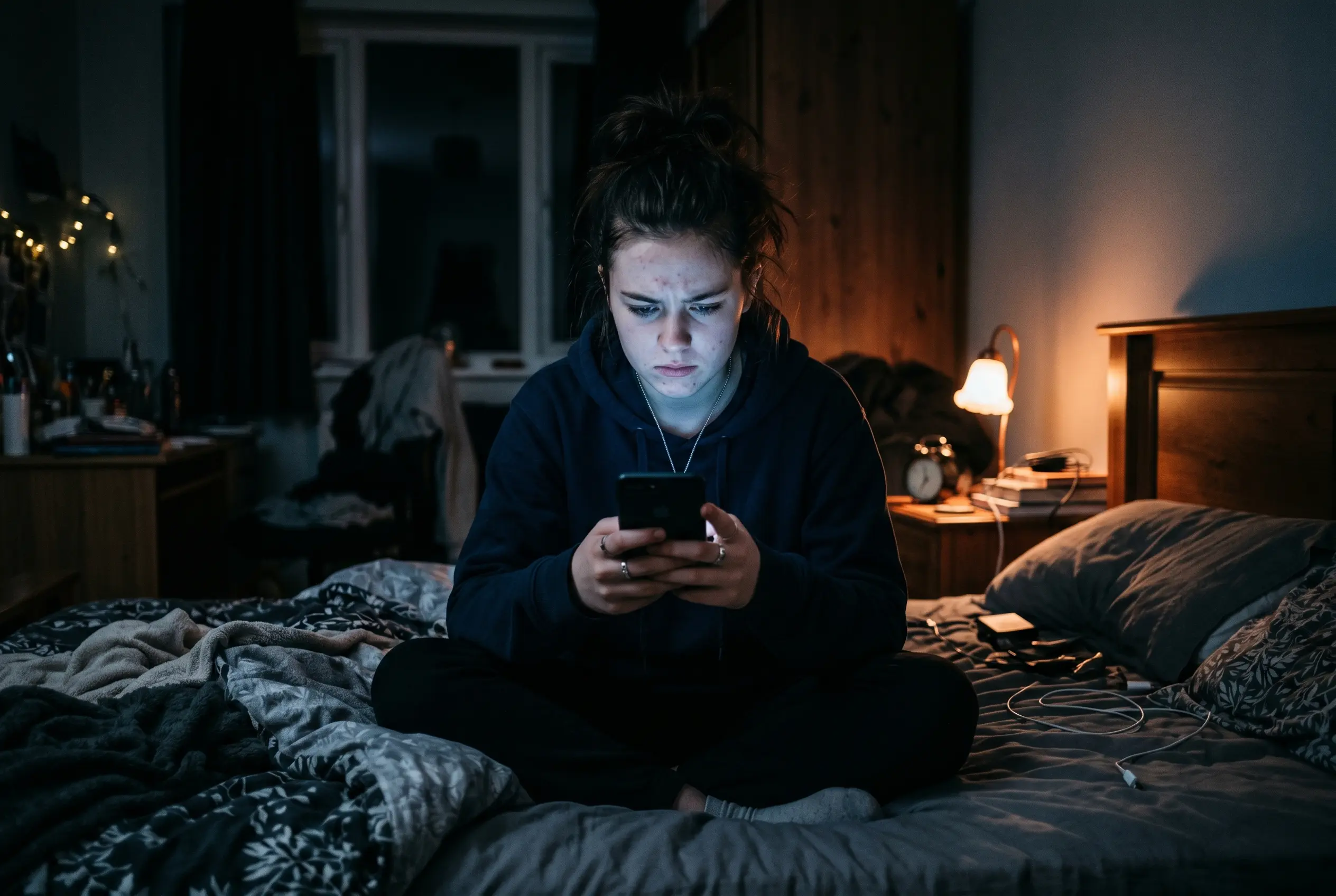
A year after the UK’s Online Safety Act came into force, a major new study has found that harmful social media content is still reaching UK teenagers at nearly the same rate as before the law took effect. The research, published by the Molly Rose Foundation, found that 47% of girls aged 13 to 17 and a third of all teens in that age range encountered high-risk content promoting suicide, self-harm, depression, or eating disorders in a single week. The study’s authors said the figures show the central promise of the act has so far gone undelivered.
The charity, set up in memory of 14-year-old Molly Russell, who died by suicide in 2017 after viewing harmful content online, said the findings amount to a “tsunami of harmful content” still flowing through children’s feeds. Prime Minister Keir Starmer is expected to outline on Monday whether the government will pursue a ban on social media for under-16s, an approach the foundation warns will not address the root problem.
A Year of Law, Barely a Shift in Exposure
Only slightly fewer teens are seeing harmful content now (34%) than just before the Online Safety Act came into force in July 2025, when the figure stood at 37%, according to the foundation’s research. The protection-of-children codes have been in force for nearly a year, and the new data lands almost a decade after the death of the foundation’s namesake, 14-year-old Molly Russell, who took her own life in 2017 after viewing harmful content on social media. The Molly Rose Foundation described the change as statistically insignificant and called the broader picture “outrageous” given the law’s stated aim of preventing exactly that kind of exposure.
It is shocking but sadly unsurprising that millions of teens continue to be shown appalling suicide, self-harm and depression content by out-of-control algorithms.
Yet the foundation’s most consistent warning since the act came into force has been that weak implementation would leave preventable harm unchecked, and Russell said the new data confirms that prediction. The prime minister must now decide. He faces a choice between a “politically expedient blanket ban” and structural changes to how platforms design their recommendation systems, a fix the foundation’s evidence suggests a ban alone “will quickly fail” to deliver. Full findings from the foundation are in the charity’s full writeup of the new survey findings.
By Monday, both Ofcom and the prime minister will have to respond. The regulator is finalising its first formal assessment of how the protection-of-children codes have been implemented since they came into force in July 2025. The foundation has been among the most persistent critics of Ofcom’s enforcement approach, arguing the regulator has been too willing to defer to platform self-assessment.
What the Survey of 1,825 Teens Found
Behind the headline numbers is a survey of 1,825 children aged 13 to 17, conducted by MEL Research in April 2026 with support from the PSHE Association. The sample is the largest UK dataset the foundation has published since the Online Safety Act took effect. Penalties for platforms that breach the act’s protection-of-children codes include fines of up to £18 million or 10% of qualifying global revenue, whichever is greater, as set out on how the protection of children codes are enforced.
And for the most at-risk content, the picture is starker still. One in five teenagers (22%) who encountered content promoting suicide said they had seen it ten or more times on at least one platform within a single week, suggesting the same material is being re-served to vulnerable users rather than removed after first contact.
The survey was commissioned by the foundation and designed with the PSHE Association, the body that supports personal, social, health, and economic education in UK schools. The fieldwork was administered online by MEL Research in April 2026. Children were asked whether they had encountered high-risk content in the previous seven days across categories including suicide, self-harm, depression, and eating disorders.
Girls, Low-Wellbeing Teens, and SEND Take the Brunt
Nearly half of all girls (47% of girls) said they had encountered high-risk content in the past week, compared with 23% of boys, a 24-point gap the foundation said tracks with longstanding patterns in self-harm and eating disorder content on image-led platforms. The Molly Rose Foundation pointed to the design of algorithmic recommendation feeds, which the survey found drove between 59% and 62% of all harmful content exposure, as a likely driver of that imbalance. Girls were also more likely to be repeatedly shown the same material, with 22% of exposed teens overall saying they had seen content promoting suicide at least ten times on a single platform in one week. The act’s protection-of-children codes require platforms to identify children on their services and to use “highly effective” age assurance to prevent harm.
Exposure was higher still for the children the act is supposed to protect most. Among children with low wellbeing, 57% of children with low wellbeing said they had seen high-risk content in the past week, more than 20 points above the all-teen average. Among children with special educational needs and disabilities, 40% had been exposed. The pattern tracks with longstanding research showing image-led platforms disproportionately push self-harm and eating disorder content to teenage girls through “For You” feeds and topic-based recommendations.
Yet the survey’s findings land as Ofcom is finalising its first formal assessment of how the protection-of-children codes have been implemented since they came into force in July 2025. Both numbers are now part of the evidence base the regulator will weigh, and the foundation has been among the most persistent critics of how the assessment is being conducted.
Behind the new data sits a foundation that has spent five years documenting how the platforms respond to voluntary guidance, and a regulator that has so far focused on encouraging self-assessment rather than enforcement. The two approaches have produced what the foundation calls a “tsunami” that the protection-of-children codes were meant to stem. Neither side has yet to revise its approach in light of the new data.
TikTok Leads, the Algorithm Carries It
TikTok dominates the exposure data. Among teens who saw high-risk content, 76% on TikTok said they had seen it on the platform, against 23% on Instagram and far smaller shares on Snapchat, YouTube, X, and others. The foundation said TikTok’s For You feed, the app’s default algorithmic recommendation surface, accounts for most of that gap.
Across all platforms, the survey found that algorithmic recommendation systems drove 59% to 62% of harmful content exposure to teens. The same systems, the foundation said, are also why children keep seeing the same material. Children reported harmful content being pushed to them through “For You” feeds, suggested accounts, and topic-based recommendations, not through accounts they had chosen to follow.
Andy Burrows, chief executive of the Molly Rose Foundation, said it was “frankly outrageous” that teenagers continue to face preventable harm because “cavalier platforms like TikTok continue to use high-risk design features and the Government and Ofcom has chosen to look the other way.” The foundation has called on Ofcom to open an immediate investigation into TikTok after the European Commission found the company in provisional breach of its rules, and Ofcom has so far declined to formally investigate, according to the charity.
An Australian-Plus Ban Takes Shape in Whitehall
Keir Starmer is expected on Monday to announce a ban on under-16s accessing major social media platforms. According to Starmer’s expected under-16 social media ban, the policy will cover the same ten apps Australia prohibited for under-16s in December 2025:
- TikTok
- Snapchat
- YouTube
- X
- Threads
- Twitch
- Kick
Described by Whitehall sources as “Australia-plus,” the UK scheme will also introduce social media curfews for older teenagers, restrict AI chatbot use for children, and stop under-16s from livestreaming on “safer” sites or talking to strangers on gaming apps. The government’s three-month consultation closed with about 116,000 responses, the second-largest in UK history, with 90% of parents who responded backing a ban and more than 83% saying the benefits of social media were outweighed by the risks.
Ian Russell, whose foundation opposes a UK version of the Australian ban, told the BBC that Starmer appeared to have “rushed” his policy “for a political reason.” He warned that an Australia-style ban would “create a false sense of safety” and push children to other parts of the internet. “If he’s playing politics, what he’s doing is gambling with young people’s lives,” Russell said, “and I find that deplorable.” For context on how the Australian model has actually played out in its first six months, see how Australia’s under-16 ban has hit its youngest teens.
For all the consultation backing, the wider YouGov poll of UK adults published alongside the research showed a much narrower split. Some 44% backed a ban, 39% preferred tighter regulation, and trust in social media companies to keep children safe sat at 16%, behind parents (51%), an independent regulator (49%), and schools (22%).
What the Ban Won’t Fix
The foundation’s own research points to a different problem. Polling it conducted in Australia in March 2026, cited alongside multiple other studies, suggests at least 60% of under-16s continue to use prohibited social networks after a ban takes effect, including 53% on TikTok alone. The charity argues that, without structural change to recommendation systems, a UK ban would replicate that outcome: a layer of compliance on top of unchanged product behaviour. To avoid that, the foundation has pressed the prime minister to take three steps:
- Banning personalised algorithmic content for under-16s unless strict safety conditions are met, including a fixed share of content from public service broadcasters and educational sources.
- Forcing platforms to guarantee an outright ban on harmful content being served, with content diversity rules to prevent rabbit-holing into similar and harmful material.
- Requiring high-quality content quotas, so a fixed percentage of what children see is educational and from public service broadcasters rather than algorithmically optimised.
And the choice, Burrows said, is now between “listening to experts and evidence” on algorithm design and “crossing his fingers and hoping for the best” with a ban. He warned that “if a majority of under 16s retain access to their accounts, but social media platforms are let off the hook for addressing these product safety issues, children will continue to face precisely the same risks.” Ofcom has so far declined to open a formal investigation into TikTok despite the European Commission’s finding, and the foundation is pressing the regulator to act before Monday’s announcement. Scotland’s minister for children, Siobhian Brown, is due to meet the UK AI and online safety minister, Kanishka Narayan, on Sunday to press for stronger measures and a social media levy to fund mental health programmes.
Frequently Asked Questions
When did the UK Online Safety Act come into force, and what does it require?
The protection-of-children codes under the act took effect in July 2025. They require platforms to use age checks and to keep recommendation algorithms from pushing content about suicide, self-harm, depression, and eating disorders to under-18 users.
What fines can social media companies face under the act?
Platforms that breach the codes face fines of up to £18 million or 10% of qualifying global revenue, whichever is greater, as well as potential UK blocking orders.
Which platforms is the UK government expected to include in its under-16 ban?
The prime minister’s expected Monday announcement would bar under-16s from ten named platforms and add curfews, AI chatbot restrictions, and gaming-app chat limits for older teens.
Why does the Molly Rose Foundation oppose an Australian-style ban?
The foundation’s own polling in Australia, conducted in March 2026, found at least 60% of under-16s still used prohibited social networks three months after the country’s ban took effect in December 2025. It argues a UK version would face the same evasion problem.
Disclaimer: This article discusses suicide, self-harm, and eating disorders. If you or someone you know is affected, contact a qualified health professional or a crisis helpline in your country. Figures cited are accurate as of publication; policy details may change after the prime minister’s expected Monday announcement.


Lenovo Prices the IdeaPad Vibe Against Apple’s $699 Neo

Xbox Caps Game Pass Cloud Gaming at 15 Hours

GTA 6 DualSense Controllers Follow Sony’s Usual $84.99 Script

South Korea Retail Investors Face Reckoning After KOSPI AI Rally Collapses

Surrey AI Maps Three Heart Attack Paths and Their Molecular Roots

Germany Locks Neutral Apple ATT Prompts Across Most of Europe

Apple’s 5% EU Fee Quietly Rewrites Alternative App Store Math

Apple’s EU Fee Truce Cuts Complexity but Leaves Rivals Fuming

Pixel 11 Pro Fold Trades Thinness for Durability and Seven-Year Stay

Mayo AI Flags HCM Obstruction From Everyday Ultrasound Videos

Oracle Cuts 21,000 Jobs in a Year, Cites AI in 10-K Filing

Fable 5 and Mythos 5 Return as US Lifts Anthropic Export Controls

SpaceX’s Google Deal Turns a Rocket Company Into a Cloud Landlord

CD Projekt Red Co-CEO: Redemption Arc Isn’t Done, Witcher 4 in 2027

XPL Rallies 30% Ahead of Plasma One Card Tier Launch

Google Search Profiles Build a Follow Graph Inside Discover

DGO App Brings Rs 549 Mobile Pass for FIFA World Cup 2026 in Nepal

Moonshot AI Targets $30 Billion in China’s Fastest AI Funding Sprint

Oppo’s ColorOS 17 Eligibility List Leaves A-Series Buyers Behind

Microsoft Xbox Layoffs Start in July as Sharma Slams 3% Margin
-
 AI2 months ago
Oracle Cuts 21,000 Jobs in a Year, Cites AI in 10-K Filing
-
 AI2 months ago
Fable 5 and Mythos 5 Return as US Lifts Anthropic Export Controls
-
 AI3 months ago
SpaceX’s Google Deal Turns a Rocket Company Into a Cloud Landlord
-
 GAMING2 months ago
CD Projekt Red Co-CEO: Redemption Arc Isn’t Done, Witcher 4 in 2027
-
 CRYPTO3 months ago
XPL Rallies 30% Ahead of Plasma One Card Tier Launch
-
 NEWS3 months ago
Google Search Profiles Build a Follow Graph Inside Discover
-
 APPS3 months ago
DGO App Brings Rs 549 Mobile Pass for FIFA World Cup 2026 in Nepal
-
 AI3 months ago
Moonshot AI Targets $30 Billion in China’s Fastest AI Funding Sprint