
APPS
Google Opens Play Store to Rivals as Developers Get Days to Opt Out
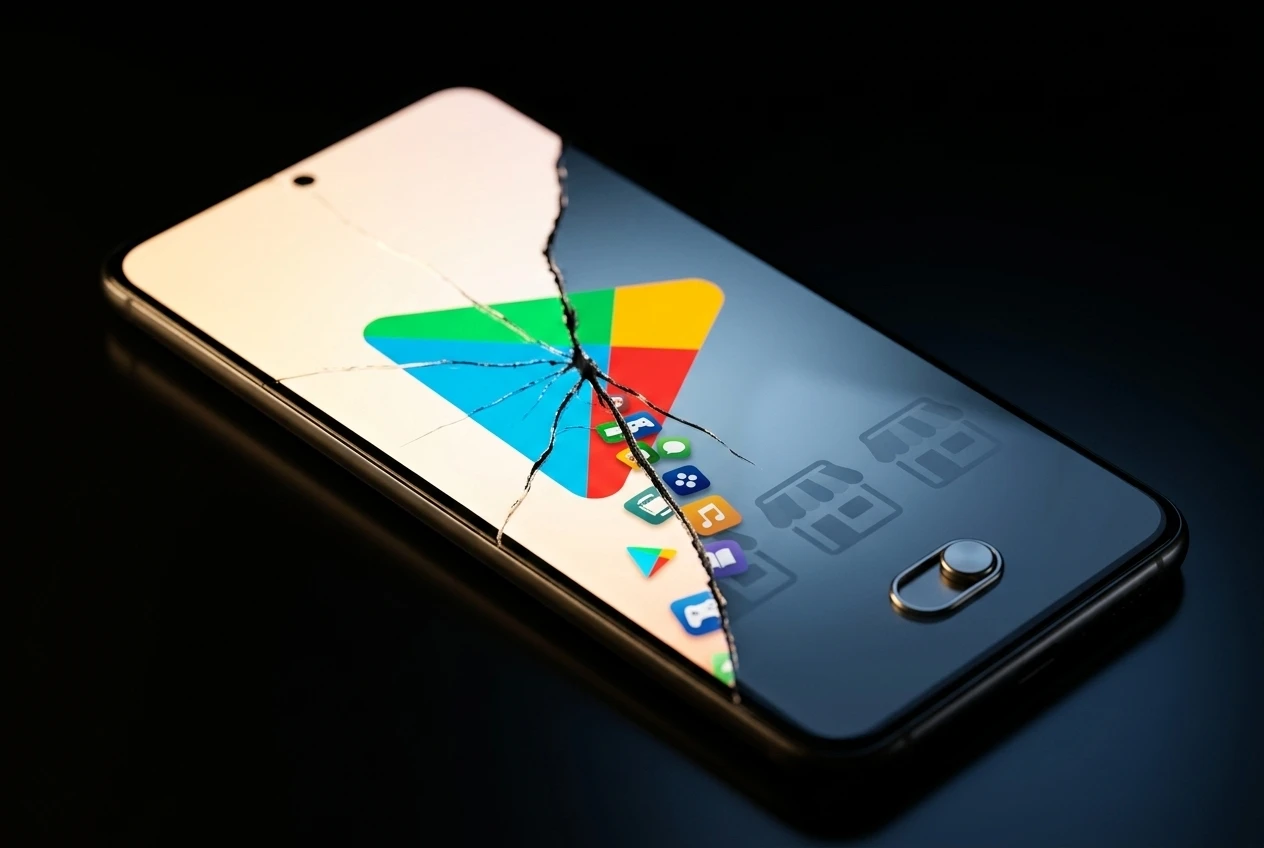
Google will share Play Store listings with rival Android app stores from July 22, and developers who don’t opt out by then are enrolled by default.

Google will let rival Android app stores plug into its Play Store catalog starting July 22, but the developers whose listings are moving didn’t get a vote. Unless they log into Play Console and choose otherwise, their apps default onto marketplaces they have never vetted.
The company confirmed the July 22 rollout of what it calls the Play Catalog Access Program this week, just days after it and Epic Games jointly abandoned a softer settlement the two sides had spent eight months negotiating. That reversal means Google now has to comply with the tougher, original court order it spent nearly two years trying to avoid, and the developers caught in the middle have less than a week to react.
What Actually Changes Inside Google Play on July 22
Under the program, eligible third-party Android app stores operating in the United States can list apps already published on Google Play. When a user taps install inside one of those rival storefronts, the app itself still comes from Google.
The download completes through Google Play on the same terms as a direct Play Store download, and Google’s service fee continues to apply no matter which storefront the user browsed. Play Protect scanning still runs. Nothing about the underlying infrastructure moves outside Google’s control, only the shop window does.
That distinction matters because it is what separates this program from ordinary sideloading, which Android has technically allowed for years through apps like F-Droid and Samsung’s Galaxy Store. Sideloaded stores had to build their own catalogs app by app. This program hands them Google’s, ready made.
The Default Setting Is Yes
Google told developers on June 22 that unless they opted out by July 22, their US app and game listings, names, icons, descriptions, screenshots and videos included, would automatically become visible to every enrolled third-party store.
Developers who never open Play Console and make a choice are enrolled anyway. That is not a hypothetical. Google’s own enrollment guidance states plainly that it will begin providing listings to third-party stores if no option is selected, and the deadline is the same July 22 date the whole program launches on.
Inside Play Console, under Catalog Settings, developers actually face three distinct choices:
- Publish everywhere – let every enrolled third-party store carry the listing automatically.
- Manage individually – approve or block each third-party store on a case by case basis.
- Opt out entirely – keep the listing off every third-party store while it remains available directly through Google Play.
For a solo developer juggling app updates, customer support and bug fixes, checking a settings menu buried in Play Console is an easy thing to miss in a six day window. For anyone building apps aimed at internal company use or a narrow professional audience, the stakes of missing it are higher, since those apps were never meant for a general consumer storefront in the first place.
Why the Softer Deal Collapsed This Week
This was not supposed to be how 2026 played out for Google. In November 2025, Google and Epic told a federal court they had reached a comprehensive settlement, a modified injunction that would have let third-party stores register for an easier sideloading path instead of living inside Google Play itself.
Sameer Samat, president of Google’s Android division, said at the time the plan would focus on expanding developer choice while lowering fees and keeping users safe. Epic chief executive Tim Sweeney called it an awesome proposal in a social media post at the time.
US District Judge James Donato was never fully sold. He had already found Google’s conduct unlawful once, through a December 2023 jury verdict and an October 2024 permanent injunction, and he was skeptical that a negotiated settlement between two companies that had just spent years as adversaries would deliver the direct competition his order demanded. The two sides pushed forward anyway, filing an updated version of the deal in March 2026 that cut Google’s commission from a flat 30 percent to roughly 9 to 20 percent depending on the transaction, and cleared Fortnite to return to the Play Store worldwide that same month.
Then, this week, with a hearing on the revised settlement scheduled for Thursday, Google and Epic jointly pulled the plug on it.
We’ve agreed with Epic to withdraw our motion to modify the US Court’s injunction rather than prolonging this process which creates uncertainty for the ecosystem.
Dan Jackson, a Google spokesperson, gave that statement to The Verge this week. Withdrawing the motion means Google no longer gets the softer, sideloading based version of app store competition it had spent months negotiating. It gets the original, harder mandate instead: full third-party stores, hosted inside the Play Store itself, with Google’s whole catalog attached.
What It Costs to Run a Rival Storefront
Google is not opening the gate for free. Third-party stores that want catalog access must register as a legitimate business, target US users exclusively, and pay Google a $5,000 upfront fee for a security and policy review, followed by another $5,000 every year just to keep that access.
Stores also have to keep malware installation attempts under one percent of the total across all devices, according to Google’s enrollment requirements for the program, and they must update their listings at least weekly, disclose clearly when an app comes from the Play Catalog, and avoid charging extra fees on top of Google’s own.
| Distribution Path | How Apps Reach Users | Cost to the Store Operator | Where It Works |
|---|---|---|---|
| Traditional sideloading | Manual APK install, no shared catalog | No fee to Google | Anywhere, with more user friction |
| Play Catalog Access Program | Downloads processed by Google Play, full catalog listing shared | $5,000 to enroll plus $5,000 a year | United States only, from July 22 |
| Registered App Stores (global plan) | Simplified sideloading, no catalog sharing | Not yet finalized | Markets outside the US, still in progress |
That fee structure sets a real floor. A hobbyist app store cannot realistically absorb a $10,000 first year bill just to compete for attention against a platform that already sits on billions of devices, which is exactly the kind of cost that tends to filter out everyone except well capitalized challengers.
Do Third-Party Stores Follow Google’s Rules?
No, not entirely. A store can pass Google’s malware and fraud checks and still apply its own standards for age ratings, regional restrictions or content categories, because once an app listing leaves Google Play, the marketplace displaying it operates under its own policies rather than Google’s.
That gap matters most for developers with content sensitive apps, gambling adjacent products, or age restricted material, since a rival store’s looser or stricter content rules could put a listing somewhere its original developer never intended. Security researchers have also found that most Android malware historically spreads through third-party stores rather than Google Play itself, which is the exact risk Google’s malware attempt threshold and Play Protect scanning are designed to contain, without eliminating the underlying policy gap.
Google’s Play Store policies are already under scrutiny well beyond the Epic dispute. India recently ordered Google and Apple to remove a batch of apps from their stores, a reminder that app store gatekeeping fights are running on multiple fronts at once, not just the one playing out in a California courtroom.
Six Years From a Deleted Game to a Reversed Deal
The whole chain of events traces back to August 13, 2020, when Epic slipped a direct payment option into Fortnite to dodge Google’s mandatory billing system. Google pulled the game from Play the same day, and Epic sued within hours, seeking structural change rather than damages.
A California jury sided with Epic on every count in December 2023. Judge Donato issued his permanent injunction in October 2024, and the Ninth Circuit upheld it on appeal in 2025, clearing the last major hurdle standing between the ruling and enforcement.
Epic framed the years since as a fight over basic competition rather than money. In its own statement on the eventual settlement terms, the company said the changes would open Android devices to competition for developers and consumers alike. Six years, one deleted game and one reversed settlement later, the mandate Epic first asked for in 2020 is the one about to take effect.
Rival Stores Still Have to Solve Their Oldest Problem
Catalog access solves the chicken and egg problem that has kept alternative Android stores small for a decade. Amazon’s Appstore, the Epic Games Store and Samsung’s Galaxy Store have all existed for years without denting Google Play’s dominance, largely because no user wants a store without apps and no developer wants to build for a store without users.
Whether that translates into an actual challenger by July 22 is a separate question. A few things are settled, and a few are not.
- What we know: The program launches July 22 in the US only, developers who take no action are opted in by default, and enrolled stores must pay Google’s fees and hold malware attempts under one percent.
- What’s unconfirmed: which storefront, if any, will actually be ready to operate inside Google Play on day one, whether Google extends similar catalog sharing outside the US through its separate Registered App Stores plan, and how disputes over content standards between Google Play and enrolled stores get resolved once real listings start moving.
Google’s grip on how people find apps is already loosening on more than one front. Even in its core search business, consumers are increasingly asking AI tools what to buy instead of browsing Google directly, a separate but related sign that the company’s role as the default gatekeeper is being tested from multiple directions at once. The Play Store opening on July 22 is simply the version of that pressure with a court order behind it.
Frequently Asked Questions
What is the Play Catalog Access Program?
It is Google’s system for letting approved third-party US Android app stores list and distribute apps that are already published on Google Play, with the actual download still processed by Google. Catalog data refreshes daily through Google Cloud Storage exports, so participating stores are not working from a static, one time snapshot of Google’s listings.
How do developers stop their apps from appearing in rival stores?
Inside Play Console, under Settings and then Catalog Settings, developers can choose to publish everywhere, manage stores individually, or block third-party distribution entirely. That setting exists specifically for this program and is separate from any other Play Console privacy or distribution control.
Do users pay more to download from a third-party store inside Google Play?
No. Google’s standard service fee applies the same way it would on a direct Play Store download, and the $5,000 enrollment and annual fees fall on the store operator, not the shopper. Users see no extra charge for choosing a third-party storefront over Google’s own.
Does this change reach users outside the United States?
No. The Play Catalog Access Program is restricted to the US market by the terms of Google’s enrollment requirements. Google is separately developing a Registered App Stores plan for other regions, but that program relies on a simplified sideloading process rather than catalog sharing, and its rollout details are still being worked out.
Will Apple’s App Store face a similar order?
Not under this case. Epic’s parallel lawsuit against Apple produced a narrower remedy limited mainly to allowing external payment links, after a judge rejected the core monopoly claims against Apple. The jury verdict against Google found a full monopoly, which is why its remedy reaches all the way to forced catalog sharing and hosted rival stores.
What stops a rival store from becoming a malware risk?
Enrolled stores must keep malware installation attempts under one percent of the total across all devices and pass Google’s security review during onboarding, with apps still routed through Play Protect scanning at download time. Historically, most Android malware has spread through unregulated third-party stores, which is precisely the gap these thresholds are meant to close.


South Korea Retail Investors Face Reckoning After KOSPI AI Rally Collapses

Surrey AI Maps Three Heart Attack Paths and Their Molecular Roots

Germany Locks Neutral Apple ATT Prompts Across Most of Europe

Apple’s 5% EU Fee Quietly Rewrites Alternative App Store Math

Apple’s EU Fee Truce Cuts Complexity but Leaves Rivals Fuming

Pixel 11 Pro Fold Trades Thinness for Durability and Seven-Year Stay

Mayo AI Flags HCM Obstruction From Everyday Ultrasound Videos

Indian Brands Quietly Scale Landmark Screens and Home Tech

Navin Vatsa Turns Grief Into a Lifetime of Quiet Seeing

Google Bets Pixel 11 Agentic AI Will Redefine Phones

Oracle Cuts 21,000 Jobs in a Year, Cites AI in 10-K Filing

Fable 5 and Mythos 5 Return as US Lifts Anthropic Export Controls

SpaceX’s Google Deal Turns a Rocket Company Into a Cloud Landlord

CD Projekt Red Co-CEO: Redemption Arc Isn’t Done, Witcher 4 in 2027

XPL Rallies 30% Ahead of Plasma One Card Tier Launch

Google Search Profiles Build a Follow Graph Inside Discover

DGO App Brings Rs 549 Mobile Pass for FIFA World Cup 2026 in Nepal

Moonshot AI Targets $30 Billion in China’s Fastest AI Funding Sprint

Oppo’s ColorOS 17 Eligibility List Leaves A-Series Buyers Behind

Microsoft Xbox Layoffs Start in July as Sharma Slams 3% Margin
-
 AI2 months ago
Oracle Cuts 21,000 Jobs in a Year, Cites AI in 10-K Filing
-
 AI2 months ago
Fable 5 and Mythos 5 Return as US Lifts Anthropic Export Controls
-
 AI3 months ago
SpaceX’s Google Deal Turns a Rocket Company Into a Cloud Landlord
-
 GAMING2 months ago
CD Projekt Red Co-CEO: Redemption Arc Isn’t Done, Witcher 4 in 2027
-
 CRYPTO3 months ago
XPL Rallies 30% Ahead of Plasma One Card Tier Launch
-
 NEWS3 months ago
Google Search Profiles Build a Follow Graph Inside Discover
-
 APPS3 months ago
DGO App Brings Rs 549 Mobile Pass for FIFA World Cup 2026 in Nepal
-
 AI3 months ago
Moonshot AI Targets $30 Billion in China’s Fastest AI Funding Sprint