
CRYPTO
California’s State Blockchain Hearing Reveals a $600M Pivot
California’s June 22 blockchain hearing set a July 1 crypto licensing deadline and projected $600M in escheated digital assets from DMV, DFPI, and Controller.

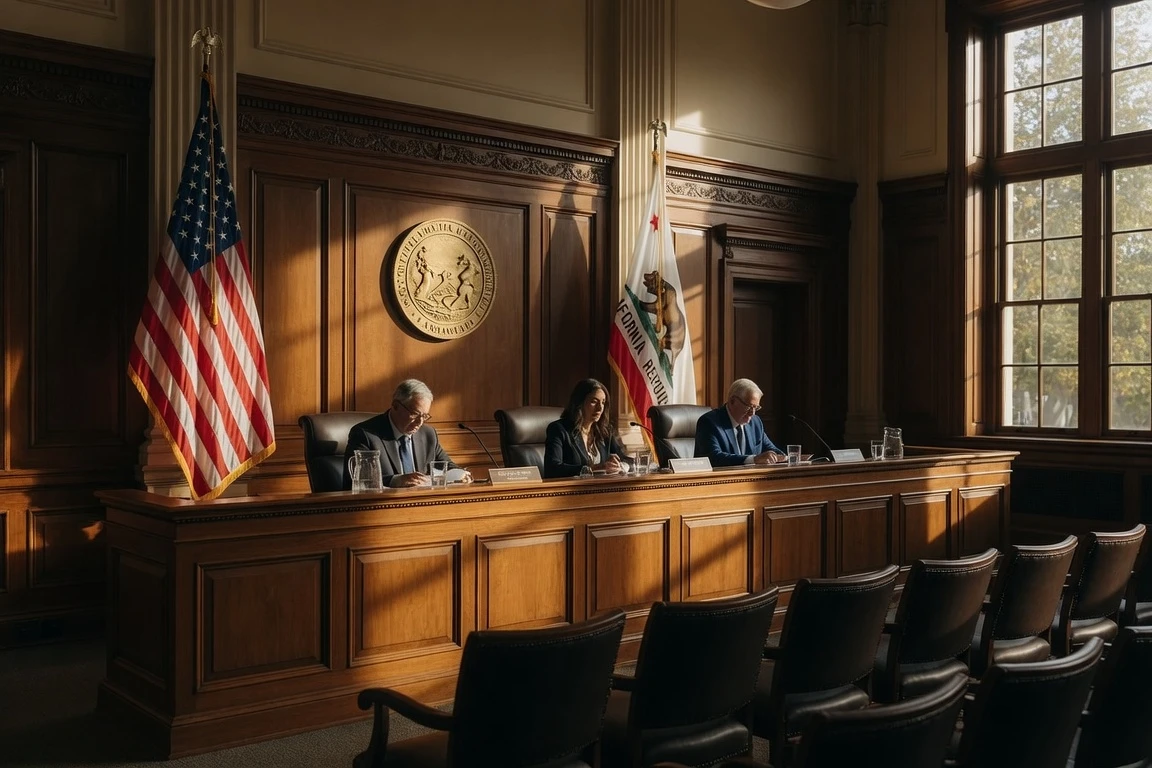
California State Treasurer Fiona Ma convened an informational hearing in Sacramento on June 22, 2026, bringing the California Department of Motor Vehicles, the Department of Financial Protection and Innovation, and the State Controller’s Office onto one stage for the first time. The session, titled “Blockchain & Digital Financial Assets: State, Policy, and Finance Perspectives,” ran three panels and pulled in testimony from academics, regulators, and major financial institutions. The hearing was livestreamed and archived.
The session looked like a routine policy discussion, but it confirmed two structural shifts at once. By July 1, 2026, every crypto business serving Californians faces a new licensing wall. The State Controller’s Office is preparing to absorb an estimated $600 million in abandoned digital assets through a custody pipeline no state has run before. The DMV brought the practical use case, DFPI brought the regulatory perimeter, and the Controller brought the back-office problem.
Three Panels, One Sacramento Hearing
The complete hearing is preserved at the full three-panel hearing on YouTube, and the State Treasurer’s Office published the program in advance. Panel 1, “Blockchain 101: Understanding Blockchain & Digital Assets,” featured Dr. Michele Neitz of the University of San Francisco School of Law, Joe Ciccolo of the California Blockchain Advisory Commission, and Max Sherman of FS Vector.
That panel set the frame: a working definition of the technology, the assets it carries, and the regulatory landscape now wrapping around them. Panel 2, “Use Cases & Regulation: California Public Sector Implementation,” was where the state’s own operators took the lectern. Brynly Llyr from DFPI, Ajay Gupta from the DMV, and Ted Lambert from the State Controller’s Office each walked through a specific program California is running, regulating, or preparing to absorb. Panel 3, “Markets & Money: Financial Institutions and Fintech Perspectives,” brought Adam Carson of JPMorgan Chase, Anthony Pecore of Franklin Templeton, and Dr. Diogo Monica of Haun Ventures into the room. The progression mattered: Panel 1 explained what blockchain is, Panel 2 showed what California is doing with it, Panel 3 made clear the state’s moves are no longer happening in isolation from the broader financial system.
Inside the DMV’s Plan to Put Titles on a Ledger
Ajay Gupta, Chief Digital Transformation Officer at the California DMV, used his slot to describe a program already running on a private blockchain. The agency has digitized 42 million car titles on a ledger system, originally trialed on Tezos and now running on Avalanche, in a move confirmed by California DMV’s 42 million title digitization on blockchain.
The push began as a fraud project and grew into a peer-to-peer transfer project. Out-of-state transactions are where the existing process breaks, Gupta said, and the pain has been public for years. The DMV is now working with the American Association of Motor Vehicle Administrators on a cross-state verification layer that, in Gupta’s telling, the industry has so far failed to build.
There has been some work done in the industry to create some centralized verification across the states, but in general, it remains a field that’s open to quite a bit of fraud.
Gupta called the existing title transfer process “distasteful” in his testimony. The blockchain version turns a paper document into what he described as a “digital twin,” an NFT-style token that contains the title’s records without exposing the owner’s personally identifiable information. The agency’s argument is that the same ledger entry that speeds up a transfer also makes fraud easier to catch. Gupta’s office is now working to extend the same plumbing to interstate transfers, which remain the most failure-prone part of the workflow. The hearing did not announce a deadline for any cross-state rollout.
A state-issued, state-maintained ledger for vehicle titles gives California a foundation it did not previously have for sharing verified ownership data with peer agencies. Other states have expressed interest, according to testimony, though no formal multi-state agreement was announced. The DMV’s pilot is no longer a pilot.
The Licensing Wall Hits on July 1
Beginning July 1, 2026, California will require licenses for businesses acting as custody providers, operating exchanges, issuing stablecoins, or running crypto kiosks. Companies that have not filed a verified application by that date cannot continue serving Californians, a deadline confirmed by DFPI’s licensing deadline FAQ for crypto businesses. The agency enforcing it is the Department of Financial Protection and Innovation. Brynly Llyr, who took the role in December 2024 after Governor Gavin Newsom’s appointment, is the department’s first Deputy Commissioner of the Digital Financial Assets Law Division. Llyr was the public-sector voice on Panel 2.
Llyr used her slot to put a number on the cost of the unregulated version. In 2025 alone, she told the audience, more than $2 billion was lost to illicit schemes that intermediaries with questions about each transaction might have stopped. Many states, she said, are now building oversight and licensing specifically to reduce scams and fraud. California is one of several states writing licensing requirements into law at the same moment, and the deadlines tend to land in clusters, as seen in other jurisdictions that have pushed smaller crypto apps onto licensed how smaller crypto apps get pushed into licensed custody rails.
The hearing drew a clear line on who enforcement reaches. Companies that do not file by July 1 must wind down California operations, which means customer accounts, custody relationships, and transaction histories all need to be unwound or transferred within weeks. The DFPI has published guidance for affected consumers, but the practical mechanics will play out through the summer.
Roughly 1 Million Wallets the State Now Has to Hold
Ted Lambert, Acting Division Chief at the State Controller’s Office, told the panel the state is preparing for an inflow of abandoned digital assets it has never had to manage before. SB 822, authored by Senator Josh Becker and signed by Governor Newsom in October 2025, took effect January 1, 2026, and treats virtual currency as a form of intangible property under California’s Unclaimed Property Law. The Controller’s Office, under Malia M. Cohen, is the agency tasked with holding what escheats. The framework aligns virtual currency with how the state already handles stocks and other financial instruments that go dormant, with holders required to attempt contact with apparent owners before any asset reaches the state.
That includes roughly 1 million unique digital assets worth an estimated $600 million. Lambert said the office expects to hold them for 18 to 20 months before converting them to U.S. dollars and depositing the proceeds into the General Fund. The mechanics were spelled out in the October 2025 SB 822 signing announcement: virtual currency held by a business association escheats to the state if the apparent owner cannot be reached after three years of inactivity. The Controller’s Office is currently designing the custody workflow and the claim process for assets that come back to the state under that framework.
- A holder, such as a crypto exchange or custodian, holds a digital financial asset for an apparent owner.
- After three years of inactivity, the holder must attempt to make contact with the apparent owner.
- If contact fails, the asset escheats to the California State Controller’s Office.
- The Controller’s Office holds the asset for 18 to 20 months.
- The asset is converted to U.S. dollars and the cash is deposited into the General Fund.
- The rightful owner can reclaim the cash value at any time thereafter.
The Controller’s Office does not want to manage the assets itself. Lambert framed a state-run custody operation as an “extreme undertaking” with security issues the agency is not staffed to absorb, and the office is now scoping a third-party handoff.
California is not the only state confronting this problem. Crypto’s institutional adoption has accelerated in parallel, reshaping the regulatory expectations state agencies face on the financial side. The retail FX side has been a clear signal: mainstream brokerages have added crypto rails faster than the underlying settlement infrastructure has been built. California is, in effect, catching up to a market that has already moved through it, as tracked in how crypto trading has moved into mainstream finance infrastructure.
| Agency | Role under the new framework | Key figure |
|---|---|---|
| California DMV | Peer-to-peer title transfer system on blockchain | 42 million titles digitized |
| California DFPI | Crypto business licensing and fraud oversight | $2 billion in 2025 fraud losses |
| State Controller’s Office | Custody and liquidation of escheated digital assets | ~1 million assets / $600 million est. |
What the State Has Not Solved Yet
Lambert was direct about the open questions. “There are challenges that are just natural because this really hasn’t been done before at a state level,” he said. “We’re trying to do everything right, we’re trying to put everything in place, but there are things we’re working through.”
The Controller’s Office is, in his telling, building workflows for a process whose volume is not yet predictable. The office expects a third party to hold the assets once they’re in state hands, but the contracts, custody standards, and security reviews for that handoff are still being designed. The state also has to prepare for the claim side: dormant digital asset holders who eventually come forward expecting their wallets back. None of those workflows have been tested at scale in California before.
The cross-agency picture is what made the hearing unusual. The DMV is building the practical use case, DFPI is closing the regulatory perimeter, and the Controller’s Office is preparing the back office. Each agency has its own timeline and its own statute behind it. The hearing put all three on the same stage for the first time. The open question from Sacramento is whether the three pipelines will be ready at the same moment, with additional coverage being posted through the Treasurer’s office news release archive on the hearing.
Frequently Asked Questions
What did California’s June 22, 2026 blockchain hearing actually cover?
The hearing, convened by California State Treasurer Fiona Ma in Sacramento, was titled ‘Blockchain & Digital Financial Assets: State, Policy, and Finance Perspectives.’ It ran three panels: a foundational overview led by the University of San Francisco School of Law and the California Blockchain Advisory Commission, a public-sector implementation panel featuring the DMV, DFPI, and State Controller’s Office, and a markets panel with JPMorgan Chase, Franklin Templeton, and Haun Ventures.
When does California’s DFAL crypto-licensing deadline take effect?
July 1, 2026. After that date, businesses acting as digital asset custody providers, exchanges, stablecoin issuers, or crypto kiosk operators must hold a Digital Financial Assets Law license from DFPI or have a verified application pending to continue serving Californians. The full rules are set out in DFPI’s FAQ for the Digital Financial Assets Law.
How much in dormant digital assets could escheat to California under SB 822?
The State Controller’s Office estimates roughly 1 million unique assets worth about $600 million could escheat to the state once SB 822 takes full effect. Assets are held 18 to 20 months before being converted to U.S. dollars and deposited into the General Fund, with the apparent owner retaining a perpetual cash claim.
Why is the California DMV moving vehicle titles onto a blockchain?
DMV Chief Digital Transformation Officer Ajay Gupta told the hearing the goal is to reduce fraud and streamline peer-to-peer title transfers, particularly across state lines. The agency has digitized 42 million car titles, originally on Tezos and now running on Avalanche, and is coordinating with the American Association of Motor Vehicle Administrators on a cross-state verification layer.
Who testified at the hearing?
Nine panelists across three panels. State operators: Brynly Llyr (DFPI), Ajay Gupta (DMV), Ted Lambert (State Controller’s Office). Academia and advisory: Dr. Michele Neitz (USF School of Law), Joe Ciccolo (California Blockchain Advisory Commission), Max Sherman (FS Vector). Financial industry: Adam Carson (JPMorgan Chase), Anthony Pecore (Franklin Templeton), Dr. Diogo Monica (Haun Ventures).


OpenAI Ultrafast Puts GPT-5.6 Sol on Live Workloads

Apple’s 15% External Fee Bid Admits Its Own Zero Floor

JBL Beats Bose and Sony on Value for 2026 Soundbars

iPhone Users Pull 40 Percent More From Microdrama Apps

Nebius Q2 Turns AI Cloud Demand Into Prepaid Growth Machine

One UI 9.5 App Lock Ends Years of Samsung Delays

Shiprocket IPO Premium Hides ESOP Costs and Flat Merchant Base

Google Halves Gemini 3.7 Flash Price to Fuel Agent Swarms

Dawnwalker Time Clock Cracks Open-World RPG Habits

Gemini 3.7 Flash Cuts Agent Costs While Pro Stays Delayed

Fable 5 and Mythos 5 Return as US Lifts Anthropic Export Controls

Oracle Cuts 21,000 Jobs in a Year, Cites AI in 10-K Filing

SpaceX’s Google Deal Turns a Rocket Company Into a Cloud Landlord

CD Projekt Red Co-CEO: Redemption Arc Isn’t Done, Witcher 4 in 2027

XPL Rallies 30% Ahead of Plasma One Card Tier Launch

Google Search Profiles Build a Follow Graph Inside Discover

DGO App Brings Rs 549 Mobile Pass for FIFA World Cup 2026 in Nepal

Moonshot AI Targets $30 Billion in China’s Fastest AI Funding Sprint

Microsoft Xbox Layoffs Start in July as Sharma Slams 3% Margin

Oppo’s ColorOS 17 Eligibility List Leaves A-Series Buyers Behind
-
 AI1 month ago
Fable 5 and Mythos 5 Return as US Lifts Anthropic Export Controls
-
 AI2 months ago
Oracle Cuts 21,000 Jobs in a Year, Cites AI in 10-K Filing
-
 AI2 months ago
SpaceX’s Google Deal Turns a Rocket Company Into a Cloud Landlord
-
 GAMING2 months ago
CD Projekt Red Co-CEO: Redemption Arc Isn’t Done, Witcher 4 in 2027
-
 CRYPTO2 months ago
XPL Rallies 30% Ahead of Plasma One Card Tier Launch
-
 NEWS2 months ago
Google Search Profiles Build a Follow Graph Inside Discover
-
 APPS2 months ago
DGO App Brings Rs 549 Mobile Pass for FIFA World Cup 2026 in Nepal
-
 AI2 months ago
Moonshot AI Targets $30 Billion in China’s Fastest AI Funding Sprint