
NEWS
ECOWAS Court: Nigeria to Pay N10 Million Over Journalist Phone Seizure
ECOWAS Court ordered Nigeria to pay N10 million to Jide Oyekunle after ruling that seizing his phone at the End Bad Governance protests violated press freedom.

The ECOWAS Community Court of Justice has ordered the Federal Government of Nigeria to pay N10 million in general damages to Jide Oyekunle, a photojournalist with the Daily Independent newspaper. The judgment, delivered on June 22, 2026, found that Nigerian security forces violated four separate articles of the African Charter on Human and Peoples’ Rights when they assaulted, detained, and seized his phone while he covered the 2024 End Bad Governance protests in Abuja. It turned a confiscated mobile phone into a binding violation of press freedom.
Avocats Sans Frontières France, known in English as Lawyers Without Borders France, brought the case under its eRIGHTS project that the European Union funds. Angela Uwandu Uzoma-Iwuchukwu, country director of Avocats Sans Frontières France in Nigeria, called the ruling a clear message that a journalist’s digital tools are extensions of the modern press. The Federal Government of Nigeria has not indicated publicly whether it will pay or appeal. The case itself sat in the court’s docket as Suit No. ECW/CCJ/APP/29/25. ASF France said in a Tuesday statement that it would monitor compliance and continue to provide legal aid to journalists facing similar violations.
The Day Police Took a Phone at Eagle Square
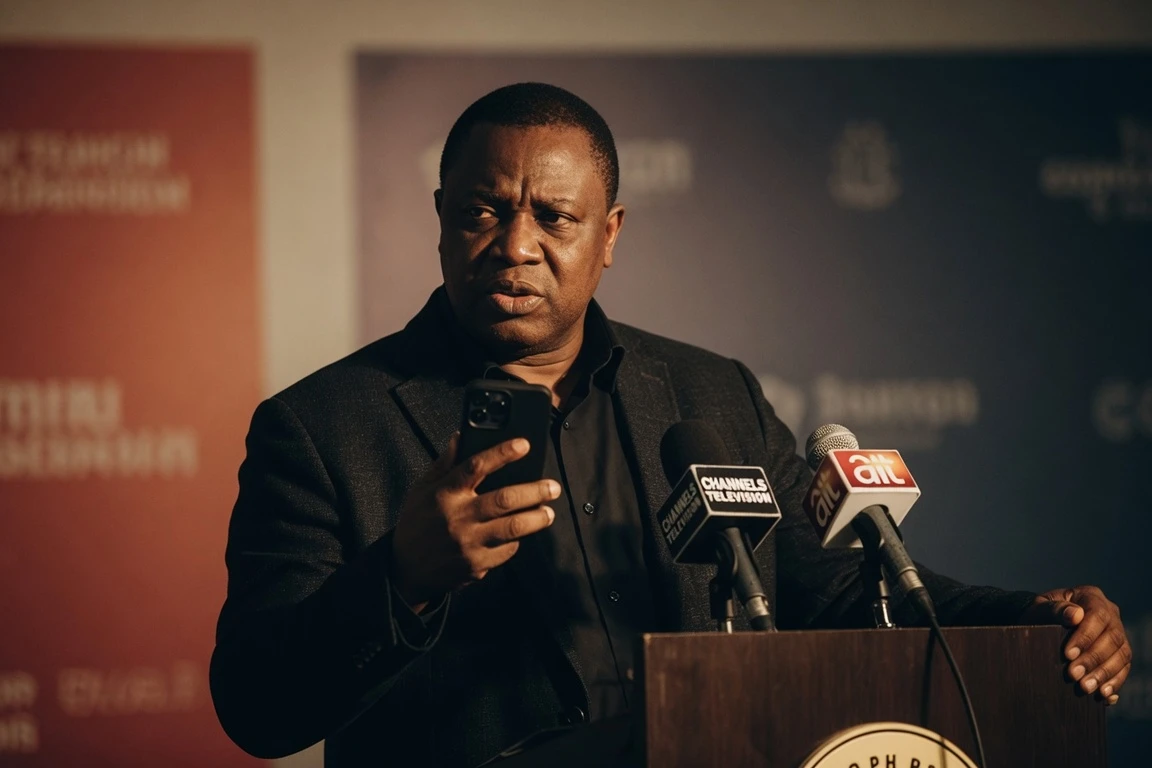
On August 1, 2024, the first day of the End Bad Governance protests, Oyekunle was covering the demonstration at Eagle Square in central Abuja. The ECOWAS Court judgment records that armed police officers acting on the order of the then FCT Commissioner of Police, Benneth Igweh, physically assaulted him, detained him, damaged his camera, and seized his mobile phone. The phone was returned to him later. The encounter cut off his live coverage of the protest, the court found.
Oyekunle is the Secretary of the Nigeria Union of Journalists (NUJ) FCT Council. The protests that drew him to Eagle Square ran from August 1 to 10, 2024, and were triggered by Nigeria’s cost-of-living crisis, a record spike in food prices, and a wave of subsidy and currency reforms under President Bola Tinubu. Police fired tear gas and live bullets to disperse demonstrators on the first day, and curfews were declared in Kano, Kaduna, Yobe, Katsina, and Borno states as the protests spread.
The federal government acknowledged the public’s pain and urged demonstrators to suspend action for dialogue. But the security forces’ response drew sustained criticism from rights groups and political figures. Amnesty International, the National Human Rights Commission, and former Vice President Atiku Abubakar publicly condemned the physical assaults on journalists covering the protests. The National Human Rights Commission called for an independent inquiry into the conduct of the security forces.
Why the ‘Necessity’ Test Decided the Case
The Nigerian government’s defense rested on the idea that the security forces’ actions were necessary to maintain order during a volatile demonstration. The ECOWAS Court rejected that argument in a single legal finding that runs through the judgment. Nigeria’s conduct, the court ruled, failed the test of necessity under international law and was therefore excessive and unlawful.
With that finding, every other violation the court identified followed. The court then broke the conduct into four distinct Charter violations, each tied to a specific act by the security forces. The assault and detention breached Oyekunle’s right to personal liberty under Article 6 and his right to human dignity under Article 5. The suppression of his live coverage breached Article 9, the Charter’s guarantee of freedom of expression.
| Charter article | Conduct at Eagle Square | Right enforced |
|---|---|---|
| Article 5 | Physical assault during arrest | Human dignity |
| Article 6 | Unlawful detention | Personal liberty |
| Article 9 | Suppression of live coverage | Freedom of expression |
| Article 14 | Seizure of mobile phone | Property |
The temporary seizure of his phone breached Article 14, the right to property, completing the four-article finding. The court ordered the Federal Republic of Nigeria to pay the full N10 million in general damages to Oyekunle. The order does not name the officers involved, and Igweh is not a party to the case.
Oyekunle was represented in the matter by counsel Collins I. Maidoh-Anene, Esq., whose arguments the court accepted on the necessity question. The court also made clear that the four violations were not duplicative. Each rested on a separate factual finding tied to a specific act by the security forces. That separation is what ASF France pointed to when it framed the ruling as a comprehensive rejection of the security forces’ conduct.
A Court Built for Cases States Would Rather Lose
The ECOWAS Community Court of Justice was designed for matters like this one, claims that domestic courts in member states are often reluctant to push against their own security services. The June 22 ruling adds to what the country director called a growing body of regional jurisprudence protecting journalists and human rights defenders who document protests and public-interest events. The same court has used the African Charter in recent years to push back on internet shutdowns, criminal defamation laws, and the arbitrary arrest of online commentators in other member states.
This judgment sends a clear message that a journalist’s digital tools are extensions of the modern press and newsroom and that their arbitrary confiscation by security forces constitutes a direct assault on the public’s right to know.
The quote is from Uzoma-Iwuchukwu’s Tuesday statement released after the ruling. The Article 9 right to receive information is the Charter’s press freedom clause, and ASF France’s eRIGHTS project was set up to use it as a lever in cases that target journalists and digital rights defenders.
The eRIGHTS project was set up after a string of digital rights violations in Nigeria, including the 2021 Twitter ban and a failed social media bill that critics said was aimed at silencing young people. Its mandate, as set out on the project’s own page, is to provide legal support to citizens whose digital rights are breached. The Oyekunle case is its highest-profile courtroom test to date, and ASF France’s Tuesday statement said the ruling ‘shields reporters from tech-based censorship and intimidation’ and ‘puts security agencies on notice that targeting media practitioners during protests will attract accountability.’ The court’s earlier rulings under Article 9, including a related ECOWAS Court ruling on the Nigerian Twitter ban, give the Oyekunle judgment a place in a chain, with the N10 million in damages attached.
Attacks on Reporters Went Well Beyond Oyekunle
The End Bad Governance protests drew a sustained response against the press. The Committee to Protect Journalists documented assaults, harassment, and arrests of dozens of journalists covering the demonstrations, including masked security forces firing bullets and teargas at reporters wearing Press vests and their media-branded cars at the national stadium in Abuja on August 3, 2024. A Channels Television-branded bus carrying 11 journalists had its windows smashed by unidentified assailants in Kano. Police spokespeople in Delta and Borno states denied the attacks when CPJ documented the incidents on August 6, 2024.
Independent monitoring recorded the broader scale of the security forces’ actions on the first day of the protests. The United Action Front of Civil Society said 21 protesters were killed and over 1,100 arrested, with 175 injured. The Chief of Defence Staff, Christopher Musa, publicly asked local and international media to stop covering the protests, and reports surfaced of telecom networks being deliberately slowed to limit information flow from demonstration sites.
- N10 million: damages awarded to Oyekunle by the ECOWAS Court
- 10 days: length of the End Bad Governance protest window, August 1 to 10, 2024
- 21+: protesters reported killed on the first day
- 1,100+: protesters reported arrested on the first day
- 4: African Charter articles the court found Nigeria had violated
The full picture is in those numbers. The Oyekunle judgment covers one of the dozens of journalists who were attacked, detained, or had equipment seized during the August 2024 protests. The court did not need to rule on the broader pattern to find for the applicant, but the pattern is what made the case worth bringing. ASF France’s broader mandate under eRIGHTS is to give journalists legal tools against that pattern.
Media reports later surfaced of demonstrators, including minors who appeared malnourished in courtroom videos, being charged with treason following the August 2024 protests. The Oyekunle judgment does not address those cases directly, but it sets the legal backdrop for any future protest-era arrest of a working journalist. The court now has a binding template for treating a confiscated phone as a press freedom violation.
The Bill That Has Not Yet Come Due
The judgment is final, but its practical effect runs through whether the Federal Government of Nigeria actually pays. ASF France said in its Tuesday statement that it would monitor compliance and continue to provide legal aid to journalists facing similar violations. The country director’s office, which has filed other ECOWAS Court cases on digital rights in Nigeria, now has a precedent it can deploy in any future protest arrest. The court order does not direct any disciplinary action against the officers involved.
The decision of the ECOWAS Court is about every journalist, media worker, and Nigerian citizen who believes in the right to freedom of expression, access to information, and peaceful civic participation. This judgment sends a clear message that security agencies and government institutions must be held accountable when they violate fundamental rights.
The quote is from Oyekunle, reacting to the ruling on Tuesday. The court’s specific finding that a phone is press equipment protected under the Charter’s property clause is what the country director pointed to when she called the ruling a binding shield for the modern newsroom. For now, that argument lives in one judgment, with N10 million in general damages attached to it, and a Nigerian government that has not yet said what it will do next.
Disclaimer: This article is for informational purposes only. The legal status of the ECOWAS Court judgment, including any appeal or payment, may change. Figures are accurate as of publication.


Workers Still Trust Judgment Over the AI Tools They Use

DigitalOcean’s $894 Million Backlog Rewrites the Old Cloud

Companies Froze Job Design and Called AI a People Problem

AI Capex Looks Unique Because the Chips Wear Out

Samsung Medison’s HERA Z10 Aims at the Sonographer Shortage

GPT-6 Astra Ships as OpenAI’s First Critical Cyber Model

Palms Sells Clean Air Without Ending Casino Smoking

OnlyFans Promo Bots on X Now Pass the Humanity Tests

Datamaran Drops the ESG Label After Winning the Argument

Xiaomi’s Own Chip Lands While Apple Argues Over Color

Oracle Cuts 21,000 Jobs in a Year, Cites AI in 10-K Filing

Fable 5 and Mythos 5 Return as US Lifts Anthropic Export Controls

SpaceX’s Google Deal Turns a Rocket Company Into a Cloud Landlord

CD Projekt Red Co-CEO: Redemption Arc Isn’t Done, Witcher 4 in 2027

XPL Rallies 30% Ahead of Plasma One Card Tier Launch

Google Search Profiles Build a Follow Graph Inside Discover

DGO App Brings Rs 549 Mobile Pass for FIFA World Cup 2026 in Nepal

Moonshot AI Targets $30 Billion in China’s Fastest AI Funding Sprint

Oppo’s ColorOS 17 Eligibility List Leaves A-Series Buyers Behind

Microsoft Xbox Layoffs Start in July as Sharma Slams 3% Margin
-
 AI3 months ago
Oracle Cuts 21,000 Jobs in a Year, Cites AI in 10-K Filing
-
 AI2 months ago
Fable 5 and Mythos 5 Return as US Lifts Anthropic Export Controls
-
 AI3 months ago
SpaceX’s Google Deal Turns a Rocket Company Into a Cloud Landlord
-
 GAMING3 months ago
CD Projekt Red Co-CEO: Redemption Arc Isn’t Done, Witcher 4 in 2027
-
 CRYPTO3 months ago
XPL Rallies 30% Ahead of Plasma One Card Tier Launch
-
 NEWS3 months ago
Google Search Profiles Build a Follow Graph Inside Discover
-
 APPS3 months ago
DGO App Brings Rs 549 Mobile Pass for FIFA World Cup 2026 in Nepal
-
 AI3 months ago
Moonshot AI Targets $30 Billion in China’s Fastest AI Funding Sprint