
GAMING
Quake’s 30th Anniversary Turned Into John Carmack’s Apology
On Quake’s 30th anniversary, Sandy Petersen said the game ‘broke us spiritually.’ Carmack’s reply that night was ‘Sorry, Sandy’ and a list of mistakes.

Quake turned 30 on June 22, 2026, and the celebration quickly gave way to something heavier. Sandy Petersen, a Quake co-designer, posted a June 24 thread on Quake ruining id Software with the headline “How Quake ruined id Software.” John Carmack, his former boss and the studio’s co-founder, replied the same day with two words: “Sorry, Sandy.”
The exchange pulled back the curtain on one of the most influential games in history. Quake shipped on June 22, 1996 for MS-DOS, helped establish online multiplayer, drove the first wave of 3D graphics cards, and seeded the modding culture that gave the world Team Fortress. What it cost the people who built it has been less visible until now. Petersen and Carmack, writing publicly 30 years later, agreed on the same conclusion: the studio never recovered.
Sandy Petersen Says the Work “Broke Us Spiritually”
Petersen wrote the thread starter at 6:53 a.m. on June 24, 2026. He opened by acknowledging Quake deserved the praise it was getting, calling it “an amazing feat of art, programming, and design.”
His next sentences made the headline land. “All the team did a brilliant job, fulfilling tasks just right,” he wrote. “But at a grim cost. We worked long and hard, and I think it broke us spiritually.”
Petersen noted that games outlive studios and concluded that “Games are more important than game companies, and Quake is an iconic titan of the gaming world.” Even so, he added, “man alive it seems like the company could have had its act together better and kept that dream team.” Quake was “absolutely” worth the cost it extracted from id, he wrote in a separate beat. “Games are more important than game companies,” he repeated, and then began listing who had left id within a couple years of finishing the game.
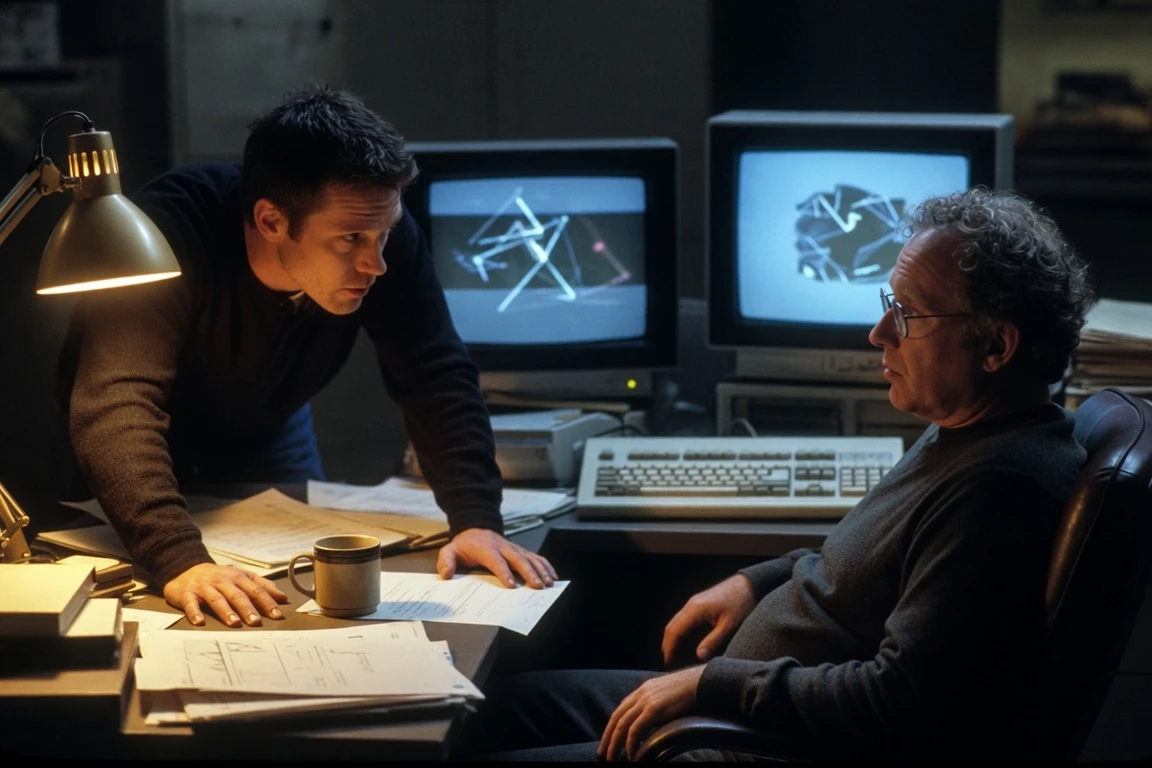
Who Left id Software in the Years After Quake
Petersen then walked through who walked out. “Within a couple years of finishing Quake,” he listed John Romero, Shawn Green, Dave Taylor, Mike Abrash, American McGee, and himself as departures from id Software. “All of them went on to have long and fruitful careers in game development,” he wrote, “so plainly we didn’t depart because of some kind of talent issue.”
- John Romero, co-founder of id Software
- Shawn Green
- Dave Taylor
- Mike Abrash
- American McGee, designer
- Sandy Petersen, designer (joined id in 1993)
Petersen also pointed a finger at Carmack’s “intensity” in a separate post. He wrote that Carmack “decided we all needed to be in the same big room together” after reading about office focus, and that the team had “nowhere we could decompress or hide out.” He said losing private offices affected Romero, Taylor, Green, and Abrash in particular. He also noted, separately, that he himself never had his own office at id either.
Every name on that list went on to long second acts in game development, Petersen wrote. The exits could not have been a talent problem, he added. American McGee, Petersen noted in a separate post, was “done dirty” by another employee at id, even though McGee was reportedly fired by Carmack for sub-par performance on Quake.
Petersen summed up what those exits meant for id. “Id Software was never the same after,” he wrote, and in his opinion, “the only other truly great game that id produced was Quake 3, and it was not at the level of the pre-Quake games.”
Carmack Replies With a List of His Own Mistakes
Carmack’s reply landed at 8:36 p.m. on June 24, 2026, and quoted Petersen’s thread in full. He opened with the line “There are a few things that I look back on as my mistakes in the early days.” The post carried the weight of three decades of distance.
I pushed everyone too hard. I didn’t appreciate how maturing companies need more slack, and that running people at startup intensity constantly will wear them out. Quake was also where I really had to accept my personal limits. I was working pretty much as hard as humanly possible, and I was still slipping past my goal points.
Carmack posted his full June 24 reply, which argued that Quake was “overly ambitious technically” and that id “could have done all the great multiplayer and modding work inside a Doom++ engine, allowing the designers to work with a more stable base instead of rug-pulling everything out from underneath them a couple times.” A follow-up game, he added, “could have then brought in full 6DOF environments and characters.” He also noted that the studio should have paired artists with designers earlier, blaming designer infighting for visual-design conflicts. At the bottom of the post, after several paragraphs of self-critique, Carmack closed with two words: Sorry, Sandy.
The Open Office and the Stock Plan
Petersen added a follow-up post on the open office the same morning, describing how the studio was physically arranged. “I think part of the problem might’ve been that John Carmack’s intensity combined decided we all needed to be in the same big room together,” he wrote. “He’d read about this way of ‘focusing’ the team and it did.” The catch: “we also had nowhere we could decompress or hide out.” Petersen had spent time at id under that arrangement, and the post made clear it had not faded.
Petersen said losing private offices hit Abrash, Taylor, Green, and Romero the hardest. The open-floor arrangement Carmack championed from a book became a structural complaint that ran alongside the workload issue. Carmack, in his reply, did not directly address the office layout.
Carmack’s post did name a different structural problem. “On all of the founders’ shoulders, our original corporate stock arrangement and buy/sell agreement was a mistake, and resulted in bad incentives,” he wrote. Id had wanted to keep ownership in the hands of people working on current projects, he explained. “The Silicon Valley standard approach of vesting stock would have worked out better,” Carmack said. The admission paired the workload complaint with a financial complaint running in parallel.
Romero Weighs In on the Same Thread
John Romero entered the conversation late on June 24 with his own reply later that night. He opened with a sentence that put both feet down: “I’m proud of Quake. We all are. Quake changed games forever.” The next words mattered: “That said…”
We were trying to make the next great leap, and none of us could really know at the beginning what that leap was or how long it would take. We were building the road while also building the car driving on it. No one had ever done anything like Quake before.
Romero echoed Carmack’s belief that id should have stuck with a “Doom++” approach while ironing out the fully-3D engine. He credited American McGee, whose time at id ended under disputed circumstances, for being “really good” at building Quake levels. The framing he offered leaned on the uncertainty at the start of the project, with all of them unable to see the shape of the leap they were attempting. His beat, in the thread, was pride first, regrets second.
Romero closed by writing, “There are a hundred things we could have done differently, but we did the best we could do at the time with what we knew. id still goes on, and so does Wolf, Doom, and Quake. Maybe that was what we came together to do.” Following Carmack’s apology, Petersen said he did not blame Carmack for how it all worked out and told Romero he “did an incredible job” on Quake.
Romero thanked Petersen for starting the conversation, and the thread settled. Three posts from three of id’s most public voices, all on the same day.
What Quake Built Anyway
For all the human cost, the game itself rewired what a first-person shooter could be. Quake shipped fully 3D in a year when most shooters were still using 2.5D tricks like Doom and Duke Nukem 3D. Real 3D collision and physics, 360-degree movement, and true verticality arrived in the same package. The CPU demands drove the first wave of consumer 3D graphics cards, with the 3dfx Voodoo, ATI Rage, and Nvidia Riva cards all leaning on Quake to sell hardware. Online multiplayer took its modern shape inside QuakeWorld, the post-release update that hardened networked deathmatch into a culture.
- Quake shareware released: June 22, 1996 (MS-DOS, North America)
- Full retail release: July 22, 1996
- Petersen and Carmack posts: June 24, 2026
- Named departures within a couple years of Quake: 6 (Romero, Green, Taylor, Abrash, McGee, Petersen)
- Source code still public: winquake, glquake, quakeworld, glquakeworld on GitHub under GPL
The modding community Quake enabled produced Team Fortress and other total conversions. A generation of developers, including the founders of Valve, first cut their teeth on Quake modding. The game’s full source code is still public on GitHub under GPL, listed as available “for entertainment and educational purposes.” Three decades in, the thread that started with Petersen’s post was still open for replies.
Frequently Asked Questions
When was Quake released?
Quake’s shareware first episode shipped on June 22, 1996 for MS-DOS in North America, with the full retail version following on July 22, 1996. id Software developed it and GT Interactive published it.
Who designed Quake?
id Software, the studio co-founded by John Carmack and John Romero, developed Quake. Sandy Petersen was a co-designer who joined id in 1993, and American McGee was a designer on the project.
Why did so many people leave id Software after Quake?
Sandy Petersen, posting on June 24, 2026, said id’s developers worked long and hard and that the work ‘broke us spiritually.’ He listed John Romero, Shawn Green, Dave Taylor, Mike Abrash, American McGee, and himself as departures within a couple years of Quake’s release. John Carmack, responding the same day, named the studio’s pace and its stock arrangement as separate problems.
What did John Carmack apologize for?
Carmack’s June 24, 2026 post was structured as a list of admissions. He conceded Quake had been too ambitious a technical swing, that he had kept the team running at an unsustainable pace, that the studio’s original stock arrangement had set bad incentives, and that designers should have been paired with artists earlier. The post closed with the line addressed to Sandy Petersen.
Is id Software still around?
id, Wolfenstein, Doom, and Quake all still exist as brands, per John Romero’s reply in the same thread.


Sony’s 10 Percent Disc Drop Leaves the 2028 Cutoff Intact

Chip Allocation Sidelines the Base iPhone 18 This Fall

Miami-Dade Fights the Vice City Brand It Already Wears

IFA 2026 Awards Put Tecno Ahead of Flagship Phones

USB-C Gadgets Made the Junk Drawer Rechargeable

Pixel 11 Pro Asks $1,099 for a Light Google Locked

The iPhone Ultra Sells Two Retired Minis as One Foldable

Google Opens Gmail to Voice and Gates Docs Live

Lenovo Prices the IdeaPad Vibe Against Apple’s $699 Neo

Xbox Caps Game Pass Cloud Gaming at 15 Hours

Oracle Cuts 21,000 Jobs in a Year, Cites AI in 10-K Filing

Fable 5 and Mythos 5 Return as US Lifts Anthropic Export Controls

SpaceX’s Google Deal Turns a Rocket Company Into a Cloud Landlord

CD Projekt Red Co-CEO: Redemption Arc Isn’t Done, Witcher 4 in 2027

XPL Rallies 30% Ahead of Plasma One Card Tier Launch

Google Search Profiles Build a Follow Graph Inside Discover

DGO App Brings Rs 549 Mobile Pass for FIFA World Cup 2026 in Nepal

Moonshot AI Targets $30 Billion in China’s Fastest AI Funding Sprint

Oppo’s ColorOS 17 Eligibility List Leaves A-Series Buyers Behind

Microsoft Xbox Layoffs Start in July as Sharma Slams 3% Margin
-
 AI2 months ago
Oracle Cuts 21,000 Jobs in a Year, Cites AI in 10-K Filing
-
 AI2 months ago
Fable 5 and Mythos 5 Return as US Lifts Anthropic Export Controls
-
 AI3 months ago
SpaceX’s Google Deal Turns a Rocket Company Into a Cloud Landlord
-
 GAMING3 months ago
CD Projekt Red Co-CEO: Redemption Arc Isn’t Done, Witcher 4 in 2027
-
 CRYPTO3 months ago
XPL Rallies 30% Ahead of Plasma One Card Tier Launch
-
 NEWS3 months ago
Google Search Profiles Build a Follow Graph Inside Discover
-
 APPS3 months ago
DGO App Brings Rs 549 Mobile Pass for FIFA World Cup 2026 in Nepal
-
 AI3 months ago
Moonshot AI Targets $30 Billion in China’s Fastest AI Funding Sprint