
GADGETS
Apple and Microsoft Push AI Memory Costs Onto Buyers
Apple and Microsoft raised Mac, iPad and Xbox prices after memory suppliers locked wafers for AI, then Apple put no cheap iPhone on the fall stage.

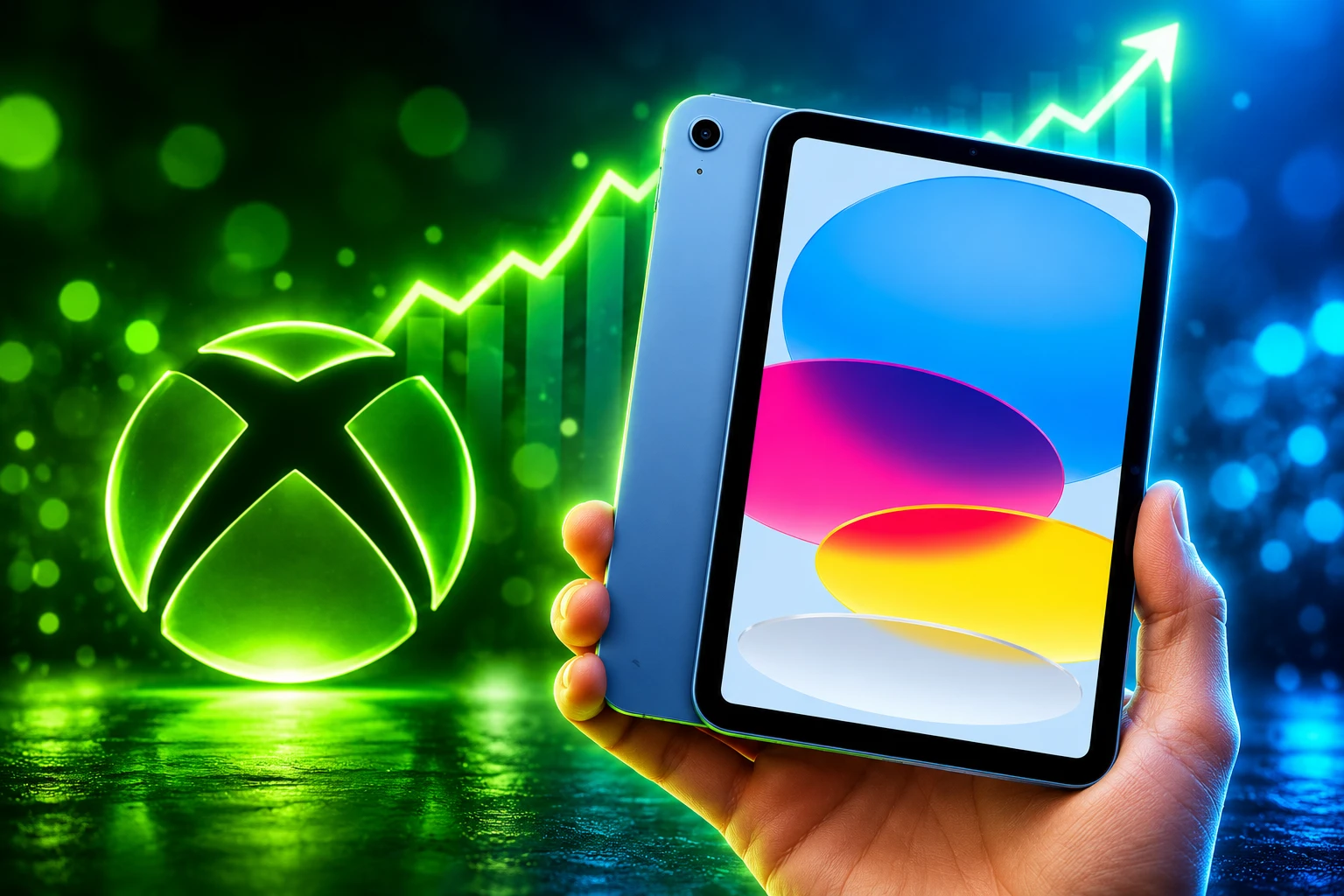
Apple raised Mac and iPad prices on June 25, 2026, by as much as $1,300, the same day Microsoft added up to $150 on Xbox. Both firms pointed at memory and storage that AI data centers had already claimed.
The bill did not stop at those tags. By September, Apple put only expensive iPhones on stage, and Xbox had already killed its 2TB console. The money landed at Samsung, SK Hynix, and Micron.
Apple Stopped Eating the Memory Bill in June
Apple had held consumer prices while chip costs ran up, then said that buffer was gone. A spokesperson said AI data centers had created “an extraordinary surge in demand for memory and storage,” and that the firm had “never seen a component price increase this much, this quickly.”
We have shielded our customers from these increases so far, but we have now reached a point where we need to begin raising prices on several products, including today’s increases for iPad and Mac.
Apple spokesperson, June 25, 2026 statement
AirPods and Apple Watch did not move, which fits devices that carry little DRAM or NAND. Macs and iPads did. The Mac Studio M3 Ultra took the largest dollar jump, to $5,299 from $3,999. Apple’s stock fell more than 6 percent after the list went live, its sharpest drop since the April 2025 tariff shock.
APPLE U.S. LIST PRICES ON JUNE 25
| Product | Old price | New price | Change |
|---|---|---|---|
| MacBook Neo | $599 | $699 | +$100 |
| MacBook Air | $1,099 | $1,299 | +$200 |
| MacBook Pro (base) | $1,699 | $1,999 | +$300 |
| iPad Air | $599 | $749 | +$150 |
| iPad Pro | $999 | $1,199 | +$200 |
| Mac Studio M3 Ultra | $3,999 | $5,299 | +$1,300 |
Trevor Long, a consumer tech analyst in Australia, said the Neo had been strong as a product in part because of price, and that the new tag “hits that hard.” Windows machines built to undercut that $699 floor, including the Lenovo IdeaPad Vibe against Neo, now sit closer to Apple than they did in the spring.
$100 Billion in Locked Memory Contracts
Device makers did not walk into a random shortage. They walked into a market where the three DRAM suppliers had already sold capacity to AI buyers. Micron’s fiscal third quarter, ended May 28, 2026, printed $41.46 billion in revenue, up 74 percent from the prior quarter and 346 percent from a year earlier, with DRAM at $31.33 billion of that total.
WHAT MEMORY SUPPLIERS BOOKED
- Micron next quarter: The company guided about $50 billion in revenue and a gross margin near 86 percent.
- Take-or-pay paper: Sixteen strategic capacity deals include 14 with about $100 billion in minimum revenue, covering roughly 20 percent of Micron DRAM bits and one-third of its NAND.
- SK Hynix profit: Second-quarter operating profit reached 60.5 trillion won, up 557 percent from a year earlier, on 79.3 trillion won of revenue.
- Market size: TrendForce lifted its 2026 memory market value to $889.3 billion from $551.6 billion.
Micron said it can fill only 50 percent to two-thirds of customer demand in the medium term, and that industry demand for DRAM and NAND stays above supply beyond 2027. CEO Sanjay Mehrotra told investors the firm still has “no line of sight as to when memory supply will be able to catch up,” even if supply improves in 2028.
Counterpoint’s second-quarter DRAM revenue split put Samsung at 39 percent, SK Hynix at 26 percent, and Micron at 25 percent. In high-bandwidth memory, Counterpoint’s first-quarter tally gave SK Hynix 58 percent, with Samsung and Micron at 21 percent each. That is the group that can decide whether a wafer becomes an AI stack or a laptop SODIMM.
Xbox Walks Into a 2.5x Storage Spike
Microsoft’s console group is a worse place to absorb that mix, because Xbox hardware is sold below cost. Team Xbox said last October’s U.S. increase of $20 to $70 was supposed to be enough, then spent months with suppliers before moving again.
Unfortunately, console storage and memory prices have increased by more than 2.5x and we expect another doubling by the fall of 2027. The entire consumer electronics industry is struggling with the current components crisis, but the effects are particularly hard on consoles. Unlike phones, computers, speakers, and other consumer devices, consoles are typically not sold at a profit, but instead for less than they cost to make.
Team Xbox, Xbox Wire, June 25, 2026
The Xbox prices from August 1 also retire the 2TB model, which is the SKU that burns the most NAND.
U.S. XBOX TAGS AFTER AUGUST 1
- Series S 512GB: $399.99 becomes $499.99.
- Series S 1TB: $449.99 becomes $599.99.
- Series X 1TB digital: $599.99 becomes $749.99.
- Series X 1TB with disc: $649.99 becomes $799.99, and the 2TB SKU is discontinued.
Microsoft pointed players at trade-in programs and certified refurbished units at up to $100 off list. That is a used-hardware valve, not extra DRAM. The timing also lined up with older supplier contracts rolling off, so the June 25 date next to Apple’s list was coincidence more than copycat theater.
51% of DRAM Bits Now Go to Servers
TrendForce’s August 25 note is the cleanest map of who gets the bits. HBM and RDIMM together take 51% of DRAM bit supply in 2026. Cloud providers’ capital spending is set to rise 98 percent this year and another 50 percent in 2027, and the memory share of CSP capex goes from 47 percent in 2026 to 68 percent in 2027.
Server DRAM contract prices rose 64 percent in the second half of 2025 and are on track for about a 270 percent rise across 2026. Enterprise SSD prices rose about 35 percent in that same 2025 stretch and are projected to jump 235 percent in 2026. HBM contracts could still climb 70 to 140 percent in 2027, even after some long-term deals added ceilings in the second quarter.
HBM is the product that makes the crowd-out physical. An HBM3E stack near $300 for 36GB, as of September 2026 figures from Silicon Analysts, uses far more wafer area per shipped bit than DDR5. Lead times on those stacks still run 20 to 26 weeks. Microsoft sits on both sides of that queue: it buys accelerators at data-center scale, a bind laid out in the firm’s own Microsoft AI chips and power limits, while Xbox pays up for leftover NAND.
Conventional DRAM did not crawl. TrendForce’s contract series shows roughly 90 to 95 percent quarter-on-quarter gains in the first quarter, then 58 to 63 percent in the second. Counterpoint’s 32GB DDR5 parts moved from $94 in the three months to September 2025 to $282 in the first quarter of 2026. PC brands answered by raising stickers and, in some lines, shipping less RAM in the box.
The Fall iPhone Line Starts at $1,199
Apple left iPhone, Watch, and AirPods alone in June. That pause lasted until the September 9 “Surprise and Shine” event, the first as CEO for John Ternus, who took the job on September 1. The company did not put a standard iPhone 18 on the stage.
FROM JUNE LIST TO SEPTEMBER STAGE
- June 25, 2026: Apple lifts Mac and iPad prices and says it has to “begin” raising prices; Microsoft posts the Xbox increase for August 1.
- August 1, 2026: New Xbox list prices take effect worldwide and the 2TB model leaves the shop.
- September 1, 2026: Nintendo’s Switch 2 moves from $449.99 to $499.99; Ternus becomes Apple CEO.
- September 9, 2026: Apple unveils iPhone 18 Pro at $1,199 and iPhone 18 Pro Max at $1,299, plus the foldable Duo from $1,999.
- September 18, 2026: iPhone 18 Pro and Pro Max go on sale after pre-orders that opened September 12.
Those iPhone 18 Pro lineup prices are $100 above last year’s Pro and Pro Max starts of $1,099 and $1,199. IDC’s Nabila Popal had said after the Mac list that Pro models might need as much as $200, and that “the days of $50 price increases are over.” Apple took the $100 step, not $200, and kept the cheap phone off the fall calendar rather than sell it into this memory tape.
Long’s pre-event band of $50 to $150 for iPhone still covered the Pro move. The missing volume model is the larger tell. Every new iPhone Apple announced that morning starts at $1,199 or $1,999. Phone makers outside Cupertino are already passing costs through, including repeated Samsung Galaxy price hikes in India this year.
PlayStation Hardware Had Its Worst May in 25 Years
Consoles felt the squeeze before Apple’s June note. Sony raised U.S. PlayStation 5 prices in March, taking the Digital Edition from $500 to $600, the disc model from $550 to $650, and the PS5 Pro from $750 to $900. Circana’s May tally then showed PlayStation hardware units down 58 percent, the weakest May in 25 years, while Xbox hardware logged its lowest May on record.
Nintendo still sold Switch 2 units, up 38 percent against May 2025, then added $50 on September 1. That is the pattern across living-room boxes: the installed base pays more, the high-storage SKU disappears, and the next hardware generation inherits a RAM bill that Microsoft has already said could double again by fall 2027. A $1,000 class for whatever follows PS5 and Xbox is no longer a joke if Pro boxes already sit at $799.99 and $900.
PC makers have been running a quieter version of the same trade, shipping fewer machines and collecting more per unit. Consumer tags also tend to stick after a squeeze. When contract RAM eventually eases, list prices on Macs, iPads, and consoles rarely walk back in a straight line.
Contract Prices Slow While Shelf Prices Hold
TrendForce now sees conventional DRAM contract gains slowing to 13 to 18 percent in the third quarter and 3 to 8 percent in the fourth, after those record first-half jumps. That is a slower climb from a high base, not a glut. New fabs still sit years out, and 2027 DRAM and HBM output is largely spoken for under deposits and multi-year deals.
So the June 25 lists were not a one-day shock. They were the moment Apple and Microsoft stopped using margin as a shock absorber and started using the product mix. Xbox already charges $100 to $150 more. The MacBook Air is $1,299. The iPhone 18 Pro that ships on September 18 starts at $1,199, and the cheap iPhone never appeared beside it.

Instagram Plus Tests a Read-Only Mode That Cuts Stories

Altman Asks the Public to Accept Some AI Harm

Google Freezes OSS VRP Product Reports After AI Flood

AI Agents Make Payment Rails the Scarce Prize

Turkey’s Crypto Boom Now Runs Through Three Banks

Fable 5 Came Back Under a Commerce On-Off Switch

Google’s SpaceX GPU Lease Has a Sept. 30 Deadline

Plasma One’s XPL Locks Face a 1.81 Billion Cliff

DGO’s Rs 549 World Cup Pass Cost Fans Sleep and Data

Moonshot AI’s $30 Billion Ask Became a $35 Billion Close
-
 AI4 months ago
Fable 5 Came Back Under a Commerce On-Off Switch
-
 AI5 months ago
Google’s SpaceX GPU Lease Has a Sept. 30 Deadline
-
 CRYPTO4 months ago
Plasma One’s XPL Locks Face a 1.81 Billion Cliff
-
 APPS4 months ago
DGO’s Rs 549 World Cup Pass Cost Fans Sleep and Data
-
 AI5 months ago
Moonshot AI’s $30 Billion Ask Became a $35 Billion Close
-

 NEWS5 months ago
ColorOS 17 Device List Spans Oppo, OnePlus and Realme
-

 GAMING4 months ago
Xbox Cuts 3,200 Jobs After Five Years of Thin Returns
-
 GAMING4 months ago
The RTX 4050 Under Rs 70,000 Hides a Wattage Gap