
APPS
Korea’s KFTC Alleges Google Abused Android App Store via ‘Project Hug’
KFTC says Google’s Project Hug abused Android app store dominance from 2019 to 2026, hitting 14.16 trillion won in revenue. A fine of up to 6% may follow.

South Korea’s antitrust regulator on Wednesday accused Google of abusing its dominant position in the Android app marketplace through a programme the company internally called “Project Hug.” The Korea Fair Trade Commission’s (KFTC) Market Surveillance Bureau released its examiner’s report at a media briefing in Seoul, alleging the programme affected 14.16 trillion won ($9.1 billion) in revenue and recommending the full commission impose a fine and corrective order.
Project Hug ran from July 2019 to March 2026, the report found. If the commission ultimately confirms the abuse, it may impose a fine of up to 6% of the relevant affected revenue. Google now has eight weeks from receiving the examiner’s report to submit a written response and review the bureau’s evidence.
What the Bureau Found
The bureau said Google abused its dominant position in the Android app marketplace to “hinder competition,” recommending corrective measures and a financial penalty. Project Hug, internally known to Google staff as the Games/Google Velocity Program, ran from July 2019 to March 2026, the KFTC Market Surveillance Bureau’s examiner’s report found. The conduct the bureau calls an abuse of dominance affected 14.16 trillion won ($9.1 billion) in revenue, the report says.
Project Hug offered domestic and overseas game developers financial support for using Google’s Cloud, Ads, and YouTube services. The contracts demanded that developers launch new games on Google Play on terms at least as favourable as those offered by rival app marketplaces. The contracts also layered more support as a developer’s Google Play revenue grew, sharpening the financial incentive for staying inside Google’s marketplace. The bureau says the contracts “significantly reduced developers’ incentives to distribute games through competing app stores, including South Korea’s OneStore.” The cumulative effect, the report concludes, was de facto exclusive dealing that the KFTC now treats as an abuse of market dominance.
The bureau’s recommendation includes both a financial penalty and a corrective order under the Korea Fair Trade Commission Act. Google has eight weeks from receiving the report to file a written response and review the bureau’s evidence. The bureau has said it will move the case to the commission “promptly” once those rights are satisfied.
How “Project Hug” Locked In Developers
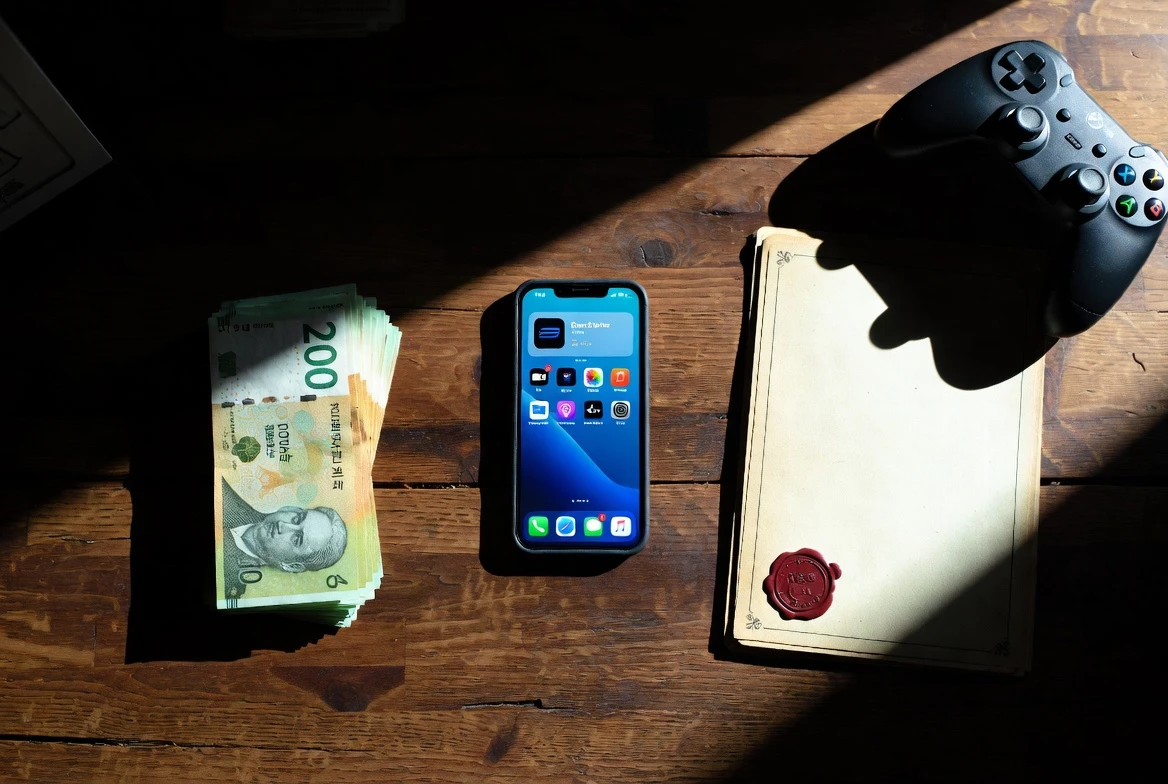
The examiner’s report reads less like a market study than a contract analysis. It dissects Project Hug’s mechanics in detail, naming four mechanisms the bureau says produced the abuse. Each mechanism left game developers with shrinking reasons to put a flagship title on a competitor’s app store. The four together are what the bureau says turned a series of contracts into a single abuse of market dominance.
- Financial support for Cloud, Ads, and YouTube usage: Google paid developers to keep using its commercial services, the support acting as a carrot to stay inside Google’s wider commercial orbit.
- Most-favoured marketplace treatment: developers had to launch games on Google Play on terms “at least as favourable” as those offered by rival app marketplaces, denying rivals a first-mover window.
- Revenue-linked support: the amount of support scaled up as developers generated more revenue through Google Play, adding an extra reward for keeping top titles on Google’s marketplace.
- Effective exclusivity: the cumulative effect “significantly reduced” developers’ incentives to distribute games through competing app stores, including OneStore, the bureau found.
OneStore, the South Korean app store joint venture operated by the country’s mobile carriers and local tech firms, was named in the report as one of the blocked competitors. The bureau found Project Hug’s terms structurally reduced OneStore’s pipeline of new game launches across the window from July 2019 to March 2026. Game developers had contractual reasons to put a marquee title on Google Play first, even if they later added titles to OneStore. The support stepped up as Google Play revenue grew, sharpening the penalty for any developer tempted to break ranks. The report describes the cumulative result as “blocking rivals’ business activities and forcing developers into de facto exclusive dealing with Google.”
Korean competition law reaches conduct that produces an exclusive outcome, beyond contracts that expressly bar distribution elsewhere. The bureau’s report treats Project Hug as a single abuse running across the full window from July 2019 to March 2026. The examiner’s framing now drives the full commission’s consideration of both penalty and corrective order.
The Fine Formula on the Table
The headline number in the report is 14.16 trillion won, the figure the bureau identifies as allegedly affected revenue. At the 1,556.4400 won-per-dollar rate the report cites, that is $9.1 billion. The fine, if the commission confirms the abuse, can reach up to 6% of that figure under Korean competition law. The 6% ceiling is the upper bound the bureau says the law sets. Both that revenue figure and the percentage ceiling will now move to the full commission for review.
- Alleged affected revenue: 14.16 trillion won ($9.1 billion)
- Maximum fine threshold: up to 6% of relevant affected revenue
- Project Hug programme window: July 2019 to March 2026
- Google’s deadline: eight weeks from receiving the examiner’s report
- Exchange rate cited: $1 = 1,556.4400 won
The bureau’s recommendation covers both the fine and the corrective order, the two remedies under Korean competition law for an abuse-of-dominance finding. The 6% ceiling applies to the revenue figure the bureau defines as “relevant” to the conduct, not to Google’s total Android or Play revenue. The examiner’s role is to lay out that revenue calculation. The full commission will then either ratify or revise it.
A 6% maximum is the upper bound, not an automatic outcome. The full commission retains discretion to set the fine inside that ceiling once an abuse finding is confirmed. The corrective order, if one is imposed, can reach deeper into the contracts Google uses with active game developers. The commission issues both remedies in one final ruling, after Google’s response window closes.
Google’s Eight-Week Window
Google now has a written-response clock of eight weeks, measured from the moment it receives the examiner’s report. Korean procedural rules let the company inspect the bureau’s evidence and file its defence before the full commission convenes. The bureau has said it will move the case to the commission “promptly” once those rights are satisfied. That two-month window sets the timetable for the next move in the case. The clock starts running the day the report reaches Google’s lawyers.
- Google submits a written response and reviews the bureau’s evidence within eight weeks.
- The bureau confirms Google’s due-process rights have been fully observed.
- The bureau convenes the full commission, which will issue a final ruling.
What happens inside those eight weeks will shape the commission’s ruling. The most-favoured-marketplace clause and the revenue-linked support are the report’s two central findings, and the points a Google defence would press hardest in its written response. The corrective order, if imposed, can reach deeper than a fine: it can rewrite the contracts Google currently uses with active developers. The commission will then need to choose whether to act on the bureau’s recommendation as drafted or revise the bureau’s view on any contested point.
Korea’s Earlier Google Bites
The new case sits inside a Korean Google antitrust arc the KFTC has been building for years. Two earlier commission rulings, plus a court decision upholding one of them, frame the terms the agency is now using.
| Attribute | 2023 KFTC ruling | 2026 KFTC examiner’s report |
|---|---|---|
| Conduct period | June 2016 to April 2018 | July 2019 to March 2026 |
| Financial penalty | 42.1 billion won (~$32 million) | Up to 6% of relevant affected revenue ($9.1 billion) |
| Alleged conduct | Game exclusivity contracts on Google Play | Project Hug programme tied to Google Play priority |
| Competing store named | OneStore | OneStore |
| Outcome | Final ruling | Examiner’s report |
In April 2023, the KFTC fined Google 42.1 billion won (~$32 million) over a separate OneStore exclusivity arrangement between June 2016 and April 2018, per the 2023 KFTC fine on Google Play exclusivity. In January 2024, a Korean court held that Google had anticompetitively prevented Samsung, LG and other Korean device makers from installing or developing competing mobile operating systems, per the January 2024 Korean court ruling on Android forks. Each ruling involved a different set of contracts and a different time window.
The new examiner’s report identifies 14.16 trillion won in allegedly affected revenue, attached to one programme rather than a single contract. The two earlier rulings show how the agency has built its case against Google’s contracts with Korean device makers and developers, step by step over several years.
Frequently Asked Questions
What is “Project Hug”?
Project Hug is the internal nickname Google staff used for what the report formally names the Games/Google Velocity Program, an effort that ran from July 2019 to March 2026. The bureau’s findings characterise the arrangement as paying developers to use Google’s Cloud, Ads, and YouTube services in exchange for launching games on Google Play on terms at least as favourable to Google as any rival store.
How much could the fine be?
The bureau’s report places the maximum fine at up to 6% of the 14.16 trillion won ($9.1 billion) figure it identifies as relevant affected revenue. The full commission has discretion to set any fine inside that 6% ceiling, and the bureau is separately recommending a corrective order alongside the financial penalty.
How long does Google have to respond?
Google has eight weeks from receipt of the report to file a written response and review the evidence. After the bureau confirms Google’s due-process rights have been satisfied, it plans to convene the full commission and issue a final ruling promptly.
What is OneStore?
OneStore is a South Korean mobile-app store run as a carrier-backed joint venture with local tech firms. The bureau’s examiner’s report names OneStore among the competitors whose market access it says Project Hug structurally narrowed.


South Korea Retail Investors Face Reckoning After KOSPI AI Rally Collapses

Surrey AI Maps Three Heart Attack Paths and Their Molecular Roots

Germany Locks Neutral Apple ATT Prompts Across Most of Europe

Apple’s 5% EU Fee Quietly Rewrites Alternative App Store Math

Apple’s EU Fee Truce Cuts Complexity but Leaves Rivals Fuming

Pixel 11 Pro Fold Trades Thinness for Durability and Seven-Year Stay

Mayo AI Flags HCM Obstruction From Everyday Ultrasound Videos

Indian Brands Quietly Scale Landmark Screens and Home Tech

Navin Vatsa Turns Grief Into a Lifetime of Quiet Seeing

Google Bets Pixel 11 Agentic AI Will Redefine Phones

Oracle Cuts 21,000 Jobs in a Year, Cites AI in 10-K Filing

Fable 5 and Mythos 5 Return as US Lifts Anthropic Export Controls

SpaceX’s Google Deal Turns a Rocket Company Into a Cloud Landlord

CD Projekt Red Co-CEO: Redemption Arc Isn’t Done, Witcher 4 in 2027

XPL Rallies 30% Ahead of Plasma One Card Tier Launch

Google Search Profiles Build a Follow Graph Inside Discover

DGO App Brings Rs 549 Mobile Pass for FIFA World Cup 2026 in Nepal

Moonshot AI Targets $30 Billion in China’s Fastest AI Funding Sprint

Oppo’s ColorOS 17 Eligibility List Leaves A-Series Buyers Behind

Microsoft Xbox Layoffs Start in July as Sharma Slams 3% Margin
-
 AI2 months ago
Oracle Cuts 21,000 Jobs in a Year, Cites AI in 10-K Filing
-
 AI2 months ago
Fable 5 and Mythos 5 Return as US Lifts Anthropic Export Controls
-
 AI2 months ago
SpaceX’s Google Deal Turns a Rocket Company Into a Cloud Landlord
-
 GAMING2 months ago
CD Projekt Red Co-CEO: Redemption Arc Isn’t Done, Witcher 4 in 2027
-
 CRYPTO2 months ago
XPL Rallies 30% Ahead of Plasma One Card Tier Launch
-
 NEWS3 months ago
Google Search Profiles Build a Follow Graph Inside Discover
-
 APPS2 months ago
DGO App Brings Rs 549 Mobile Pass for FIFA World Cup 2026 in Nepal
-
 AI2 months ago
Moonshot AI Targets $30 Billion in China’s Fastest AI Funding Sprint