
CRYPTO
Robinhood Chain Mainnet Goes Live, Wiring Stock Tokens In
Robinhood Chain went live on mainnet July 1, 2026 with Chainlink as its oracle and tokenized U.S. stocks in 120+ countries via the Robinhood Wallet, built on Arbitrum.

Robinhood flipped Robinhood Chain from testnet to public mainnet on Wednesday, putting its own Ethereum Layer-2 blockchain into production in front of nearly 28 million customers across 38 countries. The chain, built on Arbitrum, runs with Chainlink as its official oracle and pushes tokenized US stocks into the Robinhood Wallet across more than 120 countries on day one.
And the launch lands against a tougher backdrop than the keynote implied. Robinhood’s crypto revenue dropped 47% year over year in Q1 2026 to $134 million, with trading volume down 48% to $24 billion over the same quarter. Owning the chain is the firm’s bet that controlling its own rails can break that cycle.
From Testnet to Production in Five Months
Robinhood first aired its blockchain ambitions in June 2025, then spent the rest of the year building privately. The public testnet went live on February 10, 2026, at CoinDesk’s Consensus Hong Kong conference, with Johann Kerbrat, Robinhood’s senior vice president and general manager of crypto, framing it as groundwork for “an ecosystem that will define the future of tokenized real-world assets.”
That testnet carried real wiring from the start. Early infrastructure partners included Alchemy, Allium, Chainlink, LayerZero, and TRM, and developers could access network entry points, standard Ethereum tools, and documentation hosted at docs.robinhood.com. Robinhood committed $1 million toward the 2026 Arbitrum Open House program and organized buildathons across New York City, Dubai, London, and Singapore to seed developer activity.
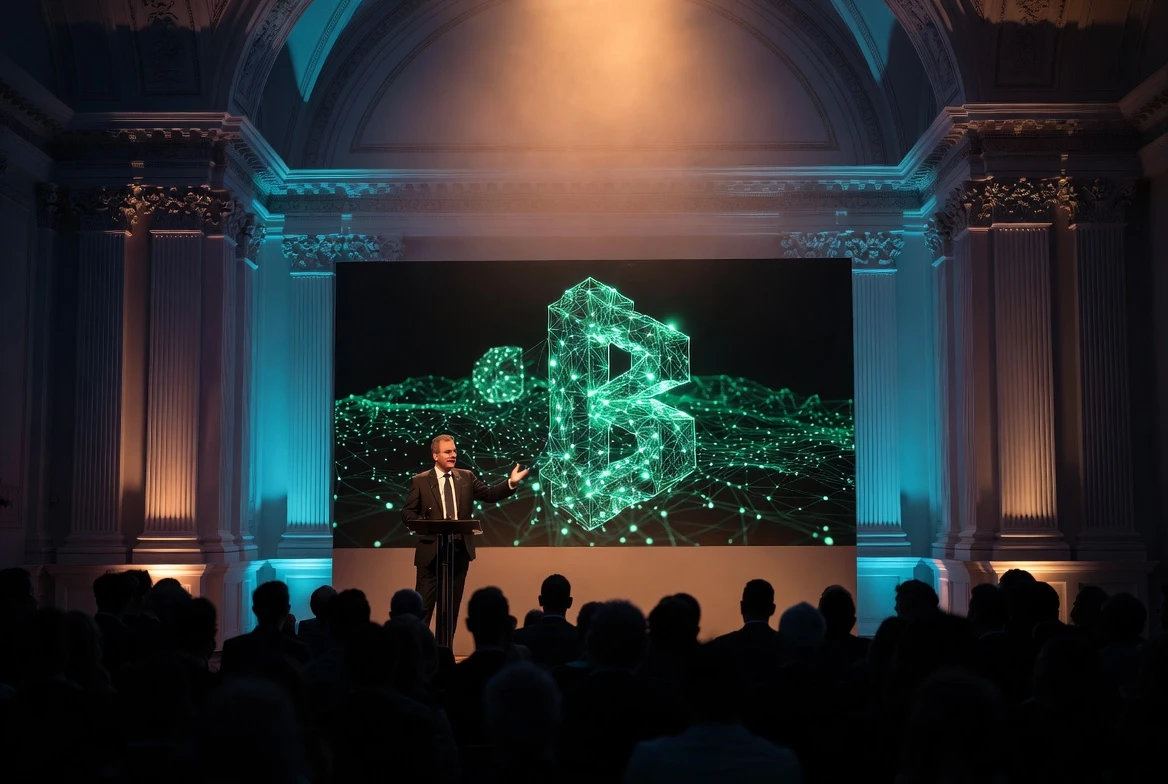
Five months later, that testnet is now the production chain. Robinhood held its “The World is Flat” keynote on July 1, 2026, in the Old Royal Naval College in London, hosted by CEO Vlad Tenev and Kerbrat, to mark the public mainnet and a wave of products built on top of it. The chain’s official newsroom confirms the launch alongside stock tokens, agentic crypto trading, and a new suite of decentralized finance products (read the Robinhood’s mainnet launch announcement for the full slate).
Built for Regulated Assets, Not Raw Throughput
Robinhood did not position its chain as another speed play. “For us, it was never really about scaling Ethereum or doing faster transactions,” Kerbrat told CoinDesk ahead of the launch. The team wanted Ethereum’s security and the EVM liquidity pool, plus the room to customize for traditional assets being tokenized, where compliance rules vary by jurisdiction. The chain is being designed around equities, ETFs, and other regulated products, not as a general-purpose rollup competing on latency.
The Arbitrum Platform gave Robinhood the levers it wanted. The chain is one of 30-plus dedicated blockchains built on Arbitrum, and the platform’s toolset delivered configurable block times with preconfirmations for 100ms latency, a Dynamic Pricing model for predictable unit economics on financial products, and the throughput needed to stay responsive in volatile sessions (see Arbitrum’s breakdown of the chain’s execution and pricing capabilities).
Decentralized finance unlocks possibilities beyond what traditional finance can offer, but historically, it has required technical expertise to navigate. We’re bringing the best of traditional finance and DeFi together, and in doing so, expanding financial ownership to every corner of the globe.
That quote is from Kerbrat, SVP and general manager of crypto and international at Robinhood, delivered at the London keynote on July 1.
Chainlink Wired In From Block Zero
Chainlink is the official oracle layer from block zero, not an integration bolted on later. Three Chainlink services are live on the chain’s mainnet from day one: Data Feeds, Data Streams, and CCIP. Data Feeds handle onchain reference prices for tokenized equities including NVDA, GOOG, and AAPL. Data Streams deliver low-latency market data for high-frequency trading and settlement flows. The Cross-Chain Interoperability Protocol moves stock tokens and messages between Robinhood Chain and outside networks without leaving the Chainlink security perimeter.
The scale behind that move is substantial. Chainlink already secures over 70% of DeFi and has enabled more than $31 trillion in transaction value across its deployments, per the launch release. Thodoris Karakostas, director of global partnerships at Chainlink Labs, framed the deal as a milestone for mainstream consumer adoption, while Gaëtan Thabot, director of product at Robinhood Crypto, pointed at institutional trust as the reason the broker picked Chainlink over a proprietary oracle (read Chainlink’s launch release confirming its three day-one services).
This is how the world’s largest financial services apps accelerate the transition to an onchain financial system powered by Chainlink.
The line comes from Karakostas at Chainlink Labs, in the same release that confirmed the day’s three services.
| Service | Provider | Day-one role |
|---|---|---|
| Oracle and cross-chain layer | Chainlink | Price feeds, low-latency market data, and CCIP messaging |
| Public DEX (AMM) | Uniswap | Primary public liquidity venue for spot trading |
| Proprietary AMM | Pleiades | Internal prop trading venue on the chain |
| Node and developer infrastructure | Alchemy | RPC, indexing, and developer tooling |
| Custody | BitGo | Institutional custody for tokenized assets |
Tokenized Stocks Reach More Than 120 Countries
Robinhood’s prior Classic Stock Tokens product, issued on Arbitrum and limited to European users, has been replaced by a new structure simply called Stock Tokens, now hosted on Robinhood Chain and accessible through the Robinhood Wallet. The tokens are available in more than 120 countries on launch.
What users can actually do with them is broader than the old product. Eligible individuals can trade 24/7 directly on the chain, deploy tokens into lending pools, and use them as trading collateral across the broader DeFi ecosystem. Spot trading routes through decentralized exchanges including Uniswap, Rialto, Lighter, Arcus, and 1inch.
The legal structure behind the tokens is critical to read closely. Per Robinhood’s disclosure, Stock Tokens are tokenized debt securities issued by Robinhood Assets (Jersey) Limited that track the price of the underlying stock but do not confer any legal or beneficial ownership in the security itself. They were the same kind of instrument Robinhood first launched last year for tokenized shares of OpenAI and SpaceX in the EU, and that structure drew an explicit public statement from OpenAI at the time saying it had not endorsed or partnered on the product.
The launch is also not global. Stock Tokens are explicitly unavailable to US persons and restricted in a number of other jurisdictions:
- United States
- Canada
- United Kingdom
- Switzerland
- United Arab Emirates
Lending, Perpetuals, and the DeFi Stack
The chain ships with more than just equities. Robinhood Earn, the first decentralized lending product available directly through the main Robinhood app, is rolling out to eligible US users. It lets people lend dollar-backed USDG through a self-custody wallet at an estimated 7% APY. The underlying infrastructure is powered by the Morpho protocol, which holds roughly $6.6 billion in total value locked across chains per DefiLlama. Robinhood named Steakhouse, Ethena, Spark, and Maple as partners on the build, with insurance procured through Lloyd’s of London and RELM covering losses from cyber or smart-contract exploits.
Perpetuals got a parallel push. Eligible users in selected jurisdictions can now trade perpetual futures on Lighter, an Ethereum-based derivatives exchange, from inside the Robinhood Wallet. Lighter committed $11 million of its LIT token to the Robinhood community, with users earning 2x points when trading through the Wallet versus 1x on Lighter’s own app. LIT was trading around $1.65 on CoinGecko at publication, with moves that day tied to broader market structure headlines rather than the Robinhood integration. In Europe, Robinhood is expanding perpetual futures beyond crypto for the first time, rolling out commodity, ETF, and FX pairs including gold, silver, QQQ, EUR/USD, WTI, Brent crude, and EWY, with up to 10x leverage in waves to eligible users.
A Chain Hitting Production During a Slump
Robinhood’s crypto business was shrinking at the start of the year. Q1 2026 crypto revenue dropped 47% year over year to $134 million, and trading volume fell 48% to $24 billion over the same quarter. The chain has gone into production against that revenue contraction.
The market read on the announcement was constructive anyway. Shares of Robinhood Markets (NASDAQ: HOOD) traded around $108 on the day of the keynote, up more than 7%, per StockAnalysis.com data. The move tracked with strong preliminary June trading volumes and a string of Wall Street price-target increases in the days before the event, not a same-day reaction to the chain itself. Launching into a slump is, in effect, a bet that running custody, oracle, DEX, and lending infrastructure in-house gives Robinhood a steadier revenue base than transaction volume alone.
Where the Chain Is Headed Next
Agentic Trading for crypto is next in line. After launching the Agentic Credit Card and an equities-and-options beta in late May, Robinhood is preparing to roll out agentic accounts for crypto to eligible US users at no additional cost. Traders can connect an AI model of choice to Robinhood’s data sources and tools through its Trading MCP interface, with humans retaining control over capital allocation and safety guardrails. Robinhood’s own disclosures note the risk that AI agents may misinterpret instructions, act on outdated information, or behave unexpectedly.
The geographic runway is also widening. Robinhood said it plans to launch crypto trading in the UK soon, adding crypto to the equities, options, and futures already available through FCA-regulated Robinhood UK Ltd. Canada opened to Robinhood on Canada Day via the WonderFi acquisition, the parent of Bitbuy and Coinsquare, with zero trading commissions through September 30. Singapore has now received its full capital markets services licence from MAS, converting April’s in-principle approval into a regulatory green light. Robinhood framed the combined slate in the launch press release as the firm’s most ambitious global expansion and product vision to date.
Frequently Asked Questions
What is Robinhood Chain?
Robinhood Chain is a permissionless Ethereum Layer-2 blockchain built on Arbitrum, designed for tokenized real-world assets and onchain financial services. Robinhood describes it as a permissionless Layer 2 built for financial services and real-world assets.
When did Robinhood Chain go live?
The public mainnet activated on July 1, 2026, during the “The World is Flat” keynote at the Old Royal Naval College in London. The public testnet had been live since February 10, 2026, when it launched at Consensus Hong Kong.
What role does Chainlink play on the chain?
Chainlink is the official oracle infrastructure from block zero, providing Data Feeds for tokenized stock pricing, Data Streams for low-latency market data, and the Cross-Chain Interoperability Protocol (CCIP) for moving tokens and messages between chains.
Can US users access Stock Tokens?
No. Stock Tokens on the Robinhood Wallet are not available to US persons and are also restricted in Canada, the UK, Switzerland, and the UAE. Eligible users in more than 120 other countries can trade them 24/7.
What is Robinhood Earn?
Robinhood Earn is a self-custody lending product inside the main Robinhood app for eligible US users, letting them lend USDG at an estimated 7% APY through the Morpho protocol, with insurance through Lloyd’s of London and RELM covering losses from covered cyber or smart-contract exploits.
Disclaimer: This article is for informational purposes only and does not constitute financial, investment, legal, or tax advice. Crypto assets, tokenized securities, perpetual futures, and lending products carry substantial risk, including the loss of principal and exposure to smart-contract exploits. Figures are accurate as of publication (July 1-2, 2026) and are subject to change. Readers should consult a qualified professional before acting on any information presented here.


Google Opens Gmail to Voice and Gates Docs Live

Lenovo Prices the IdeaPad Vibe Against Apple’s $699 Neo

Xbox Caps Game Pass Cloud Gaming at 15 Hours

GTA 6 DualSense Controllers Follow Sony’s Usual $84.99 Script

South Korea Retail Investors Face Reckoning After KOSPI AI Rally Collapses

Surrey AI Maps Three Heart Attack Paths and Their Molecular Roots

Germany Locks Neutral Apple ATT Prompts Across Most of Europe

Apple’s 5% EU Fee Quietly Rewrites Alternative App Store Math

Apple’s EU Fee Truce Cuts Complexity but Leaves Rivals Fuming

Pixel 11 Pro Fold Trades Thinness for Durability and Seven-Year Stay

Oracle Cuts 21,000 Jobs in a Year, Cites AI in 10-K Filing

Fable 5 and Mythos 5 Return as US Lifts Anthropic Export Controls

SpaceX’s Google Deal Turns a Rocket Company Into a Cloud Landlord

CD Projekt Red Co-CEO: Redemption Arc Isn’t Done, Witcher 4 in 2027

XPL Rallies 30% Ahead of Plasma One Card Tier Launch

Google Search Profiles Build a Follow Graph Inside Discover

DGO App Brings Rs 549 Mobile Pass for FIFA World Cup 2026 in Nepal

Moonshot AI Targets $30 Billion in China’s Fastest AI Funding Sprint

Oppo’s ColorOS 17 Eligibility List Leaves A-Series Buyers Behind

Microsoft Xbox Layoffs Start in July as Sharma Slams 3% Margin
-
 AI2 months ago
Oracle Cuts 21,000 Jobs in a Year, Cites AI in 10-K Filing
-
 AI2 months ago
Fable 5 and Mythos 5 Return as US Lifts Anthropic Export Controls
-
 AI3 months ago
SpaceX’s Google Deal Turns a Rocket Company Into a Cloud Landlord
-
 GAMING2 months ago
CD Projekt Red Co-CEO: Redemption Arc Isn’t Done, Witcher 4 in 2027
-
 CRYPTO3 months ago
XPL Rallies 30% Ahead of Plasma One Card Tier Launch
-
 NEWS3 months ago
Google Search Profiles Build a Follow Graph Inside Discover
-
 APPS3 months ago
DGO App Brings Rs 549 Mobile Pass for FIFA World Cup 2026 in Nepal
-
 AI3 months ago
Moonshot AI Targets $30 Billion in China’s Fastest AI Funding Sprint