
GAMING
Africa’s Betting Boom Still Runs Without Real Player IDs
A Lagos symposium named KYC as Africa’s player-protection hole, while 77% of a $23 billion betting market still sits outside licensed ID systems.

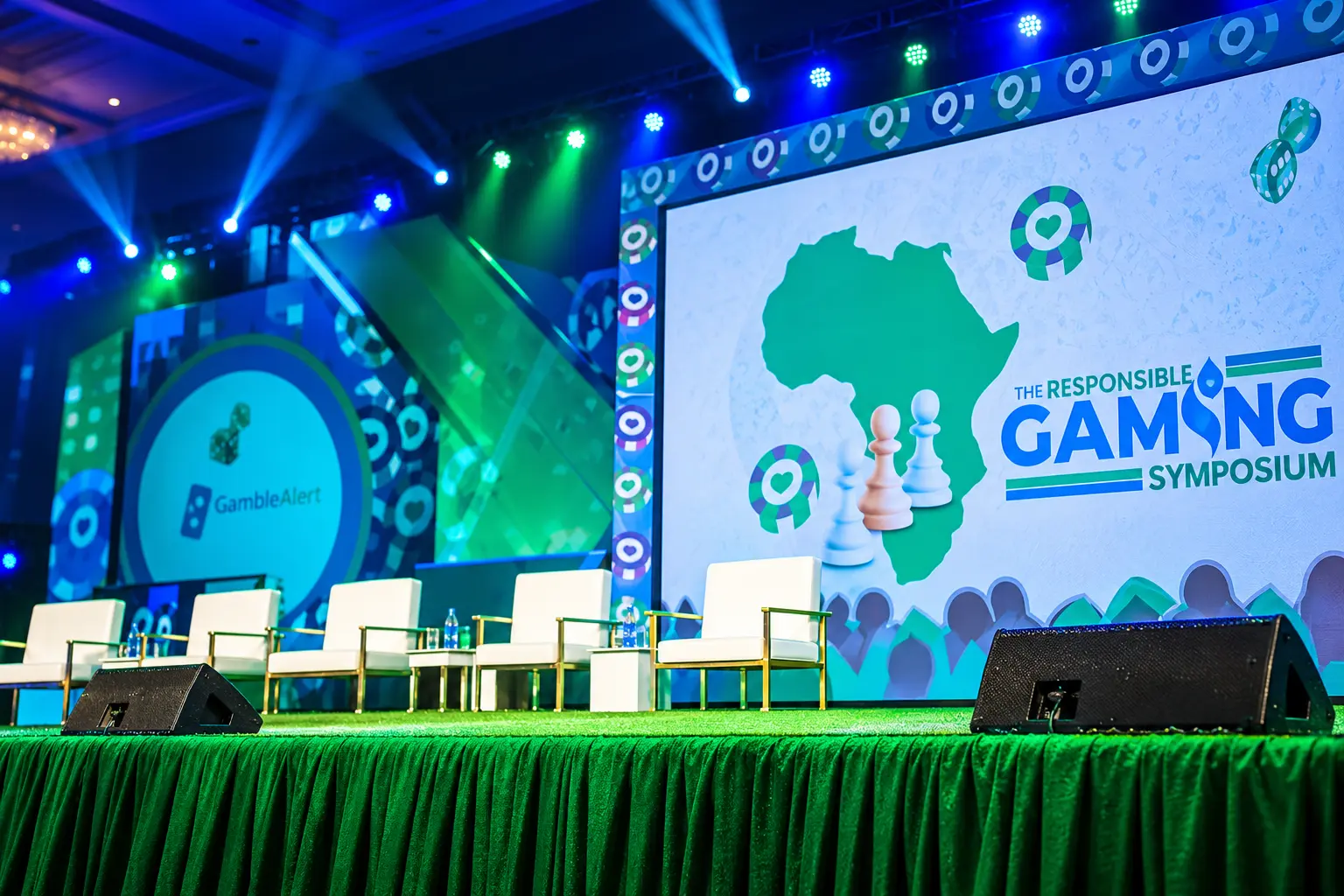
$23 billion in African online gambling revenue was booked in 2025, and 77% of that money never touched a licensed shop with real identity checks. That hole sat at the centre of Gamble Alert’s second Responsible Gaming Symposium on 11 June 2026 in Ikeja, Lagos.
Regulators, operators and advocates spent the day on player protection. The useful finding was narrower. Education campaigns cannot police a market that still does not know who is placing the bet.
What the Ghana Card Rule Requires of Betting Shops
Alhaji Bashiru Donbine, deputy commissioner for strategy and growth at the Ghana Gaming Commission, told the Lagos panel that Know Your Customer work is the gap education cannot close. “The gap in the system is KYC,” he said. “Education in terms of responsible gaming alone will not be able to fully achieve the goals. But if there are subsystems that are in place to monitor underage gambling, it would help.”
Ghana had already moved that subsystem from a talking point into a licence condition. On 11 August 2025, Acting Commissioner Emmanuel Quainoo directed every licensed operator to plug identity checks into the National Identification Authority database. The rule covers sports betting, online and retail betting, casinos and promotional schemes. Confirmation of integration plans was due in 14 days, with biometric testing and deployment due in 30 days.
Verification has to run on fingerprint or facial recognition at two points: when a bet is placed, and when winnings are paid out. Only the Ghana Card counts. Quainoo’s directive, backed by Legislative Instrument 2111, says no other manual or electronic ID will be accepted, and that missed deadlines can freeze a licence or block renewal.
This policy is imperative for several reasons. Firstly, it will eliminate underage and fraudulent participation in gaming activities by using biometric verification to prevent impersonation and the use of false identities.
Emmanuel Quainoo, Acting Commissioner, Gaming Commission of Ghana
The same letter ties the scan to player protection, not only to crime control. Once a bet sits on a verified body, operators can track behaviour, enforce limits and honour exclusions. Ghana’s later customer identification rules for Ghana operators treat that KYC file as a continuing duty, with records kept and suspicious activity reported. Gaming-law guidance in the country already asks new accounts for a national ID, a birth date and a mobile number, and it treats that step as the main under-18 block.
Donbine’s Lagos warning was that many African markets still run the awareness half of this stack without the ID half. A warning sticker on an app does not catch a teenager with a borrowed phone.
The Lagos Registry Stops Where the Licence Stops
Lagos built the other half of the pipe. The Lagos State Lotteries and Gaming Authority launched SafePlay on 6 August 2025 as a single self-exclusion list for shops it licences. The International Association of Gaming Regulators later called it Africa’s first regulator-led self-exclusion platform and gave it the 2025 Regulatory Innovation Award, because a ban at one operator had been worthless if the same person could open an account next door.
The live registry offers NIN-verified self-exclusion across licensed shops at no cost. A user signs up with a National Identification Number, picks 3 months, 6 months, 1 year, 5 years or a permanent block, and enrolled operators must refuse new bets, new accounts and promotional messages. Bashir Are, chief executive of the authority, told the launch crowd it was a human-centred tool, not only a compliance box. The site listed 73% of operators as enrolled.
LSLGA law already made operators keep their own exclusion lists, with bans running from 90 days to a lifetime and a 14-day wait before anyone can come back. SafePlay’s job is to make that list travel. Fisayo Oke, chief executive of Gamble Alert, had flagged the missing shared portal after the 2025 symposium. Lagos then shipped the product before the 2026 edition opened.
OUTSIDE THE LAGOS REGISTRY
- Unlicensed shops: Illegal or unregistered platforms sit outside LSLGA oversight, so a SafePlay flag never reaches them.
- Offshore apps: Operators based outside the state’s jurisdiction are not enrolled and can still take a blocked player.
- Private bets: Peer-to-peer or informal wagers never hit the registry, and the site tells users to report any licensed shop that still takes a blocked account.
That boundary is the whole argument. A gold-standard exclusion file in Ikeja cannot follow a punter onto an app that never asked Lagos for a licence. Are also told the June panel that revenue and player protection have to be held together, and that more work remains on the responsible-gaming side even as the licensed market grows.
$23 Billion Moved Online, 77% of It Unchecked
Gaming Compliance International, a compliance-data firm, put numbers under that boundary in July 2026. Its first pass across all 54 African countries found online gambling revenue of $23 billion in 2025, up 15% from a $20 billion total in 2024. Licensed operators took $5.2 billion, or 23%. Unlicensed platforms took $17.8 billion, or 77%.
AFRICA ONLINE GAMBLING, GCI TALLY
| Measure | 2024 | 2025 |
|---|---|---|
| Regulated gross gaming revenue | $4.4 billion (22%) | $5.2 billion (23%) |
| Unregulated gross gaming revenue | $15.6 billion (78%) | $17.8 billion (77%) |
| Audience exposed to regulated content | 10% | 11% |
| Audience exposed to unregulated content | 90% | 89% |
| People who used online gambling | 198 million (13% of population) | 215 million (14% of population) |
| Unregulated operators targeting Africa | 3,644 | 4,129 |
The unlicensed operator count rose by 485 in a year. Matt Holt, GCI’s chief executive, said the licensed slice is growing in some countries and that the tools work where they are used. Ismail Vali, the firm’s president, put the test more bluntly: demand is not the problem, capture inside the licensed sector is. The 77% share is revenue, not headcount. Unlicensed content still reached 89% of the online-gambling audience in 2025.
That split is why a Ghana Card scan or a Lagos NIN block can look complete inside a licensed app and still miss most of the activity. Self-exclusion, deposit caps and underage checks only bind the shops that accept the rulebook. The larger market does not.
Why Affordability Checks Break Down Here
Olabimpe Akingba, group head of responsible gaming at pawaTech, spoke for Peter Emolemo Kesitilwe, chief executive of the African iGaming Alliance. She told the room that Western safer-gambling kits cannot be dropped onto African streets without a rewrite, because players who never got a clear briefing will not use the tools, and because local money habits do not match a European affordability file.
For many years, discussions about players’ protection were often treated as secondary to the growth of the industry. That era, clearly, has ended.
Olabimpe Akingba, Group Head of Responsible Gaming, pawaTech, speaking for the African iGaming Alliance
Akingba said operators, regulators, investors, public-health staff and consumers now ask whether safer-gaming tools work or merely look like they work. She also warned that a clumsy rule can shove players toward unlicensed apps, where both harm checks and financial crime checks are weaker. Sudden spikes in deposits can be addiction, fraud, or both, which is why she wants player-protection work tied to anti-money-laundering work instead of parked in a separate brochure.
Olafadeke Akeju, managing partner at WYS Solicitors, said current efforts still do not match the scale of harm, especially among younger players. She pointed to weak data-sharing, split regulators, and the difficulty of judging whether someone can afford a stake across very different incomes. Her list of fixes was structural: shared data, self-exclusion that follows a person from shop to shop, and more money for treatment.
Nigeria’s map makes that sharing hard. On 22 November 2024 the Supreme Court treated lotteries, betting and gaming as state matters, ending the old federal licence path. More than 20 states then formed the Federation of State Gaming Regulators of Nigeria. Licensed books in those states already ask for a NIN, and often a Bank Verification Number, before a withdrawal. A tick-box that says “I am 18” is no longer treated as enough. The file still stops at each state’s licence line, and it never reaches the offshore app.
Olajide Boladuro, director-general of the Oyo State Gaming and Lottery Board, said his board vets advertisements and wants people ranked above revenue. He also said regulators will have to use artificial intelligence to watch player behaviour, because operators already use it to sell. The computing is not the exotic part. The missing input is a stable identity and a shared picture of what that person can afford to lose.
A Seatbelt Rule for Every Player
Gamble Alert convened the gathering at D’Podium Event Centre under the theme “Building Accountability: Strengthening Regulatory Oversight for Player Protection.” It was the second year of the symposium. Oke said the first edition had been a national conversation and that 2026 pulled in regulators and operators from several African countries, including Donbine from Ghana and John Mutua, chief executive of the Association of Gaming Operators of Kenya.
Oke has a 12-year plan for the non-profit: become the industry’s trusted player-protection partner, and do it by building systems rather than shouting from the sidelines. He used a domestic picture that the growth charts never show. One partner chases losses in secret, he said, while the other pays the rent and becomes “rescuer, financier, emotional regulator and damage controller.”
“We want responsible gaming to become like wearing a seatbelt. It should be a normal precaution for everyone participating in gaming, not just for those already facing addiction challenges,” he said. Prevention, in that telling, is for every account, not a clinic visit after the damage.
On the floor, Adewale Akande, head of legal at bet9ja, sat with Jolade Adeoye, country manager at Betway. Ewuzie Nnanna, compliance manager at 1xBet, was on the programme. The licensed brands were in the room. The unlicensed ones were not, which is the structural fact the agenda kept circling.
HOW PLAYER IDENTITY RULES LANDED
- November 22, 2024: Nigeria’s Supreme Court treats lotteries, betting and gaming as state matters, ending the old federal licence path.
- August 6, 2025: Lagos launches SafePlay, a shared self-exclusion list for LSLGA-licensed shops, after the first Gamble Alert symposium had flagged the missing portal.
- August 11, 2025: Ghana orders licensed operators onto NIA biometrics, with Ghana Card checks at the bet and at payout.
- June 11, 2026: The second Responsible Gaming Symposium in Ikeja puts KYC, local rules and split regulators on the same stage.
- July 20, 2026: Gaming Compliance International publishes two-year figures covering all 54 African countries.
- September 7, 2026: The African iGaming Alliance opens the first Africa Safer Gambling Week, which runs through 11 September 2026.
Are told the future-of-oversight panel that the industry has grown and that responsible-gaming work still lags. Donbine put Ghana’s national-ID link on the table as a working answer. Boladuro put advertising control and machine watching beside it. None of those tools, on their own, follow a player into an unlicensed app.
September’s Campaign Left Offshore Shops Untouched
Three months after Ikeja, the African iGaming Alliance ran the first Africa Safer Gambling Week from 7 to 11 September 2026. Lagos joined with a press briefing at LSLGA headquarters. Are hosted. Akingba and Oke were in the room again, with Gift Tuadibofa of the Association of Nigerian Bookmakers. The public line was simple: gambling is entertainment, not a wage.
Gamble Alert carried the same week on its own channel.
As advocates, researchers, and care providers across Africa, we know true entertainment thrives on boundaries.
This week, we’re stepping up our advocacy to champion responsible gaming across the continent.
We’re shifting the narrative from risk to resilience. pic.twitter.com/7jvQHbIsr4
— GambleAlertNigeria (@GambleAlert) September 7, 2026
Kesitilwe has said illegal operators often skip age checks, safer-gambling tools, secure player funds and a real complaints path, and that the week will be judged by whether more play moves inside the licensed channel. Licensed shops in Lagos now have a shared exclusion file, and Ghana’s licensed shops have a biometric gate. The GCI ledger still shows 4,129 unregulated operators pointed at African customers, and 77% of 2025 online revenue sitting with them.
The June symposium did not invent a new slogan. It named the pipe that slogans need. Until identity checks and shared exclusions travel as far as the bets do, player protection remains a licensed-shop service in a market that mostly does not use licensed shops.
Frequently Asked Questions
What is The Responsible Gaming Symposium?
It is an annual gathering convened by Gamble Alert, a Nigerian non-profit led by Fisayo Oke. The 2026 meeting on 11 June in Ikeja was the second edition and the first to draw regulators and operators from several African countries after a 2025 event that stayed largely national.
Which ID does Ghana accept before a bet or a payout?
Only the Ghana Card, under Legislative Instrument 2111. The 11 August 2025 directive tells operators that no other manual or electronic identity check will be accepted, including older document lists that once allowed a voter ID, passport or driving licence for onboarding.
Can a player cancel SafePlay before the chosen period ends?
No. Once the exclusion is active it cannot be reversed early, which is the design. The registry says the block typically goes live within 24 hours, with retail shops taking up to 48 hours, and it offers a free 0800-SAFEPLAY counselling line in English, Yoruba, Igbo and Hausa.
How much tax did unlicensed online betting keep from African governments in 2025?
Gaming Compliance International put the loss at $3.55 billion, framed as tax that would have sat on $17.8 billion of unregulated gross gaming revenue. The same study was the first to cover all 54 African countries across 2024 and 2025.
Disclaimer: This article is news reporting and analysis of public regulatory actions, industry meetings and published market figures. It is informational only and is not medical, legal, financial or gambling advice, and it does not tell anyone to bet, to stop betting, or to enrol in any exclusion tool. Readers who are worried about gambling harm should speak with a qualified clinician, a licensed counsellor, or a recognised support service before acting on any self-exclusion or treatment step. Figures and programme statuses reflect the cited company statements, regulator notices and datasets as published, and those facts can change as licences, registries and market tallies are updated.

Instagram Plus Tests a Read-Only Mode That Cuts Stories

Altman Asks the Public to Accept Some AI Harm

Google Freezes OSS VRP Product Reports After AI Flood

AI Agents Make Payment Rails the Scarce Prize

Turkey’s Crypto Boom Now Runs Through Three Banks

Fable 5 Came Back Under a Commerce On-Off Switch

Google’s SpaceX GPU Lease Has a Sept. 30 Deadline

Plasma One’s XPL Locks Face a 1.81 Billion Cliff

DGO’s Rs 549 World Cup Pass Cost Fans Sleep and Data

Moonshot AI’s $30 Billion Ask Became a $35 Billion Close
-
 AI4 months ago
Fable 5 Came Back Under a Commerce On-Off Switch
-
 AI5 months ago
Google’s SpaceX GPU Lease Has a Sept. 30 Deadline
-
 CRYPTO4 months ago
Plasma One’s XPL Locks Face a 1.81 Billion Cliff
-
 APPS4 months ago
DGO’s Rs 549 World Cup Pass Cost Fans Sleep and Data
-
 AI5 months ago
Moonshot AI’s $30 Billion Ask Became a $35 Billion Close
-

 NEWS5 months ago
ColorOS 17 Device List Spans Oppo, OnePlus and Realme
-

 GAMING4 months ago
The RTX 4050 Under Rs 70,000 Hides a Wattage Gap
-

 AI4 months ago
Boris Cherny’s Loops Still Demand a Higher Production Bar