
AI
Meta Pulled Muse Image in 72 Hours; the Toggle Is Still On
Meta pulled Muse Image within 72 hours, but the opt-out toggle stays on by default, and the watermark fails the EU AI Act rule taking effect August 2.

Meta launched its Muse Image AI feature on Instagram on Tuesday, July 7, 2026, then pulled the most controversial piece of it by Friday afternoon, July 10. The capability that detonated was a single line in the product: any user could type an @ symbol followed by a public Instagram handle, and Muse Image would generate new AI pictures using that person’s publicly available photos as inference-time reference inputs. The account owner received no notification. No alert, no permission prompt, no appeal. By the time Meta updated its blog to say the feature “missed the mark” and “is no longer available,” Creative Artists Agency, SAG-AFTRA, and India’s Ministry of Electronics and Information Technology had all demanded a reversal.
What Hollywood won in public was a single pull, not a structural fix. The opt-out toggle that governed the @-mention capability is still on by default for every adult with a public Instagram account, and it now governs whether any current or future Meta AI feature can reference those accounts. SAG-AFTRA’s and CAA’s post-removal statements called the move wise and responsible, but neither addressed whether the underlying consent framework was sufficient. The watermark Meta points to as a safeguard, Content Seal, is invisible to the people it labels, may fail the EU AI Act’s visible-labeling rule taking effect August 2, 2026, and provides no removal mechanism for images generated during the live window.
What Muse Image Did in the 72 Hours It Was Live
Muse Image debuted Tuesday as the first image-generation model from Meta Superintelligence Labs, the AI division Meta reorganized under the leadership of Alexandr Wang, founder of Scale AI. The model’s commercial pitch covered editable photos via sketch or annotation, in-image text rendering, and scannable QR code creation. Layered on top of that pitch was the @-mention capability. Anyone with a Meta AI account could type @ followed by any public adult Instagram handle, and Muse Image would pull that account’s publicly available photos as inference-time references to generate new AI images involving the target’s likeness.
Where it ran: Meta AI app and web, Instagram Stories in the United States, WhatsApp in select international markets. Facebook and Messenger expansion had been described by Meta as imminent. A video counterpart called Muse Video was previewed alongside the launch.
Private accounts and accounts of users under 18 were excluded automatically, Meta said in its initial defense. Every output carried Content Seal, an invisible machine-readable watermark that confirmed Meta’s AI made the image but did not stop the generation or offer a removal route. Switching the toggle off was the only opt-out path, and it required the user to know the setting existed, locate it across multiple menu levels in Instagram Settings under Sharing and Reuse, and act before any image had been created. The full Friday announcement of the @-mention feature’s removal landed the same afternoon from Meta’s blog, with Variety’s same-day report matching Meta’s statement within hours.
- Launch date: Tuesday, July 7, 2026 (Meta blog post)
- Removal: Friday, July 10, 2026 at 4:55 PM PDT, per TechCrunch’s same-day report
- Live window: under 96 hours from announcement to removal
- Auto-enrollment: all adult accounts with public Instagram profiles opted in by default
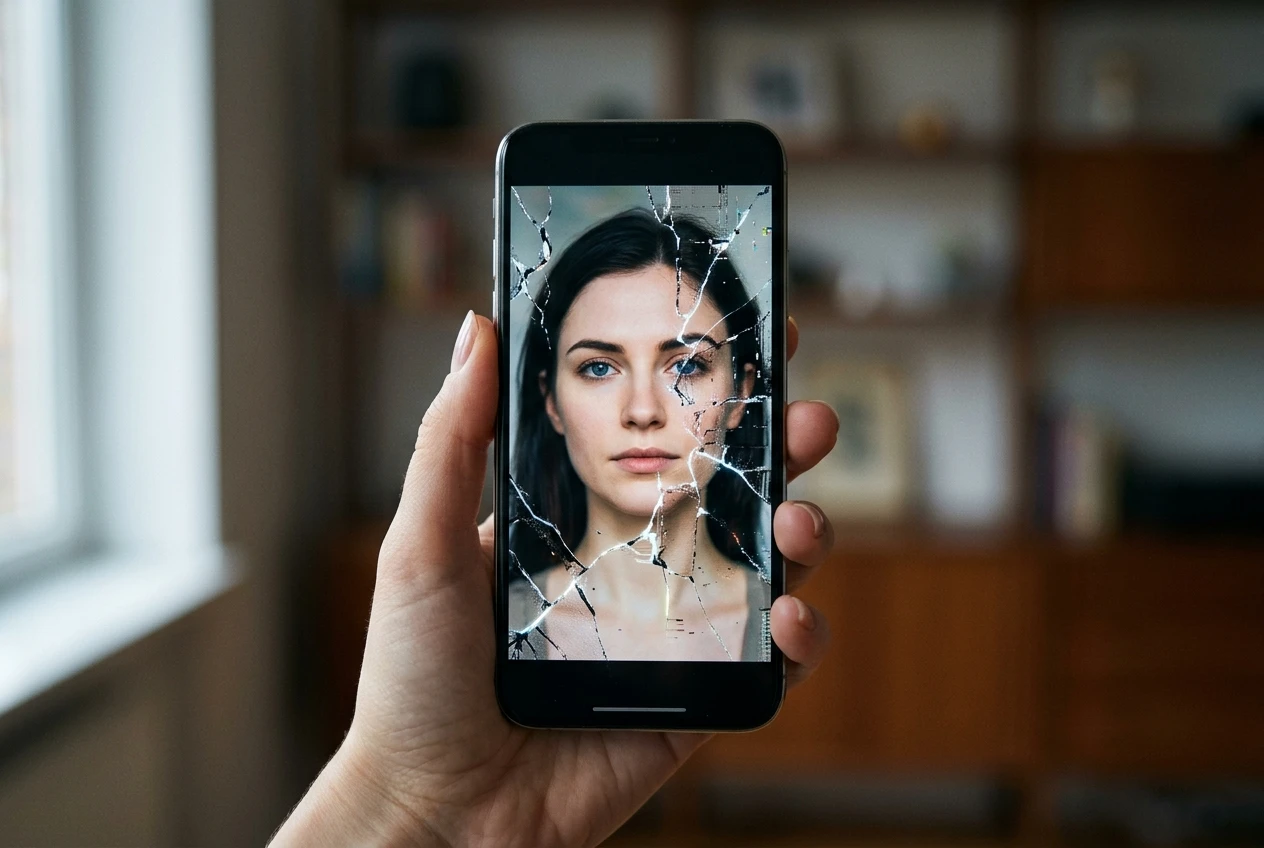
Hollywood’s 48-Hour Counteroffensive
By Wednesday, two of the most powerful industry organizations in entertainment had moved on Meta’s new tool. Creative Artists Agency, whose roster includes Tom Hanks and Meryl Streep, called on Meta to flip the default from opt-out to opt-in. SAG-AFTRA followed the next morning.
Thursday brought SAG-AFTRA’s wider call: “Meta now lets anyone use your Instagram photos in AI images without your consent. SAG-AFTRA recommends that #SagAftraMembers (and all Instagram users) opt-OUT of Meta’s new AI image generation tool, Muse Image. Take action to protect your likeness.” CAA had already laid the longer argument in a Wednesday call for opt-in defaults: “No one’s name, image, likeness, voice or creative work should be used by any third party, including AI models, without clear, documented consent.” After Meta pulled the feature on Friday afternoon, CAA described the reversal as essential to building responsible technology. SAG-AFTRA’s Friday statement called the move the responsible thing to do. Neither organization’s post-removal statement addressed whether the underlying consent framework was sufficient.
- Tuesday, July 7, 2026, Meta launches Muse Image including the @-mention capability.
- Wednesday, July 8, CAA publicly calls on Meta to switch the default from opt-out to opt-in.
- Thursday, July 9, SAG-AFTRA tells members to opt out; India MeitY Secretary S. Krishnan confirms a legal review is opening.
- Friday, July 10, late morning, Variety and Puck News report the reversal.
- Friday, July 10, 4:55 PM PDT, TechCrunch confirms Meta has pulled the feature on its own blog.
The Watchdogs Who Got There First
Before Hollywood mobilized, the privacy groups had already warned publicly. Donald Campbell, advocacy director at Foxglove, called the design an obvious recipe for disaster in comments to the BBC, tying it to a year of documented harm from non-consensual AI-altered images on social platforms. Privacy International was equally pointed, describing the rollout as a privacy landmine waiting to detonate, with the BBC relaying both organizations’ launch-day warnings.
In the United States, J.B. Branch, Public Citizen’s director of federal AI governance and technology policy, hit the company harder than the privacy groups had. His central objection, carried by Axios at launch: Meta’s product architecture keeps choosing self-protection over user protection. Public Citizen’s broader pattern analysis mapped the new feature onto a familiar template in Meta’s recent product decisions, one where stated safeguards protect the product more than the person exposed.
Meta has once again chosen the creepiest possible path.
J.B. Branch, Public Citizen’s director of federal AI governance and technology policy, in comments distributed via Axios at the launch of Muse Image.
That pattern surfaced in Meta’s ad-review defense after paid CSAM ads on Instagram in India were approved, and in the capture-LED approach on Meta’s Ray-Ban smart glasses, which blinks without offering bystanders any opt-out. The content reuse toggle, by the time the @-mention feature was pulled, was no longer preventing anything for the 96-hour live window. The toggle is still on by default and still governs consent for whatever Meta AI does next on Instagram with public photos.
India Opens a Parallel Review
The controversy did not stay contained to Los Angeles and Washington. India’s Ministry of Electronics and Information Technology said on Thursday, July 9 that it is examining whether Muse Image complies with Indian law. Secretary S. Krishnan, speaking on the sidelines of the CII GCC Summit, told reporters the government would assess the representations it received.
India arrived at this debate with a recent enforcement template. Following the December 2025 Grok episode, MeitY issued a notice to X demanding an Action Taken Report in 72 hours and warning the platform could lose its Section 79 safe harbour protections. The February 2026 amendments to India’s IT Rules created the country’s first framework targeting synthetically generated information, with a three-hour takedown window for government orders and a two-hour window for non-consensual intimate imagery. Content Seal may satisfy part of that labelling duty; the generation feature itself is what the takedown duties exist to contain.
What the Reversal Changed, and What It Left Active
The Friday statement from Meta pulled the @-mention capability, and nothing else. Muse Image, the model itself, continues to exist and is not discontinued. The wider content reuse setting in Instagram, the toggle that governs whether public photos can be referenced in any current or future Meta AI feature, is still on by default. Disabling it prevents future use; it does not delete images already generated under the toggle’s prior setting.
Meta separately pointed to its Content Seal watermark, an invisible machine-readable marker on every Muse Image output, as proof of a safeguard. The watermark documents that Meta’s AI created the image, but does nothing on consent. Under the EU AI Act’s Article 50 transparency obligations, in force August 2, 2026, the labelling duty falls on deployers and requires disclosure to natural persons in a clear and distinguishable manner at the latest at the time of the first interaction or exposure.
U.S. remedies cover the publication stage of the harm, not the generation stage, and the two acts are different. The Take It Down Act, in force since May 19, 2026 per the FTC, requires platforms to remove non-consensual intimate images within 48 hours of a valid request, with the agency’s enforcement portal now live at TakeItDown.ftc.gov. Muse Image generated images without automatically publishing them, so the act’s coverage of this specific feature is an open legal question. The only published FTC notice launching enforcement on May 19, 2026 addresses post-publication takedowns to platforms including Alphabet, Amazon, Apple, Meta, Microsoft, and X. The U.S. has no federal right of publicity statute; protections vary state by state. India has its own review in motion, and Secretary S. Krishnan has not announced a finding.
| The Muse Image capability live for 96 hours | Status after Friday’s announcement |
|---|---|
| Generate new AI images of any public adult Instagram account via @-mention | Removed; Meta says the capability “missed the mark” and “is no longer available” |
| Account owners notified when their photos are used | Never existed; Meta confirmed the design had no notification step |
| Default-on opt-in via Sharing and Reuse toggle | Toggle stays active, no change to default, governs all future Meta AI features |
| Content Seal watermark on every output | Active; not a consent mechanism, fails the EU AI Act’s visible-labeling requirement effective August 2, 2026 |
| Path for a user to find and delete images generated during the live window | None announced; per Meta’s help page, “You will not be notified about content created using AI features at Meta” |
Where Muse Echoes Sora, and Where It Stops Short
The reversal echoes the Sora episode of late 2025 and early 2026. OpenAI launched Sora 2 in late September 2025 with an opt-out approach for IP rights holders, drawing opposition from Japan’s CODA trade group in November 2025 and broader Hollywood copyright objections. OpenAI shut down the Sora video-generation app in March 2026. Disney ended its three-year licensing agreement and walked away from a planned $1 billion equity stake in OpenAI alongside the shutdown. The causes of the Sora end were primarily commercial, with OpenAI shifting strategy toward enterprise customers. The episode still established that coordinated industry resistance can accelerate outcomes in this market.
The Muse reversal stops short of a Sora-style shutdown. The Muse Image model itself is not discontinued; only the @-mention capability is removed. Meta has previewed Muse Video and described Facebook and Messenger expansion as imminent. Neither post-removal statement from SAG-AFTRA or CAA addressed whether the underlying toggle was sufficient.
- Sora 2 launched: late September 2025 (Variety)
- CODA opposition letter to OpenAI: November 2025 (Variety)
- Sora shutdown announced: March 2026, with Disney ending its $1 billion planned OpenAI stake
- Muse Image @-mention pulled: Friday, July 10, 2026 (Meta blog); model itself remains live
Frequently Asked Questions
Does the toggle that governed the @-mention feature still matter?
Yes. The Instagram content reuse setting labeled Allow people to reuse your content on Instagram and with AI features at Meta, found under Settings in the Sharing and Reuse menu, is still active by default for every public adult account. Meta’s Friday statement removed the @-mention capability but kept the broader toggle, which now governs any current or future Meta AI feature that might reference public Instagram photos. The setting is not retroactive, and disabling it stops future use but does not delete images generated during the live window.
If an AI image of me was generated during the 96-hour window, can I get it removed?
Meta has not announced a retroactive removal mechanism. If the image is sexually explicit, the federal Take It Down Act, effective May 19, 2026, requires platforms to honor takedown requests within 48 hours of a valid submission, with the FTC’s enforcement portal at TakeItDown.ftc.gov accepting complaints about platforms that fail to act. The act covers the publication of intimate images, not the generation alone, so coverage of Muse Image’s specific behavior is an open legal question. If the image is defamatory or used commercially without consent, recourse depends on the right-of-publicity law in the user’s state, since no federal right of publicity statute exists.
Could @-mention generation come back?
Meta has not announced whether any version of the @-mention feature will return or under what consent architecture a return would be structured. The Friday statement said only that the capability missed the mark and is no longer available. CAA framed its post-removal statement around ongoing conversations to ensure creators stay protected as technology evolves, and SAG-AFTRA’s removal statement did not endorse the underlying toggle as sufficient. Meta has previewed Muse Video, a video-generation model built on related architecture, with launch timing and consent design also not announced.
How is this different from a model training on my photos?
Training and the @-mention feature operate on different layers. Training-time use embeds patterns from images into a model’s weights, a process that is diffuse and not directly traceable to any specific output. The @-mention feature used public photos as inference-time conditioning inputs to generate specific new images of the named person on demand, with the result directly attributable and immediately shareable. That distinction between live generation of an identified person’s likeness and diffuse model training is what made the consent gap visible so quickly, and what made ordinary-user exposure so concrete.
What did Hollywood get that ordinary users did not?
Public institutional response. SAG-AFTRA and CAA each issued statements coordinated over a 48-hour window, both ended with public declarations that Meta’s reversal was wise or responsible, and both signaled ongoing conversations. Ordinary users have no institutional coordination mechanism of comparable reach. A small business owner, a teacher, or a parent with a public Instagram account had no notification that Muse Image was live and no clear mechanism for finding or contesting images generated using their profile during the 96-hour window. The Take It Down Act helps for intimate imagery only. India’s review may yet produce a structural remedy. None has arrived in the United States yet.


YouTube Joins Meta’s Appeal of the Social Media Addiction Verdict

Russian Realtors Could Soon Verify Credentials via Max Messenger

Apple’s Maps Ad Rules Quietly Dodge Google’s Messiest Ad Categories

Globe Telecom Backs Regulating Social Media Access for Under-16s

Argentina Inspects Pickford’s Water Bottle After Beating England Anyway

Eye Doctors Warn Childhood Myopia Is Rising Faster Than Ever

OnePlus to Exit India, US and Europe in OPPO’s Broader Retreat

Xero Shares Rebound to A$69.83 as CEO Pay Fight Overshadows Gains

OnePlus Faces a Deeper Retreat as India Joins Oppo’s 2027 Exit Plan

Bitcoin’s Quantum Threat Needs 500,000 Qubits, Not Today’s 105

Google Search Profiles Build a Follow Graph Inside Discover

Microsoft Xbox Layoffs Start in July as Sharma Slams 3% Margin

Oracle Cuts 21,000 Jobs in a Year, Cites AI in 10-K Filing

Moonshot AI Targets $30 Billion in China’s Fastest AI Funding Sprint

WhatsApp Meta Business Agent Reaches India, With a New Pricing Meter

Oppo’s ColorOS 17 Eligibility List Leaves A-Series Buyers Behind

Google DeepMind and A24 Sign $75 Million AI Partnership Deal

SpaceX’s Google Deal Turns a Rocket Company Into a Cloud Landlord

Meta’s Iris AI Chip Enters Production in September, Tests Clean

OCC Issues AML Consent Order Against Wise and Crypto.com Sponsor Bank
-
 NEWS1 month ago
Google Search Profiles Build a Follow Graph Inside Discover
-
 GAMING1 month ago
Microsoft Xbox Layoffs Start in July as Sharma Slams 3% Margin
-
 AI3 weeks ago
Oracle Cuts 21,000 Jobs in a Year, Cites AI in 10-K Filing
-
 AI1 month ago
Moonshot AI Targets $30 Billion in China’s Fastest AI Funding Sprint
-
 AI6 days ago
WhatsApp Meta Business Agent Reaches India, With a New Pricing Meter
-
 NEWS1 month ago
Oppo’s ColorOS 17 Eligibility List Leaves A-Series Buyers Behind
-
 AI3 weeks ago
Google DeepMind and A24 Sign $75 Million AI Partnership Deal
-
 AI1 month ago
SpaceX’s Google Deal Turns a Rocket Company Into a Cloud Landlord