
NEWS
Russian Realtors Could Soon Verify Credentials via Max Messenger
A Russian real estate trade group representing 58 regions wants agents to verify licenses on Max, the messenger the EU just sanctioned.

The Russian Union of Real Estate Market Participants wants agents to prove their licenses inside Max, the messenger the European Union sanctioned three days earlier over surveillance concerns. The trade group speaks for brokerages in 58 regions. It sent the proposal to the Ministry of Digital Development in late June, and RBC reviewed a copy of the letter.
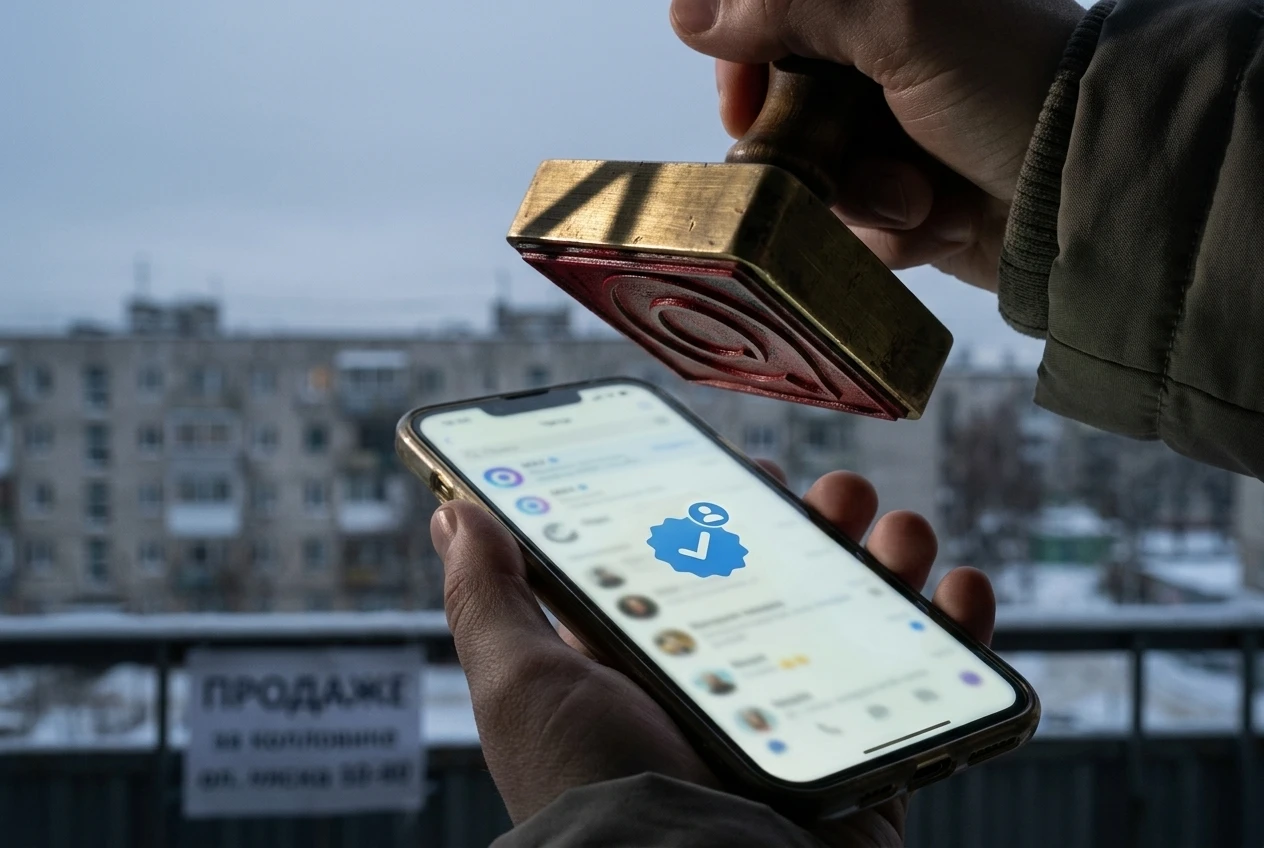
The ask itself is simple: publish an agent’s certificate number and expiration date right on their Max profile, or flash a badge confirming the paperwork exists. The harder question is what it means for a messenger already accused of feeding private data to the Kremlin to become the gatekeeper of professional trust for a market worth billions.
The Mechanism Realtors Would Have to Show
The union’s letter lays out more than one way to make an agent’s credentials visible the moment a client opens a chat. The core idea is straightforward: someone who has completed an independent qualification assessment would have that fact posted directly on their Max profile, down to the certificate number, the qualification’s name and how long it stays valid. A client could see the record before ever agreeing to a viewing.
The Ministry of Digital Development confirmed it received the appeal. It said the proposal is now being reviewed together with Max’s own team. Neither side has said when a decision might land.
| Proposed Mechanism | What It Would Show |
|---|---|
| Profile disclosure | Certificate number, qualification title and validity date posted directly on the agent’s Max profile. |
| Verification icon | A badge confirming a valid qualification document exists, without listing the underlying details. |
| Registry link | A link from the profile to the official state registry entry, so a client can confirm the record is current. |
| Automatic status check | Max cross-checks certificate status through an integration with the qualification registry, with no manual step from the agent. |
Any of the four could ship alone or together. The union told the ministry it sees the setup as a way to let buyers tell a licensed professional from, in its words, a casual intermediary within seconds.
A Market Where the Deal Happens in Chat
The union’s letter argues that a large share of communication between buyers and agents already happens through digital services and messengers, Max included. It says clients have no fast, reliable way to tell whether the person texting them is a licensed professional or someone posing as one. That gap, the group says, is what fraud schemes exploit.
Max is not a minor side channel. VK, the Russian internet company that built the app, said it had passed 107 million registered users within a year of its March 2025 launch, with users sending more than 1.5 billion messages and 30 million calls a day. That is the scale of traffic the union wants its verification badge to sit inside.
Samolet Plus, Etazhi, and the President Wearing Two Hats
The union’s letter names two of the real estate companies behind the push, Samolet Plus and Etazhi, alongside brokerages from 58 regions in total. According to URA.RU, the union’s president, Alexander Popov, also serves as chief executive of Samolet Plus. That means the group asking Moscow to set a national verification standard is led by an executive whose own company would operate under it.
The ministry has not said publicly whether that overlap shaped how the mechanism was designed.
Not everyone in the industry treats the idea as settled. Alexander Kharybin, a real estate market expert, told the independent outlet Silver Rain that a centralized confirmation system is needed in principle, but questioned who should run it. Multiple realtor associations already issue their own credentials, he said, and any one of them could end up crowning its own members as the trustworthy ones.
From Digital ID to Professional ID
Max already carries a Digital ID panel tied to Gosuslugi, the state services portal, and it already stands in for paper documents in a handful of everyday situations.
- Age verification – a dynamic QR code that substitutes for a passport at checkout.
- Retiree status and hotel check-in – confirmed through the same Digital ID panel.
- Student and large-family status – verified through the app’s own feature set.
- Vehicle and children’s documents – planned additions, according to the messenger’s press service.
The grocery chain Magnit was among the first retailers to scan the Digital ID at checkout, in stores across Moscow, St. Petersburg and Krasnodar, per Izvestia’s rundown of the feature.
Every one of those uses confirms something the state already knows about a citizen. Max’s other identity roles have stayed inside government-linked institutions too, schools, universities, municipal services. A realtor’s qualification certificate, issued by a private trade association rather than a ministry, would be the first credential from outside that world Max is asked to vouch for.
Why Would a Sanctioned Messenger Anchor Market Trust?
Max carries the label because Russian law makes it mandatory, not because users trust it. Pre-installed on every phone sold in the country since September 2025 and wired into government services, the app is now the subject of European Union sanctions and hundreds of documented security flaws, even as a trade group asks it to certify licensed professionals.
The EU sanctioned VK, Max’s parent company, and its subsidiary Communication Platform on July 13, framing the app as a surveillance tool built with state help. The development of the Max application was supervised by the Federal Security Service, the EU said in its sanctions designation, referring to the FSB, Russia’s main security and intelligence agency.
Security researchers, meanwhile, keep finding holes. A bug bounty program running since mid-2025 had logged 213 confirmed vulnerabilities out of 288 reports by mid-April, with payouts approaching 22 million rubles, according to Positive Technologies CTO Alexei Batyuk.
Any data that passes through this application can be considered to be in the hands of its owner, and in this case, the hands of the Russian state.
Baptiste Robert, a cybersecurity researcher and chief executive of the French firm Predicta Lab, made that assessment to AFP. Apple pulled Max from its App Store weeks before the EU sanctions landed, and Huawei hid it from its own app marketplace outside Russia soon after.
The Ministry Says It’s Still Reviewing
Mandatory adoption of Max has already produced friction outside real estate. Radio Free Europe/Radio Liberty (RFE/RL), the U.S.-funded broadcaster, reported that Siberian university students were threatened with exam bans or expulsion for not switching to the app. A St. Petersburg pediatrician told a separate outlet she would rather not use a tool she considers an instrument of state control, even under pressure from her employer.
The union’s letter goes further than property sales. Its authors describe the mechanism as a possible pilot for using independent qualification data across other domestic digital services, not real estate alone.
For now, the Ministry of Digital Development says only that the appeal remains under review alongside Max’s own team, with no public timeline attached and no criteria yet set for who would decide which realtor counts as verified.


YouTube Joins Meta’s Appeal of the Social Media Addiction Verdict

Russian Realtors Could Soon Verify Credentials via Max Messenger

Apple’s Maps Ad Rules Quietly Dodge Google’s Messiest Ad Categories

Globe Telecom Backs Regulating Social Media Access for Under-16s

Argentina Inspects Pickford’s Water Bottle After Beating England Anyway

Eye Doctors Warn Childhood Myopia Is Rising Faster Than Ever

OnePlus to Exit India, US and Europe in OPPO’s Broader Retreat

Xero Shares Rebound to A$69.83 as CEO Pay Fight Overshadows Gains

OnePlus Faces a Deeper Retreat as India Joins Oppo’s 2027 Exit Plan

Bitcoin’s Quantum Threat Needs 500,000 Qubits, Not Today’s 105

Google Search Profiles Build a Follow Graph Inside Discover

Microsoft Xbox Layoffs Start in July as Sharma Slams 3% Margin

Oracle Cuts 21,000 Jobs in a Year, Cites AI in 10-K Filing

Moonshot AI Targets $30 Billion in China’s Fastest AI Funding Sprint

WhatsApp Meta Business Agent Reaches India, With a New Pricing Meter

XPL Rallies 30% Ahead of Plasma One Card Tier Launch

SpaceX’s Google Deal Turns a Rocket Company Into a Cloud Landlord

Oppo’s ColorOS 17 Eligibility List Leaves A-Series Buyers Behind

Google DeepMind and A24 Sign $75 Million AI Partnership Deal

Meta’s Iris AI Chip Enters Production in September, Tests Clean
-
 NEWS1 month ago
Google Search Profiles Build a Follow Graph Inside Discover
-
 GAMING1 month ago
Microsoft Xbox Layoffs Start in July as Sharma Slams 3% Margin
-
 AI3 weeks ago
Oracle Cuts 21,000 Jobs in a Year, Cites AI in 10-K Filing
-
 AI1 month ago
Moonshot AI Targets $30 Billion in China’s Fastest AI Funding Sprint
-
 AI6 days ago
WhatsApp Meta Business Agent Reaches India, With a New Pricing Meter
-
 CRYPTO1 month ago
XPL Rallies 30% Ahead of Plasma One Card Tier Launch
-
 AI1 month ago
SpaceX’s Google Deal Turns a Rocket Company Into a Cloud Landlord
-
 NEWS1 month ago
Oppo’s ColorOS 17 Eligibility List Leaves A-Series Buyers Behind