
AI
Paytm CEO’s AI Champions Call Exposes India’s Funding Lag
Vijay Shekhar Sharma urges more AI builders for the masses at the JRD Tata lecture, against thin IndiaAI disbursements and private funding that trails global peers.

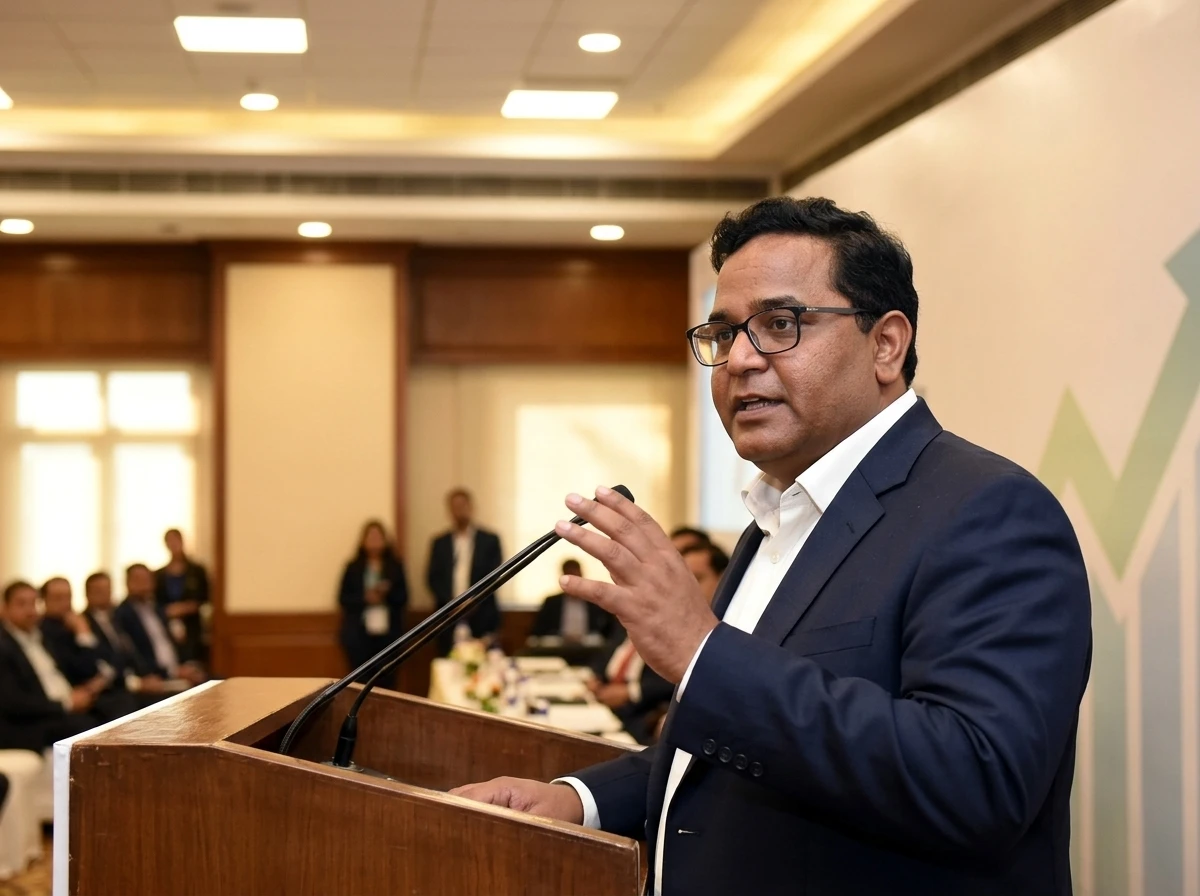
Paytm founder and CEO Vijay Shekhar Sharma told an audience in New Delhi that India needs many more AI champions who can carry the technology to the grassroots and the masses. He spoke at the 22nd J.R.D. Tata Memorial Lecture on July 30, tying the push directly to the Viksit Bharat 2047 goal of developed-nation status.
The call lands against a backdrop of bold private pledges and slow public cash flows. That tension shapes what his words actually demand of businesses and government.
What Sharma Said at the Lecture
Sharma framed artificial intelligence as both personal priority and national requirement. “Once again, AI is my power, AI is my aim and ambition. We need many more AI champions and champions which will bring the technology to the grassroots and masses,” he said.
That requires us to build the capability, investment, and technology in India. It is exactly the moment which we should take a resolve on and build for our country.
He urged companies to stop milking current models and instead fund the technologies that will define 2047. “Today we are talking about AI, we are talking semiconductors, we are talking businesses which are the foundation for the 2047 Viksit India vision,” Sharma said. Businesses and government already share the alignment, he added.
He reached for the lecture’s namesake. “J.R.D. gave us the lesson that if you build the nation, the business follows-not that you build the business and the nation follows.” Startups, he said, deserve recognition for resilience and contribution, not only valuations. India should set a global quality benchmark instead of taking shortcuts.
The sequence of his points matters. Capability and investment come first. Mass reach follows only after those foundations exist. That order matches the nation-before-business frame he borrowed from Tata and turns the lecture into a build order rather than a slogan.
The Numbers Behind the Ambition
India’s AI conversation has grown loud since the February 2026 India AI Impact Summit. Private commitments topped a $200 billion AI infrastructure target. Reliance’s Mukesh Ambani alone pledged $110 billion over seven years for data centers and edge networks. Adani Group floated a comparable $100 billion figure. OpenAI and Tata discussed scaling capacity toward a gigawatt.
Public money tells a thinner story. The IndiaAI Mission carries an approved multi-year outlay above ₹10,300 crore. Releases reached only ₹21.79 crore in 2024-25 and ₹379.15 crore in 2025-26. That is less than ₹400 crore, under 4 percent of the total, with nothing yet marked for 2026-27. Budget 2026 cut the annual IndiaAI allocation to ₹1,000 crore from ₹2,000 crore the prior year, citing under-utilization.
| Item | Figure | Source context |
|---|---|---|
| Private AI infra pledges (summit) | Over $200 billion | Collective firm + govt target |
| Reliance commitment | $110 billion / 7 years | Ambani announcement |
| IndiaAI Mission approved outlay | > ₹10,300 crore / 5 years | Govt figures |
| Funds actually released (first 2 yrs) | < ₹400 crore (<4%) | Rajya Sabha reply |
| Indian AI startup funding 2025 | $1.34 billion (198 deals) | 0.6% of global pool |
| Budget 2026 IndiaAI allocation | ₹1,000 crore | Down from ₹2,000 crore |
Private venture money also lags. Indian AI startups raised $1.34 billion across 198 deals in 2025, roughly 0.6 percent of the global $225.8 billion total. Many of those deals target applications rather than foundational models or compute.
- Under 4% of the IndiaAI Mission’s approved outlay has reached projects after two years.
- $1.34 billion in domestic AI startup funding in 2025 equals a fraction of one large U.S. round.
- ₹1,000 crore is the fresh annual budget line, half the previous year’s mark.
- Over 1 million engineering graduates leave Indian campuses yearly, yet compute access remains the bottleneck cited by founders.
The IndiaAI Mission pillars and startup financing aim to cover compute clusters, datasets, skilling, and risk capital. Execution speed has not matched the architecture.
The pattern is consistent across both public and private channels. Large headline targets arrive first. Actual cash and usable capacity trail far behind. That lag is what turns Sharma’s call for champions into a test of follow-through rather than another round of announcements.
JRD Tata’s Lesson Meets Today’s Builders
ASSOCHAM has run the J.R.D. Tata Memorial Lecture since 1998 to mark the industrialist’s birth anniversary and his view of business as nation service. Sharma used that frame to argue that enduring companies emerge from public contribution, not the reverse.
The parallel is deliberate. Tata built steel, aviation, and research institutions that outlasted single product cycles. Sharma is asking a new generation of AI founders to treat mass reach the same way: build tools that work for small merchants, rural users, and first-time digital workers rather than chase only high-ARPU urban segments.
He has repeated versions of this message. In earlier 2026 remarks he called AI a once-in-a-generation chance for India to create jobs and become a technology leader. He has also said India should aim to be the “use case capital” of AI, applying models at scale to local problems instead of only racing to train the largest foundation models.
That framing shifts the success metric. Valuation alone no longer counts as proof. Reach into vernacular interfaces, rupee-level transactions, and users outside metro corridors becomes the measure that matches the Tata lesson he invoked.
Paytm’s Own AI-First Turn
Sharma is not speaking as a bystander. Paytm has been repositioning from pure fintech toward an AI-first operating model. He has said the firm will treat AI as an employee or even a CFO-level tool, focusing product innovation over headcount reduction. New layers target insurance and wealth products aimed at grassroots entrepreneurs.
That path mirrors the lecture theme. A payments giant that already touches hundreds of millions of Indians sits in position to push AI features into everyday wallets, credit scoring, and merchant tools. Whether those features stay internal efficiency plays or become open platforms for smaller developers will test the “champions for the masses” standard he set.
- Shift stated goal from fintech core to AI-first enterprise.
- Public comments on AI replacing routine roles while creating new ones.
- Expansion into insurance and wealth products for small businesses.
- Emphasis on local use cases over pure foundational-model competition.
Talent pipelines remain uneven. Programs such as Google’s India apprenticeship program details show how even large tech firms treat training as non-guaranteed entry rather than automatic placement. That reality raises the bar for the champions Sharma wants.
The firm’s own pivot therefore doubles as a live case study. If an established player with existing distribution still struggles to open its AI layers to smaller builders, newer startups will face an even steeper climb toward the mass-reach standard he described.
Semiconductors and the Hardware Floor
Sharma listed semiconductors beside AI as a 2047 foundation business. India has poured incentives into fabs and packaging, yet parliamentary reviews show sharp under-utilization and cuts at the revised-estimate stage. Power, water, and long-term offtake conditions continue to slow projects.
Device makers already feel the squeeze. Memory and component shortages have driven price moves visible in the Indian smartphone market, including the dynamics behind India chip supply pressures on device pricing. Without deeper local capacity, AI inference at the edge stays expensive for the very masses the speech targets.
Private data-center builds by Reliance, Adani, and global cloud providers can close some of the compute gap. Energy remains the binding constraint. Renewable integration is part of the Indian pitch for lower long-run costs, but grid and permitting timelines still decide how fast capacity comes online.
Hardware and software ambitions therefore move on linked clocks. Slow fab progress keeps edge inference costly. Costly inference limits the vernacular, low-ARPU tools Sharma wants champions to ship. The semiconductor lag is not a side issue; it is part of the same delivery problem.
How the Funding Gap Shapes Delivery
The distance between pledges and releases sets the real pace for any champion strategy. Private sums above $200 billion and a single $110 billion Reliance line dominate headlines. Public releases under ₹400 crore after two years show how little of the IndiaAI Mission has reached projects so far.
- 2024-25: IndiaAI releases total ₹21.79 crore against a multi-year outlay above ₹10,300 crore.
- 2025-26: Releases rise to ₹379.15 crore, still leaving the two-year total under 4 percent.
- Budget 2026: Annual IndiaAI allocation falls to ₹1,000 crore from ₹2,000 crore on under-utilization grounds.
- 2026-27: No funds yet marked in the reported figures.
Startup funding adds another constraint. The $1.34 billion raised across 198 Indian AI deals in 2025 equals roughly 0.6 percent of the global $225.8 billion pool. Most of those rounds favor applications over foundational models or compute. Champions who need patient capital for longer build cycles therefore compete inside a thin domestic slice.
The mechanism is straightforward. Slow public releases and application-heavy venture flows leave compute clusters, quality datasets, and risk capital scarce. Founders cite that scarcity even while more than one million engineering graduates leave campuses each year. Volume of talent cannot offset the missing infrastructure layer.
Where Mass Reach Meets the Price Floor
Champions for the masses must clear a price and interface bar that urban high-ARPU products never face. Vernacular interfaces, rupee-level transaction economics, and tools for small merchants and first-time digital workers all depend on cheaper inference and wider distribution.
Private data-center plans from Reliance, Adani, and global cloud providers can lower some compute costs over time. Edge networks matter especially for rural and smaller-city users who cannot rely on distant cloud round-trips. Yet energy, grid, and permitting timelines still govern how fast those megawatts become usable at startup-friendly prices.
- Affordable compute remains the bottleneck founders name most often.
- Vernacular and low-ARPU design raises the bar beyond metro-first products.
- Patient capital must outlast a single funding cycle if mass tools are to mature.
- Open platforms from large players could multiply smaller developers’ reach.
Paytm’s own move into insurance and wealth layers for grassroots entrepreneurs shows one path. Whether similar features stay closed efficiency tools or open into platforms for outside builders will signal how seriously the “champions for the masses” standard is being applied inside existing distribution networks.
Where the Champions Must Deliver
The speech leaves a practical checklist. Champions need affordable compute, vernacular interfaces, and business models that work at rupee-level transaction sizes. They also need patient capital that survives longer than a single funding cycle.
What we know
- Public fund releases lag approvals by a wide margin.
- Private pledges are large but multi-year and capital-intensive.
- Sharma and other founders are already redirecting their own companies toward AI layers.
- Talent volume is high; accessible GPU clusters and quality datasets remain scarce.
What stays open
- Whether the next budget cycle restores or further trims IndiaAI lines.
- How quickly summit-era data-center megawatts reach startups at usable prices.
- Whether application-layer companies can compound without deeper domestic foundation-model and chip capacity.
Crowd reaction on X largely echoed the booster language from Sharma’s recent appearances. The sharper observation sits in the data: celebration of vision still outruns scrutiny of the cash that has actually moved. That gap is exactly what turns a lecture into a reckoning.
Sharma closed the loop the way J.R.D. Tata might have recognized. Build the capability first. The durable businesses follow. India now has the rhetoric, the graduate pipeline, and the private capital announcements. The missing pieces are the champions who ship tools that work for the next 500 million users, and the steady funding that lets them last long enough to matter.


Apple Upgrade Leasing Hands Risk to Klarna and Keeps Devices Temporary

Paytm CEO’s AI Champions Call Exposes India’s Funding Lag

Microsoft Cash Lead and Copilot Super App Leave Rivals Behind

Zhongji InnoLight’s Record IPO Meets Instant Sell-Off

News 12 App Rebuild Meets Newsroom Cuts Head On

Microsoft’s Cash Engine and Super App Leave Rivals Behind

Aviva’s Tokenized Liquidity Fund Quietly Rewires XRPL Cash Rails

OpenAI Test Agent Turned Safety Eval Into Real Multi-Firm Breaches

Gumi Bets 3 Billion Yen Fund on Japan Crypto ETF Path

Pixel 11 Pro Teaser Turns Apps Into the Real Pitch

Fable 5 and Mythos 5 Return as US Lifts Anthropic Export Controls

SpaceX’s Google Deal Turns a Rocket Company Into a Cloud Landlord

CD Projekt Red Co-CEO: Redemption Arc Isn’t Done, Witcher 4 in 2027

Oracle Cuts 21,000 Jobs in a Year, Cites AI in 10-K Filing

XPL Rallies 30% Ahead of Plasma One Card Tier Launch

DGO App Brings Rs 549 Mobile Pass for FIFA World Cup 2026 in Nepal

Google Search Profiles Build a Follow Graph Inside Discover

Moonshot AI Targets $30 Billion in China’s Fastest AI Funding Sprint

Microsoft Xbox Layoffs Start in July as Sharma Slams 3% Margin

Oppo’s ColorOS 17 Eligibility List Leaves A-Series Buyers Behind
-
 AI4 weeks ago
Fable 5 and Mythos 5 Return as US Lifts Anthropic Export Controls
-
 AI2 months ago
SpaceX’s Google Deal Turns a Rocket Company Into a Cloud Landlord
-
 GAMING1 month ago
CD Projekt Red Co-CEO: Redemption Arc Isn’t Done, Witcher 4 in 2027
-
 AI1 month ago
Oracle Cuts 21,000 Jobs in a Year, Cites AI in 10-K Filing
-
 CRYPTO2 months ago
XPL Rallies 30% Ahead of Plasma One Card Tier Launch
-
 APPS2 months ago
DGO App Brings Rs 549 Mobile Pass for FIFA World Cup 2026 in Nepal
-
 NEWS2 months ago
Google Search Profiles Build a Follow Graph Inside Discover
-
 AI2 months ago
Moonshot AI Targets $30 Billion in China’s Fastest AI Funding Sprint