
AI
Brad Pitt Says AI Can Revive Mid-Budget Films Hollywood Abandoned
Brad Pitt tells Esquire AI as a VFX tool could greenlight more $40-90 million originals, rewriting the economics that killed Hollywood’s middle while scan.

Brad Pitt told Esquire that artificial intelligence, used as a tool, will help get more mid-budget films made, specifically those budgeted between $40 million and $90 million, by making expensive visual effects reachable again. The Oscar winner remains far more cautious about AI that tries to reproduce an actor’s performance.
The comments land at a moment when studios have largely abandoned that budget band for either micro-indies or $200 million-plus tentpoles. Pitt’s own Plan B track record sits squarely in the missing middle.
What Pitt Told Esquire
In the full Esquire cover interview published around August 10, 2026, Pitt framed the technology as inevitable and useful on one narrow front.
There’s a lot of pushback against AI, but AI is going to be the very thing that, if used as a tool, is going to help these mid-budget films, forty- to ninety-million-dollar budgeted films, get made.
He called the broader experiment “gonna be a very interesting experiment.” On whether AI could replicate one of his own performances, he answered that it depends on the person directing the technology and the creative choices.
“Well, it depends on who’s creating it, you know? Who’s behind it, who’s telling the story. Who’s saying, ‘I want to see this emotion from him,’ and then being able to mine through whatever AI provides and going, ‘More in this direction,’ and tailoring it in that way,” he said. “So they could, but the final product might not be my choices and what I found and discovered in the thing.”
He also mentioned hearing an AI-generated song that was “pretty damn good” yet still carried “a repetitive nature” and lacked the presence of a real human voice.
Why the Middle Collapsed
Hollywood’s mid-budget lane did not vanish by accident. After the Marvel Cinematic Universe proved that scale and IP could return outsized grosses, studios shifted capital toward tentpoles. Film researcher Stephen Follows documented a strong correlation between budget size and projected return. Inflation-adjusted averages for top-grossing films climbed from roughly $63 million in 1990 to $141 million by 2019.
| Era | Typical top-film budget range | Mid-budget share of slate |
|---|---|---|
| Early 1990s | Around $60M inflation-adjusted | Majority of studio output |
| 2010s post-MCU | $140M+ common for hits | Sharp decline |
| Mid-2020s | $200M+ tentpoles or under $30M | Nearly extinct for originals |
Recent analyses show $50-80 million dramas and star vehicles struggling to clear theatrical thresholds once DVD and cable backend disappeared. Streaming buyers also tightened on mid-tier acquisitions. The result is a two-tier market: franchise spectacles or ultra-low-cost originals.
Pitt’s $40-90 million band is exactly the zone many executives now treat as too risky relative to marketing spend and opening-weekend demands.
The Cost Math AI Changes
Visual effects often decide whether a mid-budget script survives greenlight. Complex set extensions, creature work, or large battle plates can push a $50 million film into unfinanceable territory. Industry leaders interviewed for McKinsey’s look at AI in film and TV production expect 80 to 90 percent VFX efficiency gains in asset creation and related pipelines.
- Cost per minute of generated video has already fallen sharply in early tools, with further drops projected.
- Sky replacement, cleanup, and 3D assets are among the first tasks seeing acceleration.
- Localization and versioning add secondary savings that improve international returns for mid-tier titles.
If a studio can shave tens of millions off VFX without losing screen quality, the risk calculus for an original $60 million thriller or drama flips. That is the second-order shift Pitt is pointing at: not prettier pictures, but more pictures that get financed at all.
Tools such as Google’s Veo AI tools pressuring VFX crews already show both the promise and the labor friction. Efficiency for producers can mean fewer traditional artist hours.
Body Scans and the Ownership Fight
Pitt has lived with digital scanning for two decades. The practice feeds stunt doubles, de-aging, battle plates, and now generative models.
“They’re telling us all to … scan ourselves,” he said. “I’ve been scanned for the last 20 years, and I’ve always put in my contract: I own them and I destroy them. I should have kept them! All this time I’ve always had them destroyed, because I’m paranoid Ozark boy.”
That paranoia tracks the core labor dispute. Scans create high-fidelity digital doubles that can outlive the original deal. SAG-AFTRA AI consent and compensation rules in the 2026 TV/Theatrical agreement tighten requirements around clear consent, fair pay, and limits on synthetic replacements. Enforcement provisions moved into active use earlier in 2026.
Pitt’s destroy-the-scans clause is one actor’s personal fix. Most performers lack that leverage. The same AI stack that could unlock mid-budget VFX also multiplies the value and the risk of those digital assets.
Plan B Has Skin in This Game
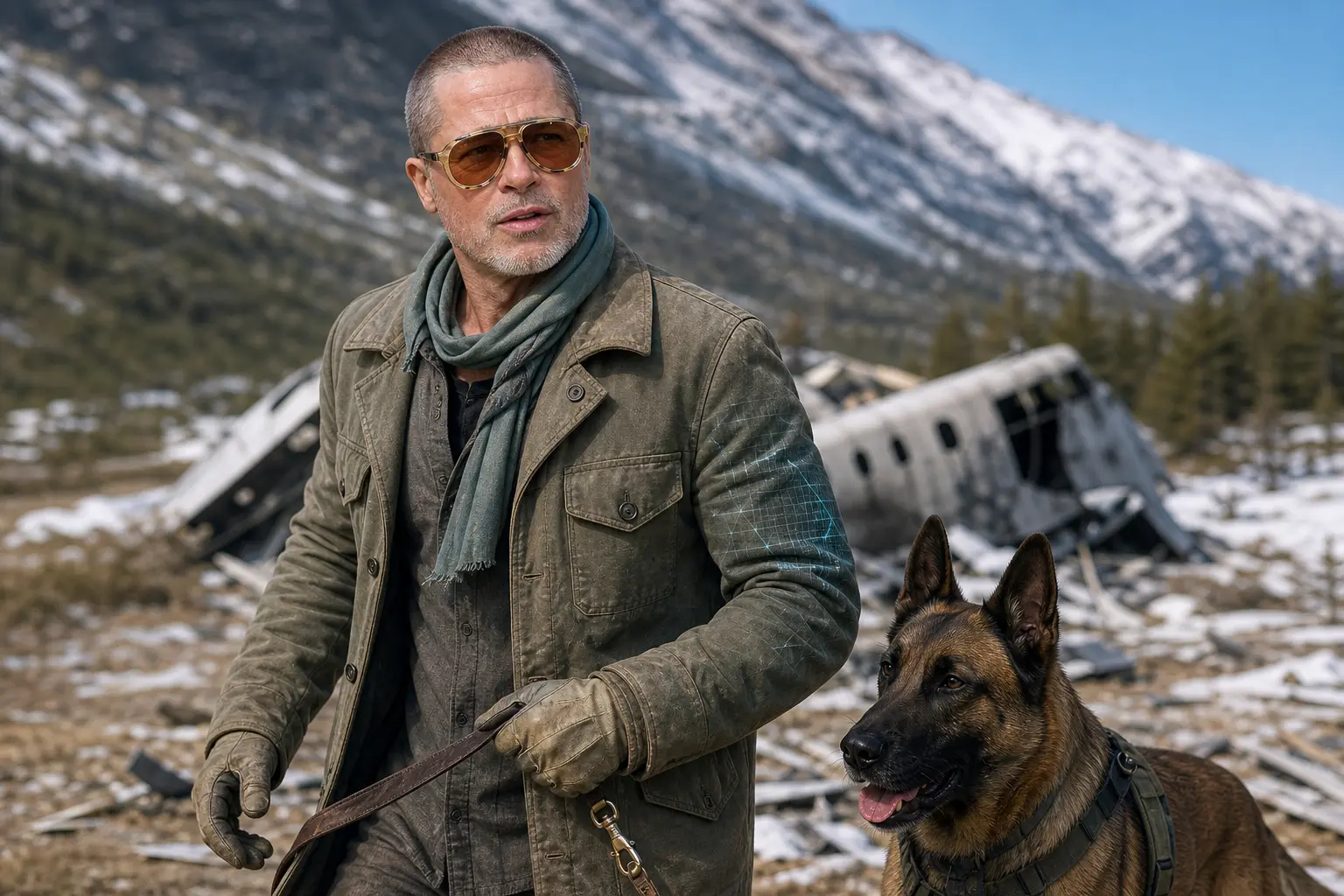
Pitt is not a detached commentator. Through Plan B he has produced Best Picture winners including The Departed, 12 Years a Slave, and Moonlight, films that thrived in or near the mid-budget band when the industry still funded them. His upcoming slate keeps him in the same territory: Heart of the Beast (special-forces survivor and dog story directed by David Ayer, shot in New Zealand partly for tax incentives) and The Adventures of Cliff Booth, the Tarantino-scripted, David Fincher-directed continuation of the Once Upon a Time in Hollywood stuntman character.
A producer who has shepherded Oscar-caliber originals understands the exact cost wall that AI might lower. When he says the tool will help those films get made, he is describing the economics of his own company as much as the industry at large.
Reactions Split on Scale and Trust
On X, high-engagement posts from Variety and entertainment accounts drew immediate pushback. One widely liked reply noted that calling $90 million “mid-budget” itself proves how far tentpoles have warped the scale of what counts as ordinary. Others treated any AI endorsement as industry self-interest. A smaller set of voices, often from producing or post circles, argued that a 20-30 percent VFX saving on a $60 million film is precisely the difference between a pass and a greenlight.
The skepticism is rational. Past efficiency waves in post-production often concentrated gains at the top while squeezing mid-tier vendors. And Jodie Foster labeling F1 made by AI earlier showed how even big tentpoles already carry the AI stigma in public conversation. Pitt’s careful “as a tool” framing tries to separate cost-saving assistance from performance replacement, but audiences and unions will keep testing that line.
What Changes If the Math Holds
If AI VFX tools deliver even half the efficiency gains executives expect, studio development slates regain room for original adult dramas, star vehicles, and mid-scale action that currently lose out to franchise slots. Financing entities that abandoned the $40-90 million band may return. Talent agencies will push packages that pair bankable names with AI-augmented but still human-led effects pipelines.
The flip side is already visible: pressure on traditional VFX houses, tighter contracts around digital replicas, and public wariness when a film looks “too perfect.” Pitt’s own regret at destroying old scans underscores the long-tail value those assets now carry. Ownership clauses will only grow more detailed.
For now the interview stands as one of the clearest statements from an A-list producer-actor that the technology’s first durable Hollywood win may not be synthetic stars. It may be the return of the films that used to sit between the tentpole and the micro-budget.
Frequently Asked Questions
What budget range did Brad Pitt call mid-budget for AI help?
Pitt specifically cited films budgeted from $40 million to $90 million as the tier AI tools could help revive by lowering visual-effects costs that currently price many originals out of studio greenlights.
How long has Brad Pitt been body-scanned for films?
He said he has been scanned for the last 20 years for stunt work, de-aging and effects, and has consistently written contract language that he owns the scans and requires their destruction after use.
Which Plan B films show Pitt’s stake in mid-budget originals?
Plan B produced Best Picture winners The Departed, 12 Years a Slave and Moonlight, projects that operated in or near the budget territory now considered difficult to finance without major IP or extreme scale.
What efficiency gains do executives expect from AI in VFX?
McKinsey interviews with studio and tech leaders point to potential 80 to 90 percent efficiency improvements in VFX and 3D asset creation, figures that would materially change the cost model for mid-tier productions.
What protections does SAG-AFTRA currently emphasize for AI?
The union’s 2026 agreements stress clear consent, fair compensation and control over digital replicas and synthetic performances, building on earlier guardrails against unauthorized use of members’ likenesses.


iOS 27 Beta 5 Locks Six iPhones and a Split Launch

Edge AI Forces Hybrid Data Centers Into a Split Reality

Qi2 25W Magnets Quietly Rewrite Desk and Car Charging

Spotify AI Persona Badges Wall Off Synthetic Discovery

GCCs Build AI Bullet Trains on Incomplete Data Tracks

Coreum Bridge Multisig Signed Off on Its Own 200k XRP Drain

AI Shrinks Solar Inspection Crews While Paying Hybrid Skills Far More

Intel Graphics Driver Fixes Still Fight Windows and OEMs

Codex Now Runs Your Mac Apps and Remembers Across Days

Mercado Takes DOH as Dual Leadership Faces Health Funding Test

Fable 5 and Mythos 5 Return as US Lifts Anthropic Export Controls

Oracle Cuts 21,000 Jobs in a Year, Cites AI in 10-K Filing

SpaceX’s Google Deal Turns a Rocket Company Into a Cloud Landlord

CD Projekt Red Co-CEO: Redemption Arc Isn’t Done, Witcher 4 in 2027

XPL Rallies 30% Ahead of Plasma One Card Tier Launch

Google Search Profiles Build a Follow Graph Inside Discover

DGO App Brings Rs 549 Mobile Pass for FIFA World Cup 2026 in Nepal

Moonshot AI Targets $30 Billion in China’s Fastest AI Funding Sprint

Microsoft Xbox Layoffs Start in July as Sharma Slams 3% Margin

Oppo’s ColorOS 17 Eligibility List Leaves A-Series Buyers Behind
-
 AI1 month ago
Fable 5 and Mythos 5 Return as US Lifts Anthropic Export Controls
-
 AI2 months ago
Oracle Cuts 21,000 Jobs in a Year, Cites AI in 10-K Filing
-
 AI2 months ago
SpaceX’s Google Deal Turns a Rocket Company Into a Cloud Landlord
-
 GAMING2 months ago
CD Projekt Red Co-CEO: Redemption Arc Isn’t Done, Witcher 4 in 2027
-
 CRYPTO2 months ago
XPL Rallies 30% Ahead of Plasma One Card Tier Launch
-
 NEWS2 months ago
Google Search Profiles Build a Follow Graph Inside Discover
-
 APPS2 months ago
DGO App Brings Rs 549 Mobile Pass for FIFA World Cup 2026 in Nepal
-
 AI2 months ago
Moonshot AI Targets $30 Billion in China’s Fastest AI Funding Sprint