
NEWS
iOS 27 Beta 5 Locks Six iPhones and a Split Launch
Battery code in iOS 27 beta 5 names iPhone Air 2, 18 Pro models, Ultra foldable and 18e, confirming dual-cell support and a staggered 2026-2027 calendar.

iOS 27 developer beta 5, seeded Monday, embeds six unreleased iPhone identifiers inside battery driver and Battery Intelligence files. Macworld matched the internal codes to the full next generation: Air 2, 18 Pro, 18 Pro Max, 18, Ultra and 18e.
The placement is no accident. Software must already understand new power hardware before any of those phones ship.
The Six Codes Inside Battery Files
Alongside every current shipping model, the beta lists:
| Internal code | Matched model | Expected window |
|---|---|---|
| V62 | iPhone Air 2 | Spring 2027 |
| V63 | iPhone 18 Pro | Fall 2026 |
| V64 | iPhone 18 Pro Max | Fall 2026 |
| V67 | iPhone 18 | Spring 2027 |
| V68 | iPhone Ultra | Fall 2026 |
| V69 | iPhone 18e | Spring 2027 |
MacRumors noted this is the first time an iOS 27 beta has carried the entire iPhone 18 family at once. The names themselves are inferred from earlier Gurman and supply-chain reporting that already used the same V-series identifiers. The code supplies no camera specs, chip details or prices. It only proves Apple is wiring software support for the hardware now.
The identifiers do not scatter at random across the battery tables. Three codes map to the fall window and three to spring. That clean split inside a single beta is itself a signal: power management is being written against two launch waves, not one monolithic drop.
Because the same files already know every current shipping model, the new entries sit in a living roster rather than a scratch pad. Developers who inspect Battery Intelligence builds will see continuity from today’s lineup straight into next year’s.
Why the Battery Drivers Matter Most
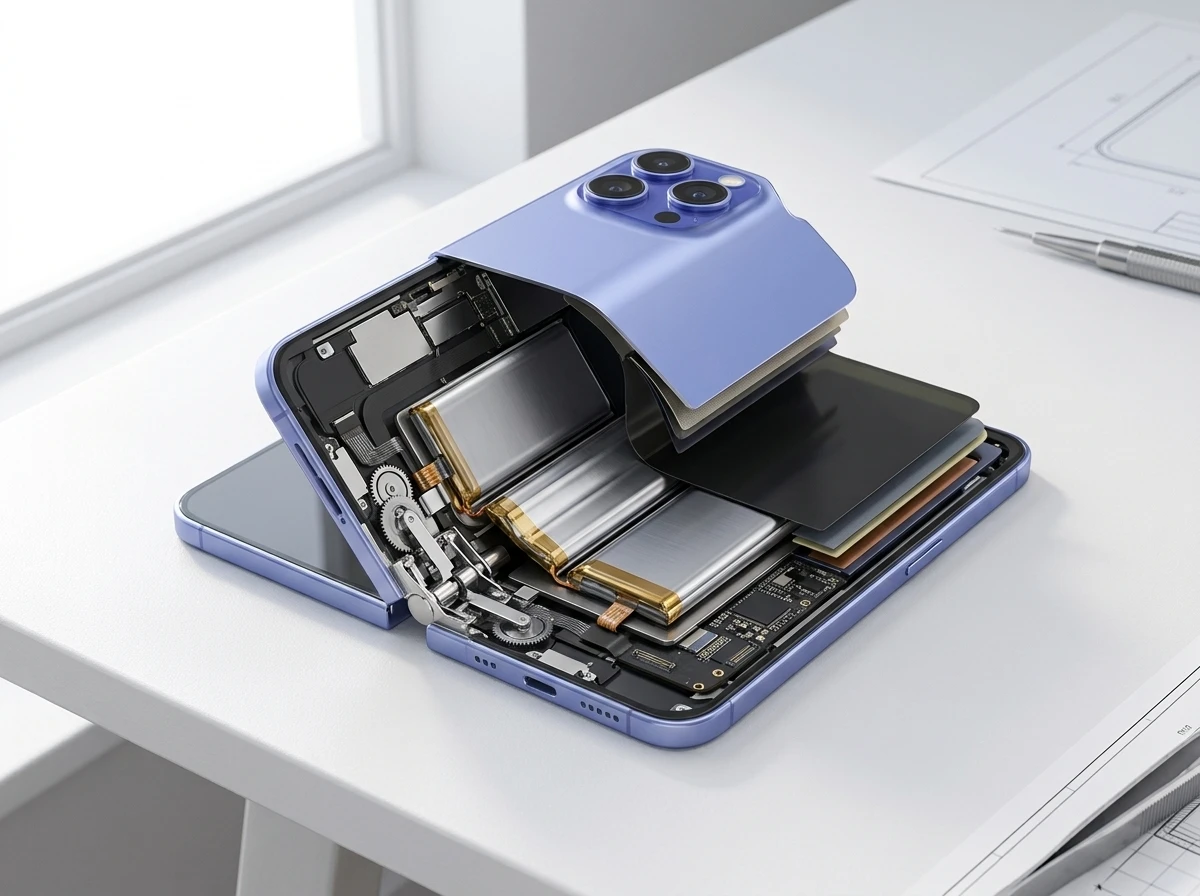
Earlier iOS 27 betas already contained fold-state and hinge-angle strings. July’s beta added plural language that no single-battery iPhone can trigger.
The batteries in this iPhone are performing as expected
Macworld quoted that exact Battery Health string, plus another that tracks when “the health of the batteries” has degraded and a check that one of the batteries might not be a genuine Apple part. Current phones use one cell (or twin cells treated as one). Independent health and authenticity tracking only make sense for a book-style foldable that places separate packs on each side of the hinge.
- Dual-cell capacity leaks cluster around 4,800-5,000 mAh total
- Each side can be monitored and, in theory, replaced separately
- Power management must balance two packs across open and closed states
- iOS already ships iPhone battery health and performance management tools that will need to surface both cells cleanly
That architecture work sits inside the same beta that just named the Ultra. Software readiness for multi-battery hardware is no longer theoretical.
Plural health strings also force the settings interface to change. A single percentage can no longer tell the full story when two packs age at different rates. The authenticity check for “one of the batteries” implies service workflows that isolate a failed cell without discarding the whole phone.
None of that logic is required for the Pro, Pro Max, base, Air or e models if they keep conventional single-pack designs. Its presence alongside V68 is therefore pointed: the Ultra is the device that makes the plural grammar necessary.
A Calendar Split That Changes Upgrade Rhythm
Rumors of a staggered rollout have circulated for months. The beta does not schedule the phones, yet it arrives while every major supply-chain source already describes the same split.
- September 2026 event window, iPhone 18 Pro, iPhone 18 Pro Max and iPhone Ultra expected on stage together
- Late September / October shipping, premium trio reaches customers first
- Spring 2027 (likely March), standard iPhone 18, iPhone 18e and iPhone Air 2 follow
The base iPhone 17 therefore remains Apple’s newest non-Pro model for roughly eighteen months. That is longer than any recent generation gap. Volume buyers who wait for the annual September refresh will find only Pro and Ultra options this fall. The cheaper SKUs arrive after the holiday quarter.
On X, the reaction mixed excitement for the Ultra with quiet fatigue: too many SKUs, another year of camera-and-chip upgrades for anyone skipping the foldable, and questions about whether the base model will even feel new by March. The software list makes the split feel locked rather than optional.
Grouping the six codes by window makes the commercial shape easier to see at a glance:
| Window | Models in the beta | Buyer impact |
|---|---|---|
| Fall 2026 | 18 Pro, 18 Pro Max, Ultra | Premium spectacle first; volume tier waits |
| Spring 2027 | 18, 18e, Air 2 | Non-Pro refresh after the holidays |
Carrier and retail planning usually assumes one September wave. Two waves mean two inventory peaks, two promotion calendars and a longer stretch where the newest affordable iPhone is last year’s silicon.
Who Gains and Who Waits
Premium buyers get the full fall spectacle: larger batteries on the Pros, dual-cell power and a crease-minimized book design on the Ultra, and the first new form factor Apple has shipped in years. Margin and halo value concentrate there.
Mass-market and carrier upgrade cycles stretch. Anyone on an older base model who wants the latest non-Pro phone must either jump to Pro pricing or wait until spring. Apple Intelligence features that already push RAM and thermal limits will keep running on last year’s silicon for that cohort longer than usual.
Accessory and case makers face two design waves instead of one. Foldable cases, dual-battery chargers and hinge protectors become a new category overnight. Competing foldable makers already push multi-device strategies; Apple’s delayed base models give those rivals a longer window against the volume tier. Samsung’s own roadmap shows the pressure: its Samsung’s multi-foldable expansion plan aims to double foldable volume while Apple finally enters.
Component suppliers for the dual cells and liquid-metal hinge also lock in earlier, because software support is already shipping in public betas.
The staggered list also reshuffles who feels urgency. Pro and Ultra shoppers can treat the fall event as decisive. Everyone else is told, in effect, that the next meaningful non-Pro jump is a spring story. That softens September demand at the low end while concentrating attention, and margin, on the devices the battery files already treat as dual-architecture hardware.
Betas Have Leaked Hardware Before
Apple’s internal identifiers surface in driver files years in advance. Previous cycles revealed titanium frames, Dynamic Island dimensions and modem switches the same way. What is new is the simultaneous appearance of an entire generation plus a form-factor jump. Earlier betas already forced developers to handle multiple screen sizes and fold angles. Battery Intelligence is simply the latest subsystem to receive the full roster.
The company still changes plans. A late production snag could push the Ultra. Yet shipping the complete V-list inside battery code this close to the fall event is the strongest public signal yet that the hardware is past the point of easy cancellation.
Past leaks tended to dribble out one chassis or one display trait at a time. Here the battery subsystem names six devices together, then attaches plural cell language that only one of them needs. The combination narrows the usual fog around which prototypes are real enough to deserve software hooks.
Ultra Readiness Heads Into the Fall Window
Supply-chain reports describe a 7.8-inch inner panel, roughly 5.5-inch cover display, titanium frame, sub-250 g target and dual cameras. Touch ID may replace Face ID on the outer display. Average selling price forecasts sit between $2,000 and $2,500. None of those numbers appear in the beta. The code only confirms the device exists in Apple’s power-management tables under the Ultra label.
Earlier iOS 27 builds already contained fold-state values. Combined with the plural battery strings and the V68 entry, the software stack now treats the Ultra as a first-class citizen rather than an experiment. Developers building for current iOS features and supported devices will need to test open, closed and intermediate angles before September.
Apple has also expanded Adaptive Power features that predict usage and stretch remaining charge. Those algorithms will have to handle two cells whose discharge curves differ when the device is folded. The same beta that names the phones already ships the intelligence layer that must manage them: Adaptive Power battery predictions sit ready for the new hardware.
Meanwhile, longer-term industrial design continues. Reports of hybrid glass constructions for later anniversary models show Apple is already looking past the first foldable. The same V-series logic that surfaces next year’s phones will eventually name those future hybrid glass iPhone designs as well.
How Dual Cells Change Everyday Power Logic
Single-pack iPhones present one discharge curve, one thermal envelope and one authenticity state. The plural strings in this beta assume two. When the Ultra opens, both cells can share load. When it closes, one pack may shoulder always-on cover-display duties while the other rests. Adaptive Power predictions have to model that shift or risk false low-battery warnings.
Health reporting splits the same way. Users will eventually see degradation on a per-side basis if Apple surfaces what the driver already tracks. Service depots gain a path to swap one cell. Counterfeit checks gain a path to flag a single non-genuine pack without condemning the pair.
Those mechanics explain why battery files, not camera or display frameworks, carried the full V-list first. Power policy has to ship before hardware can be validated at scale. Fold angles without balanced cells still brick a demo unit; balanced cells without fold angles only limit the UI.
- Open state: both packs available, hinge sensors active, full inner panel draw
- Closed state: cover display and radios may favor one cell
- Degraded state: one pack aged faster, system must rebalance or throttle
- Service state: authenticity and capacity readouts resolve per cell
The Pro and Pro Max entries in the same tables do not require that matrix. Their presence shows the generation is being registered as a set, while the Ultra alone justifies the new power branches.
What the Beta Locks In and Leaves Open
The files settle some arguments and leave others untouched. They lock in software recognition for six identifiers, dual-battery grammar and a roster that matches the long-rumored fall and spring split. They leave camera layouts, final chip binning, retail pricing and exact day-of-ship dates unstated.
That boundary matters for how to read Monday’s seed. A complete V-list inside Battery Intelligence is stronger evidence than a lone string in a private framework. It is still weaker evidence than a stage demo. Production can slip. Names on a slide can differ from internal codes. The spring trio can compress or slip further if demand for the fall premium set runs hot.
Even so, the direction of travel is consistent across every layer already public in iOS 27:
- Fold-state and hinge-angle strings arrived in earlier betas and forced multi-posture UI work
- Plural battery health and authenticity language arrived by July and assumed two monitored packs
- Full six-code V-list arrived in developer beta 5 and aligned those power hooks to named hardware
Each step made cancellation costlier. Removing the Ultra now would mean shipping battery grammar that no device triggers. Keeping the staggered calendar means the base iPhone 17’s long tour as the newest non-Pro model is already priced into software planning, not only into rumor slides.
The Software Already Treats Them as Real
Apple has not confirmed a single name, date or price. The beta does not need to. Once battery drivers, fold sensors and intelligence features all carry the same six identifiers, the hardware pipeline is no longer a rumor. The fall event will decide how many of the premium trio actually reach store shelves on time. The spring models will decide whether the staggered calendar becomes permanent. For now the code is clear: six phones are coming, two power architectures are supported, and the upgrade calendar has already split.


WeChat Moments AI Tools Hide a Bigger Skills Redesign

iOS 27 Beta 5 Locks Six iPhones and a Split Launch

Edge AI Forces Hybrid Data Centers Into a Split Reality

Qi2 25W Magnets Quietly Rewrite Desk and Car Charging

Spotify AI Persona Badges Wall Off Synthetic Discovery

GCCs Build AI Bullet Trains on Incomplete Data Tracks

Coreum Bridge Multisig Signed Off on Its Own 200k XRP Drain

AI Shrinks Solar Inspection Crews While Paying Hybrid Skills Far More

Intel Graphics Driver Fixes Still Fight Windows and OEMs

Codex Now Runs Your Mac Apps and Remembers Across Days

Fable 5 and Mythos 5 Return as US Lifts Anthropic Export Controls

Oracle Cuts 21,000 Jobs in a Year, Cites AI in 10-K Filing

SpaceX’s Google Deal Turns a Rocket Company Into a Cloud Landlord

CD Projekt Red Co-CEO: Redemption Arc Isn’t Done, Witcher 4 in 2027

XPL Rallies 30% Ahead of Plasma One Card Tier Launch

Google Search Profiles Build a Follow Graph Inside Discover

DGO App Brings Rs 549 Mobile Pass for FIFA World Cup 2026 in Nepal

Moonshot AI Targets $30 Billion in China’s Fastest AI Funding Sprint

Microsoft Xbox Layoffs Start in July as Sharma Slams 3% Margin

Oppo’s ColorOS 17 Eligibility List Leaves A-Series Buyers Behind
-
 AI1 month ago
Fable 5 and Mythos 5 Return as US Lifts Anthropic Export Controls
-
 AI2 months ago
Oracle Cuts 21,000 Jobs in a Year, Cites AI in 10-K Filing
-
 AI2 months ago
SpaceX’s Google Deal Turns a Rocket Company Into a Cloud Landlord
-
 GAMING2 months ago
CD Projekt Red Co-CEO: Redemption Arc Isn’t Done, Witcher 4 in 2027
-
 CRYPTO2 months ago
XPL Rallies 30% Ahead of Plasma One Card Tier Launch
-
 NEWS2 months ago
Google Search Profiles Build a Follow Graph Inside Discover
-
 APPS2 months ago
DGO App Brings Rs 549 Mobile Pass for FIFA World Cup 2026 in Nepal
-
 AI2 months ago
Moonshot AI Targets $30 Billion in China’s Fastest AI Funding Sprint