
GAMING
PUBG Mobile Light Replays Krafton’s Lite Bet in Shared Lobbies
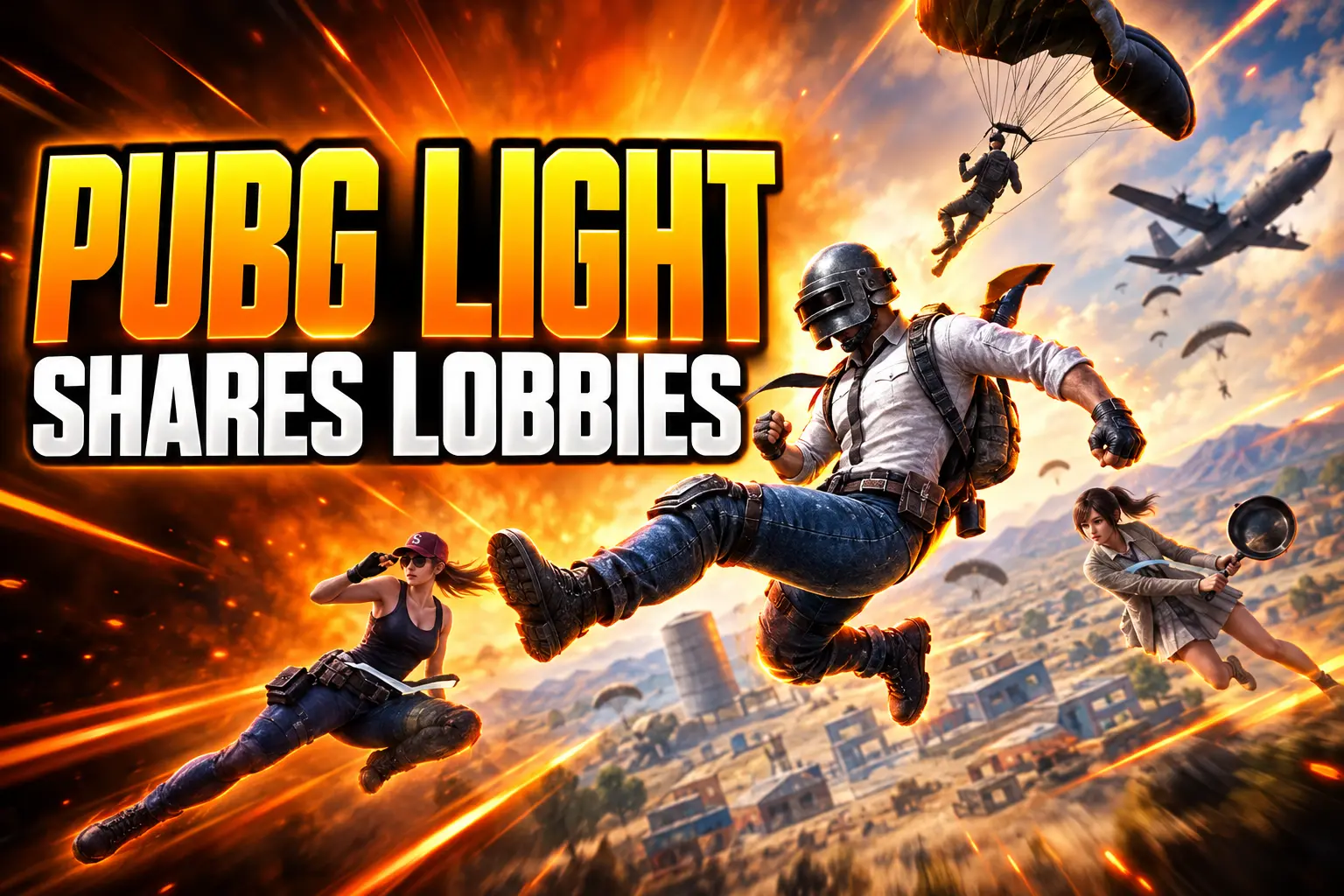
PUBG Mobile Light is a less-than-1 GB Erangel client that shares accounts and 100-player queues, unlike the old 60-player Lite app.

PUBG Mobile Light is a new app that drops into the same 100-player Erangel fights as PUBG Mobile, with an Android install of less than 1 GB.
Producer Rick Li unveiled it on August 16, 2026 at the PUBG Mobile World Cup, and pre-registration opened on August 25. Apple’s store page lists an expected November 12 launch, with a closed beta promised in selected countries.
Light Is a Second Door Into the Same Matches
The August 25 press note from PUBG Mobile, co-developed by Lightspeed Studios at Tencent Games and Krafton, calls Light a new application, not a graphics slider inside the current one. Players log in with an existing PUBG Mobile account, keep the friends list and owned items, and can switch between the two apps.
Vincent Wang, Head of PUBG MOBILE Publishing at Tencent Games, tied that shared login to mixed squads, not to a cut-down ruleset.
Whether you’re a veteran player or just getting started with PUBG MOBILE, PUBG MOBILE LIGHT is all about quick access, smooth performance, and more flexibility, without sacrificing the core gameplay that PUBG MOBILE players know and love. Best of all, it supports cross-play with PUBG MOBILE, allowing players to squad up and enjoy the action together.
Vincent Wang, Head of PUBG MOBILE Publishing, Tencent Games, August 25 press release
The official account posted the same pitch two days after the World Cup, with the line “The Original PUBG MOBILE, Now Lighter,” and a November window attached.
Introducing PUBG MOBILE LIGHT — a new app coming soon.
The Original PUBG MOBILE, Now Lighter.
A lighter way to enter the original Battle Royale, joining the PUBG MOBILE family.
Free to download on both Android & iOS.Pre-registration starts 8/25.
Stay tuned.#PUBGMOBILE… pic.twitter.com/JcmbqK6zo7— PUBG MOBILE (@PUBGMOBILE) August 16, 2026
The press note centres classic battle royale on Erangel, with up to 100 players in solo or team drops. That lobby size is the whole point of the rebuild. Krafton is not asking weak-phone players to sit in a side pool.
The Last Lite Lived on a 2 km Island
A smaller PUBG already exists, and it is still on the stores under a near-identical name. PUBG Mobile Lite is a Tencent client from July 2019 that runs a 60-player drop on a 2 km by 2 km island, asks for about 600 MB of free space and 1 GB of RAM, and adds short arena modes. It never shared the main 100-player maps.
That is the product people reached for when the full install would not fit. Krafton then left it on the side. After India banned PUBG Mobile, Lite went down there in September 2020. The full game came back later as Battlegrounds Mobile India. Lite did not.
The PC experiment ended the same way. PUBG Lite launched in Thailand in 2019 for low-spec desktops, ran its own servers, and went free-to-play in late 2020. Krafton closed it on April 29, 2021.
THE LITE ATTEMPTS BEFORE THIS APP
- July 2019: Tencent ships PUBG Mobile Lite as a 60-player client on a 2 km by 2 km map.
- September 2020: The Lite app shuts in India with the PUBG Mobile ban.
- April 29, 2021: Krafton ends PUBG Lite on PC after a two-year low-spec run.
- July 2021: BGMI launches in India as the legal full client.
- August 16, 2026: Rick Li announces PUBG Mobile Light at the World Cup.
- August 25, 2026: Pre-registration opens on Google Play and the App Store.
The first replies under the August 16 post asked whether Light was Lite with a fresh coat of paint. That mix-up is still the live problem, because the old app never left the catalog. Google Play still lists Lite as a 60-player map, 1 GB RAM game, package name com.tencent.iglite, sitting a search bar away from the new one.
What the First Install Puts on a Phone
Light’s storage claim is the opening download, not a promise that the phone stays that empty. The August 25 release puts the first package at less than 1 GB on Android and 2 GB on iOS, and says the first match does not wait on a second mandatory pack.
Google Play’s copy for package com.tencent.igfit, published by Level Infinite, repeats that Erangel comes pre-installed and that the first fight needs no extra file. Extra maps and modes come later, by choice.
LIGHT VERSUS THE OLD LITE CLIENT
| Client | First install | Opening map | Lobby | Main account |
|---|---|---|---|---|
| PUBG Mobile Light | less than 1 GB Android, 2 GB iOS | Erangel, others on demand | 100 players | Shared with PUBG Mobile |
| PUBG Mobile Lite | about 600 MB free space, 1 GB RAM | 2 km by 2 km island | 60 players | Separate app |
The press note also names the packs that sit behind that optional download, so Light is not an Erangel-only product even if the first session is.
PACKS THE PRESS NOTE PUTS ON DEMAND
- Miramar: The desert map installs when a player asks for it, not in the first package.
- Sanhok: The smaller jungle map follows the same optional path.
- Team Deathmatch: The short mode is listed as a download, not a first-boot feature.
- Metro Royale: The PvE-leaning mode is grouped with those optional files.
That menu is how Krafton avoids repeating Lite’s hard cap. The phone can stay small. The account can still grow into the rest of the live game when storage and time allow.
Squads Can Mix Light and Full Clients
Shared login would be a convenience if Light still matched only against Light. The press note and Wang’s quote go further. Light players can squad with friends on the standard app, and both clients are meant to take the same content drops.
That is the design lesson from Lite. A side game with its own map and its own 60-player count needs its own population. When that population thins, the product dies even if the install is tiny. Light borrows the main pool instead.
The trade sits on the full-client side. A squad on flagship phones will load into Erangel with teammates whose first download skipped Miramar, HD packs, and extra modes. Combat is supposed to match. The asset list on disk will not.
Rick Li’s World Cup remarks, as carried in the first write-ups of the talk, also said players pick which extra resources to pull. That choice is the pressure valve. It is also how a “light” install becomes a heavier one after a few weeks of tapping yes on maps.
India Gets BGMI Lite Aimed at 1.5 GB Phones
PUBG Mobile stays off Indian stores. BGMI is the legal client, and Krafton is copying the Light idea there under the BGMI Lite name. Krafton India’s line was that Lite continues a push on “accessibility” and “inclusivity,” with gameplay details due closer to launch, which the company has pegged as late 2026.
BGMI already pays. Krafton’s Q1 2026 results recorded a 17 percent rise in paying users for BGMI after server work and a wider content slate. The Lite build is aimed at phones that never joined that paying base, not at the people already clearing classic matches.
Promotional material for BGMI Lite lists a floor of 1.5 GB of RAM and an Adreno 306 GPU, with a first download around 1 GB and pre-registration open on Google Play from August 25. Krafton has used the tag “Nothing Less, Just Lighter.” An exact ship date, a public device list, and a clear note on whether Lite shares BGMI accounts were still missing as of early September.
BGMI’s own path is why the Lite copy matters there more than a global slogan. The game launched in July 2021, left Indian stores in July 2022, and returned in May 2023 after about 10 months. The full client came back first. The low-spec client is the leftover demand from that gap, and from years of players saying the main build hitching on 2 GB and 3 GB phones.
Apple’s Listing Already Names November 12
Official posts say Light arrives in November. The US App Store page for PUBG MOBILE LIGHT, sold by Tencent Mobile International Limited, is more specific: it carries an expected November 12 launch date, marks the app free, and sets iOS 13.0 as the floor. Pre-registration is already live there and on Google Play. A closed beta is promised in selected countries, with the usual note that the test build is not the ship version.
Store copy matches the press note on the first session. Erangel is on disk. Extra maps and modes wait. Friends, updates, and the rest of the PUBG Mobile world are supposed to follow the same account through both apps.
The old Lite listing is still on Google Play as a 60-player, 2 km game. Anyone hunting a smaller PUBG now has two apps with similar names, and only one of them sits in the main 100-player matches.

Instagram Plus Tests a Read-Only Mode That Cuts Stories

Altman Asks the Public to Accept Some AI Harm

Google Freezes OSS VRP Product Reports After AI Flood

AI Agents Make Payment Rails the Scarce Prize

Turkey’s Crypto Boom Now Runs Through Three Banks

Fable 5 Came Back Under a Commerce On-Off Switch

Google’s SpaceX GPU Lease Has a Sept. 30 Deadline

Plasma One’s XPL Locks Face a 1.81 Billion Cliff

DGO’s Rs 549 World Cup Pass Cost Fans Sleep and Data

Moonshot AI’s $30 Billion Ask Became a $35 Billion Close
-
 AI4 months ago
Fable 5 Came Back Under a Commerce On-Off Switch
-
 AI4 months ago
Google’s SpaceX GPU Lease Has a Sept. 30 Deadline
-
 CRYPTO4 months ago
Plasma One’s XPL Locks Face a 1.81 Billion Cliff
-
 APPS4 months ago
DGO’s Rs 549 World Cup Pass Cost Fans Sleep and Data
-
 AI4 months ago
Moonshot AI’s $30 Billion Ask Became a $35 Billion Close
-
 NEWS4 months ago
ColorOS 17 Device List Spans Oppo, OnePlus and Realme
-

 GAMING4 months ago
Xbox Cuts 3,200 Jobs After Five Years of Thin Returns
-
 GAMING4 months ago
The RTX 4050 Under Rs 70,000 Hides a Wattage Gap