
APPS
Wispr Flow’s $2 Billion Bet Shifts Writing Onto Voice
Wispr Flow raised at $2 billion to replace typing at work, moving the hard part of writing onto whoever has to read it.

Wispr Flow raised $280 million at a $2 billion valuation on August 17, betting that talking will replace typing at work. People have already dictated more than 60 billion words through the app, the company said, across almost all of the Fortune 500 and more than 10,000 enterprises.
The product that justified that price is a cleanup engine. You hold a hotkey, speak the way you actually speak, and polished prose lands in Slack, mail, docs, or a code editor. Speed is the pitch. The bill for structure lands on whoever has to read the result.
$2 Billion Buys a Lower Error Rate
Tanay Kothari, CEO and co-founder, wrote that the company had closed a $280 million Series B at $2 billion, led by Menlo Ventures, bringing total capital to $361 million. That follows an $81 million stack that included a $30 million Series A in June 2025 and a $25 million extension in November 2025 at a $700 million valuation.
THE ROUND IN FOUR FIGURES
| Round | Date | Amount | Post-money |
|---|---|---|---|
| Series A | June 2025 | $30 million | Not disclosed |
| Series A extension | November 2025 | $25 million | $700 million |
| Series B | August 17, 2026 | $280 million | $2 billion |
| Total raised | $361 million |
Kothari put the new money against a metric the company calls zero edit rate, the share of utterances that come back untouched. A wrong word, he argued, is not a typo. It yanks you out of the thought you were in the middle of having.
The whole reason to talk instead of type is to stay inside your own train of thought.
Tanay Kothari, CEO and co-founder, Wispr Flow Series B post
Alongside the round, Wispr previewed Canto, its first in-house speech model. In hard conditions, with noise, wind, heavy accents, or music, the company said word error rates fall from more than 30 percent to somewhere between 5 and 10 percent. Across ordinary use, it expects 30 to 35 percent fewer dictations that need a fix. Canto is also built for people who switch languages inside a sentence, including Hinglish that should come back in romanized script rather than Devanagari.
That is a product confession as much as a launch. Through June, Wispr’s own update notes said growth had strained servers, older models had been mixed into traffic, and some users saw slower, sloppier output. Canto is how a $2 billion company answers a quality dip it already admitted.
Flow Rewrites Speech Before It Lands
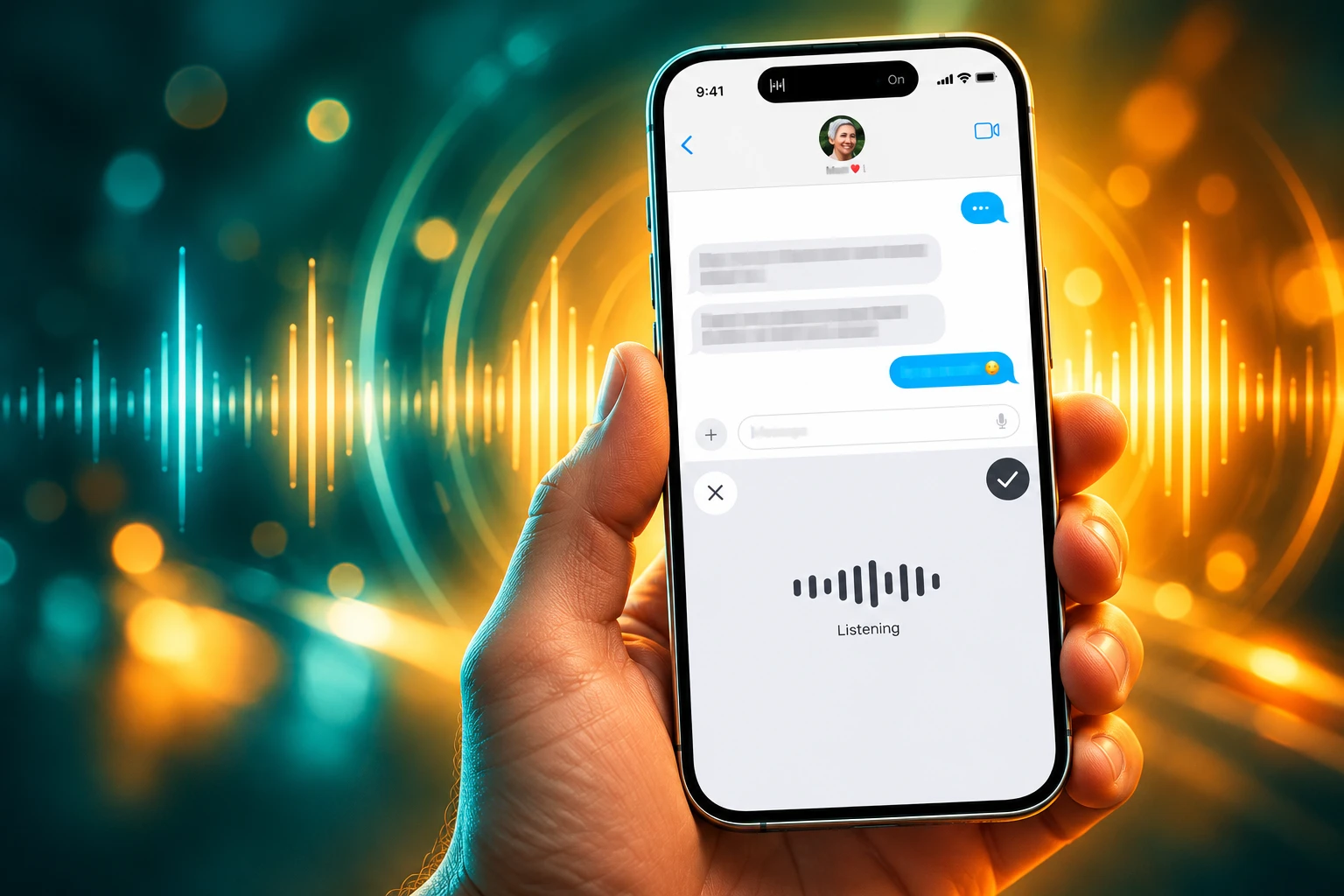
Flow sits at the system level on Mac, Windows, iOS, and Android. You press Fn on a Mac, or Ctrl+Win+Alt on Windows, hold, talk, and release. Text pastes at the cursor in whatever app has focus. The company markets this as 4 times faster than typing, 220 words a minute against a 45-word typing baseline. Independent testers more often land in the 150 to 180 range in a quiet room, which is still a large gap if your day is email and chat.
The layer people actually pay for is the rewrite. Flow is not trying to be a subtitle track. It strips filler, adds punctuation, turns “first, second, finally” into a list, and can switch tone by destination, so Slack comes out casual and a document comes out closer to prose. Command Mode lets you say “delete that last word.” It will not, as magazine editor Amy X. Wang found in August, reorder an argument or italicize a word on request.
WHAT THE CLEANUP PASS ACTUALLY DOES
- Filler: “Um,” “like,” and false starts can be dropped, or kept if you pick a casual tone.
- Self-corrections: Saying “meet at 2, actually 3” is supposed to land as 3, not both numbers.
- Lists: Spoken sequences become bullets or numbered items without you saying “bullet.”
- App tone: The same voice can render as lowercase texts or as formal email, depending on where the cursor sits.
- Dictionary: Names, jargon, and snippets accumulate as you go, and a local file on the Mac already stores that list.
Pricing matches that habit loop. The free tier caps desktop use at 2,000 words a week and iPhone at 1,000, with unlimited Android. Pro is $15 per user per month, or $12 on the annual plan, for unlimited dictation. Growth and enterprise start at $23 a month, or $18 billed annually, with SSO, enforced HIPAA, and admin controls. Dictation runs in 100-plus languages. Notetaker, the meeting product, is Mac-only for now.
Audio still leaves the machine. There is no offline mode. That is the trade: a cloud cleanup model that learns your voice, in exchange for a hotkey that feels like typing if the next word comes back right.
The July Cut That Left Five People in the Office
Wispr did not start as a dictation utility. Kothari and co-founder Sahaj Garg founded the company in 2021 around a silent-speech wearable, headphones that would turn mouthed words and neural signals into text so you could talk to devices without talking out loud. Kothari later wrote that the hardware worked in a limited way and still would have flopped, because the software on the other end was not good enough to replace a keyboard.
FROM HEADSET TO HOTKEY
- 2021: Kothari and Garg found Wispr to build a silent-speech wearable.
- Mid-2024: After a board meeting, they decide the hardware has no consumer market.
- July 18, 2024: Hardware work stops. Flow, the software layer, becomes the whole company.
- Late July 2024: Headcount falls from 40 people to 5 overnight.
- October 1, 2024: Flow launches on Product Hunt and finishes the day, and the week, at number 1.
- January to February 2025: Kothari says paid conversion hit about 20 percent, against a typical 3 to 4 percent, with about 90 percent month-over-month organic growth. Heavy users were doing around 100 dictations a day and still typing only 25 to 30 percent of their input.
He also wrote that he would never have started a voice dictation company on purpose. The wearable was the dream. Flow was the thing users would pay for. Two years later the same company is valued at $2 billion for the unsexy product, and a partner ring is trying to put a microphone back on your hand.
Reid Hoffman Sends Most Messages Unedited
Reid Hoffman, the LinkedIn co-founder and Greylock partner, is the named user Wispr now leads with. On his podcast Possible, he walked through a live demo with Kothari and framed computers as a speed mismatch: people think at about 400 words a minute, speak at about 150, and type at about 40. Typing, in that telling, is a pile of micro-decisions about spelling and layout that interrupt the thought.
A company write-up of that session puts 89 percent of messages sent unedited, up from about 45 percent earlier in 2026, with about 0.5 seconds from speech to send. Once the habit sticks, about 75 percent of input shifts off the keyboard. Voice also beat a typist above 110 words a minute on stage. Those are Wispr’s figures from its own case study, not a third-party audit, and they describe messages, not reported features.
People go from frankly quite skeptical to instantly obsessed with Wispr.
Reid Hoffman, Greylock partner, on Possible
The same page lists who the hotkey actually levels up: people with dyslexia, people with motor impairments, older users, and people who never learned to type fast. About 20 percent of users, in that conversation, are over 60 and run the product off a single button. That is the stakeholder the literary critique keeps missing. For someone who cannot, or should not, live on a keyboard, “sounding like speech” is the point.
Hoffman is also the proof of the second-order bet. If a person whose job is email, memos, and deal chatter can send 89 percent of messages without touching them, the inbox becomes a spoken medium. The magazine column is the edge case. The Series B is priced on the inbox.
On-Device Clones and the $12 Objection
Desktop dictation had a king for two decades. Dragon NaturallySpeaking, shipped in 1997, made continuous speech usable on a PC. Nuance took it over, Microsoft later bought Nuance, and the Mac product died in 2018. What replaced it for a lot of people was Apple’s built-in dictation, which is free, often on-device on Apple silicon, and still clumsy for jargon, long stretches, and cleanup.
Flow’s real peer set is newer. Superwhisper, MacWhisper, VoiceInk, and a cluster of Whisper-based apps run models locally. Wispr’s answer is polish plus a presence on every major OS, including Android since February 2026. The counter is privacy and uptime: if the cloud stutters, you reach for the keyboard, and the thought is gone, which is the failure mode Kothari himself described.
WHERE THE AUDIO GOES
| Tool | Platforms | Audio path | Offline |
|---|---|---|---|
| Wispr Flow | Mac, Windows, iOS, Android | Cloud, with AI cleanup | No |
| Superwhisper | Mac, Windows, iOS | on-device models that never leave the computer | Yes, in offline mode |
| Apple Dictation | Apple devices | On-device on Apple silicon | Yes, on those Macs |
| Dragon | Windows | Local legacy engine | Yes; no Mac version since 2018 |
Through late August and September, the loudest product argument among builders was not “voice input is fake.” It was “this habit should not require a $12 subscription and a server.” Open-source twins with the same press-and-speak pattern showed up within days of each other, some adding a way to circle a region of the screen so an agent sees what you see. Developers have already found Flow’s learned words in a local SQLite file on the Mac and piped them into coding agents. The input layer is leaking even when people leave the app.
That clone wave is the tell. Nobody reverse-engineers a toy. They copy a default. Wispr’s moat, if it has one, is not the hotkey. It is the cleanup quality, the Fortune 500 rollout, and the zero-edit number Hoffman recited on stage.
What Happens to Writing When Talking Is Cheaper?
Amy X. Wang, a magazine story editor and writer, drafted a column on Flow in August and came away wanting to take a hammer to it. The accuracy impressed her. She could whisper and watch almost clean text appear. She could not, without a keyboard, move a sentence, fix a preposition two paragraphs up, or make herself sound like a writer. The app even congratulated her for dictating enough words to cover “12 wedding vows,” which was the gag that made her point.
Writing takes time and editing and a deep level of commitment. Writing is a rigorous process to understand your own thoughts and then lay those thoughts out in a way that convinces or inspires or moves other people.
Amy X. Wang, magazine story editor and writer, August 2026 column dictated in Wispr Flow
She argued that a lot of what people now read all day is not written in that sense. It is speech with punctuation. Flow makes that cheaper, then scores you on volume. Her first paragraph also placed Don Draper in the 1940s. A few days later her editor caught that he is a 1960s figure. She treated the correction as the case for people.
Both things can sit next to each other. Flow is a gift if the artifact is a Slack, a CRM note, a commit message, or a reply you would have typed with two thumbs. It is a tax if the artifact is a piece of writing that has to survive a second reading, because the structure never got built in the author’s hands. When 10,000 companies hand people a hotkey that emits sendable prose, the volume of first-draft speech goes up. Readers do the outlining the writer skipped.
Wang wanted italics and could not get them. That sounds small until you notice what the product optimizes. Zero edit rate rewards the utterance that is good enough to send. It does not reward the paragraph that was worth keeping.
Notetaker Takes the Meeting, and a Ring Takes the Whisper
The round is already being spent past the cursor. On August 5, Wispr shipped Notetaker on the Mac, a meeting recorder that stays on-device for capture rather than joining Zoom or Teams as a bot, then writes summaries, decisions, and action items with calendar and Slack context. Kothari’s line on that launch was that nobody reads transcripts and everyone acts on them. Full Notetaker access is being pushed through October 31 as a trial on team plans. Windows is still in the works.
In July the company stood up the Wispr Advanced Interfaces Lab under chief scientist Ariya Rastrow, a founding Alexa engineer who later worked on multimodal models at Meta. Rastrow’s stated aim is systems that hear intent and produce an interface, not a block of text, and not a voice that talks back by default.
THREE BETS PAST THE KEYBOARD
- Canto: A previewed in-house speech model aimed at noise, accents, and mixed-language speech, scored on zero edit rate.
- Notetaker: Meeting notes as the second product, Mac-first, feeding summaries into Claude, ChatGPT, and other agents over MCP.
- Oasis 1: A partner smart ring with a whisper mic and a fingertip trackpad, listed at $289, with shipping described for Christmas, using Flow as the dictation engine.
The ring is a strange full circle. Wispr killed its own headset in 2024 because voice software was not ready. In June 2026 it congratulated Oasis for putting a mic on a finger so you can whisper at a laptop without performing for the open office. Hardware returns as a customer, not as the company.
Kothari closed the funding note with a scoreboard, not a slogan. People have written more than 60 billion words with Flow. The years ahead, he wrote, will be judged on whether the next word comes back the way you meant it. If it does, a lot more work will be spoken. If it does, a lot more of that work will read like talk.

Instagram Plus Tests a Read-Only Mode That Cuts Stories

Altman Asks the Public to Accept Some AI Harm

Google Freezes OSS VRP Product Reports After AI Flood

AI Agents Make Payment Rails the Scarce Prize

Turkey’s Crypto Boom Now Runs Through Three Banks

Fable 5 Came Back Under a Commerce On-Off Switch

Google’s SpaceX GPU Lease Has a Sept. 30 Deadline

Plasma One’s XPL Locks Face a 1.81 Billion Cliff

DGO’s Rs 549 World Cup Pass Cost Fans Sleep and Data

Moonshot AI’s $30 Billion Ask Became a $35 Billion Close
-
 AI4 months ago
Fable 5 Came Back Under a Commerce On-Off Switch
-
 AI5 months ago
Google’s SpaceX GPU Lease Has a Sept. 30 Deadline
-
 CRYPTO4 months ago
Plasma One’s XPL Locks Face a 1.81 Billion Cliff
-
 APPS5 months ago
DGO’s Rs 549 World Cup Pass Cost Fans Sleep and Data
-
 AI5 months ago
Moonshot AI’s $30 Billion Ask Became a $35 Billion Close
-
 NEWS5 months ago
ColorOS 17 Device List Spans Oppo, OnePlus and Realme
-
 GAMING4 months ago
The RTX 4050 Under Rs 70,000 Hides a Wattage Gap
-
 AI4 months ago
Boris Cherny’s Loops Still Demand a Higher Production Bar