
AI
Brookfield: 1 Gigawatt of India AI Needs Up to 9 Gigawatts of Renewables
Brookfield says India’s AI buildout needs 7 to 9 GW of renewable capacity per 1 GW of data centre, with battery storage demand set to rise 115x by 2035.

Brookfield Asset Management is betting that renewable energy will be the binding constraint on India’s AI data centre buildout. The New York-based firm argues that a one-gigawatt AI data centre in India may require seven to nine gigawatts of installed renewable capacity to keep running around the clock. The framing, from managing partner Nawal Saini, runs against how global investors have lately priced Indian technology stocks.
Brookfield runs about $1 trillion in assets, including $32 billion in India, where it is the largest foreign investor in renewable energy and one of the country’s biggest commercial real estate landlords. Saini frames India as the consumer base that will force a generation-scale buildout of solar, wind, and battery storage to serve the country’s population at scale. The bet positions energy and land as the binding constraints data-centre developers have to solve first. Brookfield has already deployed $32 billion of Indian assets inside that renewable push.
The Math Behind the Bet
AI data centres need continuous, around-the-clock electricity, which forces developers to overbuild intermittent solar and wind capacity and back it with storage. Saini pegs that ratio at seven to nine gigawatts of installed renewable capacity for every one gigawatt of data centre demand. That multiple is the core of Brookfield’s India thesis. The ratio accounts for the gap between intermittent generation and a 24/7 compute load.
The firm made the case in a July 1 interview from Mumbai, detailed in the India data centre power forecast from Saini. Global investors have pulled back from Indian stocks this year, citing a lack of foundational AI models or advanced chip manufacturers that have driven technology stocks higher in most other markets. Brookfield’s stance is that consumption at India’s scale still demands a domestic infrastructure buildout, and that the energy side will capture most of the capital. The energy and land constraints, not the chip pipeline, are where the capital goes.
Brookfield’s bet is that consumption at India’s scale still demands a domestic infrastructure buildout, and that the energy side will capture most of the capital. Saini, who also heads Brookfield’s energy business in South Asia and the Middle East, lays the argument out in clear multiples. The question is whether developers can find seven to nine gigawatts of clean capacity to anchor each gigawatt of compute inside the timeline the hyperscalers are setting.
India is a very large-scale adopter. As AI use cases become more clear and widespread, we have a 1.5 billion population to serve, creating business models and the infrastructure behind them.
Saini, who heads Brookfield’s energy group, made the case from Mumbai in a July 1 interview. His argument is that the population alone makes India a structural AI market, regardless of who wins the model race.
What Brookfield Already Has on the Ground
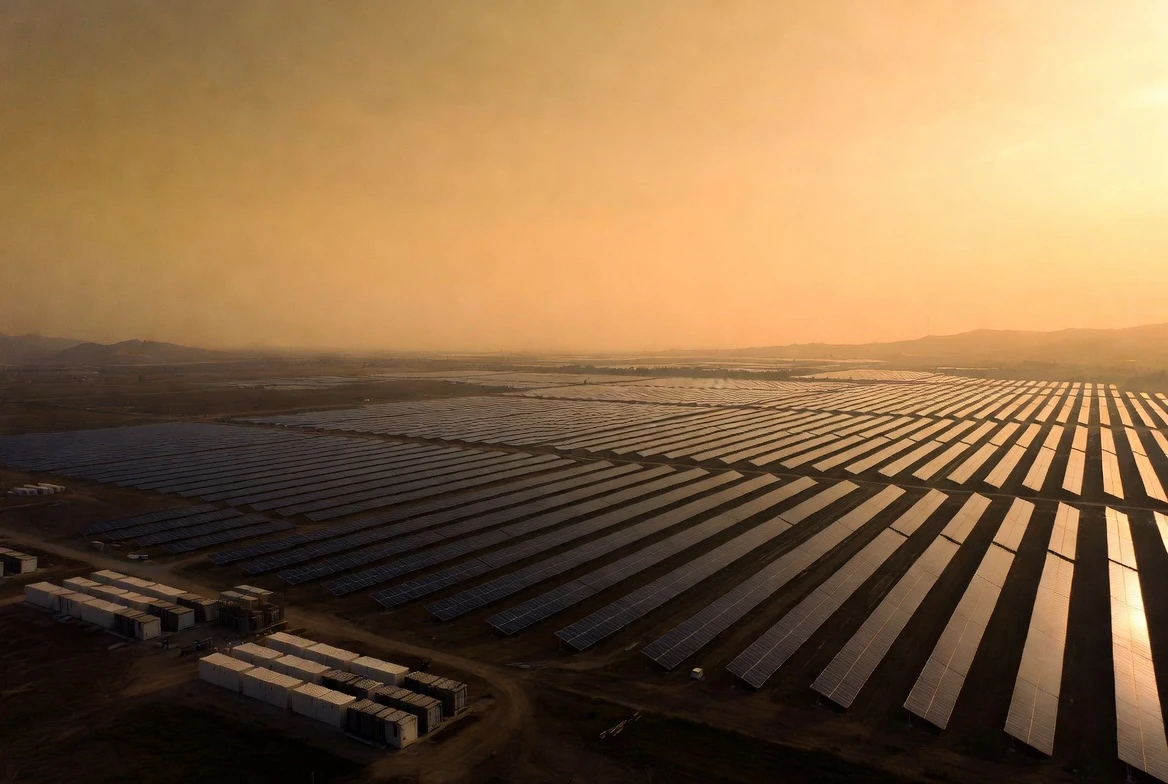
Brookfield is the largest foreign investor in renewable energy in India and one of the country’s biggest commercial real estate landlords. The firm carries $32 billion of Indian assets inside an overall $1 trillion balance sheet. That footprint is what the data-centre bet is built on top of.
Last November, Brookfield launched the dedicated $100 billion AI Infrastructure Fund, anchored by the Brookfield Artificial Intelligence Infrastructure Fund. NVIDIA and the Kuwait Investment Authority joined as founding partners. The fund targets $10 billion in equity commitments and aims to acquire up to $100 billion of AI infrastructure assets across every stage of the value chain, from energy and land to data centres and compute. Brookfield had secured $5 billion in capital commitments at launch. Its India renewable portfolio spans four named investments:
- Clean Max Enviro Energy Solutions Ltd.
- Evren Technologies Inc.
- Avaada Energy Pvt
- Leap Green Energy Pvt
Clean Max’s Revenue Tilt Toward AI
The clearest signal inside the portfolio is Clean Max, which currently derives about 42% of its revenue from supplying green power to AI customers and data centres. The mix has shifted fast enough that AI workload contracts now anchor the company’s growth plan. Brookfield’s energy team is using Clean Max as the proof point for the broader thesis. The 42% share captures how fast hyperscaler demand has re-priced the renewable base.
Clean Max recently signed agreements with Meta Platforms and Iron Mountain, two U.S. hyperscaler-adjacent buyers that have publicly committed to large data centre footprints in India. Brookfield’s broader India renewable portfolio now includes more than 45 gigawatts of operating and planned assets across solar, wind, storage, and transition technologies. Clean Max is the single line item where the AI data-centre thesis is already showing up in the income statement.
The other three portfolio companies, Evren Technologies, Avaada Energy, and Leap Green Energy, give Brookfield exposure across the rest of the renewable stack. None has yet reported a 42% AI exposure on par with Clean Max, but each sits inside the same demand backdrop.
Battery Storage Demand Set for a 115x Run
Brookfield expects to deploy significant capital into battery storage, the part of the stack that smooths the intermittent output of solar and wind into a 24/7 supply. The opportunity inside India is unusually compressed compared with other markets. Storage demand is expected to outpace even the renewable generation buildout.
Demand for energy storage in India is expected to reach 336.7 gigawatt hours by 2035, or about 115 times the current installations, according to Bloomberg New Energy Finance. Saini told Bloomberg the storage layer is where customers make their biggest asks of developers. The 115x figure is what makes the buildout feel compressed over a single decade. Battery projects have to come online in step with the data centres they back, on a build cycle the hyperscalers are tightening.
- 7 to 9 GW of installed renewable capacity required per 1 GW of AI data centre demand, per Brookfield
- 336.7 GWh of battery storage demand projected in India by 2035, per Bloomberg New Energy Finance
- 115x the current installations in India that the 2035 storage figure represents
- 45+ GW of operating and planned renewable assets in Brookfield’s India portfolio
- $100 billion AI infrastructure acquisition target across Brookfield’s new fund
Why Brookfield Is Also Betting on Green Ammonia
The renewable push extends past data centres. Brookfield is also looking beyond the grid to green ammonia, a fertilizer produced with renewable power at scale. The bet is that green ammonia can substitute for India’s imports of urea and natural gas in the agricultural sector. Saini described the diversification as a parallel opportunity inside the same renewable buildout. Green ammonia plants need the same kind of behind-the-meter clean power the data-centre pipeline needs.
The Middle East conflict has disrupted global supply chains, exposing India’s vulnerability to imported natural gas and urea. Brookfield’s view is that the supply shock creates a domestic policy tailwind for green ammonia. The bet is that domestic contracts revive faster than imports normalise.
Saini said the recent revival in domestic green ammonia contracts is providing a major boost to the sector. Green ammonia would reduce India’s fertilizer import bill by replacing urea in the domestic mix. It would also position the country to eventually export green molecules once domestic demand is met. Both uses run on the same renewable energy buildout the data-centre thesis needs.
Why Some Investors Still Walk Away From Indian AI
The bear case from global allocators runs on a structural critique. India, in that telling, lacks the foundational AI models that have powered U.S. tech leadership and the chip manufacturers behind Taiwan and South Korea, leaving the country as a downstream consumer rather than a builder of frontier AI.
Brookfield’s counter is that consumption matters even without model leadership. India hosts the world’s largest population, the fastest-growing pool of cloud and AI end users, and the most acute energy-supply gap relative to its data-centre ambitions. Investors looking for model-layer exposure are walking away from Indian equities this year on those grounds, a stance that sits inside the broader sector systems in India built past language models. Brookfield is positioning the energy and infrastructure layer as where the capital goes instead.
That positioning also lines up with India’s parallel sovereign AI push without an AI Act, which is building state procurement and trust frameworks even as the model-layer debate continues. The capital that flows into compute and data centres still has to land on a power source. The renewable ratio is what makes the demand for power bankable.
Saini has not put a closing date on the buildout. The next 18 months of storage project commissions, the deployment of capital inside the $100 billion AI Infrastructure Fund, and Clean Max’s post-IPO operating cadence will all be visible signals of whether the 7-to-9 gigawatt ratio holds up on the ground. The fund’s launch release projects $7 trillion of capital needed across the AI value chain in the next 10 years, per the firm’s head of AI infrastructure, Sikander Rashid. The India piece of that capital plan is what Brookfield is buying into first.
Frequently Asked Questions
What is Brookfield’s $100 billion AI Infrastructure Fund?
Brookfield announced the AI Infrastructure program on November 19, 2025, anchored by the Brookfield Artificial Intelligence Infrastructure Fund (BAIIF). The fund targets $10 billion in equity commitments and aims to acquire up to $100 billion of AI infrastructure assets, with NVIDIA and the Kuwait Investment Authority as founding partners. Brookfield had secured $5 billion in capital commitments at launch.
How much renewable capacity does Brookfield say is needed per gigawatt of data centre?
Nawal Saini, managing partner in Brookfield’s energy group, said an AI data centre requiring one gigawatt of power may need seven to nine gigawatts of installed renewable capacity to ensure smooth, around-the-clock supply. The ratio accounts for the intermittent nature of solar and wind and the need for backup storage.
Which Brookfield-backed firms supply green power to AI data centres in India?
Brookfield’s named India renewable investments include Clean Max Enviro Energy Solutions, Evren Technologies, Avaada Energy, and Leap Green Energy. Clean Max currently derives about 42% of its revenue from supplying green power to AI customers and data centres and has signed recent agreements with Meta Platforms and Iron Mountain.
What does Bloomberg NEF project for India’s battery storage demand?
Bloomberg New Energy Finance expects India’s energy storage demand to reach 336.7 gigawatt hours by 2035, or about 115 times current installations. Brookfield expects to deploy significant capital into battery storage to support that growth.
Why is Brookfield also investing in green ammonia in India?
Brookfield is backing green ammonia as a fertilizer substitute for imported urea and natural gas, supply chains for which have been disrupted by the Middle East conflict. Saini said the recent revival in domestic green ammonia contracts is providing a major boost to the sector.
Disclaimer: This article is for informational purposes only and does not constitute investment advice. Brookfield’s India AI and renewable energy investments carry market, regulatory, execution, and geopolitical risks; consult a qualified financial professional before acting. Figures are accurate as of publication on July 1, 2026.


South Korea Retail Investors Face Reckoning After KOSPI AI Rally Collapses

Surrey AI Maps Three Heart Attack Paths and Their Molecular Roots

Germany Locks Neutral Apple ATT Prompts Across Most of Europe

Apple’s 5% EU Fee Quietly Rewrites Alternative App Store Math

Apple’s EU Fee Truce Cuts Complexity but Leaves Rivals Fuming

Pixel 11 Pro Fold Trades Thinness for Durability and Seven-Year Stay

Mayo AI Flags HCM Obstruction From Everyday Ultrasound Videos

Indian Brands Quietly Scale Landmark Screens and Home Tech

Navin Vatsa Turns Grief Into a Lifetime of Quiet Seeing

Google Bets Pixel 11 Agentic AI Will Redefine Phones

Oracle Cuts 21,000 Jobs in a Year, Cites AI in 10-K Filing

Fable 5 and Mythos 5 Return as US Lifts Anthropic Export Controls

SpaceX’s Google Deal Turns a Rocket Company Into a Cloud Landlord

CD Projekt Red Co-CEO: Redemption Arc Isn’t Done, Witcher 4 in 2027

XPL Rallies 30% Ahead of Plasma One Card Tier Launch

Google Search Profiles Build a Follow Graph Inside Discover

DGO App Brings Rs 549 Mobile Pass for FIFA World Cup 2026 in Nepal

Moonshot AI Targets $30 Billion in China’s Fastest AI Funding Sprint

Oppo’s ColorOS 17 Eligibility List Leaves A-Series Buyers Behind

Microsoft Xbox Layoffs Start in July as Sharma Slams 3% Margin
-
 AI2 months ago
Oracle Cuts 21,000 Jobs in a Year, Cites AI in 10-K Filing
-
 AI2 months ago
Fable 5 and Mythos 5 Return as US Lifts Anthropic Export Controls
-
 AI3 months ago
SpaceX’s Google Deal Turns a Rocket Company Into a Cloud Landlord
-
 GAMING2 months ago
CD Projekt Red Co-CEO: Redemption Arc Isn’t Done, Witcher 4 in 2027
-
 CRYPTO3 months ago
XPL Rallies 30% Ahead of Plasma One Card Tier Launch
-
 NEWS3 months ago
Google Search Profiles Build a Follow Graph Inside Discover
-
 APPS3 months ago
DGO App Brings Rs 549 Mobile Pass for FIFA World Cup 2026 in Nepal
-
 AI3 months ago
Moonshot AI Targets $30 Billion in China’s Fastest AI Funding Sprint