
AI
Hyderabad’s New AI Robots Map Pipeline Leaks and Illegal Taps
HMWSSB will deploy AI-powered robotic crawlers across all 12 Hyderabad zones to find pipeline leaks, contamination and unauthorised water connections.

The Hyderabad Metropolitan Water Supply and Sewerage Board (HMWSSB) approved, on July 3, 2026, the citywide deployment of AI-powered robotic crawlers across all 12 of its zones, according to a New Indian Express report on the order approving the citywide rollout. The board’s own framing presents the rollout as a leak-detection upgrade. Tucked into the same order sits a quieter, larger ambition: mapping and prosecuting every unauthorised water tap the network carries.
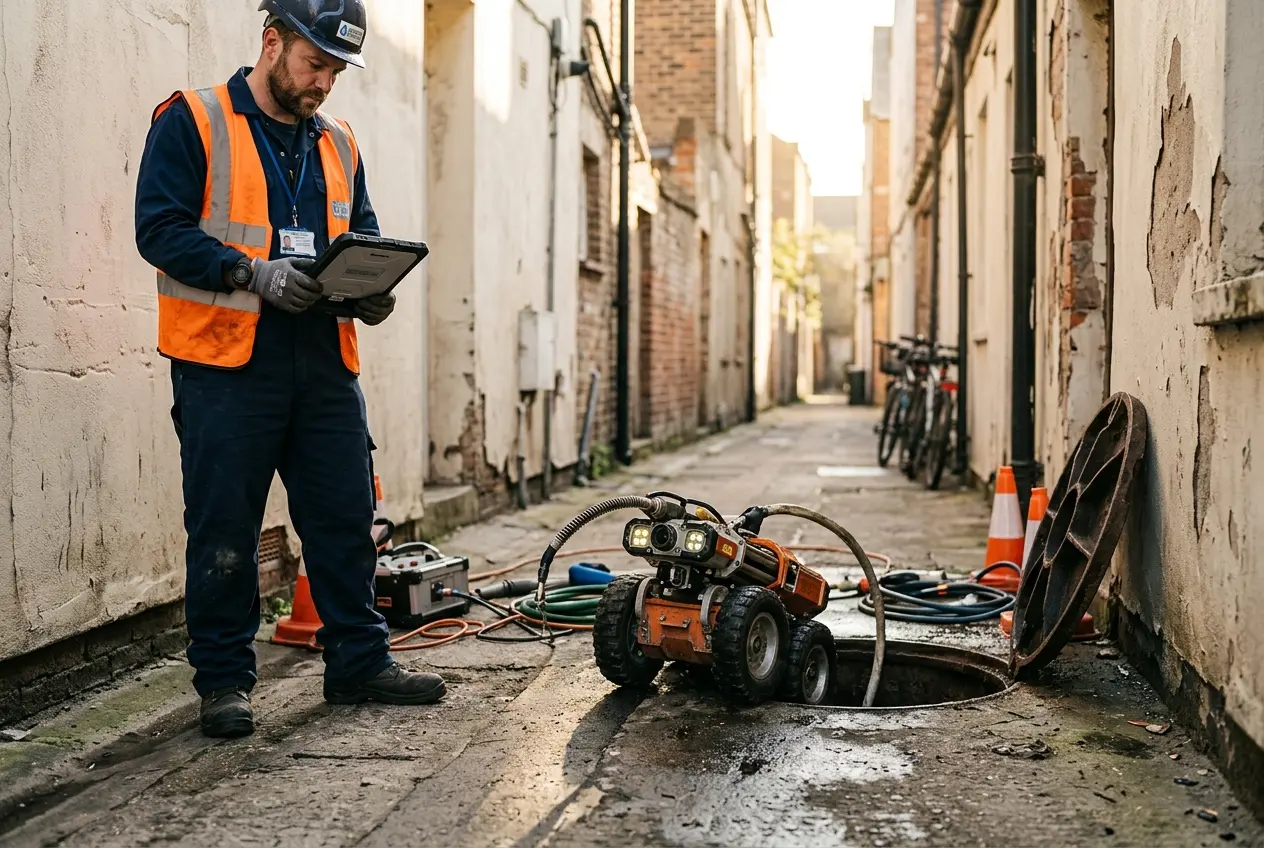
Crawlers carrying high-resolution cameras, advanced sensors and AI-based defect detection will slide into pipes 100 mm to 250 mm in diameter to flag leaks, blockages, sediment build-up, cracks, damaged joints, contamination and structural defects without extensive excavation. Each inspection team runs one non-motorised PTZ (pan-tilt-zoom) camera for the narrowest 100 mm pipes and one motorised compact robotic unit for the rest, with extra equipment dispatched for larger mains when needed. Every finding will be geo-tagged and integrated with the HMWS&SB’s digital systems, with each team expected to handle 65 to 75 complaints a month. The same crawlers will also trace unauthorised water connections, the board said, building the video and spatial evidence needed to chase them in court.
What the Board Approved
In one move, the HMWSSB expanded robotic inspection across every zone it manages. All 12 zones will host dedicated teams equipped with robotic inspection systems, trained personnel, vehicles and maintenance support, the board told the Express. Those teams will respond to complaints and carry out scheduled inspections across the city. The order is a direct response to “a large number of complaints related to water contamination, leakages and pipeline blockages,” particularly in older localities and densely populated slum areas, the board said.
Those 12 zones span the full geography of the metropolitan board. Each will receive a dedicated team, with the rollout distributing the same kit and the same reporting line across every circle. They are:
- Malkajgiri
- Uppal
- LB Nagar
- Serilingampally
- Kukatpally
- Quthbullapur
- Khairatabad
- Secunderabad
- Shamshabad
- Rajendranagar
- Charminar
- Golconda
Each team carries one non-motorised PTZ camera inspection system for the narrowest 100 mm pipes and one motorised compact robotic inspection system for pipelines 100 mm to 250 mm in diameter. The crawlers can flag leaks, blockages, sediment build-up, cracks and damaged joints, the board said, alongside contamination and other structural defects, all without extensive excavation. Pipeline runs above 250 mm will require additional robotic equipment, dispatched when the call comes in. Every finding is geo-tagged and integrated with the HMWS&SB’s digital systems, with each team built to handle 65 to 75 complaints a month.
The Quiet Job: Hunting the Illegal Taps
The leak-detection framing is the public-facing pitch of the order. Mapping every unauthorised water connection is the quieter operational half, and the one that explains the rollout’s true scale. Unauthorised water connections are the second thing the robots are for: the board’s order tasks them with tracing those taps, recovering unaccounted-for water, reducing Non-Revenue Water (NRW) losses and producing the video and spatial evidence needed for enforcement against illegal connections.
NRW is the gap between what a utility treats and what it bills for, and it shows up wherever pipelines leak, metres drift or connections never get registered. India’s urban utilities lose an average of 38 percent of potable water to NRW, almost double the global acceptable benchmark of 15 to 20 percent, per an India-wide 38-percent NRW benchmark. HMWSSB has not published a city-level NRW figure in the rollout announcement. Hyderabad’s slums already surface as the source of most water-pollution and leakage complaints, which is also where unaccounted-for water tends to live.
The geo-tagged video a crawler produces turns a contested tap into a piece of evidence a court or billing officer can use. That shifts the board’s recovery tool from physical raids, slow and politically fraught, to documentary proof. It also puts every line in the network on the record for the first time, including the ones nobody wants on it.
The board’s July framing treats enforcement as a side benefit. Off the back of the August 2025 announcement, the chairman’s office described the new infrastructure as a maintenance and complaint-response upgrade, with the illegal-connection work tucked into the closing paragraph. That subordination is probably tactical: the leak brief is politically safe, the tap hunt is not. The HMWSSB has had to defend itself repeatedly against accusations of contaminated supply, and the same neighbourhoods flagged for illegal connections also lead the contamination complaint list.
Where the Robots Will Hit Hardest
The board’s complaint profile points to exactly where the crawlers will land first. Hyderabad received between 450 and 500 water pollution complaints daily, the board told the Express in August 2025, with most of those calls coming from slum areas where ageing pipelines and narrow lanes complicate repairs. The ageing underground networks in those neighbourhoods are difficult to access with conventional maintenance methods. The same areas, by the board’s own description, are where pipeline blockages, sediment build-up and illegal connections concentrate. The complaint profile is, in effect, a deployment map for the new robots.
The robots, designed to enter pipes a person cannot, are explicitly built to reach where older maintenance crews could not. The Express’s image shows a HMWSSB worker fixing an overflowing water connection at Rail Nilayam in Secunderabad, and that scene is the problem the new equipment is meant to replace. The rollout distributes dedicated teams into all 12 zones, so the slums inside each circle get the new reach alongside the central districts. The board has placed teams in every zone, with the new equipment dispatched to the oldest, hardest-to-access parts of the network first.
Twelve zones will receive the dedicated teams. The daily complaint load sits between 450 and 500 calls. The standard team kit covers pipeline runs from 100 mm to 250 mm in diameter. Each team is sized to handle 65 to 75 complaints a month once fully deployed. Together those numbers explain why the board wants 12 teams rather than three.
From Pilot to Citywide Rollout
The July order is the second stage of a plan that started a year earlier. In August 2025, the HMWSSB announced an expansion of robotic inspection and fault-detection technology, prompted by the same complaint load and the same limitations of the Annual Maintenance System it had used before. The August shift was to bring in an external agency on a hire basis, with three specialised teams and a wider pipeline range.
Pipelines of 70 mm to 900 mm were to be inspected by an external agency under the August 2025 plan, using a mix of three non-motorised cameras, three small robots and one large robot. The July 2026 citywide scale-up narrows the standard team’s primary reach to 100 mm to 250 mm, with additional robotic equipment dispatched for the larger mains. The shift also changes throughput expectations: the August pilot team was set to handle three to five sites per day, while the July teams handle 65 to 75 complaints per team per month.
Management of the work has moved too. The August 2025 rollout ran on an outsourced, hire-basis contract with three teams operated by an external agency. The July citywide version places dedicated teams in each of the 12 zones, equipped with vehicles and maintenance support, sitting inside the board. The shift from contractor to in-house teams signals the board wants the inspection capacity to be permanent, not project-based.
Both stages share a few constants. Findings are geo-tagged and tied into the Water Board’s GIS. Detection targets include leaks, blockages, sediment build-up, illegal connections and structural issues. The change from August 2025 to July 2026 is one of structure and reach, not of underlying purpose.
| Category | Pilot rollout (Aug 2025) | Citywide scale-up (Jul 2026) |
|---|---|---|
| Pipeline diameter coverage | 70 mm to 900 mm | 100 mm to 250 mm standard; >250 mm with extra equipment |
| Teams deployed | 3 specialised teams, external agency | Dedicated teams per zone with vehicles and training |
| Throughput per team | 3 to 5 sites per day | 65 to 75 complaints per month |
| Equipment mix | 3 non-motorised cameras + 3 small robots + 1 large robot | 1 non-motorised PTZ camera + 1 motorised compact robot per team |
| Data integration | Cloud-based dashboard linked to GIS, hire-basis operation | Geo-tagged findings integrated with HMWS&SB’s digital systems |
What the Crawlers Actually Carry
The hardware description in the board’s order matches a generation of small inspection crawlers already on the market. The 100 mm to 250 mm envelope is normal for compact crawler-class systems with onboard HD cameras, IMU sensors for motion tracking, and laser profiling for pipeline measurements. The crawlers stream video and sensor readings back through the geo-tagged pipeline to the board’s dashboard, where defect detection runs against the feed. The same crawler generates the spatial evidence the board will use to chase unauthorised connections.
On the defect side, the detection targets the board named are wide:
- Leaks
- Blockages
- Sediment build-up
- Cracks and damaged joints
- Unauthorised connections
The “AI-based defect detection” the board invokes is software layered over that sensor feed. It classifies what the camera sees and what the laser profile measures, flagging anomalies against an asset map. Vendor catalogues describe similar stacks with IMU-assisted localisation, HD video capture and a digital pipeline twin that updates as the crawler moves. The board has not named a vendor in its public statement.
What Changes for the Daily Complaint
For the average complaint, the practical change is reach. Conventional maintenance has been the bottleneck, by the board’s own admission. The robotic system is the proposed fix to that delay: instead of excavating a road to find a cracked joint, a crawler finds it from inside. Each team’s expected throughput of 65 to 75 complaints a month is the new service standard the board is buying, and HMWSSB’s rollout sits inside a wider push to put AI sensors across Hyderabad’s city infrastructure, with traffic, power and emergencies already on the same track, per Hyderabad’s citywide AI sensor pilot covering power and water.
For unauthorised connections, the practical change is paperwork. A video file from a geo-tagged crawler inspection is closer to courtroom evidence than a physical raid is. The board has not spelled out the enforcement workflow in the order, but the explicit mention of “video and spatial evidence” tells the next question: who gets billed, and when. HMWSSB’s order fits a wider pattern of Indian urban utilities trying to recover revenue and reliability at the same time, and the robots are now the operational answer for both.
Technical limitations often delay fault detection and repairs, leading to consumer dissatisfaction.
The framing, by HMWSSB officials to the Express, is the case for the spend.
Frequently Asked Questions
What can the new HMWSSB robots actually see inside a pipe?
The robots carry high-resolution cameras, advanced sensors and AI-based defect detection software. The board said the system can flag leaks, blockages, sediment build-up, cracks, damaged joints, contamination and structural defects inside pipes between 100 mm and 250 mm in diameter, with extra equipment dispatched for larger mains.
When will the robots reach my zone?
The July 3, 2026 approval orders deployment across all 12 HMWSSB zones at once. The board has not published a per-zone schedule for the dedicated teams yet.
Will the robots find illegal water connections too?
Yes. The board’s order explicitly tasks the robotic inspection system with tracing unauthorised water connections, recovering unaccounted-for water and reducing NRW losses. The crawlers generate geo-tagged video and spatial evidence for enforcement against illegal connections.
How big is Hyderabad’s water-loss problem?
India’s urban utilities lose an average of 38 percent of potable water to Non-Revenue Water (NRW), almost double the global benchmark of 15 to 20 percent, according to the Observer Research Foundation. The HMWSSB has not published a city-level NRW figure in the July rollout announcement.


South Korea Retail Investors Face Reckoning After KOSPI AI Rally Collapses

Surrey AI Maps Three Heart Attack Paths and Their Molecular Roots

Germany Locks Neutral Apple ATT Prompts Across Most of Europe

Apple’s 5% EU Fee Quietly Rewrites Alternative App Store Math

Apple’s EU Fee Truce Cuts Complexity but Leaves Rivals Fuming

Pixel 11 Pro Fold Trades Thinness for Durability and Seven-Year Stay

Mayo AI Flags HCM Obstruction From Everyday Ultrasound Videos

Indian Brands Quietly Scale Landmark Screens and Home Tech

Navin Vatsa Turns Grief Into a Lifetime of Quiet Seeing

Google Bets Pixel 11 Agentic AI Will Redefine Phones

Oracle Cuts 21,000 Jobs in a Year, Cites AI in 10-K Filing

Fable 5 and Mythos 5 Return as US Lifts Anthropic Export Controls

SpaceX’s Google Deal Turns a Rocket Company Into a Cloud Landlord

CD Projekt Red Co-CEO: Redemption Arc Isn’t Done, Witcher 4 in 2027

XPL Rallies 30% Ahead of Plasma One Card Tier Launch

Google Search Profiles Build a Follow Graph Inside Discover

DGO App Brings Rs 549 Mobile Pass for FIFA World Cup 2026 in Nepal

Moonshot AI Targets $30 Billion in China’s Fastest AI Funding Sprint

Oppo’s ColorOS 17 Eligibility List Leaves A-Series Buyers Behind

Microsoft Xbox Layoffs Start in July as Sharma Slams 3% Margin
-
 AI2 months ago
Oracle Cuts 21,000 Jobs in a Year, Cites AI in 10-K Filing
-
 AI2 months ago
Fable 5 and Mythos 5 Return as US Lifts Anthropic Export Controls
-
 AI3 months ago
SpaceX’s Google Deal Turns a Rocket Company Into a Cloud Landlord
-
 GAMING2 months ago
CD Projekt Red Co-CEO: Redemption Arc Isn’t Done, Witcher 4 in 2027
-
 CRYPTO2 months ago
XPL Rallies 30% Ahead of Plasma One Card Tier Launch
-
 NEWS3 months ago
Google Search Profiles Build a Follow Graph Inside Discover
-
 APPS2 months ago
DGO App Brings Rs 549 Mobile Pass for FIFA World Cup 2026 in Nepal
-
 AI3 months ago
Moonshot AI Targets $30 Billion in China’s Fastest AI Funding Sprint