
CRYPTO
HYPE Drops 9% and Robinhood’s CASHCAT Meme Coin Crashes 52%
Hyperliquid’s HYPE token slid over 9% and Robinhood Chain’s CASHCAT meme coin crashed more than 52% as Iran tensions and a launchpad outage hit crypto.

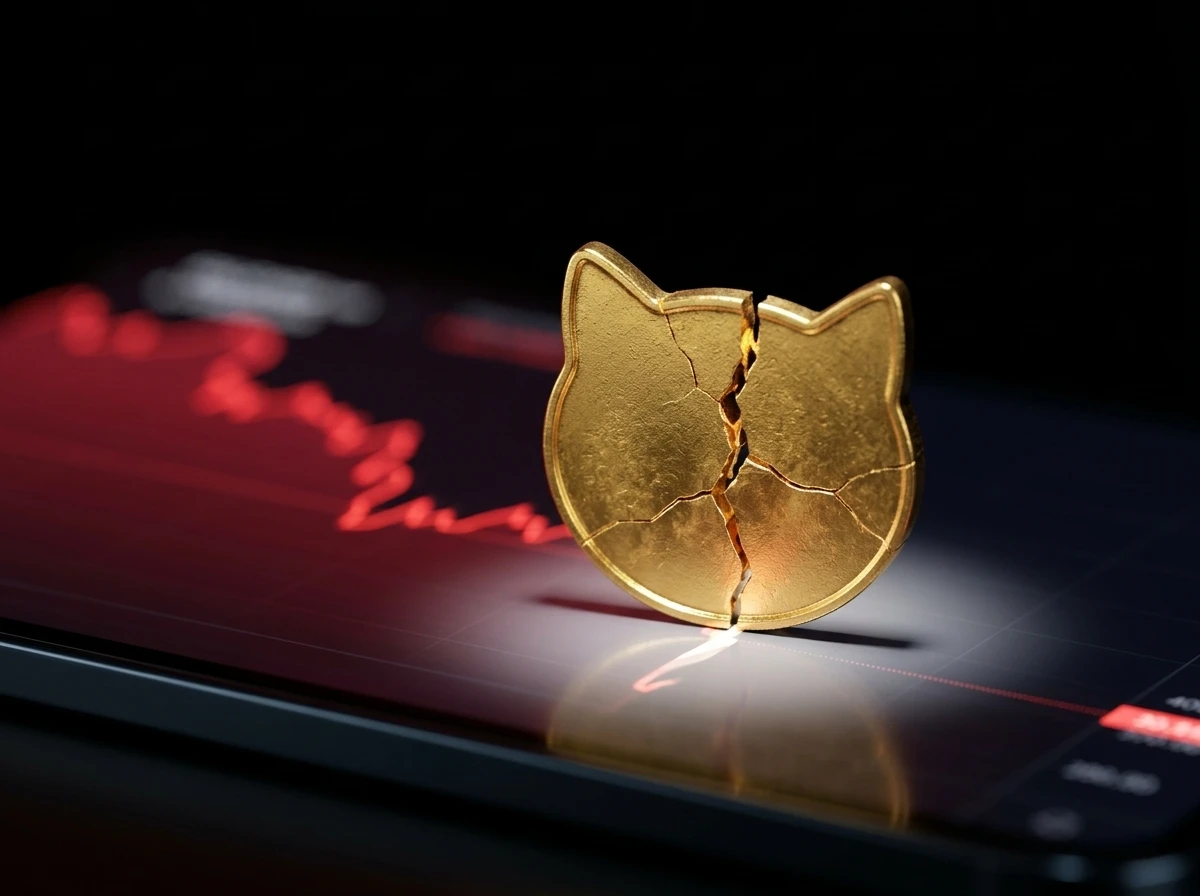
Hyperliquid’s HYPE token fell more than 9% Friday and Robinhood Chain’s meme coin CASHCAT crashed over 52%, hit by Iran tensions and a launchpad blackout. The two token routs happened in the same week for different reasons.
HYPE’s slide fits a pattern that has repeated all year: crypto sells off whenever Iran-linked tensions spike, then claws back part of the loss. CASHCAT’s collapse is stranger. The token’s rise depended entirely on a launchpad’s marketing machine, and when that machine’s website went dark, so did most of its value.
HYPE’s Rejection at $72 Turns Into a 9% Slide
HYPE, the native token of the decentralized derivatives exchange Hyperliquid, touched an intraday low of $60.15 on OKX on July 17, according to crypto outlet Odaily. It later steadied near $60.40, still down more than 9% for the day.
The drop had two engines. Iran said it had struck US military positions in the Middle East, reviving fears over the Strait of Hormuz, the waterway that carries roughly a fifth of the world’s oil trade. That pushed Bitcoin under $64,000, per Odaily, and dragged the broader altcoin market down with it.
HYPE was an easy target on top of that. The token had already failed several times to clear resistance in the $72 range, with buying momentum fading each time. It only just touched an all-time high of $76.67 on June 16, and Friday’s price sat more than 20% below that peak.
| Asset | 24-Hour Move (July 17) | Price / Market Cap | Primary Driver |
|---|---|---|---|
| HYPE | Down more than 9% | Around $60.40; market cap near $15.4 billion | Iran-linked risk-off, repeated failure at $72 resistance |
| CASHCAT | Down more than 52% | Around $52 million market cap | Noxa launchpad fallout, liquidity rotation to newer coins |
Both numbers describe the same afternoon, but they describe two very different markets sitting on top of each other.
Iran, Oil, and a Familiar Playbook
This is not the first time Iran-linked tensions have hit crypto in 2026. Bitcoin has now sold off around Strait of Hormuz headlines several times this year, and the pattern rarely changes: a sharp drop, a wave of liquidations, then a partial recovery once the immediate threat cools.
Bitcoin broke below $73,000 in late May after US strikes near the strait triggered close to $1 billion in liquidations. It happened again in mid-July, when renewed hostilities pushed Bitcoin toward $63,000 and drove $253 million in 24-hour liquidations skewed toward longs. By July 14, Iran had announced an indefinite closure of the strait and Bitcoin dipped under $62,000.
None of that happens in isolation. A hawkish Federal Reserve has spent months squeezing crypto liquidity through three separate funnels, leaving altcoins with less cushion whenever a geopolitical shock lands. High-beta tokens like HYPE tend to absorb the worst of it first.
CASHCAT Was Built on Borrowed Attention
Robinhood Markets opened its own blockchain, a layer-2 network built on Ethereum, on July 1. Within nine days, trading volume on Robinhood Chain rocketed from around $200,000 to more than $500 million, according to data from DefiLlama, a crypto analytics tracker, cited by Fortune. Meme coins, not the tokenized stocks Robinhood built the chain for, drove almost all of it.
CASHCAT led the pack. Its name is a callback to Robinhood’s earliest days: Robinhood cofounders Vlad Tenev and Baiju Bhatt originally called their company CashCat, according to a New Yorker profile cited by Fortune. The token surged from a $10 million market cap to $100 million within hours of launch, then kept climbing toward a peak near $226 million.
Then its launchpad vanished. Noxa was the largest token-launch platform on Robinhood Chain and had listed CASHCAT from day one. It halted new token creation on July 11, citing a flood of copycat, bot-driven launches. Two days later its website went dark entirely, an outage the team blamed on a Cloudflare issue. On July 14, Noxa said it would stop collecting fees altogether and hand 100% of transaction revenue to creators instead.
- July 1: Robinhood Chain’s public mainnet goes live; daily trading volume starts near $200,000.
- July 11: Noxa halts new token launches, citing a wave of copycat, bot-driven tokens crowding the platform.
- July 13: Noxa’s website goes dark for two days; the team blames a Cloudflare issue.
- July 14: Noxa says it will stop collecting fees entirely, redirecting 100% of transaction revenue to creators.
- July 16: CASHCAT falls 35.44% and drops below $0.10, according to Bloomingbit.
- July 17: CASHCAT’s market cap briefly slips under $50 million as HYPE falls more than 9% on renewed Iran tensions.
Noxa’s fee haul before the shutdown was significant by any measure, though the exact number depends on who is counting. CoinDesk, citing DefiLlama, put the total near $12 million; separate Odaily-linked reporting put it above $14.5 million. Either way, the launchpad had pushed out more than 60,000 tokens and, on its best single day, collected $2.33 million in protocol fees, more than four times what the Solana launchpad Pump.fun made that same day.
What Is Robinhood Chain for, Anyway?
Robinhood built its chain to carry tokenized stocks and other real-world assets onto a public blockchain. Two weeks after launch, tokenized real-world assets on Robinhood Chain totaled roughly $12.66 million in combined market cap, a small fraction of what a single meme coin reached in days.
“Two weeks on, RWAs are 4% of it and a cat token ran the place,” crypto.news wrote, summarizing the gap between Robinhood Chain’s stated purpose and what actually happened on it.
Robinhood crypto SVP Johann Kerbrat has kept the company’s public messaging focused on tokenized assets rather than meme coin speculation, Fortune reported. The chain’s own usage data tells a different story.
- Trading volume: rocketed from about $200,000 to more than $500 million in nine days after the July 1 launch, per DefiLlama data.
- CASHCAT’s peak: reached a market capitalization near $226 million within days, dwarfing the chain’s entire real-world asset total.
- Noxa’s footprint: pushed out more than 60,000 tokens before halting new launches on July 11.
- Fee lead: Noxa collected $2.33 million in protocol fees on its best day, versus $575,500 for Pump.fun on the same day.
None of that volume required the real-world-asset use case Robinhood advertised. It required a working front end, a trending feed, and a reason to click. When the front end disappeared, so did the reason.
Crypto Twitter Can’t Agree on Who Won
Noxa’s decision split traders instantly. Some saw a launchpad finally policing its own platform. Others saw a team walking away from a business that, by its own numbers, had been making millions of dollars a day.
Half the timeline called it based because someone finally pushed back against the spam.
That was the take from trader @zubic_eth, in a post that split Crypto Twitter down the middle. The same post noted the other camp called it a “generational fumble,” accusing Noxa of abandoning roughly $3 million a day in revenue.
Not everyone treated the selloff as validation of anything. Trader 0xAvast, who says he rode CASHCAT from a $10,000 market cap to $230 million, called the drop “irrelevant FUD” and argued the lower price was a buying opportunity.
What Noxa Does Next Will Decide CASHCAT’s Fate
Crypto.news framed the range of outcomes plainly: Noxa could relaunch its interface, unlock creator fees, and reclaim the share it lost during the blackout. That is the likeliest single outcome by the outlet’s own account, and also the least dramatic.
The alternative is that the market has already moved on. Competing launchpads, including flap.sh, trensh.today, and bankr, kept adding new tokens on Robinhood Chain while Noxa’s site sat offline, according to Dune Analytics data cited across multiple crypto outlets. If those platforms keep the attention they picked up during the outage, CASHCAT trades on whatever community loyalty survives once the novelty of Robinhood Chain wears off.
CASHCAT’s Uniswap liquidity pool keeps functioning no matter what Noxa does next. Its trending feed and creator dashboard do not work that way. Those lived entirely on a website, and that website is the thing that broke.
Frequently Asked Questions
Why Did HYPE Fall More Than 9% This Week?
HYPE dropped after Iran said it struck US military positions in the Middle East, reviving fears over the Strait of Hormuz and pushing Bitcoin under $64,000. Traders were also watching a scheduled unlock of 9.92 million tokens on August 6, worth roughly $618 million, adding to supply concerns already weighing on a token that had repeatedly failed to clear $72 resistance.
Why Is CASHCAT Called CASHCAT?
The name nods to Robinhood’s own founding story. Cofounders Vlad Tenev and Baiju Bhatt originally called their company CashCat before renaming it Robinhood, according to a New Yorker profile cited by Fortune.
Can Noxa Creators Still Claim Their Fees?
Noxa says yes. After its site went dark for two days, the team rolled out a replacement address, fun.noxa.eth, built on ENS and IPFS, where creators can view token history and withdraw earnings now that trading fees flow entirely to them.
Does Robinhood Chain Do Anything Besides Meme Coins?
Yes. Tokenized real-world assets were the chain’s original purpose, but they totaled only about $12.66 million in combined market cap two weeks after launch, according to CoinDesk, compared with CASHCAT’s peak of roughly $226 million.
Disclaimer: This article is for informational purposes only and does not constitute investment advice. Cryptocurrencies including HYPE and CASHCAT are highly volatile and speculative assets. Consult a licensed financial advisor before making investment decisions. Figures are accurate as of publication on July 17, 2026.


Google Opens Gmail to Voice and Gates Docs Live

Lenovo Prices the IdeaPad Vibe Against Apple’s $699 Neo

Xbox Caps Game Pass Cloud Gaming at 15 Hours

GTA 6 DualSense Controllers Follow Sony’s Usual $84.99 Script

South Korea Retail Investors Face Reckoning After KOSPI AI Rally Collapses

Surrey AI Maps Three Heart Attack Paths and Their Molecular Roots

Germany Locks Neutral Apple ATT Prompts Across Most of Europe

Apple’s 5% EU Fee Quietly Rewrites Alternative App Store Math

Apple’s EU Fee Truce Cuts Complexity but Leaves Rivals Fuming

Pixel 11 Pro Fold Trades Thinness for Durability and Seven-Year Stay

Oracle Cuts 21,000 Jobs in a Year, Cites AI in 10-K Filing

Fable 5 and Mythos 5 Return as US Lifts Anthropic Export Controls

SpaceX’s Google Deal Turns a Rocket Company Into a Cloud Landlord

CD Projekt Red Co-CEO: Redemption Arc Isn’t Done, Witcher 4 in 2027

XPL Rallies 30% Ahead of Plasma One Card Tier Launch

Google Search Profiles Build a Follow Graph Inside Discover

DGO App Brings Rs 549 Mobile Pass for FIFA World Cup 2026 in Nepal

Moonshot AI Targets $30 Billion in China’s Fastest AI Funding Sprint

Oppo’s ColorOS 17 Eligibility List Leaves A-Series Buyers Behind

Microsoft Xbox Layoffs Start in July as Sharma Slams 3% Margin
-
 AI2 months ago
Oracle Cuts 21,000 Jobs in a Year, Cites AI in 10-K Filing
-
 AI2 months ago
Fable 5 and Mythos 5 Return as US Lifts Anthropic Export Controls
-
 AI3 months ago
SpaceX’s Google Deal Turns a Rocket Company Into a Cloud Landlord
-
 GAMING2 months ago
CD Projekt Red Co-CEO: Redemption Arc Isn’t Done, Witcher 4 in 2027
-
 CRYPTO3 months ago
XPL Rallies 30% Ahead of Plasma One Card Tier Launch
-
 NEWS3 months ago
Google Search Profiles Build a Follow Graph Inside Discover
-
 APPS3 months ago
DGO App Brings Rs 549 Mobile Pass for FIFA World Cup 2026 in Nepal
-
 AI3 months ago
Moonshot AI Targets $30 Billion in China’s Fastest AI Funding Sprint