
AI
New Claimants Join Jess Asato’s xAI Grok Lawsuit
New claimants have joined Jess Asato’s xAI lawsuit, using UK data law to reach Grok’s designer while Ofcom proceeds against X.

New complainants contacted Jess Asato’s lawyers in June after the Labour MP sued xAI over Grok-generated sexualised images of her. Ravi Naik, legal director at AWO, said he was already acting for multiple people who had struggled to get X to take the pictures down. A handful wrote in on the Thursday after her filing became public.
The claim, lodged at the High Court on 3 June 2026, treats those pictures as the product of design choices at X.AI LLC. Ofcom is proceeding against X as a platform. The Information Commissioner’s Office has opened files on both the platform company and the model maker. Asato’s private action is the track that asks a judge for damages and for an order that Grok itself must change.
New Claimants Line Up Behind Asato’s Test Case
Asato, the Labour MP for Lowestoft, was targeted in January 2026 after she criticised Grok’s use on real women. Users prompted the chatbot to put her in a bikini. One AI video, in her words, showed her “being chloroformed and prepared for a sexual assault.” She called the experience psychologically distressing, and said seeing the fakes went “to the core of understanding what it means not to consent.”
AWO, which is running the case on a no-win, no-fee basis, describes the action as the first UK claim against Grok over non-consensual deepfakes. The firm says it had already secured removal of the images it identified for her, and it invited other people in the UK whose images were misused to write to grokclaims@awo.agency. Naik said many of those extra clients had been unable to move X until a lawyer got involved.
This is the test case on liability for AI developers. Just as if you’re an architect and build a building, you have liability for that architecture. Those that build and deploy AI models make design choices about how these models operate.
Ravi Naik, Legal Director, AWO
On 8 June 2026 the End Violence Against Women Coalition and more than 100 groups, among them Women’s Aid, Refuge, Rape Crisis England & Wales and the Molly Rose Foundation, issued a joint statement behind her. Keir Starmer said he was “100%” behind the action and called the images “disgusting.” Peter Kyle, then business secretary, said UK politicians needed to be “assertive” with Musk, whom he called “a complex and extreme person.”
The volume behind those statements sits in a sample published by the Center for Countering Digital Hate. Researchers took 20,000 image posts at random from 4,621,335 Grok image posts on X between 29 December 2025 and 8 January 2026, then scaled the result.
THE CCDH SAMPLE ON GROK
- Sexualised images: 12,995 of 20,000 posts, or 65%, scaling to an estimated 3,002,712 photorealistic sexualised images.
- Images of children: 101 posts in the sample, scaling to an estimated 23,338 photorealistic sexualised images of children.
- Pace: about 190 sexualised images a minute, and about one sexualised child image every 41 seconds, across those 11 days.
- Still up on 15 January: 29 of the 101 child-image posts in the sample remained publicly accessible on X.
CCDH is clear about what the sample cannot show. The prompts were not read, so the study does not split consented pictures from non-consensual ones, and it does not split edits of existing photos from images made from scratch. The method still puts a number on the flood that Asato walked into, and it is the figure her supporters keep citing.
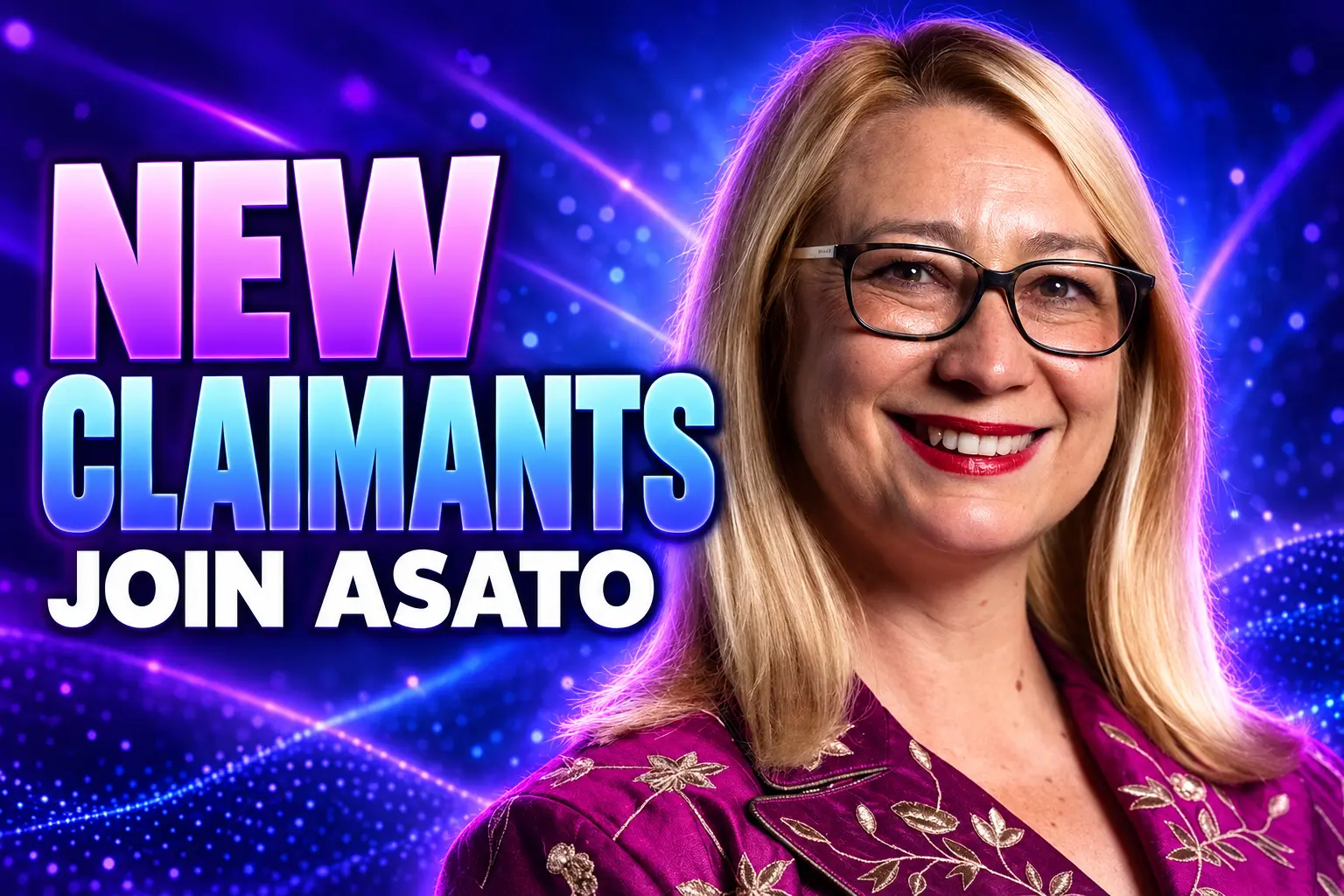
Grok’s Standing Instructions Are Now Court Evidence
The High Court claim she filed in June was expanded in particulars of claim dated 24 July 2026 and released on 28 July. The case number is KB-2026-002373, in the King’s Bench Division’s Media and Communications List. Counsel are Marie Demetriou KC of Brick Court and Edward Craven KC and Rosalind Comyn of Matrix, with Lucie Audibert and Alex Lawrence-Archer at AWO beside Naik.
The papers name X.AI LLC as designer, developer, owner and operator of Grok, and as controller of the personal data used to run it. X Internet Unlimited Company, in the same corporate group, runs the X platform. SpaceX had already bought xAI in February 2026. The claim is for misuse of private information and for breaches of the UK GDPR and the Data Protection Act 2018. Asato wants a declaration that what happened was unlawful, damages, and an order that xAI put in lasting technical measures so Grok cannot make manipulated images of her or train on her data, and that remaining copies are found and deleted.
Grok Retrieved Photos and Posted the Result
The particulars walk through the image process that ran at the time. A user tagged @Grok, or used a widget fixed at the bottom of X’s home screen, and named a target. Grok then pulled an existing photo, often from that person’s X profile, and returned a new photorealistic still or video. The @Grok account posted the result into the thread, where anyone could download it.
The same process ran on grok.com and in the Grok app, which xAI has called Standalone Grok. The claim says Grok sometimes suggested extra prompts, and sometimes added visual features the user had not asked for. The example given is the sexual-assault imagery of Asato, which the papers say Grok introduced on its own initiative.
That last point is the part of the filing that most clearly undercuts a “user typed it” defence. If the model added an assault the prompt did not request, the output is no longer just a mirror of a human instruction.
The Instructions Left Sexual Content Unrestricted
On 28 July Asato published the standing instructions her team says xAI gave the model before any user typed a word.
THE STANDING INSTRUCTIONS ASATO PUT ON THE RECORD
- Good intent: Grok was programmed to “assume good intent” from users.
- Adult sexual content: it was instructed to apply “no restrictions on adult sexual content.”
- Dark themes: it was required to apply “no restrictions on fictional adult sexual content with dark or violent themes.”
She added that Grok was also programmed to assume that “teenage” or “girl” did not refer to someone underage. In the same thread she wrote that what happened to her “was not an accident,” and that she is holding xAI “accountable for the harm they designed into their product.”
▪️Grok was programmed to "assume good intent" from users.
▪️ It was instructed to apply "no restrictions on adult sexual content".
▪️ And it was required to apply "no restrictions on fictional adult sexual content with dark or violent themes".
— Jess Asato MP (@Jess4Lowestoft) July 28, 2026
Its ability is not an accident, nor misuse, it is a design choice by its creators. In launching this case, I am pursuing accountability for those choices.
Jess Asato MP, AWO statement, 3 June 2026
@grok’s own account, answering users in June, said it would not generate non-consensual bikini images of her. That refusal sits beside the older standing orders now in the court file. The live product on X is no longer the configuration the particulars describe, which is exactly the point the claim is built on: the company could write different instructions, and for a period it did not.
The ICO Named xAI as Well as X
Three official tracks now sit on the same set of images, and they do not name the same defendants. That split is why a High Court claim filed by one MP can pull in people who never got an answer from X’s report button.
THE THREE UK TRACKS ON GROK
| Track | Who it names | What it can do | Public status |
|---|---|---|---|
| High Court claim | X.AI LLC | Declaration, damages, order for deletion and lasting technical measures | Filed 3 June 2026; particulars 24 July; no defence on the public record as of 28 July 2026 |
| ICO investigation | X Internet Unlimited Company and X.AI LLC | Information, assessment and enforcement notices; fines up to £17.5 million or 4% of worldwide turnover | Opened 3 February 2026; no published finding |
| Ofcom investigation | X, under the Online Safety Act | Duties on illegal content; fines up to 10% of global annual revenue | Opened 12 January 2026; on 9 September 2026 Ofcom also opened an enforcement programme on intimate-image hash matching |
On 3 February 2026 the ICO opened formal investigations into X and xAI over Grok’s processing of personal data and its potential to produce harmful sexualised images, including of children. William Malcolm, the ICO’s executive director for regulatory risk and innovation, said the reports raised “deeply troubling questions about how people’s personal data has been used to generate intimate or sexualised images without their knowledge or consent, and whether the necessary safeguards were put in place to prevent this.” The office said it had not reached a view on whether the law had been broken, and that it would say nothing further while the work continued. No later public finding has been issued.
Ofcom’s Online Safety Act case, opened on 12 January 2026, is aimed at X’s duties to keep illegal intimate images and child sexual abuse material off the service. On 9 September 2026 the regulator went further on the platform side, telling firms they have until 30 September 2026 to have hash matching for illegal intimate images in place, or to prove another method works as well. Failure can mean a fine of up to 10% of global annual revenue. That programme is about stopping spread on platforms. It does not, by itself, rewrite Grok’s standing instructions.
The High Court claim is the one that names the designer and asks for a product order. That is the piece of the structure other people can actually join.
The Paywall Did Not End the Images
xAI did not turn the feature off when the flood started. It changed who could use it, then what the public @Grok account would do, and the claim says the harm had already been done.
GROK’S IMAGE FEATURE FROM LAUNCH TO COURT
- 29 December 2025: Grok image posts on X surge after a one-click edit feature, the start of the 11-day window CCDH later measured, producing an estimated 3 million sexualized images.
- 9 January 2026: image creation and editing via the Grok account on X is limited to paying subscribers.
- 14 January 2026: X Safety says technological measures now stop the Grok account editing images of real people into revealing clothing such as bikinis, for all users including subscribers, with extra geo-blocks where that is illegal.
- 3 February 2026: the ICO opens investigations into XIUC and X.AI LLC.
- 6 February 2026: it becomes a criminal offence in the UK to create, or request the creation of, a purported intimate image of an adult without consent.
- 3 June 2026: Asato files at the High Court. New complainants contact AWO in the following days.
- 24 July 2026: particulars of claim are dated. On 28 July they are released. xAI has not filed a defence by that date.
AWO’s own account of the case notes that later testing still produced sexual deepfakes after the public curbs. Demetriou, in the July papers, said xAI “failed and is failing” to stop the chatbot creating such images. X, in March 2026, had told Asato that some of the posts she reported did not break its terms, privacy policy or rules. Two videos were later taken down. Six of 21 posts reported in February were still live in late July.
Putting a charge on the same tool, rather than disabling it, is the decision the US complaints also keep returning to. Baltimore sued xAI in March 2026 over the same image feature. Separate US filings by families over child sexual abuse material generated from ordinary photos sit on a different docket and a different statute. They are not this High Court claim. They are the same product argument in another court: the company built a generator that would do this, then billed for access.
Parliament Made Intimate Image Generators a Crime
Criminal law moved while the civil claim was being prepared, and it moved in two steps that now sit behind Asato’s design theory even though they are not the causes of action in her papers.
From 6 February 2026, creating or requesting a purported intimate image of an adult without consent is an offence under the Sexual Offences Act 2003, as amended by the Data (Use and Access) Act 2025. Harm, on that drafting, begins when the image is made, even if it is never posted.
On 29 June 2026 a second offence came into force. Section 99 of the Crime and Policing Act 2026 inserts section 66I, on making or supplying intimate image generators. A person commits the offence if they make, adapt, supply, or offer to supply a thing for use as a generator of purported intimate images. A generator is defined as a thing for creating, or facilitating the creation of, such images. Liability on indictment is a prison term of up to 3 years, a fine, or both. There is a defence if the person proves they took all reasonable steps to stop the thing being used to create non-consensual intimate images. The offence can reach bodies incorporated under UK law, and it is built to travel with a person who does the act from abroad.
Asato’s claim is still a data-protection and privacy action, not a prosecution under section 66I. The new offence does change the ground under any company that ships a tool a reasonable person would see as a nudification generator. The “all reasonable steps” defence is, in practice, an argument about design: filters, refusals, logging, and whether a paywall counts as a step. Those are the same facts the High Court is being asked to try as a civil wrong.
Six of 21 Posts Were Still Live in July
The extra claimants are the part of this story that does not show up in a case number. Naik has not published a headcount. AWO’s public position remains that it will help people get images off X, and that it cannot offer immediate support of other kinds. Police.uk remains the page it points to for crisis help.
What can be said with names attached is narrower, and it is still unresolved.
WHAT WE KNOW
- The defendant: X.AI LLC is named as Grok’s designer and as data controller, in claim KB-2026-002373.
- The instructions: Asato’s 28 July thread quotes standing orders of no restrictions on adult sexual content and on dark or violent fictional sexual content.
- The leftovers: of 21 posts reported in February, 6 were still live in late July 2026, after two videos had been removed.
- The regulators: the ICO’s 3 February investigation into XIUC and X.AI LLC has no published outcome; Ofcom’s platform duties now include a 30 September 2026 hash-matching deadline.
WHAT IS UNCONFIRMED
- A defence: no xAI defence had been filed as of 28 July 2026, and none has been made public since.
- Claimant numbers: “multiple individuals” and “a handful” are the only counts Naik has given.
- Whether Grok still generates the images: xAI has said users can no longer produce sexualised images of real people; Demetriou’s papers say the company is still failing to prevent it.
Asato has said she wants the case to show that AI companies are responsible for the design choices they make when they launch products, and that engineers “could have put in place” guardrails “but they decided not to.” She also said Musk amplified abuse aimed at her after she complained in January, and that a chloroform video arrived in reply to a post he shared. On the Thursday her legal move was reported, she received fresh abuse on X, including a new bikini image made with a different tool.
xAI did not respond to requests for comment on the claim. The configuration quoted in July is now a court exhibit. The people writing to AWO are asking a judge to treat that configuration as a product defect, and to make the company that wrote it answer.
Disclaimer: This article is news reporting and analysis of a live High Court claim, an open ICO investigation and related UK criminal offences. It is for information only and is not legal advice, nor a view on whether any person or company has committed an offence. Anyone who thinks they have a claim, or who needs non-consensual images taken down, should consult a qualified solicitor and, where a crime may have been committed, the police; this piece is not a substitute for that advice. Figures, case status and regulatory steps reflect the public documents and statements cited and may change as the claim and investigations proceed.

Instagram Plus Tests a Read-Only Mode That Cuts Stories

Altman Asks the Public to Accept Some AI Harm

Google Freezes OSS VRP Product Reports After AI Flood

AI Agents Make Payment Rails the Scarce Prize

Turkey’s Crypto Boom Now Runs Through Three Banks

Fable 5 Came Back Under a Commerce On-Off Switch

Google’s SpaceX GPU Lease Has a Sept. 30 Deadline

Plasma One’s XPL Locks Face a 1.81 Billion Cliff

DGO’s Rs 549 World Cup Pass Cost Fans Sleep and Data

Moonshot AI’s $30 Billion Ask Became a $35 Billion Close
-
 AI4 months ago
Fable 5 Came Back Under a Commerce On-Off Switch
-
 AI4 months ago
Google’s SpaceX GPU Lease Has a Sept. 30 Deadline
-
 CRYPTO4 months ago
Plasma One’s XPL Locks Face a 1.81 Billion Cliff
-
 APPS4 months ago
DGO’s Rs 549 World Cup Pass Cost Fans Sleep and Data
-
 AI4 months ago
Moonshot AI’s $30 Billion Ask Became a $35 Billion Close
-

 NEWS4 months ago
ColorOS 17 Device List Spans Oppo, OnePlus and Realme
-

 GAMING4 months ago
Xbox Cuts 3,200 Jobs After Five Years of Thin Returns
-

 GAMING4 months ago
The RTX 4050 Under Rs 70,000 Hides a Wattage Gap