
NEWS
Manila Police Wire Schools Into Beat Patrols With One-Tap App
Manila Police District’s One Push Button app lets school admins alert beat patrols in one tap. Here is what it does, who runs it, and what the CHR has flagged.

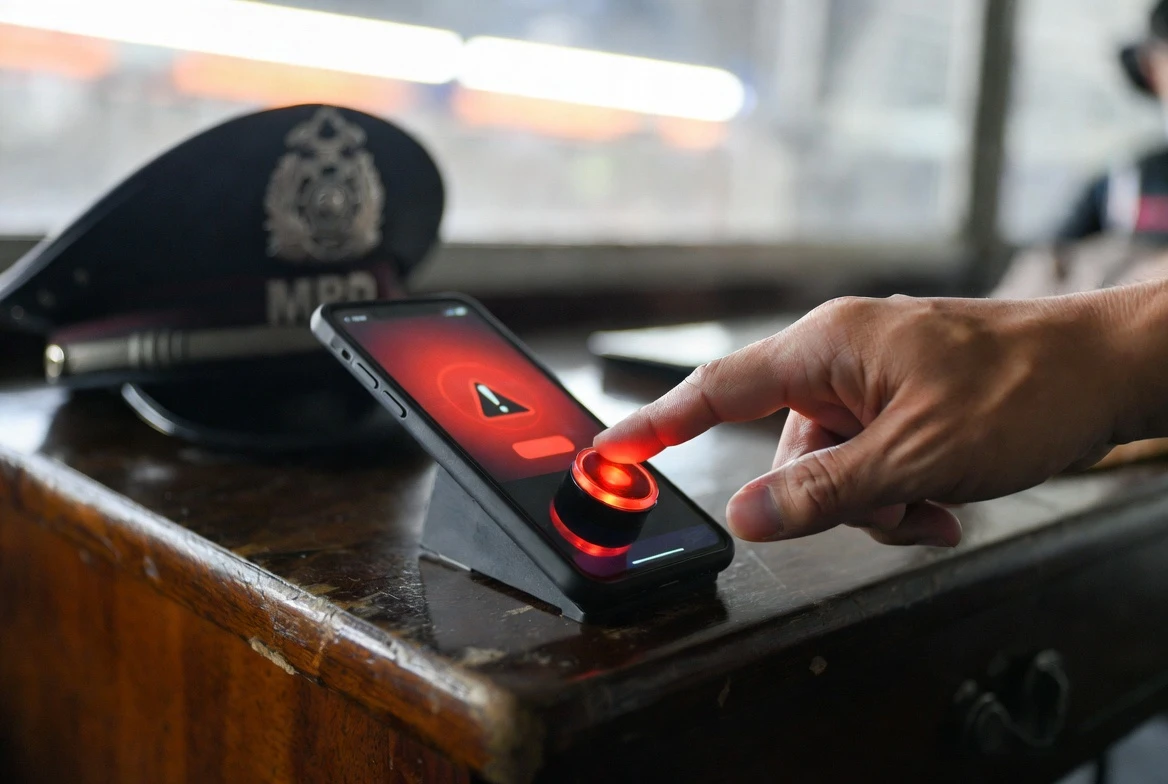
The Manila Police District has wired Ermita schools into its beat-patrol network with a new one-tap emergency app, the latest layer added to a Balik-Eskwela 2026 security push that already covers Tondo with checkpoints and foot patrols. School administrators in PS-5’s coverage area can press the button during an incident and reach assigned officers without going through a station switchboard. The deployment lands inside a wider campaign the MPD calls “Oplan Ligtas Eskwela.”
Lt. Col. June Paolo O. Abrazado, commander of Police Station 5 in Ermita, led the school visits that installed the app and coordinated directly with school officials. MPD Director Brig. Gen. Arnold Casingal Santiago oversees both PS-5’s rollout and PS-1’s parallel checkpoints in Tondo, run by Lt. Col. Ronald De Leon under the same campaign. The same week the rollout went district-wide, the Commission on Human Rights had already told MPD to police its own anti-criminality operations more carefully.
How the One Push Button App Works
The One Push Button emergency app turns a school administrator’s phone into a direct line to assigned beat patrol units. One tap fires an alert that bypasses the usual 911-style flow and routes straight to officers already moving through the area. The MPD says the app is meant to cut response time and reduce the coordination lag a station call would create.
- One Push Button: emergency alert app installed by MPD PS-5
- Routes alerts to assigned beat patrol units
- Deployed under “Oplan Ligtas Eskwela” for Balik-Eskwela 2026
- Led by PS-5 commander Lt. Col. June Paolo O. Abrazado
Abrazado’s team also walked the schools to map security gaps before installing the app, a step MPD framed as much about coordination as about hardware. The visit list, per the Manila Police District, included assessment of access points and direct conversation with school officials. PS-5 said the goal is faster on-site arrival when an incident occurs inside the campus or right outside the gate. The pilot is limited to PS-5’s Ermita coverage area for now, with no Manila Police District timeline for citywide rollout.
Ermita Schools Get the Button, Tondo Gets the Checkpoints
The PS-5 push in Ermita ran alongside a parallel operation in Tondo, where PS-1 stationed under Lt. Col. Ronald De Leon spent the weekend on visibility patrols, checkpoints, and the operation known as Oplan Galugad. The two stations sit at opposite ends of Manila but are answering the same Balik-Eskwela 2026 brief: keep schools and their surrounding streets under watch through the resumption period. The MPD frames both efforts as preventive, not reactive, with foot patrols and school visits doing most of the early work. Manila Bulletin’s coverage of MPD operations during the same window lists PS-5 and PS-1 among the district’s active school-security deployments.
- PS-5 (Ermita): school visits, One Push Button app installs, led by Lt. Col. June Paolo O. Abrazado
- PS-1 (Tondo): checkpoints, foot patrols, Oplan Galugad, led by Lt. Col. Ronald De Leon
- MPD-wide: Balik-Eskwela 2026 coordination, MPD Director Brig. Gen. Arnold Casingal Santiago
Santiago has publicly tied the school push to the broader Balik-Eskwela campaign the Philippine National Police runs every year, a campaign that draws on patrol, traffic, and beat resources from across the district. The PS-1 work in Tondo focuses on the public streets around schools, with officers directed to flag suspicious behavior before it escalates. Inside the campuses, PS-5’s app gives administrators a way to escalate without picking up a phone.
The PS-1 footprint in Tondo is heavier on physical presence: checkpoint points and on-foot “Galugad” sweeps that MPD says are about deterrence as much as enforcement. PS-5’s footprint is heavier on software: an app, a school visit, and a coordinator’s number on speed dial. Both report up to the same MPD directorate through Santiago.
PS-5’s Place in a Wider Tech Push
The app does not arrive in a vacuum. On June 11, 2026, the Philippine National Police cited the MPD Ermita Police Station for a wider set of tech-based crime-prevention work in PS-5’s citation for Project UIIC and push-button devices. Project UIIC is a face-recognition system PS-5 uses to flag persons of interest; the push-button devices are the same kind of hardware that now sits inside school admin offices in Ermita. PNP Chief Police General Jose Melencio C. Nartatez Jr. has tied both projects to the organization’s “Bagong PNP para sa Bagong Pilipinas” reform framework, which emphasizes accountability and service delivery. The PNP’s recognition of PS-5 in the same news cycle as the school rollout is not accidental, and it signals that the one-tap app is one piece of a station-level tech package, not a stand-alone pilot.
The Manila Bulletin account of the recognition also notes that “more than 1,500 personnel have faced disciplinary action in recent months, including dismissals from service, as part of internal cleansing efforts” under the same framework. Santiago, quoted in the same piece, said “units are being encouraged to adopt tools and strategies that enhance responsiveness while maintaining close ties with residents and businesses.” The PS-5 school app sits cleanly inside that sentence: a tool, a closer tie to a specific community, and a measurable response-time claim. The PNP also highlighted disaster-readiness deployments by the MPD-RMFB in late May, the same kind of capability the new app layers on top of. None of that erases the rights questions the CHR has already raised, but it sets the institutional backdrop the school rollout lives inside.
The Rights-Based Warning Already on the Record
The same week PS-5 was installing the app in schools, MPD was already under a directive to pull back from punitive action in its other big anti-crime operation. In April 2026, MPD spokesperson Maj. Philipp Ines ordered all personnel involved in Oplan Galugad and similar anti-criminality operations “to refrain from taking punitive actions” and instead “issue appropriate warnings and conduct information drives emphasizing proper decorum and community standards,” per the MPD directive halting punitive actions under Oplan Galugad. The order came after the “Safer Metro Manila Plan” recorded 61,549 violations since its April 6 launch and after labor activist Leody de Guzman, chairperson of the Bukluran ng Manggagawang Pilipino, called enforcement of the shirtless ordinance “anti-poor.” PS-1’s weekend checkpoints in Tondo fall under that same Galugad umbrella.
In this regard, effective immediately, all operating units and personnel involved in Oplan Galugad [or search operations] and other anti-criminality operations shall refrain from taking punitive actions. Instead, they shall issue appropriate warnings and conduct information drives emphasizing proper decorum and community standards.
The Commission on Human Rights read the MPD suspension as a chance to push the wider program toward a rights-based standard. In a statement dated April 22, 2026, the CHR said it “recognizes the State’s duty to ensure the safety and security of communities through legitimate law enforcement efforts” but called on operators to ensure that “enforcement remains fair, humane, and non-discriminatory,” per the CHR’s call for rights-based implementation. The same statement flagged the apprehension of minors during Galugad operations as a specific concern, citing the Juvenile Justice and Welfare Act and reminding officers to prioritize “proportionate, non-custodial responses.” The CHR also cited Ridon v. People and the Local Government Code of 1991 to push back on warrantless arrests for ordinance violations where imprisonment is not at stake. The framing matters for PS-5: a new app that funnels school administrators into a Galugad-era network has to clear a higher bar than the old one did.
| Station | Operation | Tool or framing |
|---|---|---|
| PS-5 (Ermita) | School visits + app installs | One Push Button app, Project UIIC face recognition |
| PS-1 (Tondo) | Checkpoints + foot patrols | Oplan Galugad, now warning-first under MPD directive |
| CHR (national oversight) | Monitoring of rights-based policing | Statement April 22, 2026 |
Read together, the MPD directive, the Safer Metro Manila Plan’s 61,549-violation figure, and the CHR statement draw a tight perimeter around what the new app can and cannot do. The PS-5 deployment is for emergencies, not for ordinance enforcement, and that is the MPD’s own framing. Schools are not on the Galugad list. The CHR is still watching, though, and the same beat-patrol units that respond to a school tap can also be the ones that run a checkpoint outside the gate.
What Changes for a School When It’s Wired In
The MPD is turning school administrators into a new kind of dispatcher. Under the old flow, an emergency inside a campus went through a station hotline, a desk officer, and a beat assignment. Under the new flow, a single tap on the app reaches the assigned beat patrol units directly. The MPD’s stated case for the upgrade is faster response and tighter coordination.
The trade-off lives in the same network. The same beat patrols that respond to a school tap run checkpoints under Galugad and carry the weight of the CHR’s rights-based warning. PS-5’s app is a discrete, school-facing tool; it does not by itself answer the questions the CHR has put on the record about checkpoints, minors, and ordinance enforcement. The PNP, through Santiago, has framed the rollout as part of a wider push where “units are being encouraged to adopt tools and strategies that enhance responsiveness while maintaining close ties with residents and businesses,” a line the Manila Bulletin carried on June 11. The closer tie to schools is real, and so is the closer tie to a network the Commission on Human Rights is still monitoring.
Frequently Asked Questions
What is the One Push Button emergency app?
It is the emergency alert app installed by the Manila Police District’s Police Station 5 in Ermita schools under “Oplan Ligtas Eskwela.” A single tap routes an alert directly to assigned beat patrol units in the area, bypassing the usual station switchboard flow.
Where is it being installed?
The first deployment is in schools inside PS-5’s Ermita coverage area as part of the Balik-Eskwela 2026 push. PS-5 personnel led by Lt. Col. June Paolo O. Abrazado ran school visits before the installs and coordinated the rollout with school officials.
Who runs the Balik-Eskwela 2026 security effort in Manila?
The Manila Police District, under MPD Director Brig. Gen. Arnold Casingal Santiago, runs the overall campaign. PS-5 (Ermita) handles the school-side app and visits, and PS-1 (Tondo), led by Lt. Col. Ronald De Leon, handles checkpoints and Oplan Galugad foot patrols.
What is Oplan Galugad?
Oplan Galugad is the Philippine National Police’s search-style anti-criminality operation, used in Manila for checkpoints and foot patrols. In April 2026, MPD ordered personnel to stop punitive enforcement under Galugad and switch to warnings and information drives, after labor groups called enforcement of the shirtless ordinance “anti-poor.”
What did the Commission on Human Rights say?
On April 22, 2026, the CHR issued a statement calling for rights-based implementation of Oplan Galugad. The statement noted MPD’s suspension of punitive enforcement in Manila and urged proportionate, non-custodial responses, especially where minors are concerned.


DigitalOcean’s $894 Million Backlog Rewrites the Old Cloud

Companies Froze Job Design and Called AI a People Problem

AI Capex Looks Unique Because the Chips Wear Out

Samsung Medison’s HERA Z10 Aims at the Sonographer Shortage

GPT-6 Astra Ships as OpenAI’s First Critical Cyber Model

Palms Sells Clean Air Without Ending Casino Smoking

OnlyFans Promo Bots on X Now Pass the Humanity Tests

Datamaran Drops the ESG Label After Winning the Argument

Xiaomi’s Own Chip Lands While Apple Argues Over Color

Pixel 11 Trails Galaxy Phones That Last as Long

Oracle Cuts 21,000 Jobs in a Year, Cites AI in 10-K Filing

Fable 5 and Mythos 5 Return as US Lifts Anthropic Export Controls

SpaceX’s Google Deal Turns a Rocket Company Into a Cloud Landlord

CD Projekt Red Co-CEO: Redemption Arc Isn’t Done, Witcher 4 in 2027

XPL Rallies 30% Ahead of Plasma One Card Tier Launch

Google Search Profiles Build a Follow Graph Inside Discover

DGO App Brings Rs 549 Mobile Pass for FIFA World Cup 2026 in Nepal

Moonshot AI Targets $30 Billion in China’s Fastest AI Funding Sprint

Oppo’s ColorOS 17 Eligibility List Leaves A-Series Buyers Behind

Microsoft Xbox Layoffs Start in July as Sharma Slams 3% Margin
-
 AI3 months ago
Oracle Cuts 21,000 Jobs in a Year, Cites AI in 10-K Filing
-
 AI2 months ago
Fable 5 and Mythos 5 Return as US Lifts Anthropic Export Controls
-
 AI3 months ago
SpaceX’s Google Deal Turns a Rocket Company Into a Cloud Landlord
-
 GAMING3 months ago
CD Projekt Red Co-CEO: Redemption Arc Isn’t Done, Witcher 4 in 2027
-
 CRYPTO3 months ago
XPL Rallies 30% Ahead of Plasma One Card Tier Launch
-
 NEWS3 months ago
Google Search Profiles Build a Follow Graph Inside Discover
-
 APPS3 months ago
DGO App Brings Rs 549 Mobile Pass for FIFA World Cup 2026 in Nepal
-
 AI3 months ago
Moonshot AI Targets $30 Billion in China’s Fastest AI Funding Sprint