
NEWS
OpenAI Phone 2027: Why Altman Ditched Ive’s Screenless Dream

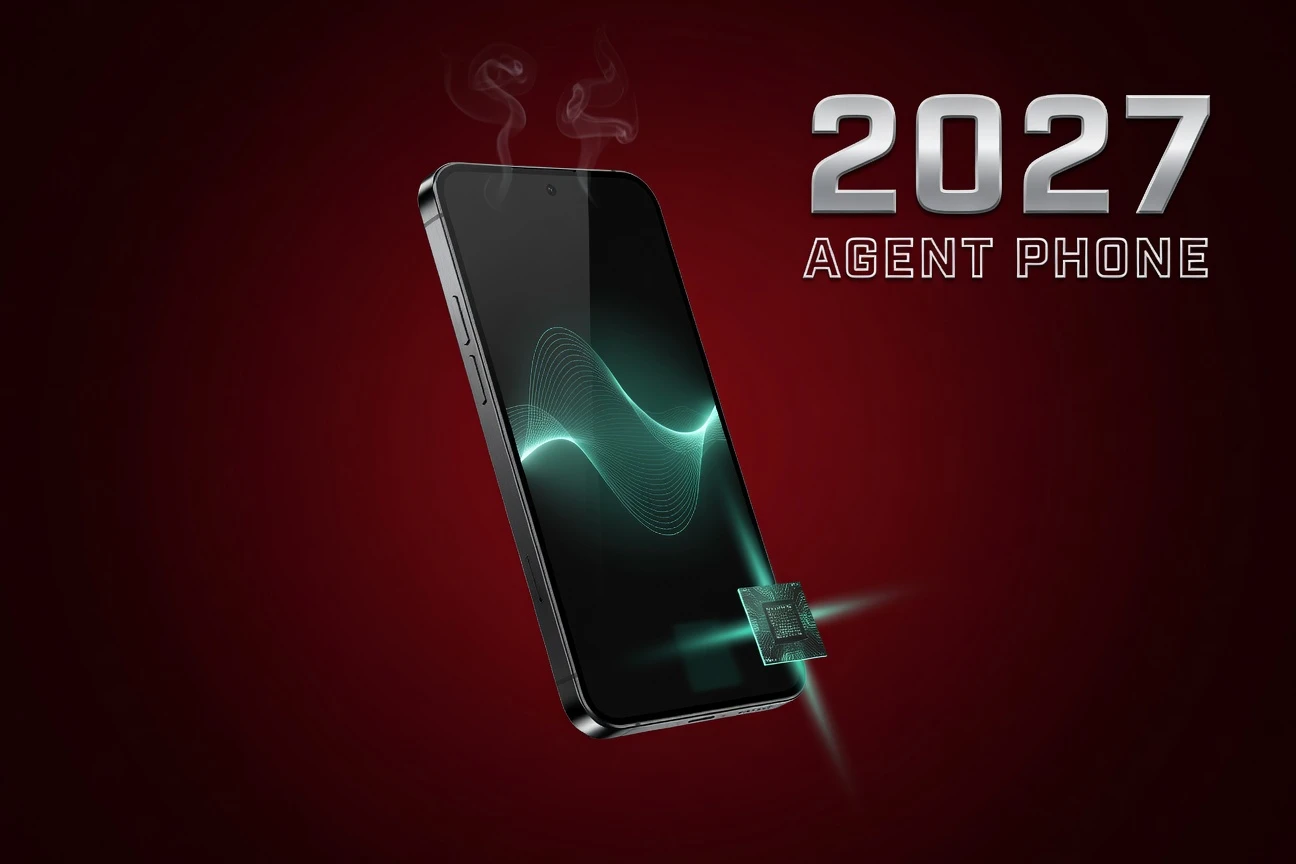
OpenAI’s first piece of consumer hardware won’t be the screenless, ambient AI device Sam Altman and Jony Ive teased last year. It will be a smartphone. Mass production starts in the first half of 2027, a full year ahead of schedule, with MediaTek supplying a custom Dimensity 9600 chip and Luxshare assembling the device. Analyst Ming-Chi Kuo, who broke the timeline, pegs cumulative shipments across 2027 and 2028 at roughly 30 million units. Apple and Samsung each move close to twice that figure in a single quarter.
So the headline isn’t “OpenAI is killing the iPhone.” The headline is that the company spent $6.5 billion buying Ive’s hardware studio io to chase a post-app future, then chose the most familiar form factor on earth as its way in. The reasons for that retreat say more about OpenAI’s next 18 months than any rumored spec sheet does.
The Real Trigger: An IPO Story That Needs Hardware
Kuo’s revised production target, posted to X on May 5, 2026, names two drivers. One is intensifying competition in AI agent phones from Google’s Gemini-native Android push and Apple’s slow Apple Intelligence rollout. The other is OpenAI’s planned initial public offering. A company valued north of $300 billion in private markets needs more than ChatGPT subscription revenue to justify a public listing. It needs a hardware narrative.
That changes how you read the timeline. A 2028 launch is a research project. A 2027 launch is a roadshow asset. The phone doesn’t have to dominate the market in its first year. It has to exist, ship in measurable volume, and let bankers point to a defensible third revenue line beyond API fees and ChatGPT Plus.
Reuters and the CNBC report on the io acquisition closing in July 2025 confirmed the deal cost OpenAI roughly $5 billion in fresh equity on top of the 23% stake it already held. That capital outlay needs a return. A delayed screenless device with no proven category does not produce one. A phone does.
What the Hardware Actually Looks Like
The component picture is unusually detailed for a device 14 months from production. Kuo says MediaTek beat Qualcomm for sole-supplier status, with the chip built on TSMC’s N2P process and slated to debut in the second half of 2026. Luxshare, the Apple supplier that builds AirPods and an increasing share of iPhones, will handle assembly outside China, with Vietnam named as the leading manufacturing site.
The internal spec list, sourced from Kuo’s supply chain notes and aggregated in the Business Standard breakdown of the MediaTek decision, points at a device built around on-device inference rather than photography:
- Dual NPU architecture so language and vision models can run in parallel without thrashing memory.
- LPDDR6 RAM and UFS 5.0 storage, both ahead of what 2027 flagships from Samsung and Apple are expected to ship.
- An enhanced HDR image signal processor tuned for what Kuo calls “real-world visual sensing” rather than camera output.
- pKVM and inline hashing, kernel-level security primitives normally seen on enterprise-grade Android.
Notice what’s missing. No screen size. No battery capacity. No camera count. The leak prioritizes inference plumbing, which is consistent with a device whose primary user interface is supposed to be a voice agent, not a viewfinder.
The Ive Bet, Quietly Downgraded
OpenAI bought io for what NPR’s coverage of the io deal reported as just under $6.5 billion, the largest acquisition in OpenAI’s history. Ive brought 55 employees, including former Apple hardware leads Evans Hankey and Tang Tan. The pitch was a family of devices: a pocketable screenless object, smart speakers with cameras, wearables, even a smart lamp. Altman said publicly he wanted to ship 100 million units faster than any consumer product in history. The original iPhone took six years to clear that bar.
From Screenless Dream to Pocket Pragmatism
The flagship Ive device, described in early reporting as roughly the shape of an iPod Shuffle and intended to be worn around the neck, has slipped. Sources cited by the Wall Street Journal said the project hit thermal and battery problems plus an unsolved question about how to communicate with users without a display when conversation alone couldn’t carry the load.
The smartphone is the workaround. It gives Ive’s team a recognizable canvas, gives OpenAI a distribution vehicle, and gives investors a product they can model. The screenless device isn’t dead. It’s been demoted to project two.
The Humane Lesson Nobody at OpenAI Wants to Repeat
Humane shut down its AI Pin business after fewer than 10,000 units sold and Rabbit’s R1 collected scathing reviews within weeks of launch. Both products tried what Ive’s original io concept promised: replace the smartphone with something calmer and more ambient. Neither survived first contact with consumers who wanted to text their friends without learning a new gesture language.
OpenAI is reading that data correctly. A phone meets users where they already are. A neck pendant asks them to change posture, habit, and social signaling on day one.
The Duopoly Math, Reframed
Kuo’s 30 million unit estimate spans 24 months of shipments. Apple shipped roughly 77 million iPhones in the December 2024 quarter alone, per its own 10-Q filings. Samsung clears similar volumes. The OpenAI phone, even at full Kuo projection, would represent less than 1% of global smartphone shipments through 2028.
That math is the point. OpenAI isn’t trying to outsell Apple. It’s trying to own a platform layer.
“For winning in the AI era, it is imperative for OpenAI to move beyond software and AI models and focus on owning the end-user interface and the hardware ecosystem itself,” said Prabhu Ram, VP-Industry Research Group at CyberMedia Research, in comments to Financial Express Online. “The true objective is the establishment of OpenAI as the foundational intelligence layer through which the next generation of consumers experiences technology.”
The smartphone is the only device that captures the user’s full real-time state, which is the most important input for real-time AI agent inference.
That line, from Kuo’s analyst note, explains why a phone matters more than a pendant. Continuous context, location, calendar, messages, photos, app behavior, is the data an agent needs to be useful. An app inside iOS or Android can see only what Apple and Google permit. A phone OpenAI controls sees everything.
Where Apple and Google Actually Sit
Apple’s position is the more exposed one. Daniel Newman of the Futurum Group called 2026 a “make-or-break year” for the company’s AI strategy, citing repeated delays to Siri’s promised LLM-powered overhaul. Apple’s January 2026 deal to license Google Gemini for fallback queries, covered in Fortune’s analysis of the Apple-Google AI agreement, was read by Wedbush analyst Dan Ives as a stepping stone, but also as confirmation that Apple still cannot ship a competitive in-house large language model.
Google sits more comfortably. Gemini ships natively on Pixel devices and licenses to Samsung, and Android’s open architecture lets Google adapt faster than Apple’s locked stack permits. Several Wall Street analysts now argue Google ultimately benefits even if OpenAI’s phone succeeds, because every iOS user OpenAI poaches weakens Apple’s ecosystem moat without touching Android’s market share.
The Operating System Is the Real Product
The hardware is interesting. The software is the moat. Reporting from Kuo and aggregated in The Next Web’s account of the AI agent phone strategy indicates OpenAI is building a new operating system from the ground up, not skinning Android. The interface centers on agents, not app icons.
Picture the home screen as a conversation pane. You ask the device to book a flight. It does not open a travel app. It calls airline APIs directly, checks your calendar, debits your saved card, and confirms the booking. The same agent handles your messages, your photos search, your music, your shopping. Apps as discrete icons disappear. Tasks as conversational outcomes replace them.
That vision is hard. It requires every service OpenAI wants to use to either expose an agent-friendly API or be reverse-engineered into one. Stripe, Uber, Spotify, and DoorDash will play. Banks, insurance carriers, government portals, and most retailers will not, at least not on day one. The first OpenAI phone will likely run a hybrid mode where critical apps still exist as fallback surfaces while the agent handles the friendly cases.
What 2027 Buyers Should Actually Expect
Skip the hype cycle. Here’s the realistic shape of the launch based on what supply chain analysts and former io employees have signaled to date.
- First half of 2027: Mass production begins at Luxshare facilities in Vietnam. Initial allocation likely targeted at the United States, the United Kingdom, and select EU markets where ChatGPT already has paying scale.
- Second half of 2027: Commercial launch. Pricing is unknown, but a custom-silicon flagship with TSMC N2P production will not undercut a standard iPhone Pro. Expect a price band of $1,100 to $1,400.
- 2028: Volume ramp toward the Kuo-projected 30 million cumulative units. Second-generation Ive device, possibly the original screenless concept, ships as a companion product.
Ram, the CMR analyst, was blunt about the execution risk. “The onus is still on OpenAI to execute its challenge of ensuring discipline while executing the goal to challenge consumer behaviour,” he said. Translation: the hardware can be perfect and the launch can still fail if the agent OS feels like a downgrade from iOS for the first six months.
Frequently Asked Questions
When can I actually buy the OpenAI phone?
Realistic availability is late 2027 in the United States and a small set of launch markets. Mass production starts in the first half of 2027 per Ming-Chi Kuo, but commercial launch typically lags production by four to six months. OpenAI has not opened a waitlist or registration page. Anyone seeing one online today is looking at a scam. The official channel will be openai.com when the company is ready to take preorders.
Will it run Android apps or my existing iPhone apps?
No to both, based on every signal so far. OpenAI is building a new agent-first operating system, not an Android skin or an iOS clone. Your iPhone apps will not transfer, and your Android APK files will not install. Expect a curated set of partner integrations at launch, similar to how the original iPhone shipped without an App Store and added third-party apps a year later. Plan to keep your current phone as a fallback device for the first 12 months.
How much will it cost?
OpenAI has confirmed no pricing. Custom TSMC N2P silicon, LPDDR6 memory, UFS 5.0 storage, and Luxshare assembly outside China all push the bill of materials above a standard 2027 flagship. Industry expectation is a price band of $1,100 to $1,400 for the base model, putting it head-to-head with the iPhone Pro and Galaxy S Ultra rather than midrange Android devices. A bundled ChatGPT Plus or Pro subscription is likely to soften the sticker.
Is it safe to switch from an iPhone if I rely on banking and government apps?
Probably not on day one. First-generation operating systems lack the deep partnerships needed for niche services, and most banks, insurance providers, and government portals will not have agent integrations ready at launch. If your daily flow includes mobile banking apps, two-factor authentication tied to a specific phone, healthcare portals, or country-specific government services, wait for the second-generation device or treat the OpenAI phone as a secondary handset for the first year.
The bigger story isn’t whether OpenAI sells 30 million phones. It’s whether Altman can convince the public market in 2027 that the company is more than a chatbot wrapper around someone else’s GPU farm. A phone in a few million pockets, even running a half-finished agent OS, is enough proof for that pitch. The iPhone took years to find its footing. OpenAI doesn’t need to win the smartphone war. It needs to be on the field when the IPO bell rings.


Sony’s 10 Percent Disc Drop Leaves the 2028 Cutoff Intact

Chip Allocation Sidelines the Base iPhone 18 This Fall

Miami-Dade Fights the Vice City Brand It Already Wears

IFA 2026 Awards Put Tecno Ahead of Flagship Phones

USB-C Gadgets Made the Junk Drawer Rechargeable

Pixel 11 Pro Asks $1,099 for a Light Google Locked

The iPhone Ultra Sells Two Retired Minis as One Foldable

Google Opens Gmail to Voice and Gates Docs Live

Lenovo Prices the IdeaPad Vibe Against Apple’s $699 Neo

Xbox Caps Game Pass Cloud Gaming at 15 Hours

Oracle Cuts 21,000 Jobs in a Year, Cites AI in 10-K Filing

Fable 5 and Mythos 5 Return as US Lifts Anthropic Export Controls

SpaceX’s Google Deal Turns a Rocket Company Into a Cloud Landlord

CD Projekt Red Co-CEO: Redemption Arc Isn’t Done, Witcher 4 in 2027

XPL Rallies 30% Ahead of Plasma One Card Tier Launch

Google Search Profiles Build a Follow Graph Inside Discover

DGO App Brings Rs 549 Mobile Pass for FIFA World Cup 2026 in Nepal

Moonshot AI Targets $30 Billion in China’s Fastest AI Funding Sprint

Oppo’s ColorOS 17 Eligibility List Leaves A-Series Buyers Behind

Microsoft Xbox Layoffs Start in July as Sharma Slams 3% Margin
-
 AI2 months ago
Oracle Cuts 21,000 Jobs in a Year, Cites AI in 10-K Filing
-
 AI2 months ago
Fable 5 and Mythos 5 Return as US Lifts Anthropic Export Controls
-
 AI3 months ago
SpaceX’s Google Deal Turns a Rocket Company Into a Cloud Landlord
-
 GAMING3 months ago
CD Projekt Red Co-CEO: Redemption Arc Isn’t Done, Witcher 4 in 2027
-
 CRYPTO3 months ago
XPL Rallies 30% Ahead of Plasma One Card Tier Launch
-
 NEWS3 months ago
Google Search Profiles Build a Follow Graph Inside Discover
-
 APPS3 months ago
DGO App Brings Rs 549 Mobile Pass for FIFA World Cup 2026 in Nepal
-
 AI3 months ago
Moonshot AI Targets $30 Billion in China’s Fastest AI Funding Sprint