
NEWS
Software Tops Chips as ServiceNow, Workday, AppLovin Lead S&P 500
Software stocks beat chips Friday as ServiceNow rose 8.3%, Workday 6.9%, and AppLovin 7.6%. ON Semiconductor fell 24% on its $7 billion Synaptics deal.

Software stocks beat chip stocks on Friday, a one-day reversal of the rotation that has defined 2026. ServiceNow jumped 8.3%, Workday climbed 6.9%, and AppLovin advanced 7.6%, each among the S&P 500’s best performers. Sector-level gauges split in opposite directions by the close.
The flip came as ON Semiconductor dropped 24% after saying late Thursday it would buy Synaptics in an all-stock transaction valued at about $7 billion. Tech shares broadly stayed under pressure, extending a recent slump. Yet the day’s action gave software its strongest session against chips in months. Per Friday’s software-led S&P 500 rotation, software led chips across the board.
Software Tops Chips in Friday’s Reversal
The cleanest read of the rotation came from the sector ETFs that frame the trade. The iShares Expanded Tech-Software Sector ETF (ticker IGV) added 3.3%, while the VanEck Semiconductor ETF (SMH) gave back 3.7%. That gap of about 7 percentage points between the two funds marked the widest single-day divergence in either direction so far this quarter, according to Dow Jones Market Data cited in the Barron’s recap.
The Philadelphia Semiconductor Index, the SOX benchmark that tracks 30 chip stocks, fell 4.8% on the session. The chip selloff joined the broader tech tape under pressure for a third straight session. NXP Semiconductors, Microchip Technology, Analog Devices, and Teradyne each posted substantial losses on Friday. Tech shares broadly remained under pressure, extending the recent slump.
Software names dominated the top of the S&P 500. ServiceNow, Workday, and AppLovin each landed among the index’s strongest performers, joined by Palantir Technologies, which gained 5.2% and was set to break a seven-day losing streak.
The leadership list stretched across enterprise software, mobile advertising, and data analytics. ServiceNow sells workflow automation, Workday sells HR and finance software to large employers, and AppLovin runs the AI-driven ad platform that has powered its stock through repeated records.
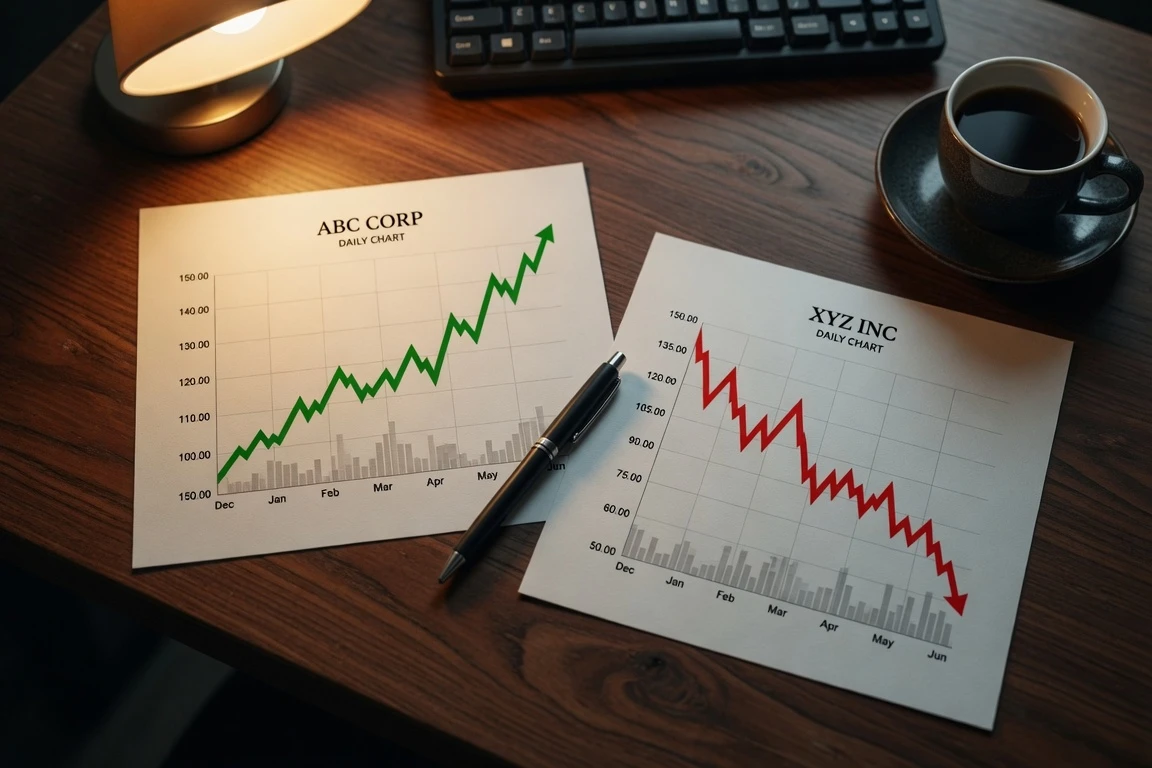
ServiceNow’s 8.3% Gain Leads a Broad Software Bid
ServiceNow’s 8.3% move was the headline. The enterprise workflow company has been one of the names caught in the software selloff that defined the first half of 2026, with investors weighing whether AI agents will erode demand for its automation platform. Friday’s gain didn’t resolve that debate. It pushed the stock to one of its best single-day prints of the year.
Workday’s 6.9% advance and AppLovin’s 7.6% climb spoke to the same bid. Palantir, the data analytics and AI deployment company, added 5.2% to end a seven-day slide. AppLovin’s Friday move built on AppLovin’s 6.3% pop tied to the Axon AI ad platform in earlier sessions.
BlackBerry’s Two-Day Surge Caps the Software Rally
The breadth of the IGV rally matched its size. The five best performers in the software ETF on Friday all rose more than 8%:
- Guidewire Software: vertical SaaS for property and casualty insurers
- Intapp: software for legal and professional services firms
- CCC Intelligent Solutions: software for the auto insurance and collision ecosystem
- Tenable Holdings: cybersecurity and vulnerability management
- Life360: consumer location and family safety app
BlackBerry’s session stood on its own. Shares rose 7.3% on Friday, adding to a 20% jump from Thursday that followed strong earnings. The two-day stack gave the legacy phone maker its sharpest rally in years. BlackBerry now operates as a software and security company rather than a handset vendor.
None of the eight-percent names share a single industry. Insurers, lawyers, mechanics, security teams, and families all turned up in the day’s top software movers. The spread suggests the bid came from sector rotation rather than a thesis tied to one corner of enterprise software.
ON Semi Drops 24% on Synaptics Deal News
ON Semiconductor dropped 24% on Friday, the worst S&P 500 performer of the session. The chip maker said late Thursday it would buy Synaptics in an all-stock deal with about $7 billion in enterprise value. The drop erased roughly a quarter of the chip designer’s market value. The deal had been telegraphed in a 5 p.m. ET call on Thursday that laid out the rationale for combining onsemi’s power and sensing portfolio with Synaptics’ edge AI compute and human-machine interface.
Investors read the all-stock structure as dilutive, and the timing as a hedge against weakening end-market demand. ON had already warned on its outlook earlier in the quarter. Adding a $7 billion target at a fixed exchange ratio of 1.350 ON shares per Synaptics share amplified those concerns.
The deal’s strategic logic, as laid out in the onsemi’s Synaptics acquisition announcement, is to push the company from AI data centers into what it calls Physical AI. Physical AI is the combination of power, sensing, connected compute, and control that lets machines sense, decide, act, and adapt in the physical world. The combined company would target a $243 billion total addressable market by 2030. Expansion from AI infrastructure into edge applications opens $30 billion in new TAM, per onsemi.
As artificial intelligence moves beyond the cloud and into the physical world, including automotive and industrial, the next phase of innovation will depend on systems that can sense, decide, act and adapt in real time.
Hassane El-Khoury, onsemi’s president and CEO, framed the rationale that way in the deal announcement. The transaction is expected to close in mid-2027.
- ~19%: premium to the 10-day volume-weighted average closing price
- ~12%: pro forma ownership Synaptics holders take in ON
- $30 billion: TAM expansion, taking the combined company’s TAM to $243 billion by 2030
- ~$200 million: expected annual synergies
- Mid-2027: expected closing, subject to regulatory and shareholder approval
Chip Weakness Spreads Beyond ON Semi
ON Semi was the day’s standout chip loser, but the semiconductor ETF bled across the board. NXP Semiconductors, Microchip Technology, Analog Devices, Teradyne, and ON Semiconductor each posted substantial losses that dragged the VanEck Semiconductor ETF to its 3.7% decline.
The five names span auto chips, microcontrollers, analog signal processing, and industrial test equipment. Their simultaneous weakness pointed to a common cause: a market rethinking how much AI infrastructure spending will flow through chip suppliers in the second half of 2026. The VanEck Semiconductor ETF had tracked semiconductor strength throughout the year. AI infrastructure concerns had started to weigh on chip multiples in the prior week.
Friday’s selloff extended a slump that has dragged the sector for several sessions. Reuters and Bloomberg reported earlier in the week that AI spending concerns were weighing on chip multiples, and the ON-Synaptics transaction gave traders a fresh reason to take profits in a group that had been the year’s standout winner. ON Semi’s 24% slide was the single largest drag on the chip ETF.
Friday’s Move Cut Against Most of 2026
Friday’s rotation is notable because the inverse has been true for most of 2026. With AI driving up demand for chip processors, semiconductor stocks have been rallying at historic levels. The AI thesis for software plays runs the other way, with the overwhelming sentiment that AI will disrupt software and render some offerings obsolete. Whether software’s 2026 sell-off is structural risk or noise lays out the bear view in detail. ServiceNow kept building the bull case: HCLTech’s three-way agentic AI expansion with ServiceNow added manufacturing, field services, and customer experience solutions on June 25.
Whether the rotation changes the software narrative in any meaningful way is the open question. ServiceNow, Workday, and the small-cap names in the eight-percent club face a market that has priced in software’s AI threat. The first session of next week will test whether the rotation has legs. In most of 2026, chips have led the rotation.


Sony’s 10 Percent Disc Drop Leaves the 2028 Cutoff Intact

Chip Allocation Sidelines the Base iPhone 18 This Fall

Miami-Dade Fights the Vice City Brand It Already Wears

IFA 2026 Awards Put Tecno Ahead of Flagship Phones

USB-C Gadgets Made the Junk Drawer Rechargeable

Pixel 11 Pro Asks $1,099 for a Light Google Locked

The iPhone Ultra Sells Two Retired Minis as One Foldable

Google Opens Gmail to Voice and Gates Docs Live

Lenovo Prices the IdeaPad Vibe Against Apple’s $699 Neo

Xbox Caps Game Pass Cloud Gaming at 15 Hours

Oracle Cuts 21,000 Jobs in a Year, Cites AI in 10-K Filing

Fable 5 and Mythos 5 Return as US Lifts Anthropic Export Controls

SpaceX’s Google Deal Turns a Rocket Company Into a Cloud Landlord

CD Projekt Red Co-CEO: Redemption Arc Isn’t Done, Witcher 4 in 2027

XPL Rallies 30% Ahead of Plasma One Card Tier Launch

Google Search Profiles Build a Follow Graph Inside Discover

DGO App Brings Rs 549 Mobile Pass for FIFA World Cup 2026 in Nepal

Moonshot AI Targets $30 Billion in China’s Fastest AI Funding Sprint

Oppo’s ColorOS 17 Eligibility List Leaves A-Series Buyers Behind

Microsoft Xbox Layoffs Start in July as Sharma Slams 3% Margin
-
 AI3 months ago
Oracle Cuts 21,000 Jobs in a Year, Cites AI in 10-K Filing
-
 AI2 months ago
Fable 5 and Mythos 5 Return as US Lifts Anthropic Export Controls
-
 AI3 months ago
SpaceX’s Google Deal Turns a Rocket Company Into a Cloud Landlord
-
 GAMING3 months ago
CD Projekt Red Co-CEO: Redemption Arc Isn’t Done, Witcher 4 in 2027
-
 CRYPTO3 months ago
XPL Rallies 30% Ahead of Plasma One Card Tier Launch
-
 NEWS3 months ago
Google Search Profiles Build a Follow Graph Inside Discover
-
 APPS3 months ago
DGO App Brings Rs 549 Mobile Pass for FIFA World Cup 2026 in Nepal
-
 AI3 months ago
Moonshot AI Targets $30 Billion in China’s Fastest AI Funding Sprint