
CRYPTO
Copper Rebounds After Trump Claims ‘Great Settlement’ With Iran
Copper climbed more than 1% from June 8-12 after Trump said he made a ‘great settlement’ to end the Iran war. The April peak at $13,441 per metric ton still stands.

Copper futures climbed out of a three-week hole this week after President Donald Trump said the United States had reached a settlement to end the war with Iran, the latest round in a year-long pattern where presidential statements have set the metal’s price. On the London Metal Exchange, copper rose more than 1% between June 8 and June 12, pushing back toward levels not seen in weeks. The move came after Trump told reporters at an Oval Office event on Thursday that he expected the agreement to be finalized “over the next few days,” according to the Oval Office settlement report from Dubai.
Copper rose to $6.41 per pound on June 12, up 2.34% from the previous session, according to copper’s June 12 price reference, with analysts attributing the move to “rising optimism over a potential US-Iran peace agreement.” The same data noted that Trump said a deal “could be signed as soon as this weekend in Europe,” even though there has been no confirmation from Tehran. The rebound covered the ground lost during the June 10 selloff, when benchmark three-month copper on the LME dropped 1.2% to $13,457 per metric ton as Iran Revolutionary Guards claimed drone and missile attacks on U.S. bases in Jordan, Kuwait and Bahrain.
Copper Climbs Out of a Three-Week Hole
By Friday, the optimism had clawed back most of the prior session’s losses. The June 8-12 climb of more than 1% left the metal still below the highs it set in April, when the same pattern of Trump statements and copper rallies played out on a larger scale. John Meyer, an analyst at SP Angel, told Reuters that “actions” between the two sides were dominating the market, with a stronger dollar also weighing on dollar-denominated metals. The site’s analysts separately noted that “stronger-than-expected US inflation data bolstered bets for a Federal Reserve interest rate hike later this year,” a reminder that copper’s path also runs through U.S. monetary policy.
Trump’s June 11 statement was the second time in a week he had pointed to an end to the conflict, following comments earlier in the week that a deal could be reached “in a matter of days,” according to the AP. The pattern of escalation and de-escalation has been the dominant short-term driver of copper prices since the war began. Every presidential statement on Iran has become a potential market-moving event, with traders watching for any sign that the conflict’s end is closer or further away.
The April Peak Sets the Ceiling
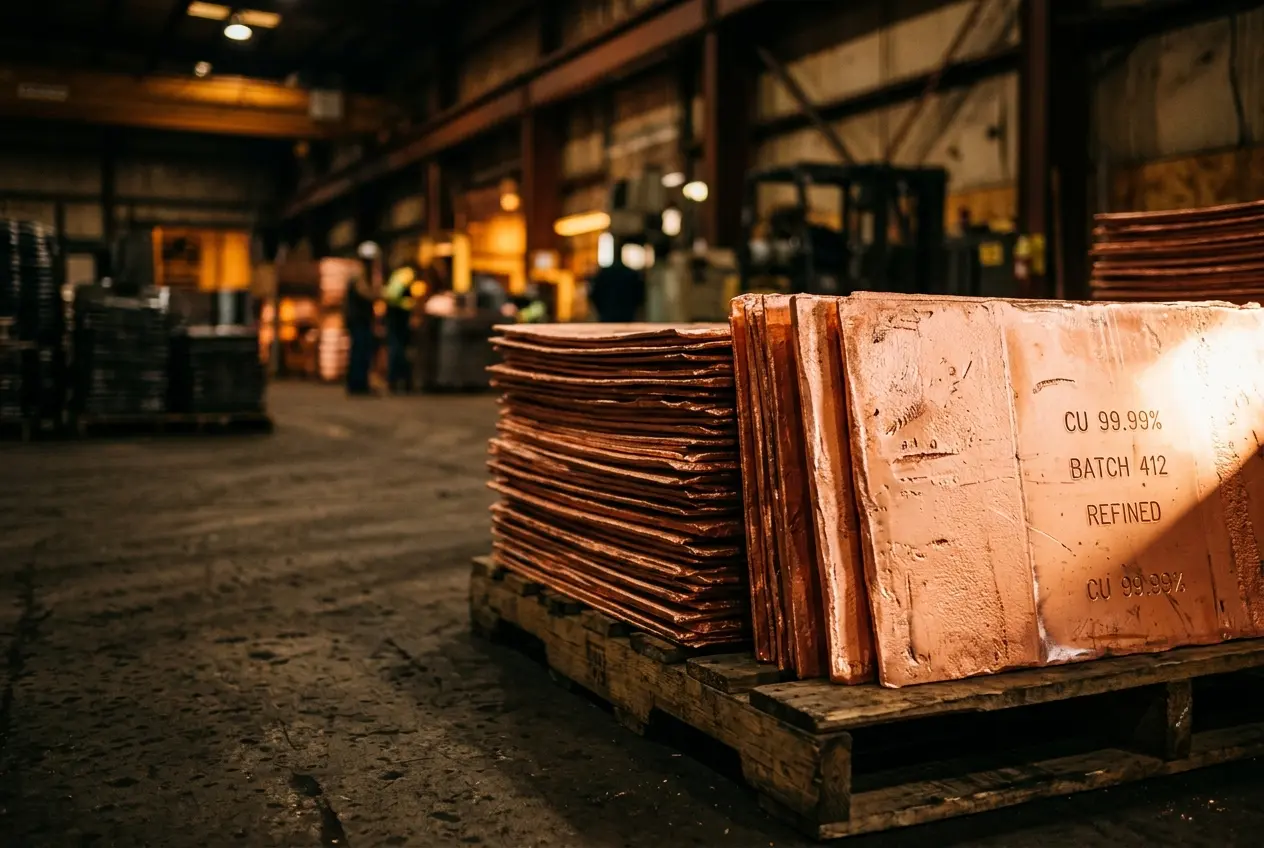
Copper’s reference point for this cycle remains the $13,441 per metric ton it touched on April 22, the highest level in seven weeks. That price came hours after Trump extended a fragile ceasefire with Iran, triggering a 1.6% single-session gain on the LME. The April peak has not been matched since. The metal pulled back as the optimism around that ceasefire extension proved premature, with strikes resuming and talks stalling through May.
The June 8-12 rally brought copper closer to that benchmark, but not through it. The current bounce is a recovery from a three-week low, not a breakout. A Trading Economics summary of the day’s move highlighted Jefferies’ call for copper to stay elevated through 2030, citing an average annual supply deficit.
| Date | LME benchmark | Trigger |
|---|---|---|
| April 22, 2026 | $13,441 per metric ton (seven-week high) | Trump extends Iran ceasefire |
| June 10, 2026 | $13,457 per metric ton (three-week low) | Iran Guards claim attacks on U.S. bases |
| June 8-12, 2026 | Rose more than 1% | Trump claims settlement |
Why the Strait of Hormuz Pulls Copper Around
Copper’s sensitivity to the Iran conflict comes down to a single waterway. The Strait of Hormuz, the narrow shipping lane between Oman and Iran, carried an average of 20 million barrels of oil per day in 2024, the equivalent of about 20% of global petroleum liquids consumption, according to the U.S. Energy Information Administration. The strait is deep enough and wide enough to handle the world’s largest crude oil tankers, and very few alternative routes exist to move oil out of the Persian Gulf if it is closed. The same EIA data shows roughly a fifth of global liquefied natural gas trade transited the strait in 2024, primarily from Qatar. Most of the crude and condensate that moves through Hormuz, an estimated 84% in 2024, goes to Asian markets, with China, India, Japan and South Korea the top destinations.
The strait’s strategic weight has drawn military planning, diplomatic negotiation, and even Iran’s bitcoin-settled maritime insurance scheme built around Hormuz transit. That last note matters for copper, because any disruption to Hormuz raises the cost of moving raw materials, finished goods and energy around the world.
When Trump signals the conflict is ending, the market prices in the prospect of a stable Hormuz, and copper climbs. When strikes resume or talks collapse, the metal drops. The Iran conflict has been marked by direct strikes and repeated threats to energy shipping routes, creating cycles of fear and relief in commodity markets. The June 8-12 rally was the latest swing in that pattern, with copper recovering from a three-week low set on June 10.
The conflict itself began Feb. 28, 2026, when the U.S. and Israel jointly attacked Iran, according to the AP. The war has run through multiple flare-ups and temporary halts in strikes, keeping traders on edge. The Strait of Hormuz has been a central flashpoint, with Iran disrupting shipping through the lane for months, crimping global energy supplies and driving up fuel and food prices well beyond the region.
Trump’s Whipsaw and the Rally-Fade Pattern
The year-long pattern has been remarkably consistent. Trump floats a timeline for ending hostilities, copper rallies. Strikes resume or talks stall, copper pulls back. The April peak, the May pullback and the June 8-12 rebound all follow the same template.
- March-April 2026: Trump proposes timelines of “two to three weeks” or “very soon” for ceasing the conflict. Industrial metals rally. Copper peaks at $13,441 per metric ton on April 22.
- May 2026: Optimism fades as strikes resume. Copper pulls back from the April high.
- June 10, 2026: Iran Revolutionary Guards claim attacks on U.S. bases in Jordan, Kuwait and Bahrain. Copper falls 1.2% to $13,457 per metric ton, a three-week low.
- June 11-12, 2026: Trump claims a “great settlement” to end the war. Copper climbs more than 1% over the June 8-12 period.
The AP report on Thursday captured the pattern in a single phrase: Trump’s “whipsaw approach” to the war. He had threatened earlier in the day to seize Kharg Island, the heart of Iran’s oil industry through which 90% of its exports pass, then backed off within hours. Trump told Fox News he did not think America had the stomach for it, saying: “I don’t want to have boots on the ground.” His rapid shift from dire threats to promoting peace negotiations underscored the same template the copper market has been trading for months. The Iran conflict has run through multiple ceasefire announcements since April, none of which have fully held.
We just made a great settlement of the war with Iran.
Where Copper Stands After the Bounce
President Donald Trump, speaking from the Oval Office on Thursday, offered scant details beyond saying he expects the agreement to extend a fragile ceasefire that started in April to be finalized “over the next few days.” Copper’s near-term benchmark remains the April peak. A sustained move above $13,441 per metric ton on confirmed diplomatic progress would signal genuine market conviction, rather than another short-covering bounce on a presidential statement. Jefferies expects copper prices to stay elevated for longer than previously anticipated, citing an average annual supply deficit of 491,000 tons through 2030 and a slower-than-expected recovery at the Grasberg mine.
That supply backdrop gives the metal its own floor, separate from the geopolitical noise. Iran Foreign Ministry spokesperson Esmail Baghaei said on Thursday night that the text of a deal is “mostly finalized.” He added that “the contradictions in America’s position has caused turbulence to this process,” pointing to the status of Iran’s nuclear program and its hold on the Strait of Hormuz.
Both remain unresolved. Trump has said the war’s “core strategic objectives” are nearing completion, but he has stopped short of providing a clear outline of when the conflict would end. The U.S. has carried out aggressive strikes on Iran in recent weeks and disabled merchant vessels enforcing a blockade on Iranian ports. Iran’s parliamentary speaker, Mohammad Bagher Qalibaf, responded on social media that “wrong strategies and impulsive decisions” would wreak havoc on energy markets. The next data point traders will watch is whether both Washington and Tehran sign off on the ceasefire extension Trump described.
One observation from CryptoBriefing’s reporting on the rebound: the cryptocurrency market has shown essentially zero correlation with these copper price movements. No tokens or digital assets have been connected to the fluctuations driven by Trump’s Iran comments, the outlet noted, a contrast to the metals market’s direct reaction.
Frequently Asked Questions
Why is copper reacting to Iran war news?
The Iran conflict threatens the Strait of Hormuz, which carried about 20% of global petroleum liquids consumption in 2024. Disruption to that flow raises shipping costs for every commodity that depends on global trade, copper included. When the market prices in a stable Hormuz, copper climbs.
What level does copper need to break for real conviction?
The April 22 peak of $13,441 per metric ton on the London Metal Exchange remains the ceiling traders watch. A close above that level on two or more sessions, with formal ceasefire text from both Washington and Tehran, would mark the first time the metal has broken out of the rally-fade pattern that has defined 2026.
How reliable are Trump’s end-of-war claims?
The pattern through 2026 has been one of repeated false dawns. Trump floated timelines of two to three weeks in March and April, copper rallied, then strikes resumed. His June 11 statement came hours after he had threatened to seize Kharg Island, a whipsaw the AP described in its reporting.
Has the crypto market moved with copper?
CryptoBriefing, the outlet that first reported the June 8-12 copper rebound, noted that the cryptocurrency market has shown essentially zero correlation with these moves. No tokens or digital assets have been tied to the fluctuations driven by Trump’s Iran comments, according to the outlet.
What is the next trigger for copper prices?
Formal confirmation of a ceasefire extension from both Washington and Tehran. Iran’s Foreign Ministry said the deal text is mostly finalized but cited contradictions in America’s position that have caused turbulence. Any breakdown in those talks would likely pull copper back below the June 10 three-week low.
Disclaimer: This article is for informational purposes only and does not constitute financial advice. Commodity trading involves substantial risk, and past performance does not guarantee future results. Figures cited are accurate as of publication on June 12, 2026. Readers should consult a qualified financial professional before making investment decisions.


Redmi Note 17 Battery Wins by Leaving Power Behind

WeChat Moments AI Tools Hide a Bigger Skills Redesign

iOS 27 Beta 5 Locks Six iPhones and a Split Launch

Edge AI Forces Hybrid Data Centers Into a Split Reality

Qi2 25W Magnets Quietly Rewrite Desk and Car Charging

Spotify AI Persona Badges Wall Off Synthetic Discovery

GCCs Build AI Bullet Trains on Incomplete Data Tracks

Coreum Bridge Multisig Signed Off on Its Own 200k XRP Drain

AI Shrinks Solar Inspection Crews While Paying Hybrid Skills Far More

Intel Graphics Driver Fixes Still Fight Windows and OEMs

Fable 5 and Mythos 5 Return as US Lifts Anthropic Export Controls

Oracle Cuts 21,000 Jobs in a Year, Cites AI in 10-K Filing

SpaceX’s Google Deal Turns a Rocket Company Into a Cloud Landlord

CD Projekt Red Co-CEO: Redemption Arc Isn’t Done, Witcher 4 in 2027

XPL Rallies 30% Ahead of Plasma One Card Tier Launch

Google Search Profiles Build a Follow Graph Inside Discover

DGO App Brings Rs 549 Mobile Pass for FIFA World Cup 2026 in Nepal

Moonshot AI Targets $30 Billion in China’s Fastest AI Funding Sprint

Microsoft Xbox Layoffs Start in July as Sharma Slams 3% Margin

Oppo’s ColorOS 17 Eligibility List Leaves A-Series Buyers Behind
-
 AI1 month ago
Fable 5 and Mythos 5 Return as US Lifts Anthropic Export Controls
-
 AI2 months ago
Oracle Cuts 21,000 Jobs in a Year, Cites AI in 10-K Filing
-
 AI2 months ago
SpaceX’s Google Deal Turns a Rocket Company Into a Cloud Landlord
-
 GAMING2 months ago
CD Projekt Red Co-CEO: Redemption Arc Isn’t Done, Witcher 4 in 2027
-
 CRYPTO2 months ago
XPL Rallies 30% Ahead of Plasma One Card Tier Launch
-
 NEWS2 months ago
Google Search Profiles Build a Follow Graph Inside Discover
-
 APPS2 months ago
DGO App Brings Rs 549 Mobile Pass for FIFA World Cup 2026 in Nepal
-
 AI2 months ago
Moonshot AI Targets $30 Billion in China’s Fastest AI Funding Sprint