
NEWS
Oppo Reno 16 Pro Global Listed on Geekbench With a Different Chip
The global Oppo Reno 16 Pro phone has appeared on Geekbench with a Dimensity 8500 or 8550 chipset, 12GB of RAM, and Android 16, below the China 9500s.

The global version of the Oppo Reno 16 Pro has surfaced on Geekbench under the model number CPH2863, and the listing places the phone on a different MediaTek chip than the version Oppo already sells in China. According to the benchmark page, the global Reno 16 Pro runs MediaTek’s MT6899 silicon, a chip that maps to the Dimensity 8500 family and may carry the Dimensity 8550 name at launch. The Chinese Reno 16 Pro, which Oppo launched in May, uses the Dimensity 9500s.
The Geekbench Listing
An unannounced Oppo device carrying the model number CPH2863 appeared on Geekbench on June 13. Previous certification entries have tied that number to the global edition of the Reno 16 Pro.
The benchmark page identifies the chipset as MediaTek’s MT6899 and lists 12GB of RAM on Android 16. The chip’s metadata records one core at 3.40 GHz, three cores at 3.20 GHz, and four cores at 2.20 GHz, the same layout MediaTek uses across its Dimensity 8500 and 8550 parts. The Mali-G720 MC8 GPU, pulled from the same listing, also points to that family. Coverage by the global Reno 16 Pro Geekbench listing details confirms the link between the model number and the global Pro.
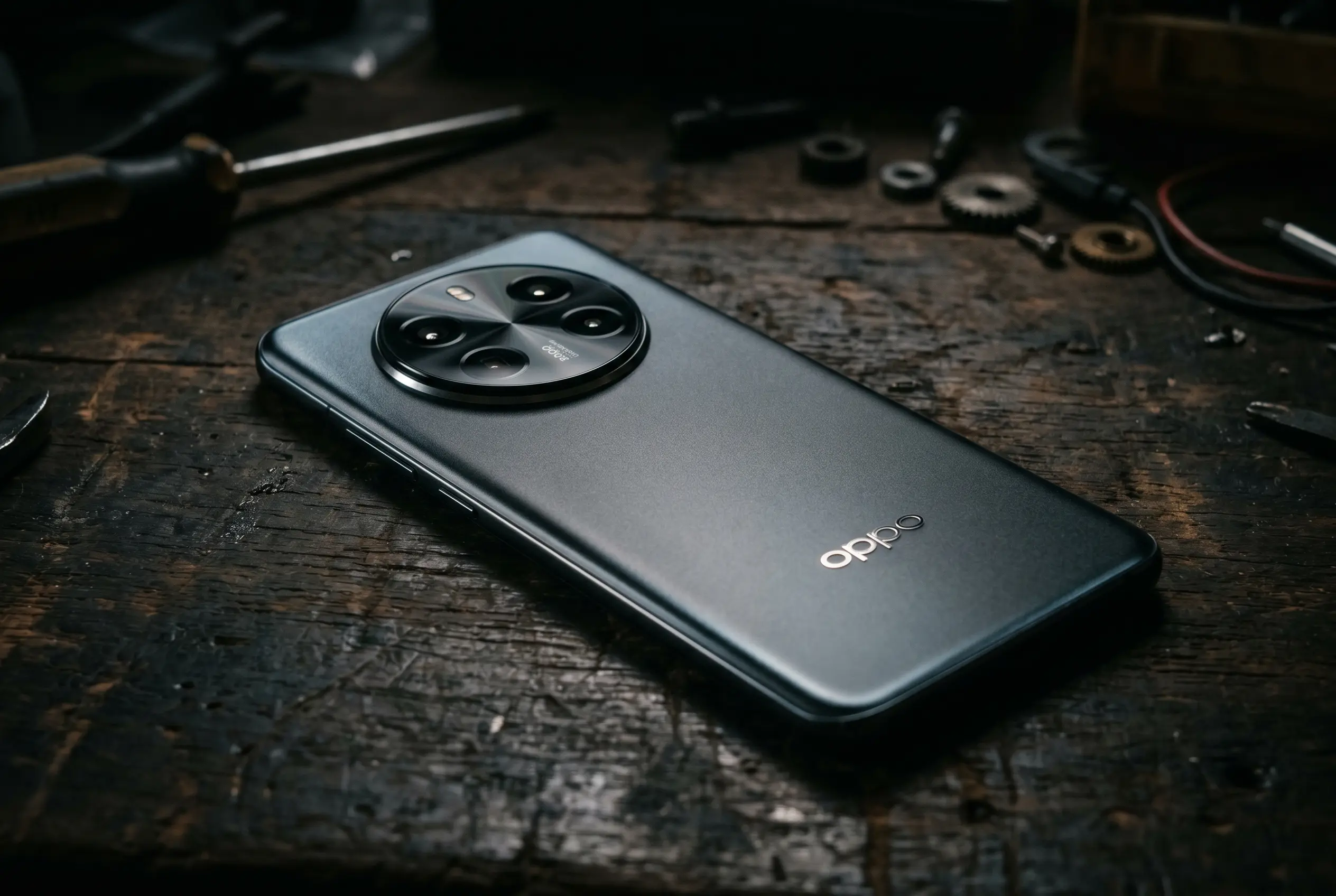
Why the Global Pro Lands on a Different Chip
The Reno 16 Pro is the first Pro-branded Reno this generation to break from the silicon Oppo ships in China. Oppo launched the Reno 16 and Reno 16 Pro in China in May on the Dimensity 8550 Super and the Dimensity 9500s, respectively. The global Pro now lands on the Dimensity 8500 platform, one tier lower.
The Dimensity 9500s is a flagship-class part, while the 8500 sits in MediaTek’s upper mid-range. Gizmochina’s reading of the listing notes that the Dimensity 8550 Super and Dimensity 8550 share the same CPU and GPU as the 8500, with the Super tier mainly adding AI-focused improvements. The 9500s, by contrast, uses a different core layout and targets the premium tier. For the buyer, the practical gap lands in sustained performance and on-device AI throughput, areas where the 9500s has more headroom. The global Reno 16 Pro’s Dimensity chip confirmation tracks the same finding.
The global phone still has the same 12GB of RAM and the same Android 16 base as the Chinese model, so the difference is the silicon underneath, not the software on top. Reno 16 Pro buyers outside China will not get the same chip as Reno 16 Pro buyers inside China, a split that has not applied to the Pro name in earlier Reno generations.
| Spec | China Reno 16 Pro (May 2026) | Global Reno 16 Pro (leaked) |
|---|---|---|
| Chipset | Dimensity 9500s | Dimensity 8500 / 8550 |
| RAM | Not specified in sources | 12GB (about 11.18GB usable) |
| Operating system | ColorOS 16 over Android 16 | Android 16 |
| Battery | 7,000 mAh | 6,700 mAh (leaked) |
| Wired charging | 80W | 80W |
| Wireless charging | 50W | Not confirmed |
Benchmark Numbers Put the Pro Ahead
The Geekbench entry pairs the chip with about 11.18GB of usable RAM, the figure that would be marketed as 12GB. In Geekbench 6.7.1 for Android AArch64, the global Reno 16 Pro logged a single-core score of 1,575 and a multi-core score of 5,889. That is a clear jump from the standard Reno 16’s earlier global run.
The standard global Reno 16, which surfaced on Geekbench on the Qualcomm Snapdragon 7 Gen 4, posted 1,240 single-core and 3,994 multi-core. The Pro’s lead on both axes reflects the gap between the Dimensity 8-series and the Snapdragon 7 Gen 4 in this benchmark, not a flagship-tier leap. The score also sits well below what the China-only Dimensity 9500s version would likely post. Geekbench scores do not capture sustained thermals or GPU throughput, so the day-to-day gap may land narrower or wider than the numbers suggest. The standard Reno 16’s Snapdragon 7 Gen 4 listing gives the comparison points.
Other Confirmed Specs
The global Reno 16 Pro picked up TÜV Rheinland certification in March, and that filing confirmed support for 80W wired fast charging. Oppo’s China launch used the same 80W wired ceiling, but added 50W wireless charging, a feature the global filing does not mention.
Beyond charging, the global Reno 16 Pro is widely tipped to retain the 200-megapixel primary camera from the Chinese model, per coverage from Notebookcheck. The global phone is also expected to ship with a 6.32-inch 144Hz AMOLED display and a smaller 6,700 mAh battery. None of those display, camera, or battery details appear in the Geekbench listing, so they remain leak-tier until Oppo confirms them.
A short list of the global Reno 16 Pro’s confirmed and leaked specs, drawn from Geekbench, TÜV, and the tipster line:
- Chipset: MediaTek MT6899, Dimensity 8500 or 8550
- RAM: 12GB (about 11.18GB usable)
- Operating system: Android 16, likely with ColorOS 16 on top
- Geekbench 6.7.1 single-core: 1,575
- Geekbench 6.7.1 multi-core: 5,889
- Wired charging: 80W (TÜV confirmed)
The bigger open question is what these leaks mean for the final retail price of the global Pro. Oppo has not announced pricing for any of the three Reno 16 models. The display, camera, and battery details will likely firm up in the weeks ahead as more certification listings surface.
What the Chip Difference Means for Buyers
The Dimensity 9500s is the chip Oppo uses in the China Reno 16 Pro, a flagship-class part. The 8500 sits in MediaTek’s upper mid-range, the same tier the global Pro is now landing on. The visible difference buyers will see on the spec sheet, and the one that will likely show up in head-to-head benchmark comparisons, is the chip tier itself.
The 9500s is built on a different core layout than the 8500 family, which is what gives it the flagship positioning. The 8500 and the 8550 share the same CPU and GPU as each other, with the 8550 Super tier mainly adding AI-focused improvements, per Gizmochina’s reading of the listing. For the buyer, the practical gap lands in sustained performance and on-device AI throughput, areas where the 9500s has more headroom. The day-to-day experience, including social apps, photo processing, and general UI smoothness, will likely feel closer than the chip tier suggests.
The global Pro will still ship with 12GB of RAM, Android 16 with ColorOS 16 on top, and 80W wired fast charging, the same feature set the China model has. The trade-off is in benchmarks, gaming peak performance, and the marketing premium that comes with a flagship chip. How that gap lands on price is the open question Oppo has not yet answered.
The Wider Reno 16 Global Lineup
The Reno 16 Pro is one of three Reno 16 devices Oppo is preparing for international release. The lineup, as currently leaked, includes the standard Reno 16, the Reno 16 Pro, and a third model, the Reno 16F.
The standard Reno 16 global will run on the Qualcomm Snapdragon 7 Gen 4, and the Reno 16F is rumored to ship with the Dimensity 7300. Together with the Pro on the Dimensity 8500, the family covers Qualcomm’s upper mid-range, MediaTek’s premium mid-range, and MediaTek’s lower mid-range, three distinct price tiers in one launch. The leaked Reno 16 global lineup adds the rest of the tipster sheet. All three models are expected to ship with Android 16 and carry an IP69 rating.
- Reno 16: Snapdragon 7 Gen 4, 6.32-inch 120Hz display, 50MP main camera, 6,000 mAh battery
- Reno 16 Pro: Dimensity 8500 / 8550, 12GB RAM, Android 16, 200MP main camera (leaked), 6.32-inch 144Hz AMOLED (leaked), 6,700 mAh battery (leaked), 80W wired charging
- Reno 16F: Dimensity 7300, 6.57-inch 120Hz display, 6,500 mAh battery
Buyers are still waiting for Oppo to confirm the prices, storage tiers, and India availability for each model. The Indian launch is the most concrete date on the calendar, tipped for July 2. What the company has not yet said is which of the three phones will lead the marketing push.
The Geekbench listing for the Pro is the first hard data point to land in a quiet pre-launch stretch. The other two models will likely surface on the same platform before Oppo’s official announcement.
Launch Timing and Open Questions
Coverage from Cashify and Gizmochina points to a global rollout in early July, with the India launch most often tipped for July 2. Oppo has not officially confirmed the date or the regional hardware split, and the company is expected to begin teasing the lineup within the next few days if that timeline holds. The launch will be the first signal of where the global Pro lands on price. Reno 16 Pro global launch timing report gives the early-July framing.
What is still not on the record: the global Pro’s display size and refresh rate, the full camera configuration, the IP rating, wireless charging support, and storage tiers. The Geekbench page does not list those fields, and the TÜV filing only confirmed charging wattage. India’s Bureau of Standards and other regional certifications should add detail in the days ahead. Buyers will have to wait for Oppo’s official announcement to fill the gaps.
Frequently Asked Questions
What chipset does the global Oppo Reno 16 Pro use?
The Geekbench listing for CPH2863 shows MediaTek’s MT6899, which maps to the Dimensity 8500 family. Coverage from Gizmochina notes it could be marketed as the Dimensity 8550 because the chips share CPU and GPU specifications.
How is the global Reno 16 Pro different from the China model?
The China Reno 16 Pro runs the Dimensity 9500s with a 7,000 mAh battery, 80W wired and 50W wireless charging, and an IP69K rating. The global Reno 16 Pro is listed with the Dimensity 8500 or 8550, 12GB of RAM, Android 16, 80W wired charging, and is so far tipped to ship with a smaller 6,700 mAh battery.
How much RAM does the global Reno 16 Pro have?
The global Reno 16 Pro is listed with about 11.18GB of usable RAM in the Geekbench entry. Coverage suggests this will be marketed as 12GB of memory at retail.
When will the Oppo Reno 16 Pro launch globally?
Reports point to an early July global rollout, with India most often tipped for July 2. Oppo has not officially confirmed the date.
How fast is the Reno 16 Pro’s charging?
A TÜV certification filed in March confirms 80W wired fast charging. Wireless charging support is not confirmed for the global model.


Redmi Note 17 Battery Wins by Leaving Power Behind

WeChat Moments AI Tools Hide a Bigger Skills Redesign

iOS 27 Beta 5 Locks Six iPhones and a Split Launch

Edge AI Forces Hybrid Data Centers Into a Split Reality

Qi2 25W Magnets Quietly Rewrite Desk and Car Charging

Spotify AI Persona Badges Wall Off Synthetic Discovery

GCCs Build AI Bullet Trains on Incomplete Data Tracks

Coreum Bridge Multisig Signed Off on Its Own 200k XRP Drain

AI Shrinks Solar Inspection Crews While Paying Hybrid Skills Far More

Intel Graphics Driver Fixes Still Fight Windows and OEMs

Fable 5 and Mythos 5 Return as US Lifts Anthropic Export Controls

Oracle Cuts 21,000 Jobs in a Year, Cites AI in 10-K Filing

SpaceX’s Google Deal Turns a Rocket Company Into a Cloud Landlord

CD Projekt Red Co-CEO: Redemption Arc Isn’t Done, Witcher 4 in 2027

XPL Rallies 30% Ahead of Plasma One Card Tier Launch

Google Search Profiles Build a Follow Graph Inside Discover

DGO App Brings Rs 549 Mobile Pass for FIFA World Cup 2026 in Nepal

Moonshot AI Targets $30 Billion in China’s Fastest AI Funding Sprint

Microsoft Xbox Layoffs Start in July as Sharma Slams 3% Margin

Oppo’s ColorOS 17 Eligibility List Leaves A-Series Buyers Behind
-
 AI1 month ago
Fable 5 and Mythos 5 Return as US Lifts Anthropic Export Controls
-
 AI2 months ago
Oracle Cuts 21,000 Jobs in a Year, Cites AI in 10-K Filing
-
 AI2 months ago
SpaceX’s Google Deal Turns a Rocket Company Into a Cloud Landlord
-
 GAMING2 months ago
CD Projekt Red Co-CEO: Redemption Arc Isn’t Done, Witcher 4 in 2027
-
 CRYPTO2 months ago
XPL Rallies 30% Ahead of Plasma One Card Tier Launch
-
 NEWS2 months ago
Google Search Profiles Build a Follow Graph Inside Discover
-
 APPS2 months ago
DGO App Brings Rs 549 Mobile Pass for FIFA World Cup 2026 in Nepal
-
 AI2 months ago
Moonshot AI Targets $30 Billion in China’s Fastest AI Funding Sprint