
APPS
Arriva UK Bus Unifies Seven Operators Behind a New Passenger App
Arriva UK Bus rolled out a Passenger-built app and website across its seven regional bus operators outside London, with mobile ticketing and live tracking.

Arriva UK Bus has launched a new mobile app and website built by Passenger, a UK transit-tech company now operating as a Masabi subsidiary. The platform rolls out across Arriva’s seven bus operating companies outside London, replacing a prior lineup of regional apps with a single customer experience. Mobile ticketing, real-time vehicle tracking, journey planning and accessibility information are now unified in one product.
The launch follows Masabi’s February 4, 2026 acquisition of Passenger Technology Group, the deal that folded the UK transit-tech firm into the Justride fare-collection platform. The combined company is now pitching a single ‘plan-pay-ride’ stack to UK public transport operators. Arriva, whose group runs more than 1.2 billion passenger journeys a year across 11 European countries, has now consolidated its seven UK regional bus operators onto a single Passenger-built app.
The New App Rolls Out Across Arriva’s Seven UK Bus Companies
Passenger worked with Arriva to deliver an overhaul of the operator’s customer-facing digital services, capturing all seven of its UK bus operating companies outside London in a single product, according to a Passenger launch press release issued on Monday, June 15, 2026. The work covers mobile ticketing, data management, journey planning and real-time vehicle tracking through one customer app, with a new website rebuilt alongside it. Trade press coverage followed the next day.
Arriva’s regional structure had long produced separate rider experiences in different parts of the UK. The new app and website give those riders one sign-on, one ticket wallet, and one set of live service updates. The supplier says the platform enables the Arriva team to ‘easily understand its online business and make informed decisions regarding its future strategy.’
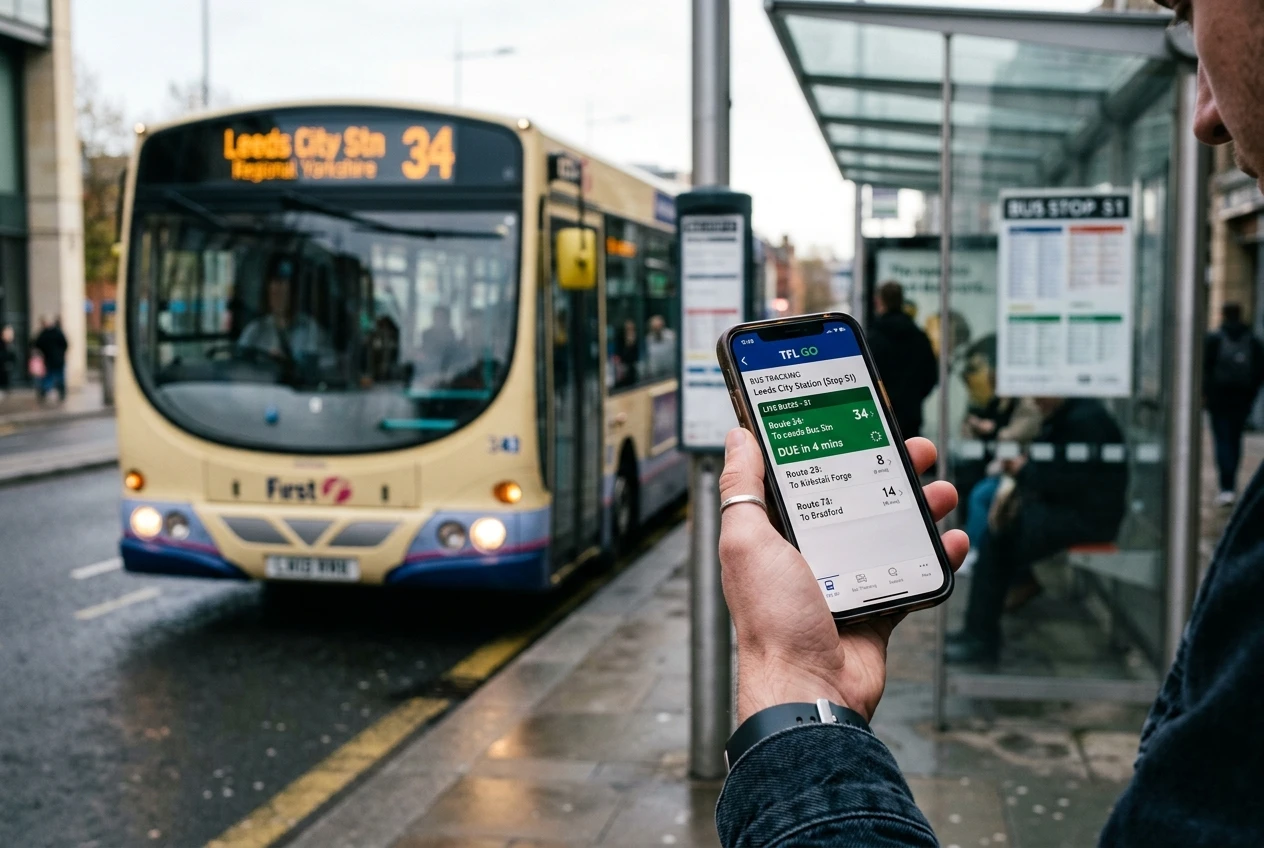
What’s Actually in the New App and Website
Passenger positions the rebuild as a full overhaul rather than a refresh. New features were added across ‘almost every part of the customer journey,’ the supplier says, with existing capabilities made easier to discover. The work spans a new app and a new website.
On the rider side, the platform unifies what were previously separate regional apps and websites into one customer experience. The supplier says mobile ticketing is improved, and that information provision on services is clearer. The full list of new features, drawn from the supplier’s own description, runs as follows:
- Bus fares, including support for multi-operator cap structures
- Real-time bus locations
- Accessibility information for individual services
- Service updates and disruption notices
- Vehicle branding, identifying which operator is running the bus
- Availability of onboard Wi-Fi and USB charging
The new website is described by the supplier as ‘secure, functionally rich, clear and informative, and intuitive to use.’ The rebuild moves it away from Arriva’s older content-managed estate. For the Arriva team, the unified back end means customer service, marketing and operations teams all see the same usage and ticketing data, a layer the supplier emphasises as the foundation of the rebuild.
That data plumbing is also what the supplier points to for the next layer of work: ‘multi-modal transport hubs’ and ‘multi-operator management of capped fares,’ two policy shifts already reshaping UK bus commissioning.
After Masabi Closed the February 2026 Deal for Passenger
Passenger is no longer a standalone UK tech firm. On February 4, 2026, Masabi, the London-based global leader in enterprise-grade SaaS fare collection for public transport, announced it had acquired Passenger Technology Group Ltd. The deal brought together Masabi’s Justride fare-collection, payments and back-office product with Passenger’s white-label mobile apps, websites and real-time information tools, as detailed in Masabi’s February 2026 acquisition announcement.
Brian Zanghi, Masabi’s CEO, said the acquisition would let the combined company ‘accelerate our vision of a fully connected, cloud-based mobility platform that can serve both operators and passengers worldwide.’ Tom Quay, Passenger’s CEO, called the deal ‘the beginning of an exciting new chapter.’ Financial terms were not disclosed. The Arriva app, announced a few months after the deal closed, is one of the first large UK bus deployments publicly named since the merger.
The combined entity now pitches a ‘plan-pay-ride’ stack: Passenger’s customer experience and information layer sitting on top of Masabi’s fare collection. The Arriva deployment exercises the customer-facing half of that pitch at scale, with the fare-collection integration still to be detailed publicly.
Built for Franchising, Multi-Modal Hubs, and Multi-Operator Fare Capping
The Arriva app is not a neutral consumer tech release. Passenger designed it for the next decade of UK bus policy, where local authorities are taking over service commissioning through franchising and where capped multi-operator fares are spreading outside London. Both trends are reshaping who runs buses, who sets fares, and who collects revenue, and the Passenger platform is engineered for that shift, the supplier says.
The three operational challenges the platform is explicitly built to address are:
- Franchising, where local authorities become the customer of last resort and contract operators to run services
- Multi-modal transport hubs, where buses, trains and other modes share a single digital front door
- Multi-operator management of capped fares, a model familiar from London’s bus hopper that is now spreading to other city regions
Arriva, as one of the largest regional bus operators in the UK, has a strong incentive to be the platform that franchising authorities and multi-operator fare schemes plug into. The Passenger app is built to be that plug, with the customer relationship, the data layer, and the back-office integration all designed to survive the operator changing underneath the user.
Voices From the Launch
Two senior voices anchored the launch. Cora Woodhouse, Arriva’s Marketing and Customer Experience Director, and Tom Quay, Passenger’s CEO, both framed the work as the start of a long-term partnership, not a one-off product release.
The new Arriva app, powered by Passenger, is making it easier for our customer to plan, track and enjoy their journeys, helping them to get where they need to go with greater ease and confidence. Following the successful launch of our app, we are continuing to invest, with further enhancements planned to make every journey smoother, simpler and more convenient for our customers.
That is Cora Woodhouse, Arriva’s Marketing and Customer Experience Director, speaking to the trade press about the rider-facing change. The phrasing positions the launch as a starting point, with Arriva saying it is continuing to invest. The operator has not yet published a public roadmap for the planned enhancements.
We are delighted that the Arriva team has chosen the Passenger platform to power the new customer-facing app and website. This project is a testament to the reliability and maturity of our solution, which is trusted by leading operators nationwide. We are committed to ensuring that Arriva’s digital services are secure, functionally rich and scalable, allowing them to meet the needs of millions of passengers. We look forward to building a long-term, collaborative partnership.
That is Tom Quay, CEO at Passenger, framing the work as a flagship deployment for the platform. The ‘long-term collaborative partnership’ line matches Passenger’s wider pitch to UK public transport operators, of which it works with around 100.
Passenger’s 100-Operator, 100-Million-Journey Footprint
Passenger’s work with Arriva is one of its largest UK deployments to date, both companies implied, but it sits inside a much wider footprint. The supplier says it works with ‘approximately 100 public transport authorities and operators throughout the UK.’ That portfolio is the customer base Masabi is now selling its Justride fare-collection stack into, and it is also the base Passenger is pitching for consolidated customer experience rebuilds like the Arriva one.
Passenger’s existing product line covers mobile ticketing, account-based ticketing, open payments, real-time information, and customer-facing apps and websites. Masabi’s Justride, by contrast, handles back-office fare collection, payments and ticket validation. The two product sets sit at different ends of the transit stack, and the merger stitches them together. For Arriva, the immediate win is the customer-facing app, which is now live; for Passenger and Masabi, the longer-term prize is selling the combined stack to other regional operators facing the same franchising pressure, with several transport authorities having already received UK government funding to support transitions to franchised bus networks.
On its own metrics, Passenger facilitates ‘over 100,000,000 journey plans annually on behalf of its clients.’ Adding Arriva’s regional bus network to that base, which delivers more than 1.2 billion passenger journeys a year across the Arriva Group’s 11 European countries, materially expands the platform’s reach. Most of the impact, for now, is on the customer information side rather than the fare collection side; Masabi’s fare collection work at Arriva, if it is happening, has not been announced. The visible work is the app. Comparable transit app rebuilds landed in the same week elsewhere, with MARTA’s transit app debut earlier in June in Atlanta running on a similar consolidated-stack pitch.
Both Arriva and Passenger framed the launch as the start of a multi-year platform rollout, with Arriva saying it is continuing to invest and Passenger calling the work a long-term collaborative partnership. Neither has yet named a public roadmap for the next round of features or a follow-on regional operator on Passenger’s UK-built transit platform.

Lunit Turns Routine H&E Slides Into a Lung Pre-Screen

Meta’s Muse Agent Wants Your Inbox and Your Card

Police Chase Mules as AI Chatbots Run Romance Scams

Ticketmaster’s Personalized App Is Built to Move Empty Seats

Software Deals Now Hinge on Filing Accuracy, Not Beats

Oracle Cuts 21,000 Jobs in a Year, Cites AI in 10-K Filing

Fable 5 and Mythos 5 Return as US Lifts Anthropic Export Controls

Google’s SpaceX GPU Lease Has a Sept. 30 Deadline

XPL Rallies 30% Ahead of Plasma One Card Tier Launch

DGO App Brings Rs 549 Mobile Pass for FIFA World Cup 2026 in Nepal
-
 AI3 months ago
Oracle Cuts 21,000 Jobs in a Year, Cites AI in 10-K Filing
-
 AI2 months ago
Fable 5 and Mythos 5 Return as US Lifts Anthropic Export Controls
-
 AI3 months ago
Google’s SpaceX GPU Lease Has a Sept. 30 Deadline
-
 CRYPTO3 months ago
XPL Rallies 30% Ahead of Plasma One Card Tier Launch
-
 APPS3 months ago
DGO App Brings Rs 549 Mobile Pass for FIFA World Cup 2026 in Nepal
-

 AI3 months ago
Moonshot AI’s $30 Billion Ask Became a $35 Billion Close
-

 NEWS3 months ago
ColorOS 17 Device List Spans Oppo, OnePlus and Realme
-

 GAMING3 months ago
Microsoft Xbox Layoffs Start in July as Sharma Slams 3% Margin