
AI
Moonshot Bets Genshin’s Global Architect Can Sell Kimi
Moonshot AI hired Genshin Impact’s global architect Jin Wenyi to run Kimi, betting a game-publishing playbook can sell a Chinese model abroad.

Jin Wenyi joined Moonshot AI in early June 2026 to run Kimi-related business after nine years as HoYoverse’s global publishing chief. She had told staff on April 30 that she wanted to see the outside world, then handed the international brief to Wang Yuyang, a former Bilibili vice president.
She Walked Out of HoYoverse in May
Jin Wenyi, also called Wendy Jin, sent the letter on April 30, 2026, and said she would leave miHoYo and HoYoverse at the end of May. miHoYo answered that she had resigned for personal career planning and thanked her for work on the global development of its products. Wang Yuyang, known inside the company as Seven, took the international job after a one-month handover.
She did not park the games career as a side project. The June reports that placed her at Moonshot said she had taken charge of the Kimi assistant business line, including overseas expansion, at a lab still shifting from model work to selling a product.
THE PATH FROM HOYOVERSE TO KIMI
- April 30, 2026: Sends an internal letter saying she will leave at the end of May and wants to explore the world beyond.
- End of May 2026: Leaves after a month of handover; Wang Yuyang takes the international brief.
- Early June 2026: Joins Moonshot AI to run Kimi-related business, including the overseas push.
- July 2026: Moonshot ships Kimi K3, then puts a K3 web-game shelf online while the consumer app still trails in China.
Before miHoYo she had already worked the overseas problem from three desks. She was a McKinsey analyst on internet and media, then ran overseas marketing at DeNA China, then handled marketing and business at FunPlus. In 2017 she joined miHoYo as international vice president, when Honkai Impact 3rd still needed a global storefront.
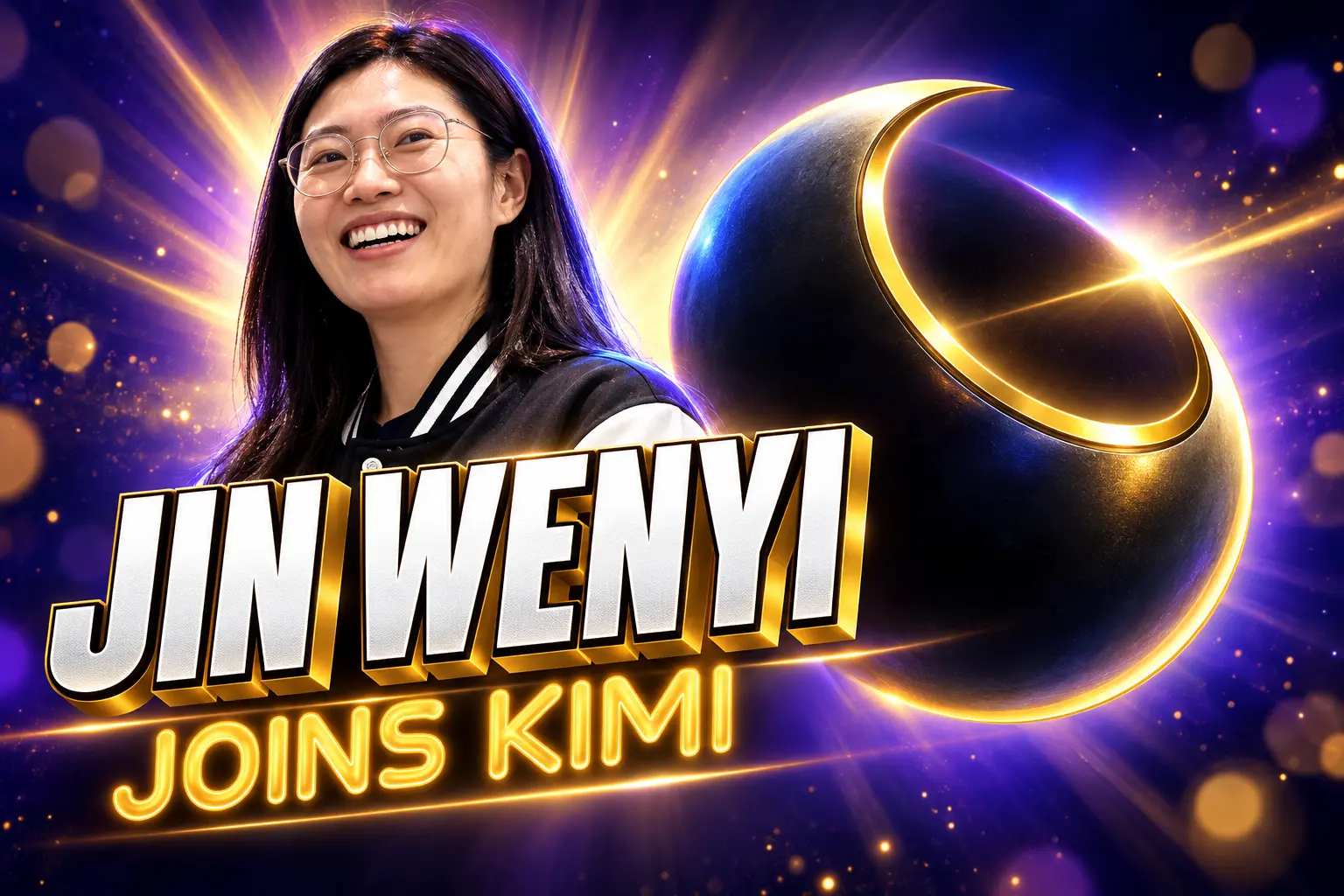
What Genshin’s First $245 Million Month Paid For
Her first large file at miHoYo was Honkai Impact 3rd. In 2017 the game went up on Google Play and later reached more than 200 countries and regions, with long stretches at the top of sales charts in South Korea and in Hong Kong, Macao, and Taiwan. That run was the rehearsal.
Genshin Impact launched worldwide on September 28, 2020. In its first month it took in $245 million and led global mobile-game revenue, and overseas markets supplied 66.5% of that haul. Jin’s team set the overseas plan, the localization, the ads, and the community work. Before launch, the Japan campaign put television spots across Kanto, Kansai, Hokkaido, Sendai, Nagoya, and Fukuoka under the line of a new-era open-world RPG. The game shipped in 15 languages, the widest localization miHoYo had done.
Honkai: Star Rail and Zenless Zone Zero then went out on the same overseas rails. In November 2021 miHoYo posted roles for a roughly 100-person studio in Montreal. In February 2022 it put the HoYoverse brand over the global games, with offices in Singapore, Montreal, Los Angeles, Tokyo, and Seoul. Jin’s letter to staff said the group had built miHoYo’s global publishing ability from the ground up, and that for years the company and its games had ranked first among Chinese publishers going abroad.
My resignation is part of my personal career planning. I want to explore the world beyond.
Jin Wenyi, then President of Internationalization, miHoYo internal letter, April 30, 2026
She closed with a line about mountains, rivers, and meeting again. The next job was not another publisher.
Moonshot Hired Her to Sell a Model Like a Game
Moonshot AI, known in Chinese as Yue Zhi Anmian, was founded in Beijing in March 2023 by Yang Zhilin, Zhou Xinyu, and Wu Yuxin. Yang, the chief executive, is a Tsinghua-trained researcher who had worked at Google Brain and Meta. The lab’s consumer assistant, Kimi, took its name from his English nickname and launched in October 2023 on a long-context pitch. In June 2024 the company said it had no plan to build and ship separate overseas products after talk of a U.S. role-play app and a music-video tool. Two years later it hired the person who had built HoYoverse.
The hire is a wager on a publisher’s skill set, not on another researcher. Kimi already had a path into foreign developers through an OpenAI-compatible API and through open weights. What it still lacked was the slower work Jin had done with games: regional taste, paid retention, community ops, and a brand that can live outside China. That is the gap a game executive is supposed to close, and it is a different job from training a model.
Labs that want users who pay, keep coming back, and clear local rules are now shopping in the same talent pool that took Chinese games abroad. Games already ran that playbook. Model shops are late to it. Jin left a mature overseas machine for a lab that still has to prove a consumer brand in those same markets, which is also a read on where she thinks the next growth sits.
K399 Put Game Generation on the Home Screen
The first public hint of the wager did not look like a chatbot skin. After Kimi K3 went live, Moonshot stood up K399, a web shelf of games made with the new model. An industry roundup on July 22 described dozens of titles and a “one-sentence” create-and-ship flow. Some builds offered AI play in the user’s place. The same roundup said several titles tracked too close to The Legend of Zelda, Black Myth: Wukong, Bubble Fighter, and Vampire Survivors, and that review and legal work on the shelf was still being built.
WHAT K399 PUT ON THE WEB
- The shelf: Dozens of K3-made browser games went up in July across shooting, music, side-scrolling action, palace-intrigue AVG, 3D puzzles, and open world.
- The pitch: A one-sentence generate-and-publish path, plus AI auto-play on some titles, sold as a window on K3’s planning and multimodal work.
- The scrapes: Familiar layouts drawn from Zelda, Black Myth: Wukong, Bubble Fighter, and Vampire Survivors put copyright and clone quality on the same launch as the demo.
Moonshot’s own K3 blog is blunter than a web-game shelf. It says the model can turn concepts, images, and videos into playable interactive experiences by looping on live screenshots. One-sentence game generation is now on the Kimi App Store card as well, which promises a multiplayer 3D game from a single line, with the model iterating worlds, characters, stages, and combat. That is a publisher’s object, not a research demo, and it is the object Jin knows how to take across borders if the builds hold up.
Kimi K3 combines strong 3D reasoning, coding, and vision capabilities to turn concepts, images, and videos into fully playable interactive experiences.
Moonshot AI, Kimi K3 technical blog, July 16, 2026
A gacha IP makes money from long seasons, character love, and live ops. A one-sentence game that looks like someone else’s hit does not. If K399 is the prototype, her first content problem is taste and clearance, not store setup.
Kimi Ranks Eighth Among China Chat Apps
The company she joined is small, rich, and no longer winning the China assistant chart. Venture Atlas, drawing on dated round and product figures, puts the lab at about 300 people. Kimi peaked near third in China by monthly users in 2024 and was about eighth by April 2026 as Doubao, Qwen, and DeepSeek took the mass market. QuestMobile’s June 2026 count put ByteDance’s Doubao at 382 million monthly users. Kimi is not going to beat that with another homepage banner.
MOONSHOT AND KIMI, MID-2026
| Metric | Figure | As of |
|---|---|---|
| Staff | About 300 | 2026 |
| Annual recurring revenue | $200 million, then $300 million | April 2026, then June 2026 |
| Last funding close | $3.5 billion at a $35 billion valuation | July 29, 2026 |
| Alibaba stake | 36% | From the 2024 Alibaba-led round |
| Kimi rank in China | About eighth by monthly users | April 2026 |
| China subscription range | ¥5.2 short pass to ¥399 a year | 2026 consumer plans |
The money story is the API and the paid tiers, not the China download chart. ARR moved from $200 million in April 2026 to $300 million in June, before K3. K3 arrived on July 16 as a 2.8 trillion parameter mixture-of-experts model with 104 billion parameters active per token, 16 of 896 experts, a 1 million token window, and native vision. Official API pricing is $3 per million input tokens, $15 per million output tokens, and $0.30 on cache hits. On July 19, three days after launch, Moonshot paused new subscriptions and said demand had run close to the limits of its capacity. Full Kimi K3 weights on Hugging Face followed on July 27, about 1.56 TB across 96 shards, eleven days after the API went live.
That open drop is how Kimi already travels: developers pull weights, wire the API, and skip the consumer app. Rebecca Arcesati, who leads the science, technology, and innovation program at MERICS, wrote that K3 is not another DeepSeek moment, because Moonshot is competing on size on terms set by U.S. labs rather than on a cheaper training method. If she is right, the model is not the product Jin was hired to invent. The product is whatever a foreign user will pay for without living inside China’s app charts.
A U.S. Advisory Named Her New Employer
The overseas door she is supposed to walk through has a federal notice on it. On September 8, 2026, CISA, the NSA, and the FBI published a joint advisory on industrial-scale distillation campaigns they said China-based labs had run against U.S. frontier models. The advisory names Moonshot with DeepSeek, Alibaba, MiniMax, StepFun, and Z.AI, and says the campaigns have run since at least late 2024 against variants of Claude, GPT, Gemini, and Grok. On Moonshot itself, the advisory says the lab has run a wide distillation effort since at least mid-2025, including Claude Fable 5 data used on Kimi K3 and GPT-4o data used on Kimi K2.
Moonshot has not treated those claims as a sideshow. U.S. officials are telling American companies to lock down model access. A former HoYoverse lead knows store rules, age ratings, and local ads. She now also inherits a security argument that can freeze cloud deals, scare publishers, and turn a consumer launch into a policy fight. Genshin did not have to clear that kind of advisory to go on sale in Tokyo or Los Angeles.
Open weights make the technical product easy to try and the consumer brand harder to own. Anyone can download K3. Few of those users will ever see a Kimi membership screen, a localized community, or a paid event tied to a character. That second list is the work Jin used to do, and it is the work a distillation fight can poison before a single regional campaign ships.
Three Hundred People and a Different Clock
Game publishing runs on seasons, live ops, and a long IP. A frontier lab of about 300 people runs on training cycles, GPU limits, and the next open drop. Jin is moving from a company that already had offices in five overseas cities to a shop whose consumer app sits eighth in its home market and whose last close was $35 billion. The title is Kimi-related business. The test is whether a model that developers already use can be sold like a world people return to.
K399 and the App Store line about a game from one sentence are the first artifacts of that test. They also show the snag: clone heat, thin play, and a business model that is not yet a gacha season. She has the store maps. She does not yet have a hit that behaves like Genshin, and her new employer is on a U.S. advisory that Genshin never had to argue with.
Yang still runs the lab. Jin has the brief to make Kimi pay like a product with borders, languages, and fans. The next launches will show which clock she is on.

Huang Sells Cybersecurity as AI’s Next Always-On App

Gemini for Windows Cannot Act on Gmail or Drive

Apple Health App Will Sell $119 Quest Blood Tests

AMD’s EPYC Playbook Now Runs Against NVIDIA’s AI Lead

A Nevada Ring Clip Turns a Door Kick Into Evidence

Fable 5 Came Back Under a Commerce On-Off Switch

Google’s SpaceX GPU Lease Has a Sept. 30 Deadline

Plasma One’s XPL Locks Face a 1.81 Billion Cliff

DGO’s Rs 549 World Cup Pass Cost Fans Sleep and Data

Moonshot AI’s $30 Billion Ask Became a $35 Billion Close
-
 AI3 months ago
Fable 5 Came Back Under a Commerce On-Off Switch
-
 AI4 months ago
Google’s SpaceX GPU Lease Has a Sept. 30 Deadline
-
 CRYPTO4 months ago
Plasma One’s XPL Locks Face a 1.81 Billion Cliff
-
 APPS4 months ago
DGO’s Rs 549 World Cup Pass Cost Fans Sleep and Data
-
 AI4 months ago
Moonshot AI’s $30 Billion Ask Became a $35 Billion Close
-

 NEWS4 months ago
ColorOS 17 Device List Spans Oppo, OnePlus and Realme
-

 GAMING4 months ago
Xbox Cuts 3,200 Jobs After Five Years of Thin Returns
-
 GAMING3 months ago
The RTX 4050 Under Rs 70,000 Hides a Wattage Gap